Recessed or Surface-Mounted: How Should a Mirror Cabinet Be Installed?
Recessed mirror cabinets give the cleanest look and keep the cabinet body out of the user's head space, but they need a stud or block wall with enough cavity depth and no pipes in the way. Surface-mounted cabinets work on any wall and are the default for refurbishments and concrete walls.
| Installation | Wall Requirement | Best For | Watch Point |
|---|---|---|---|
| Fully recessed | Cavity depth equal to the cabinet body | New-build hotels, premium apartments | Coordinate with plumbing and wall framing early |
| Semi-recessed | Partial cavity | Shallow partition walls | Visible side reveal needs a finished edge |
| Surface-mounted | Any solid or blocked wall | Refurbishments, rentals | Projects into the room; check clearance over the basin |
For recessed units, send the wall build-up drawing so we can size the cabinet body and a trim flange that covers rough opening edges.
What Should Be Specified for an LED Mirror Cabinet?
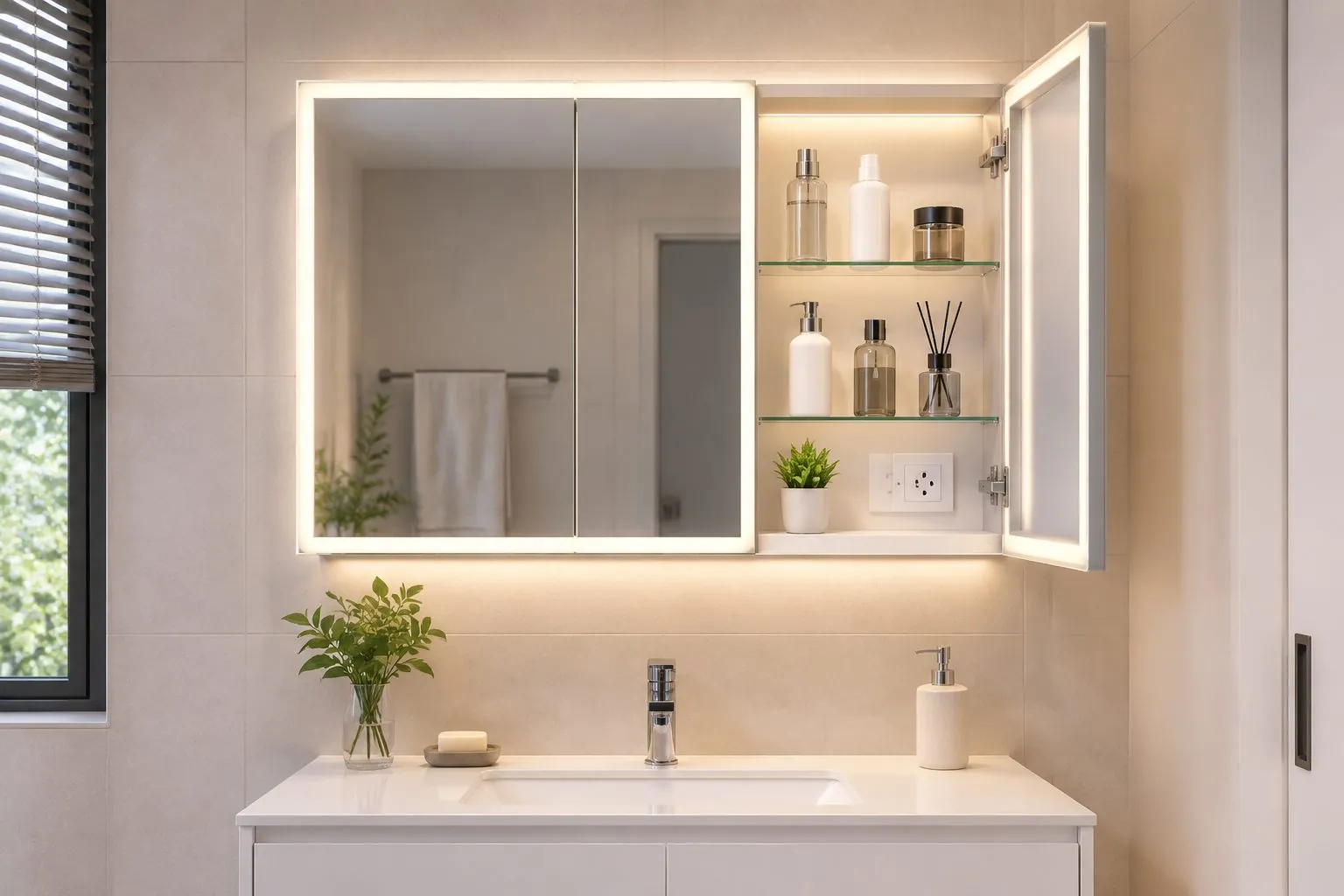
An LED mirror cabinet is an electrical appliance in a wet room, so specify the electrical system before the cabinet style. The key items are lighting layout, color temperature, switching and the wet-area protection rating required by the destination market.
- Light position: front-lit frosted strips around or beside the mirror give even face lighting; a lower light line can serve as a night light.
- Color temperature: warm, neutral or adjustable; many hotels standardize on one value for all rooms.
- Switching: touch sensor, motion sensor or wall switch; touch sensors need clear labelling.
- Demister pad: heated pad behind the mirror to keep a clear zone after showers.
- Socket: shaver socket or USB inside the cabinet, where permitted by local rules.
Electrical certification, IP rating and driver specification are confirmed per market and per component supplier. Ask for these documents before approving the sample.
Which Cabinet Body Materials Work in Humid Bathrooms?
Mirror cabinet bodies sit in the most humid part of the bathroom, so the body material and edge sealing decide service life more than the mirror itself.
| Body Material | Moisture Performance | Typical Use |
|---|---|---|
| Aluminium body | Does not swell; strong in steam | Hotels, LED mirror cabinets |
| Moisture-resistant MDF or particle board, lacquered or melamine | Good when every edge is sealed | Apartments matched to vanity finish |
| Plywood with lacquer or veneer | Good with sealed edges | Premium residential |
| PVC board | Waterproof | Rentals, high-humidity bathrooms |
Whatever the body, check that drilling holes and cut-outs for cables are sealed, because moisture often enters through machined holes rather than faces.
How Is the Mirror Door Built and Hung?
Mirror doors are heavy relative to their size and are opened many times a day, so hinge selection and mirror bonding are the details to check. Most units use concealed soft-close hinges with the mirror bonded to a backing panel or framed in aluminium.
- Double-sided mirror doors let users see behind the head when the door is open.
- Edges are polished or beveled; frameless designs need extra care in packing.
- Safety backing on the mirror reduces the risk of loose fragments if broken.
- Hinge count and type are set by door height and weight.
When Does a Bathroom Tall Linen Cabinet Make Sense?
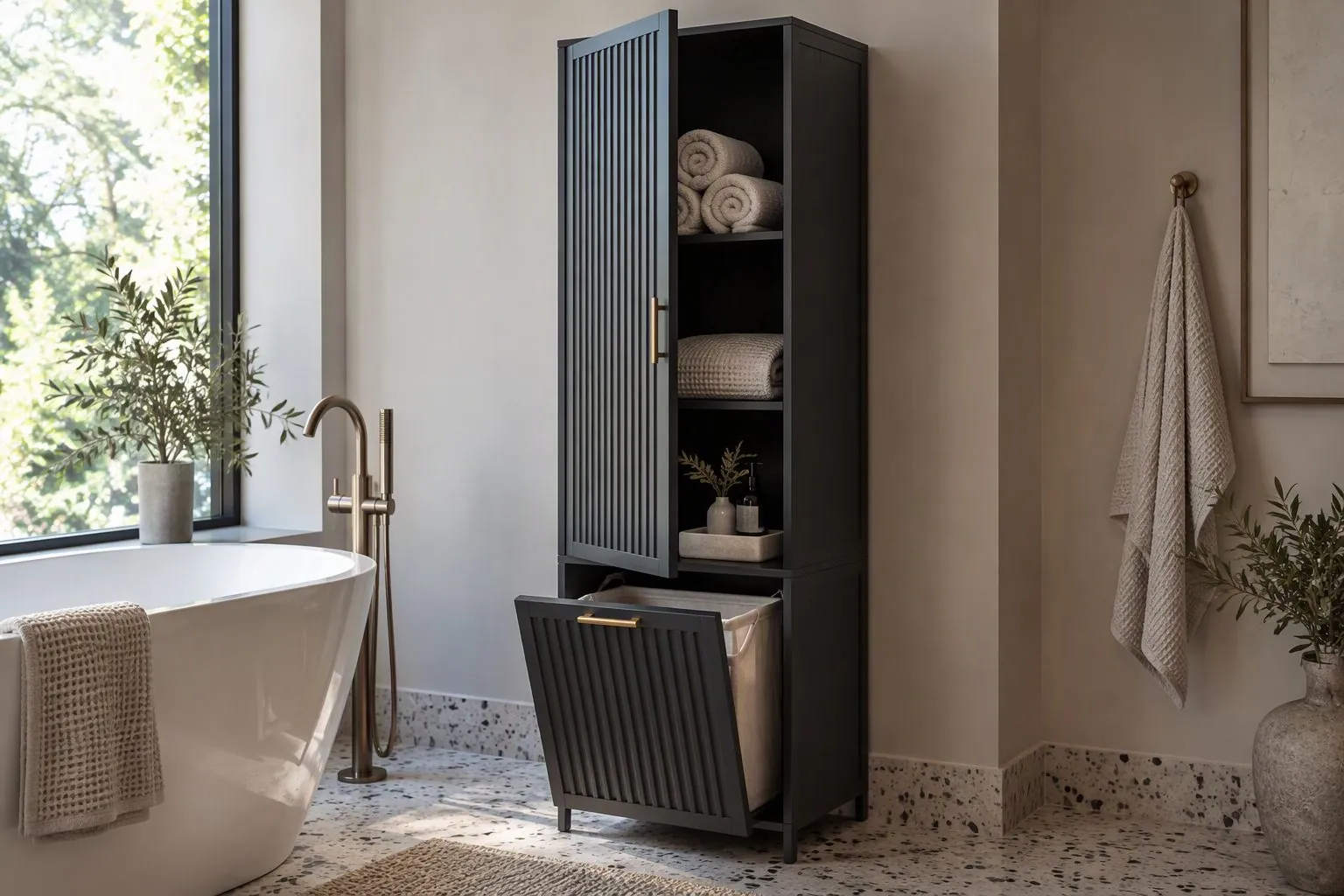
A bathroom tall linen cabinet adds the storage a mirror cabinet cannot: towels, toilet rolls, cleaning products and spare toiletries. It suits bathrooms with an unused wall section beside the vanity or door, and it usually matches the vanity finish.
- Lower doored section for cleaning products, upper section with adjustable shelves for towels.
- Optional pull-out laundry basket at the base.
- Raised legs or a wall-hung body for floor cleaning and to keep the base away from water.
- Door hinge side set so the door does not clash with the bathroom entry door.
What Should an Over-Toilet Storage Cabinet Clear?
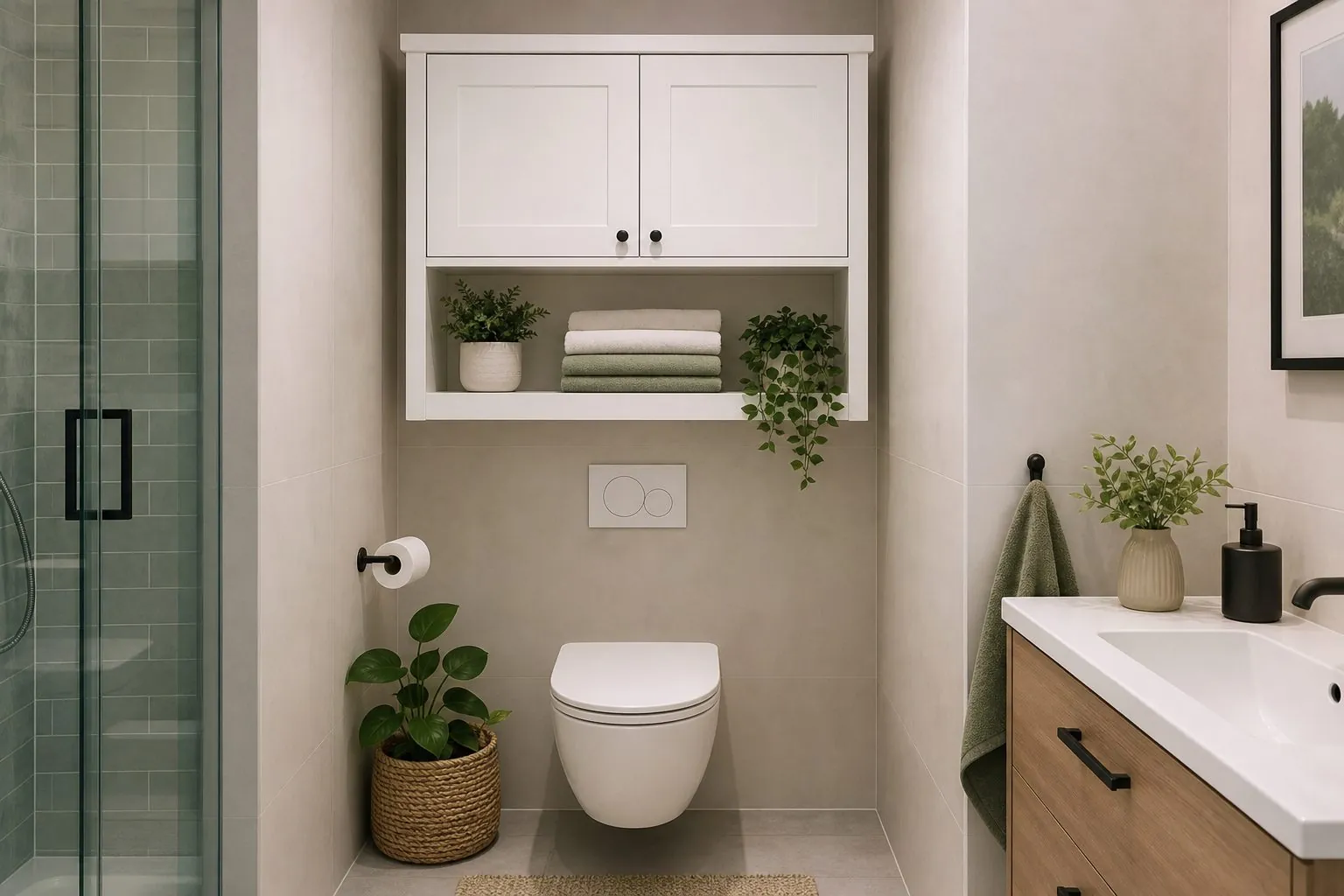
An over-toilet storage cabinet must clear the cistern, the flush button and the user's head. Concealed-cistern toilets need access to the flush plate and service panel, so the cabinet cannot cover them.
- Measure from the floor to the top of the cistern or flush plate.
- Set the cabinet base high enough to remove the cistern lid or access panel.
- Keep the cabinet shallow so it does not overhang the seated user.
- Choose push-to-open or shallow handles so nothing protrudes into the space.
How Do You Match Mirror Cabinets to Vanities Across a Project?
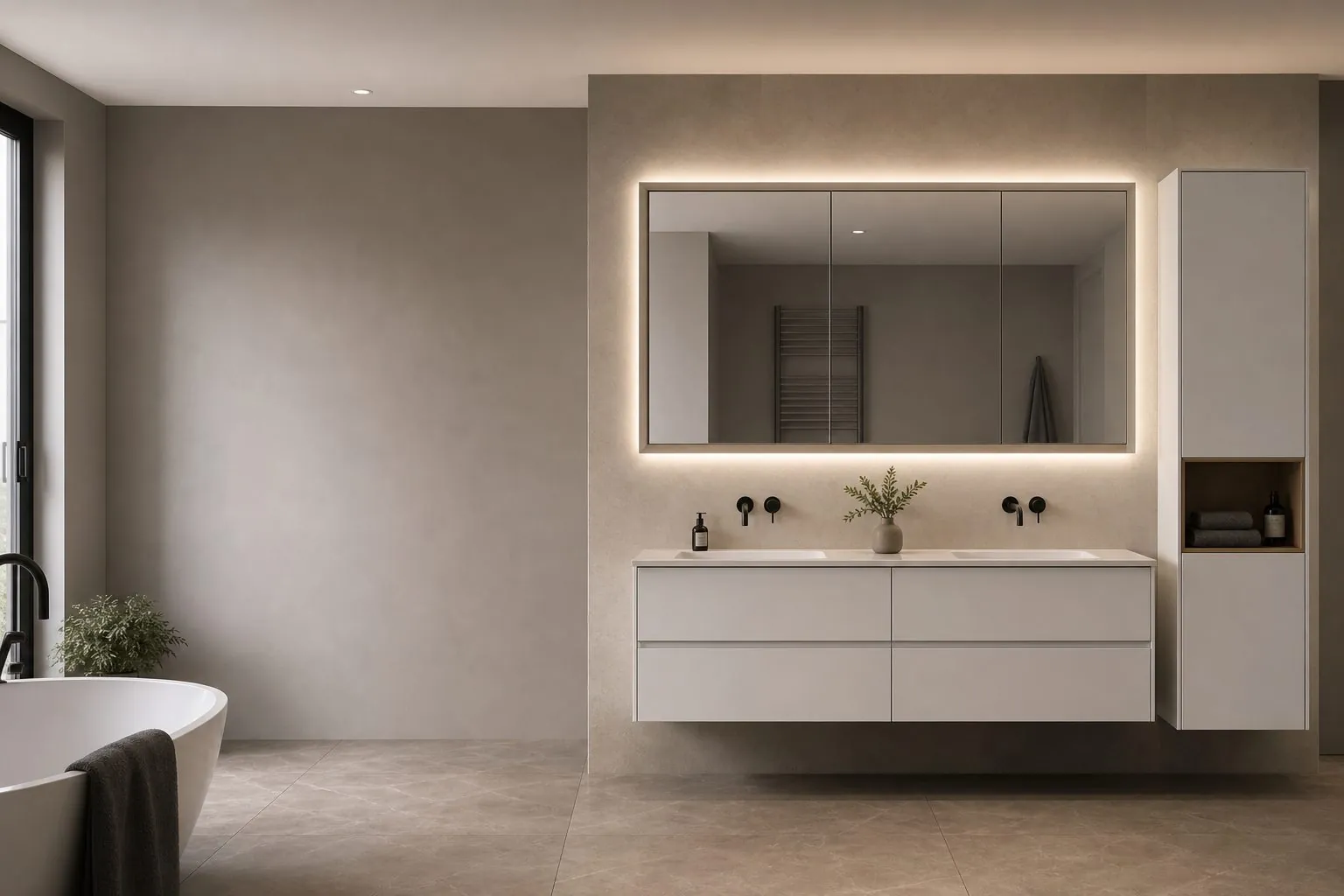
Match by finish code and by width module. The mirror cabinet is usually the same width as the vanity or slightly narrower, and its side panels or frame use the vanity's finish or a complementary metal.
For hotel projects, bathrooms on different floors often have different basin positions. Recording the mirror cabinet width, hinge side and socket position per room type on the bathroom schedule prevents mix-ups at installation. Cartons are then labelled by room type so each mirror cabinet reaches the right bathroom. A signed sample of the vanity and mirror cabinet together is the best batch reference.
- Align the mirror cabinet center line with the basin or tap, not with the vanity body.
- Keep the cabinet bottom high enough to clear tall taps and wall-mounted spouts.
- Match the hinge side to the light switch and the bathroom entry so the open door never blocks either.
- For double vanities, compare one wide cabinet with two separate cabinets above each basin.
What Should Be Checked Before Shipping LED Mirror Cabinets?
LED mirror cabinets combine glass, electronics and cabinetry in one carton, so pre-shipment checks cover all three.
- Light-on test of every unit, including sensor and demister functions.
- Mirror surface checked for scratches, silvering defects and edge chips.
- Hinge alignment and soft-close action on each door.
- Drivers, cables and wall brackets packed in the correct carton.
- Foam corner protection and fragile labelling on every carton.
How Can Arcova Help With Mirror Cabinet Orders?
Arcova supplies LED mirror cabinets, bathroom tall linen cabinets and over-toilet storage cabinets matched to our vanities, with drawings that coordinate wall cavities, power points and basin positions. Hinges come from Blum, Hettich, Häfele, Salice, DTC or Hutlon by budget, and inspection photo reports cover function tests by unit. See our bathroom vanities or send your bathroom schedule.