
Which Bedroom Pieces Should Be Built-In and Which Freestanding?
Build in the pieces that depend on the wall and the room size, and keep freestanding the pieces owners may want to move. Wall beds, headboard walls, over-bed storage, bay window seats and floating nightstands are fixed to the structure and must be drawn to site measurements. Dressers, tall chests of drawers and dressing tables can be freestanding, which makes them easier to standardize across unit types and replace later.
For developers, a practical split is to include the fixed joinery in the fit-out contract and offer loose pieces as an optional furniture package. Hotels usually prefer fixed headboards with integrated nightstands, because they cannot be moved, scratched against walls or stolen, and they hide cables for reading lights and USB outlets.
When Does a Murphy Wall Bed Make Sense?
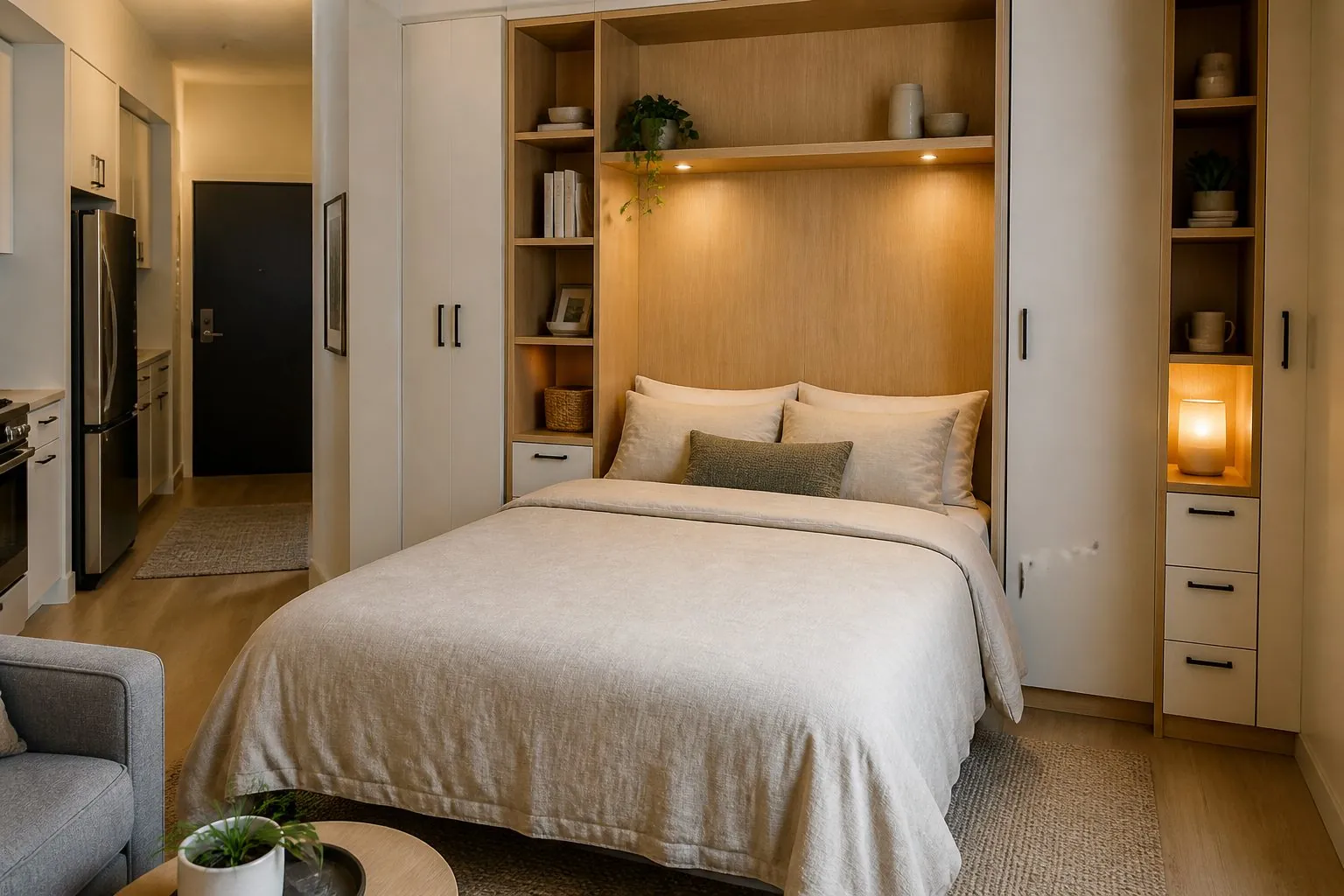
A wall bed pays off when one room must work as both a bedroom and a living or working space: studios, micro-apartments, serviced apartments and guest rooms that double as home offices. In a room used only for sleeping, a conventional bed is cheaper and simpler.
Before ordering, confirm these points, because they determine the mechanism and the cabinet construction:
- Orientation: vertical (head against the wall) needs more ceiling height; horizontal (side against the wall) suits low ceilings and narrow rooms.
- Mattress size and weight: spring or gas-piston mechanisms are balanced to a mattress range, so the mattress type should be fixed before production.
- Wall construction: the cabinet must be anchored to a structural wall or a reinforced frame. Lightweight partitions need a plan from the site engineer.
- Combination units: side wardrobes, shelves or a fold-down desk that stays level when the bed opens.
Ask for the mechanism specification and the anchoring drawing with the quotation. A wall bed is a moving, load-bearing product, so installation guidance matters as much as the finish.
Storage Bed, Tatami Platform or Gas-Lift Bed?
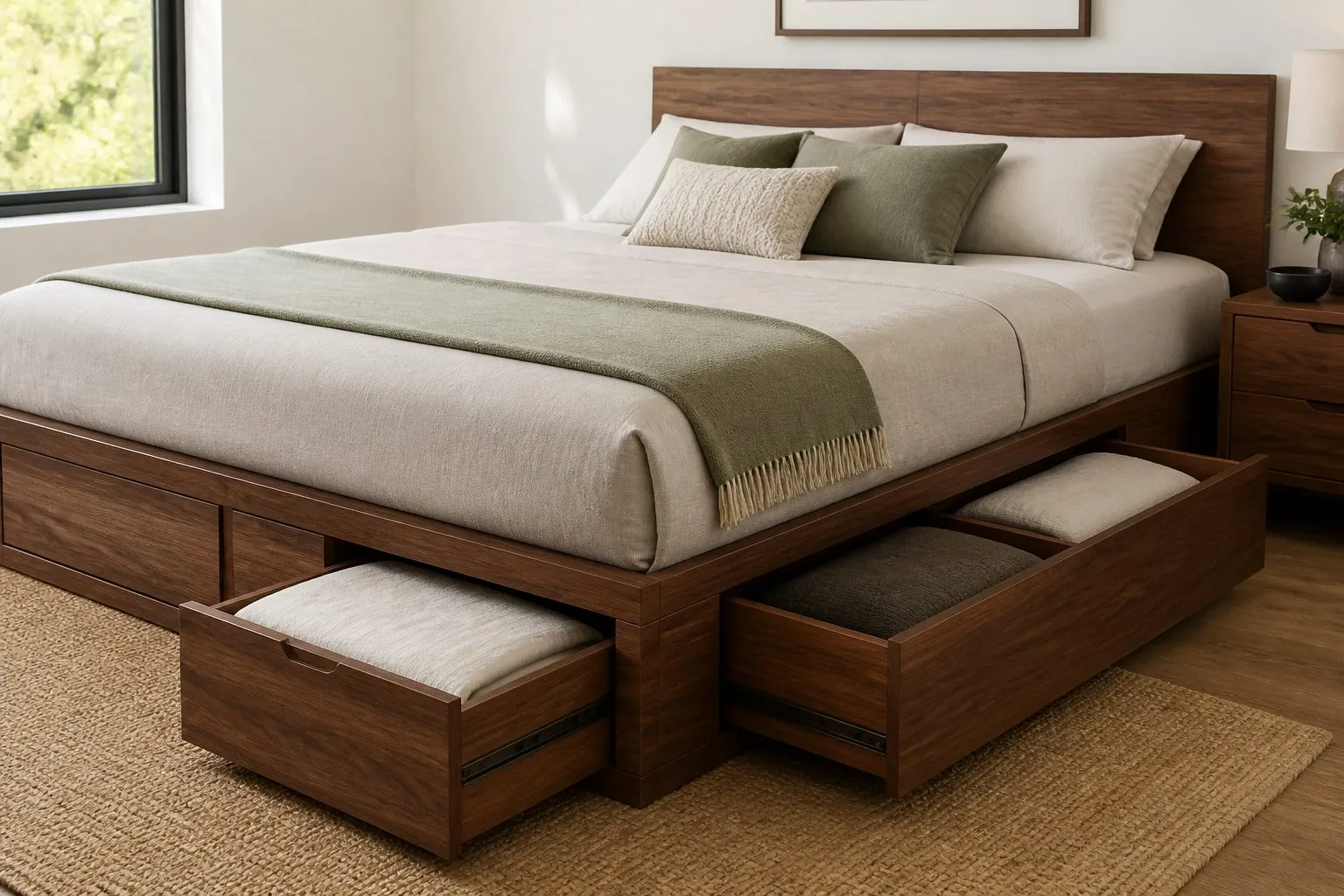
All three add storage under the sleeping area, but they suit different users. The table below summarizes how we advise buyers:
| Type | How Storage Is Accessed | Best For | Watch Out For |
|---|---|---|---|
| Bed with drawers | Side or end drawers on slides | Daily items, family homes, kids and teen rooms | Needs clear floor space beside the bed |
| Gas-lift storage bed | Whole base lifts on gas struts | Seasonal bedding, luggage, small rooms | Strut rating must match mattress weight |
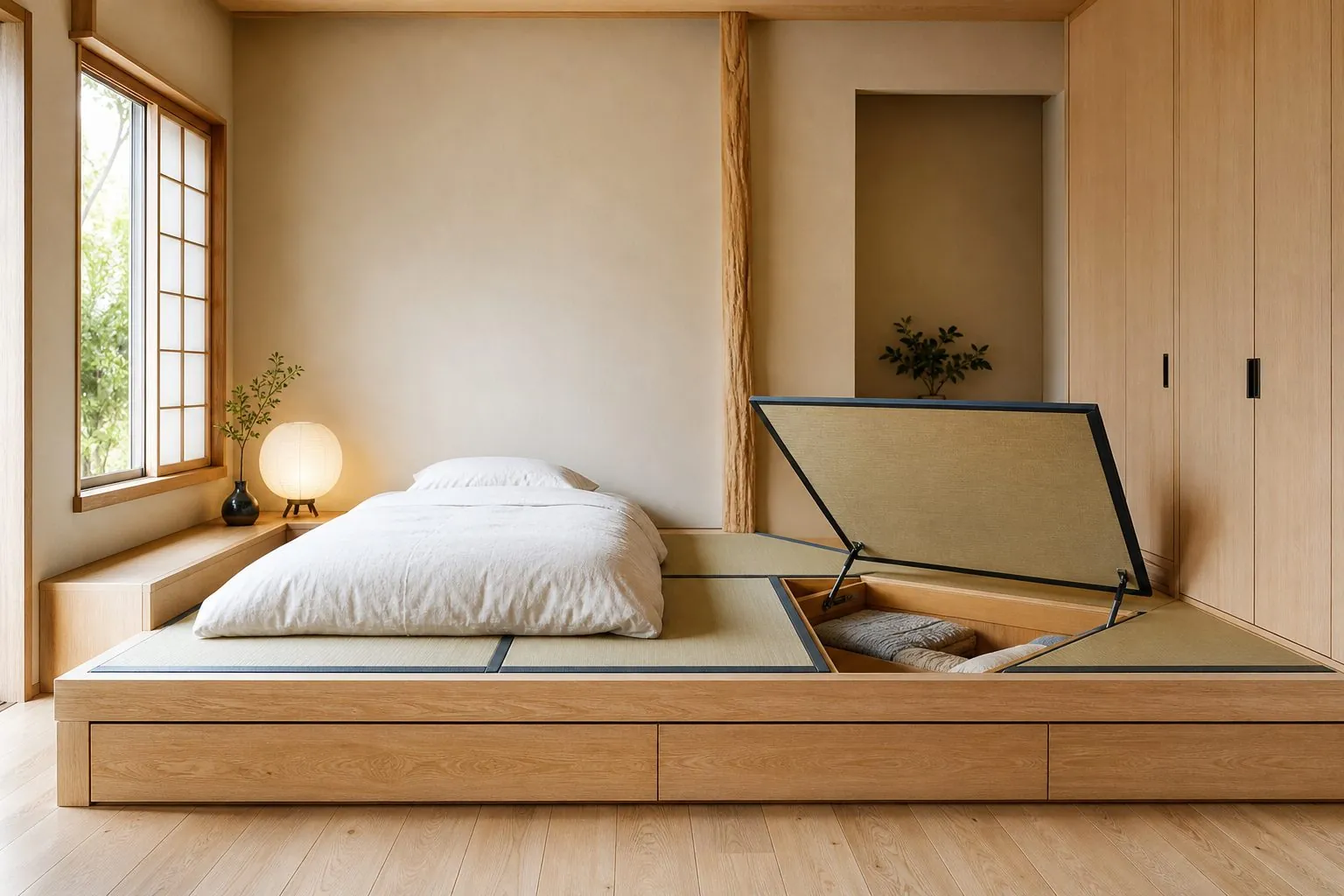
| Tatami platform bed | Lift-up floor hatches and front drawers | Multi-use rooms, Japanese and Asian-inspired designs | Platform depth and ventilation for mattresses |
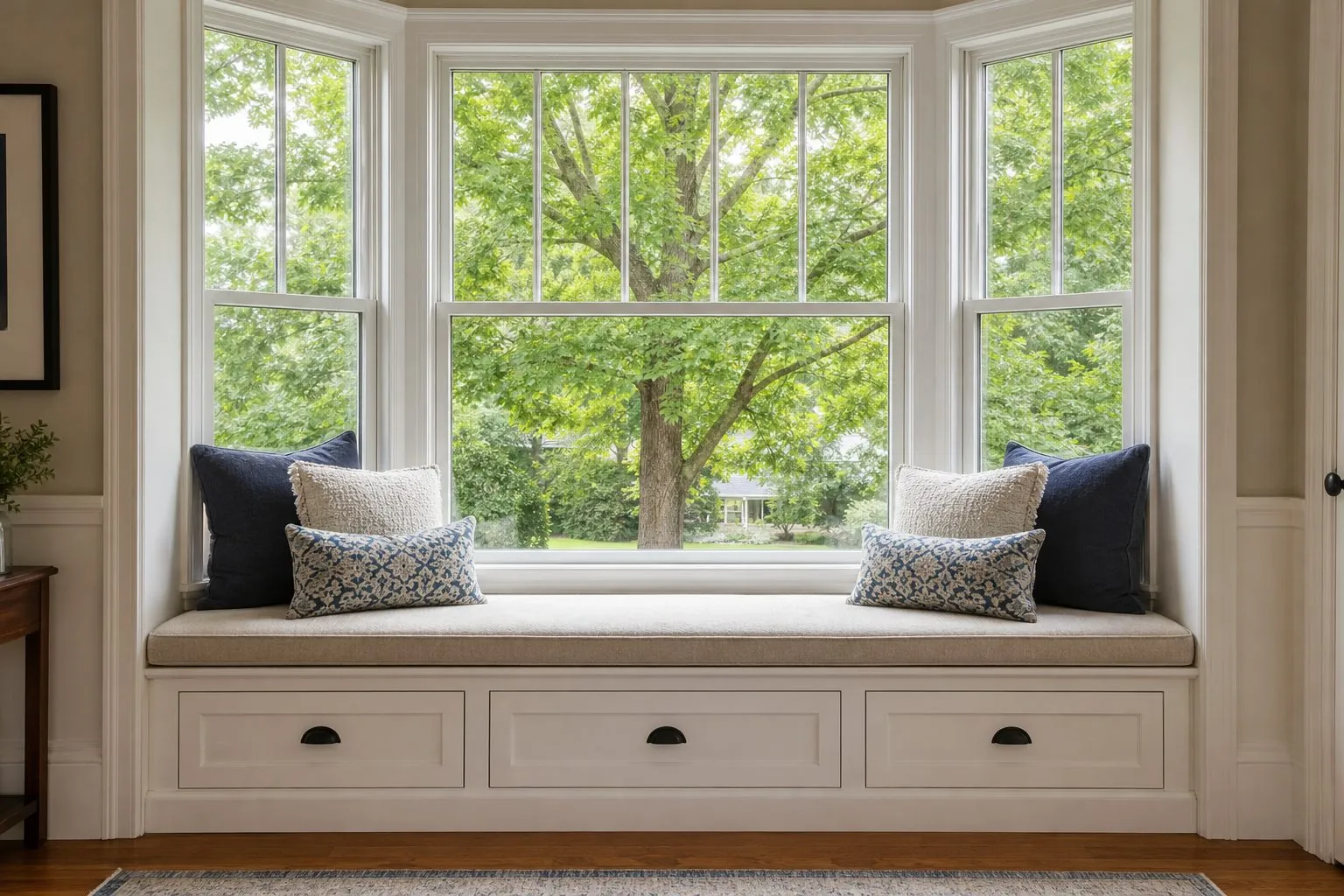
| Bay window storage seat | Hinged lids or front drawers | Rooms with deep window recesses | Window and radiator clearances |
Tatami platforms are built in modules so they can pass through doors and be leveled on site. In humid climates, specify ventilation slots or slatted bases under mattresses to prevent condensation and odors.
How Should a Headboard Wall Be Specified?
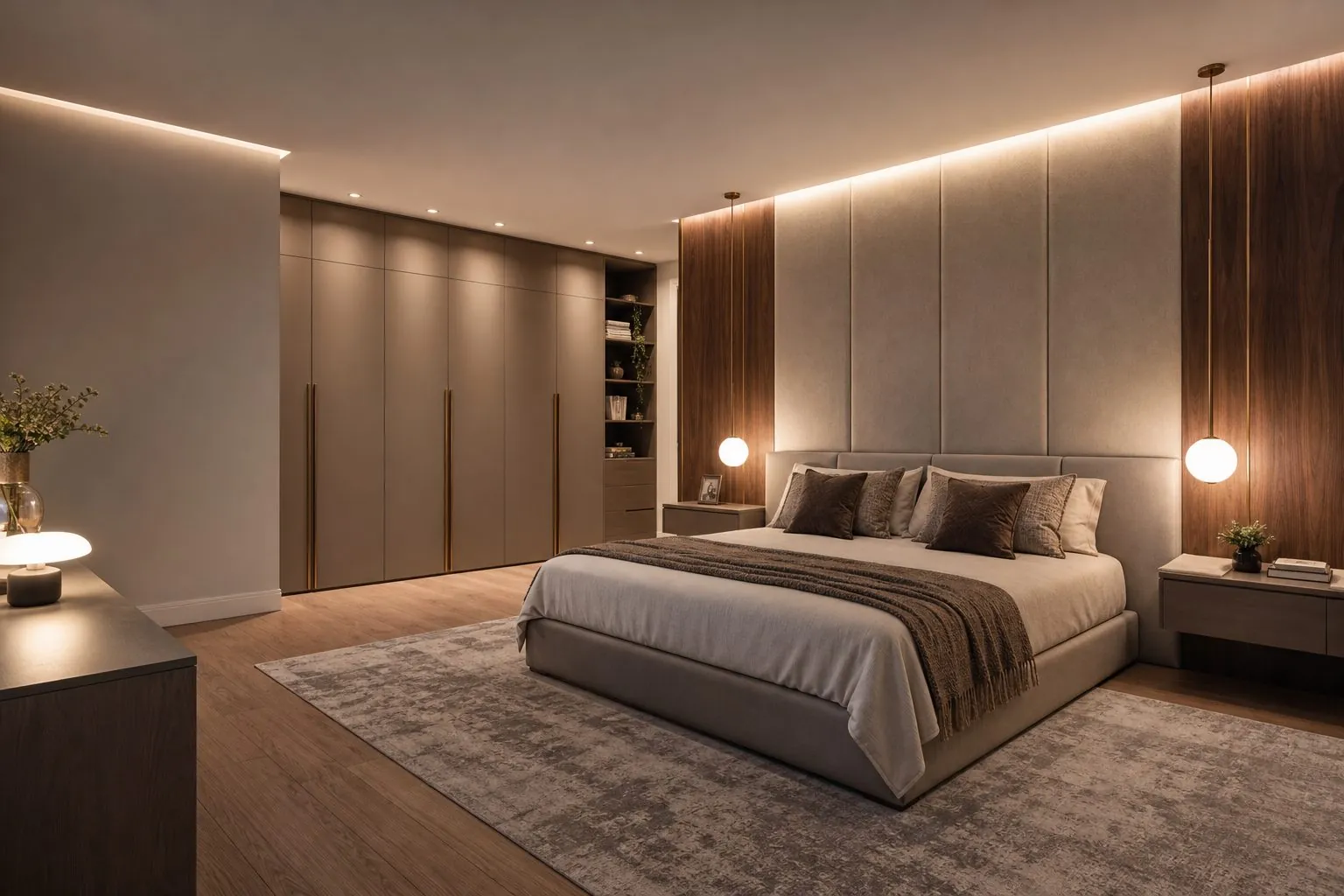
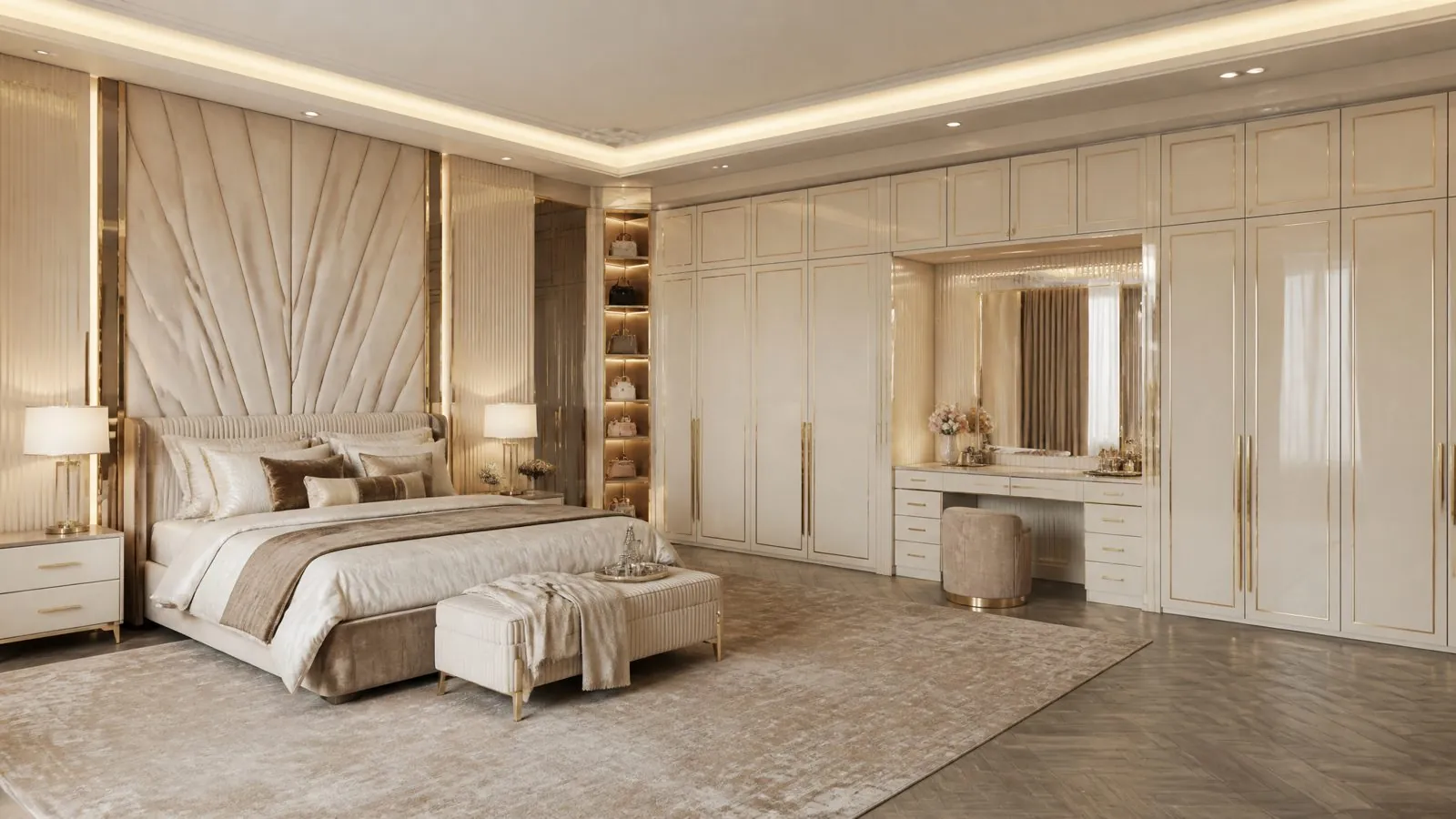
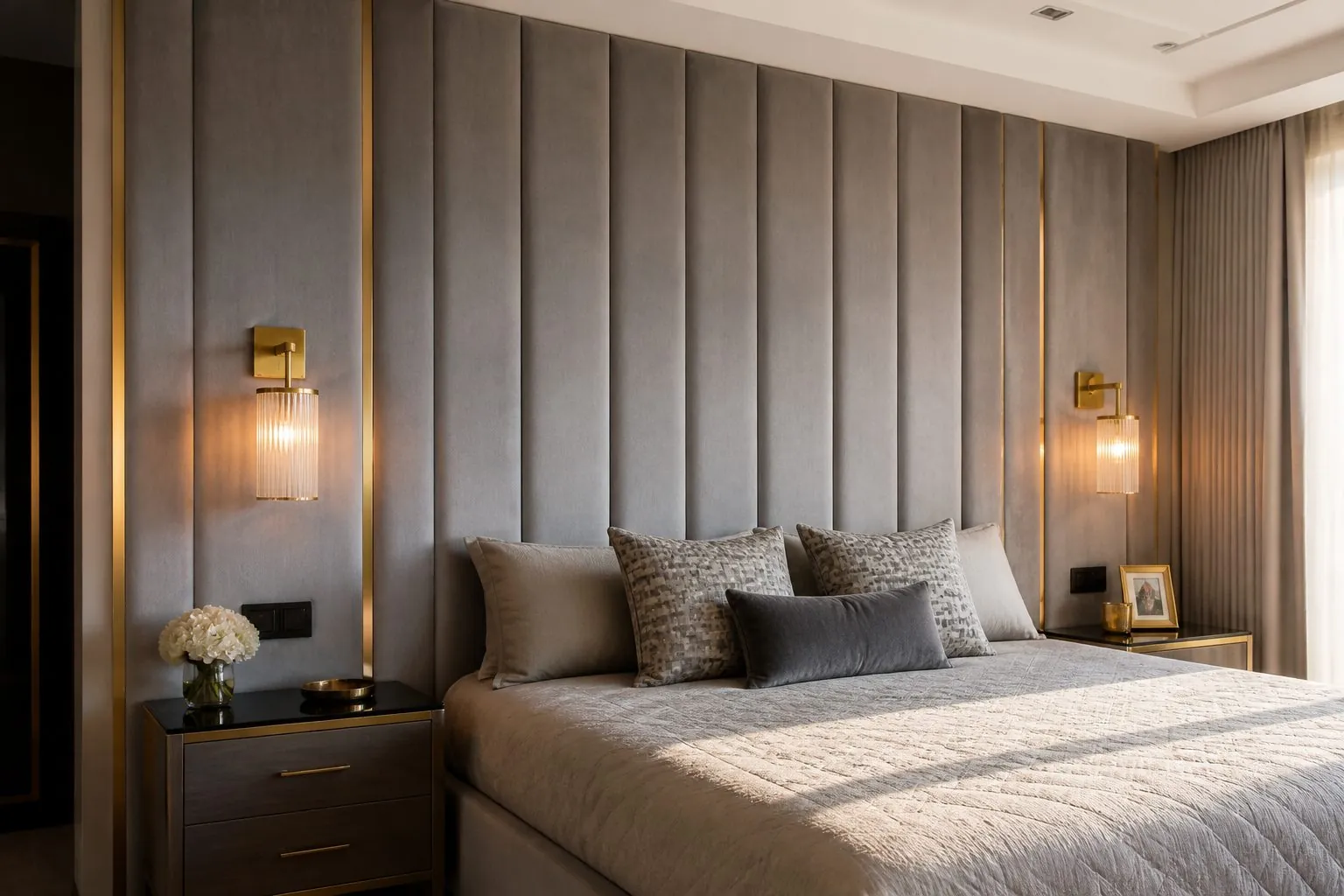
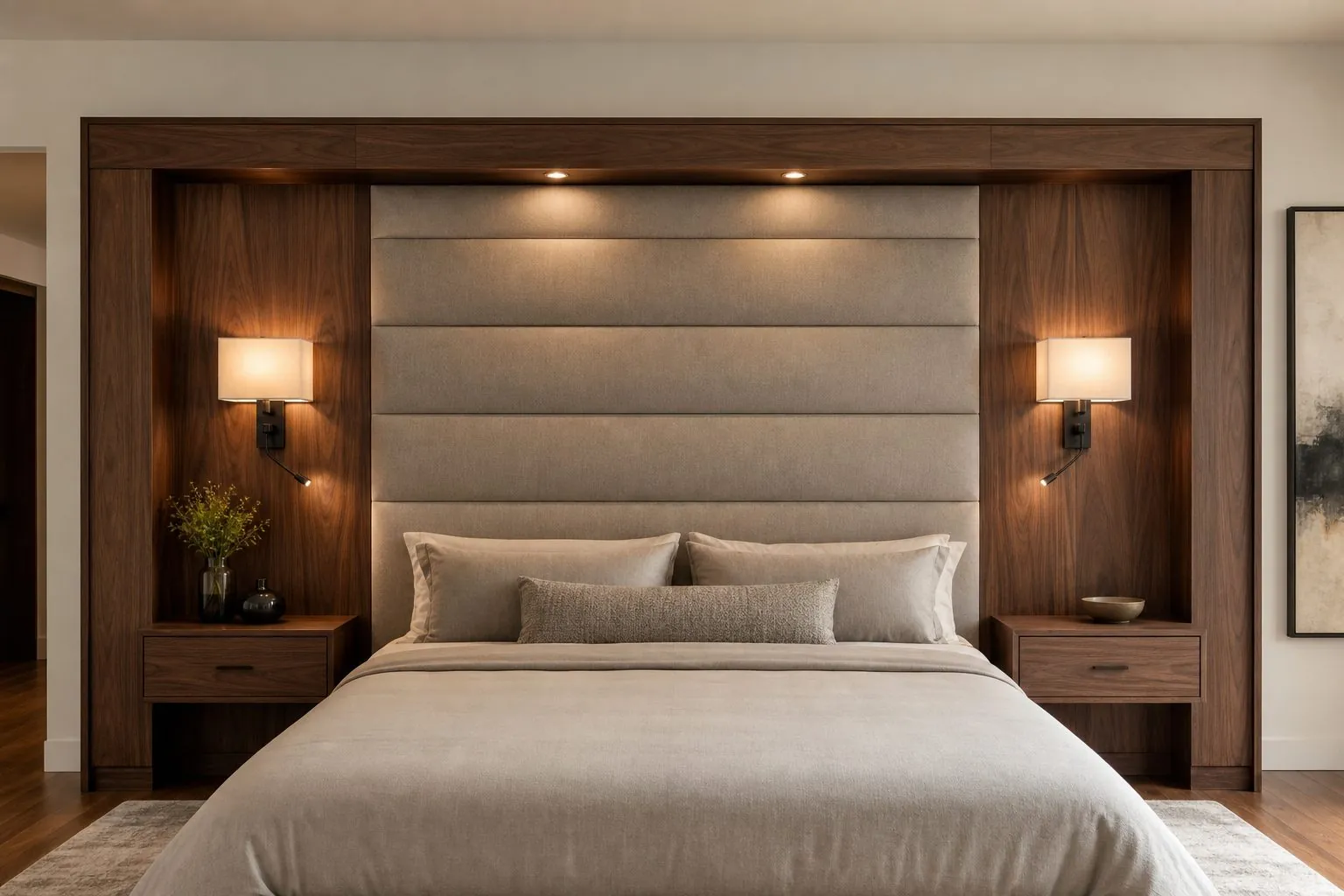
A headboard wall is the focal point of the room and the part guests touch most, so specify surface, services and fixing together. Upholstered panels add comfort and some sound absorption; veneer, fluted and painted panels are easier to clean and suit hotel rooms with heavy turnover.
- Fabric or leatherette: confirm abrasion and flammability requirements of your market before selecting the material.
- Services: reading lights, switches, sockets and USB outlets need cut-outs and cable channels planned on the drawings.
- Integrated nightstands: floating shelves or drawers fixed to the headboard keep floors clear for cleaning.
- Fixing: French cleats or hidden brackets let panels be removed for re-upholstery later.
For hotels, we recommend making upholstered sections removable so the fabric can be replaced during a soft refurbishment without replacing the whole wall.
What Matters Most in Dressers and Nightstands?
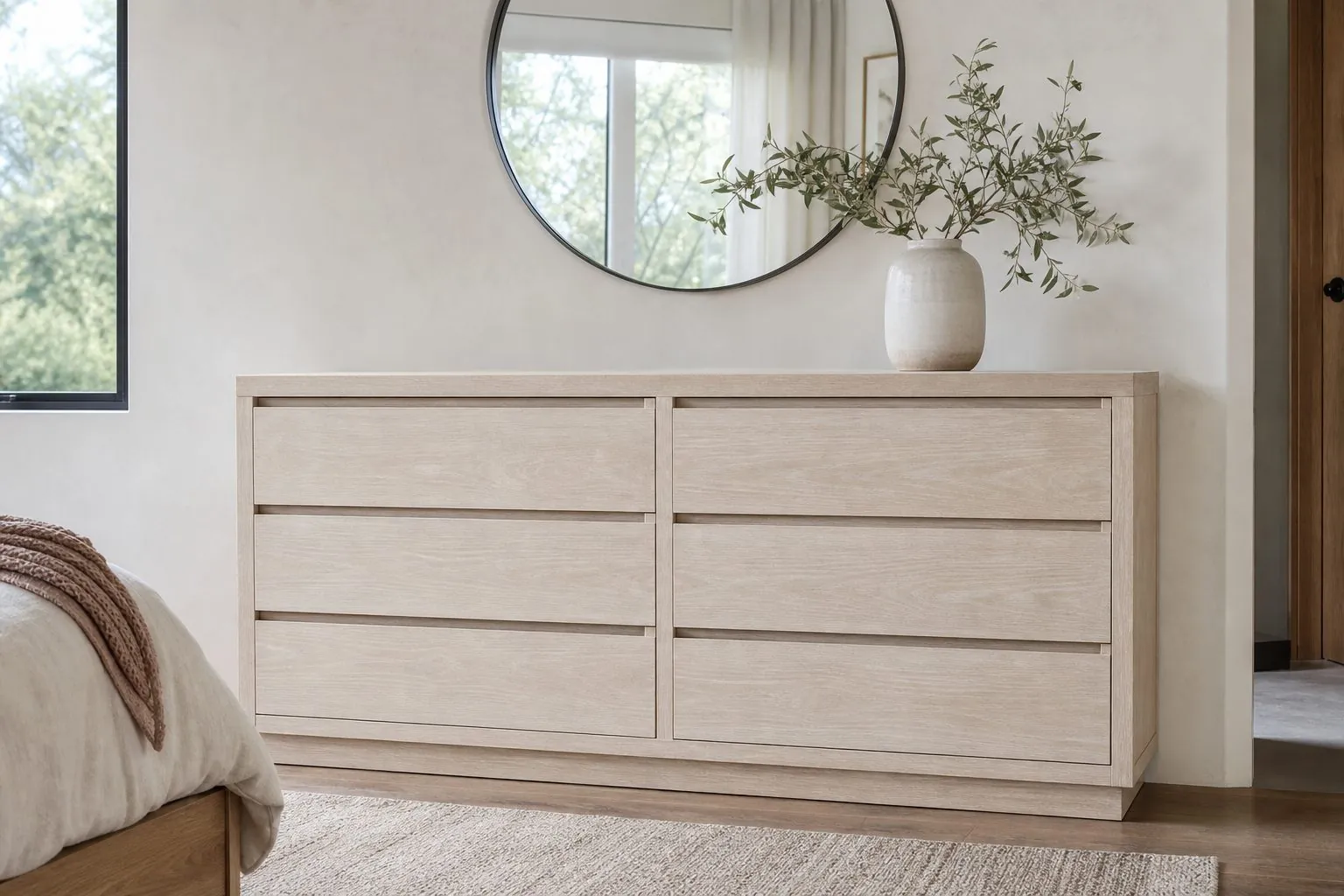
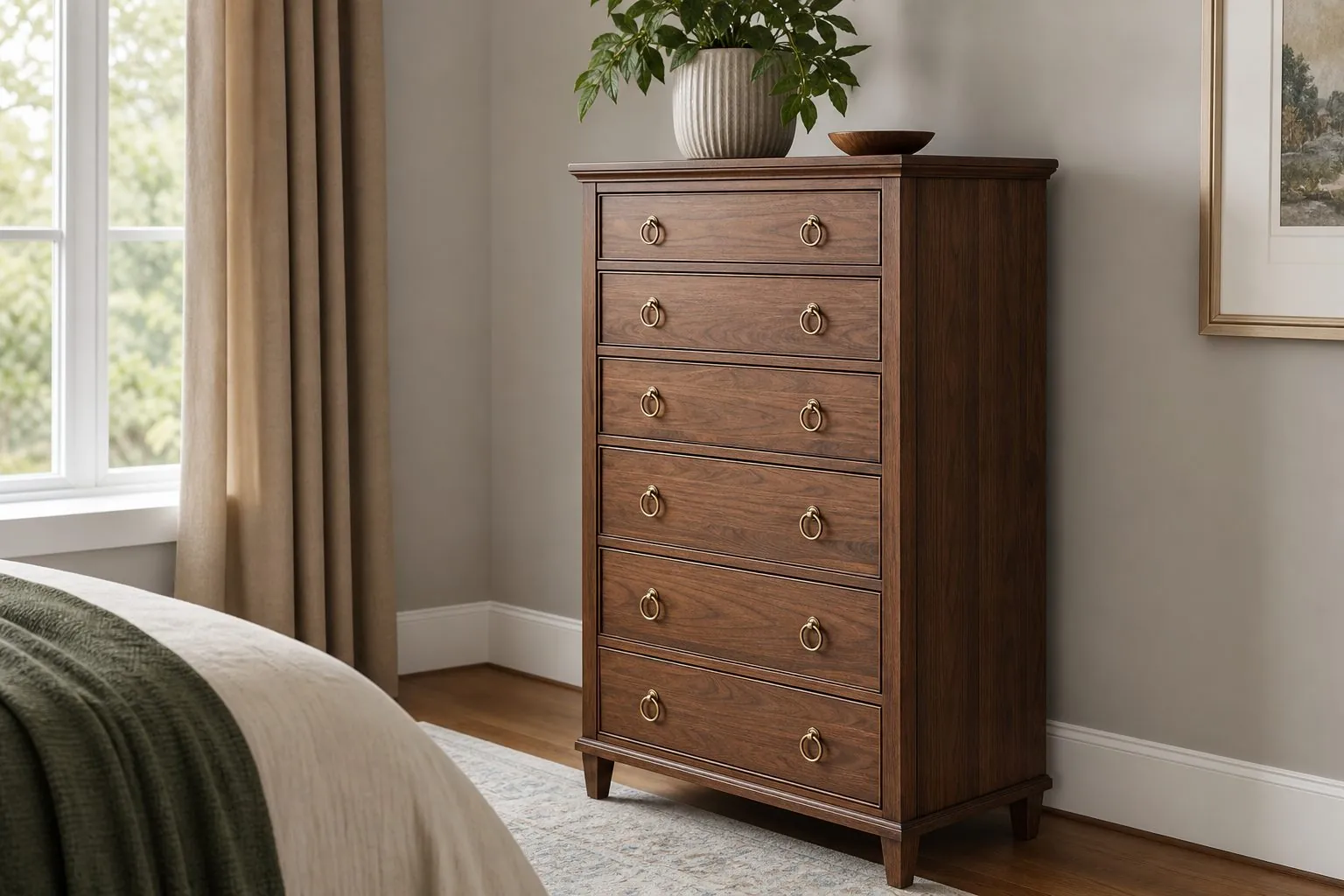
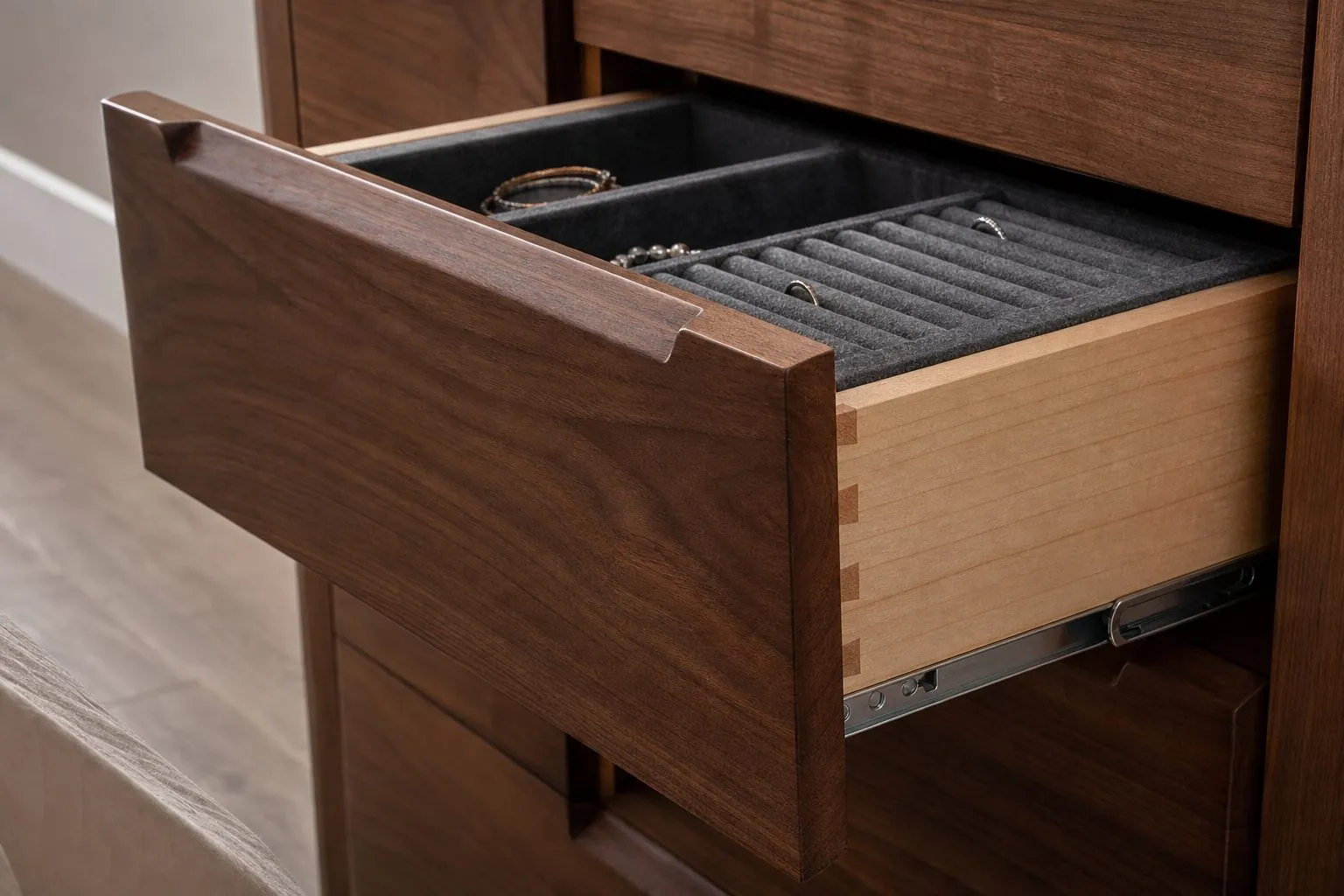
Drawers decide whether a dresser feels solid or cheap. Buyers judge bedroom casegoods by opening the top drawer, so drawer boxes and slides deserve more budget than decorative details. Full-extension soft-close slides and a rigid drawer bottom prevent sagging when drawers are loaded with folded clothes.
Three other points cause frequent complaints and are easy to prevent at the drawing stage:
- Tip-over safety: tall chests and six-drawer dressers should ship with anti-tip wall fixing kits. Several markets have specific stability rules, so confirm yours before production.
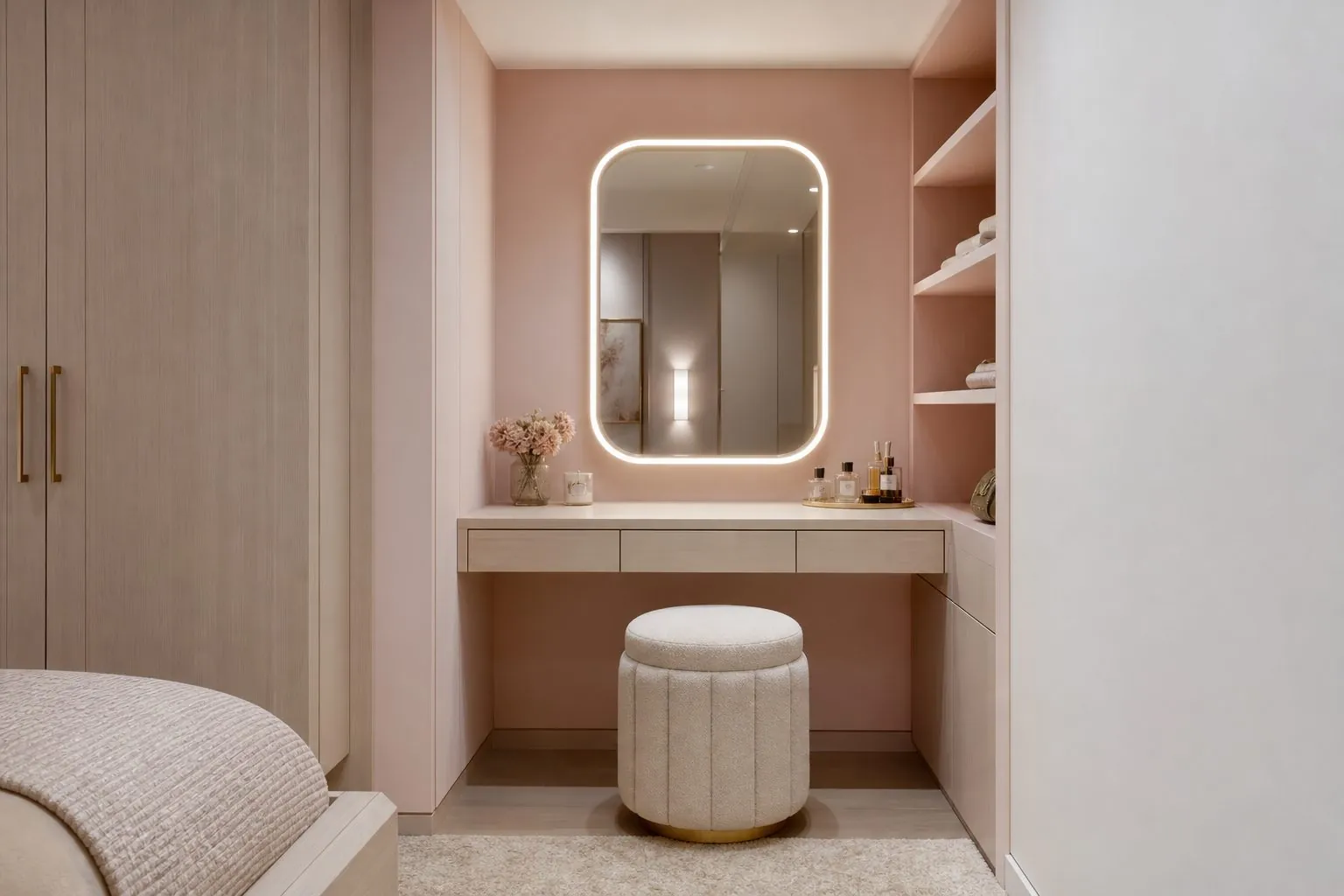
- Top surfaces: perfume, cosmetics and hot hair tools mark soft finishes. Hard-wearing lacquer, laminate or a glass top protects dressing tables.
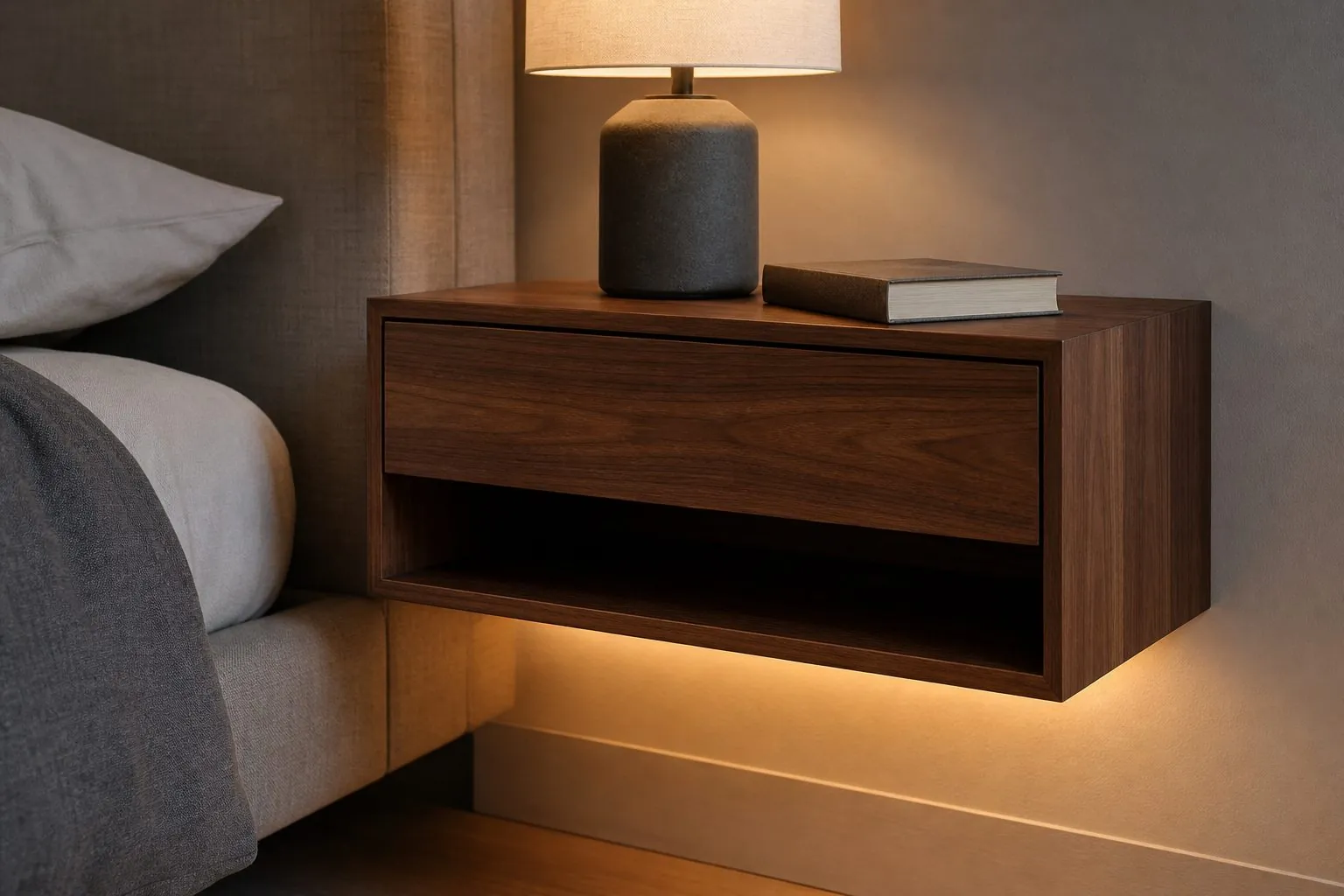
- Floating nightstands: wall-hung units need a concealed bracket rated for the load and a wall that can carry it.
How Do You Keep a Bedroom Set Consistent Across Pieces?
Order the whole set from one finish batch and approve one physical reference sample. When a headboard, dresser, nightstand and wardrobe are made weeks apart or by different workshops, colors and wood grain drift, and the difference shows once the pieces stand side by side.
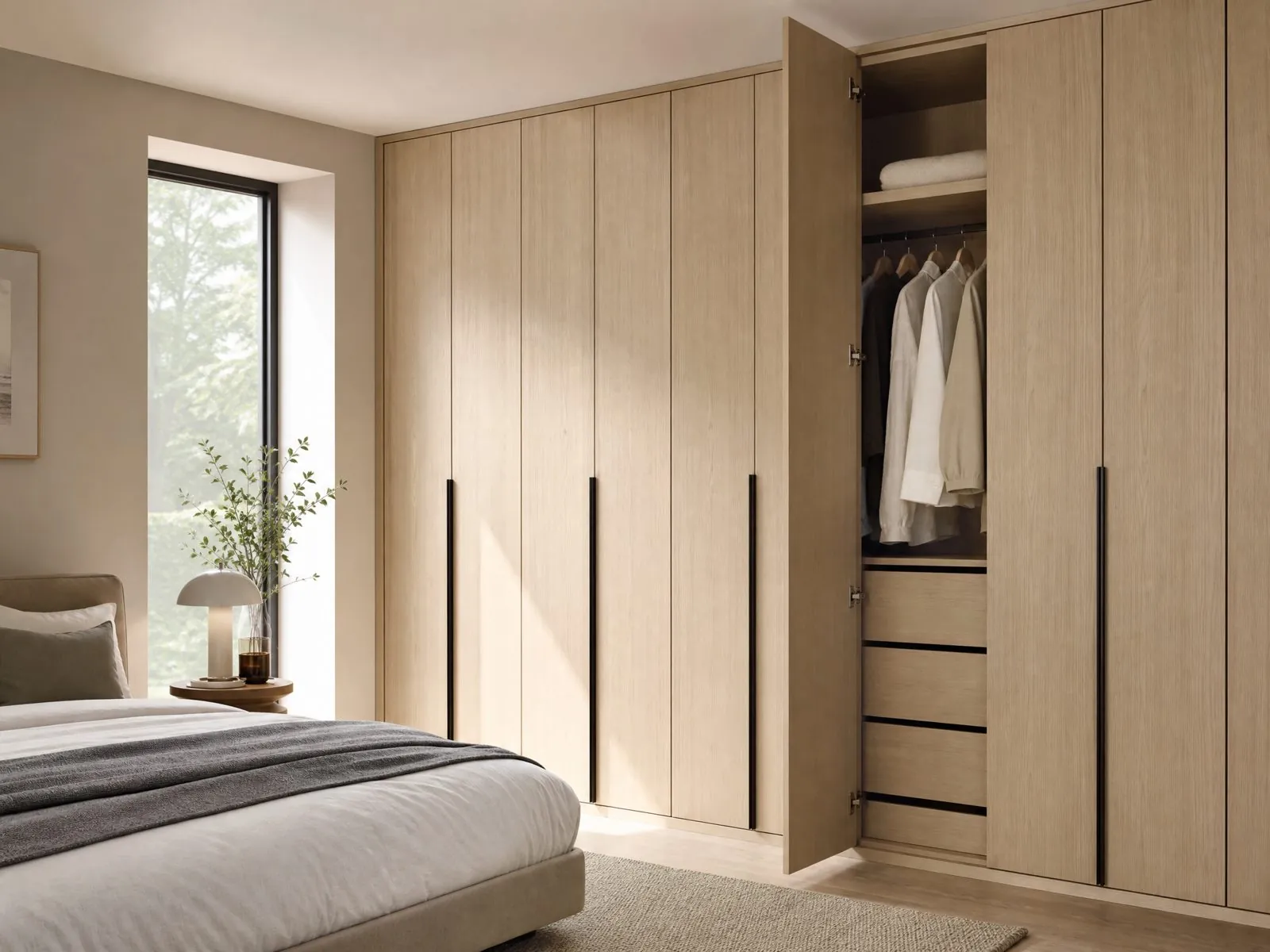
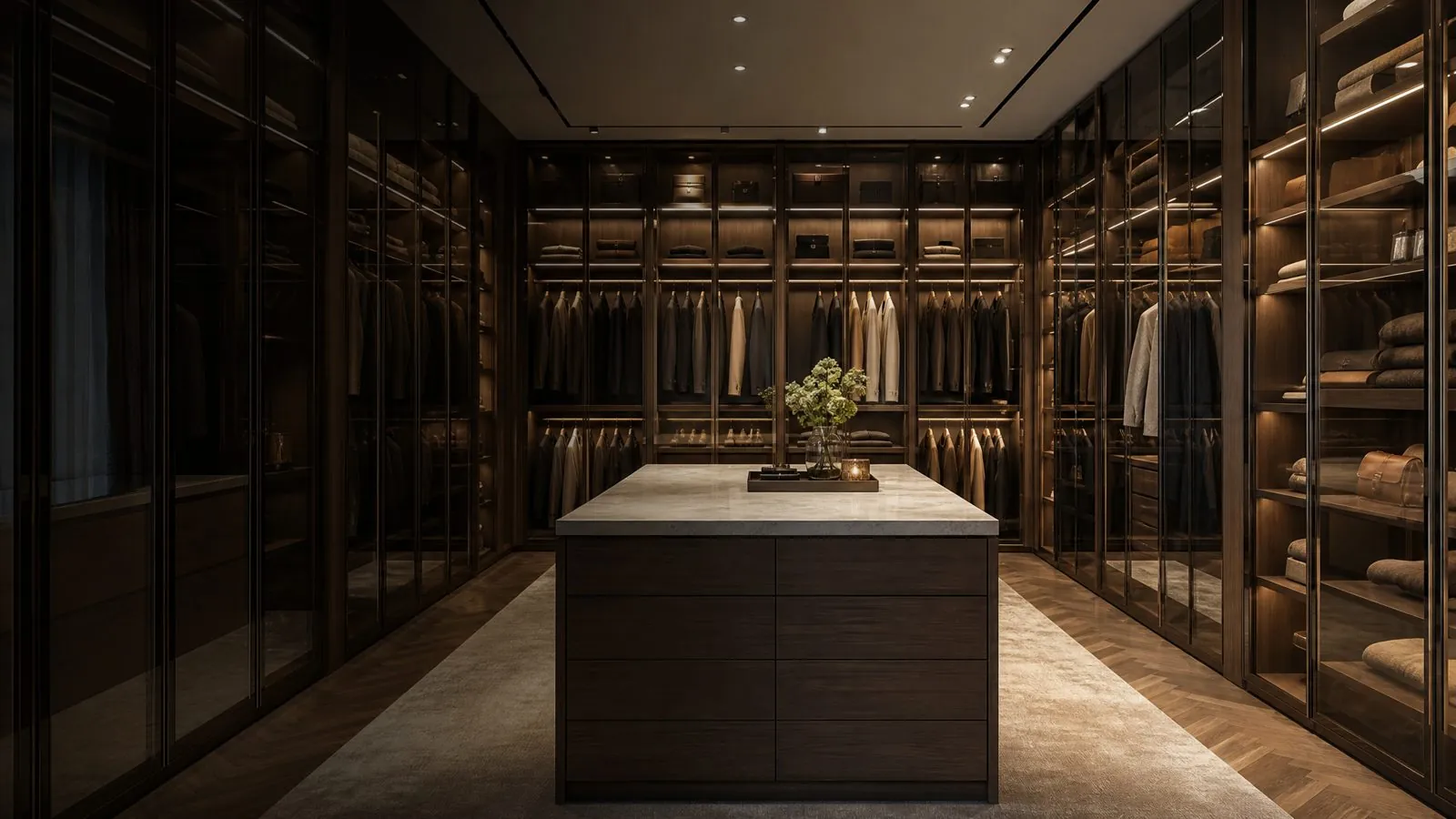
Wood veneer naturally varies between logs, so for master bedroom furniture sets we sequence veneer leaves for adjacent pieces where possible. With solid colors, the risk is gloss level rather than color, so we check sheen as well as shade. If the bedroom must match Built-In Wardrobes or a bedroom TV cabinet, include them in the same order so all pieces share one sample and one inspection.
Which Bedroom Furniture Fits Each Project Type?
The same product group is specified very differently by project. Our typical recommendations:
- Rental and student housing: beds with drawers, simple nightstands and melamine finishes with hard-wearing edges.
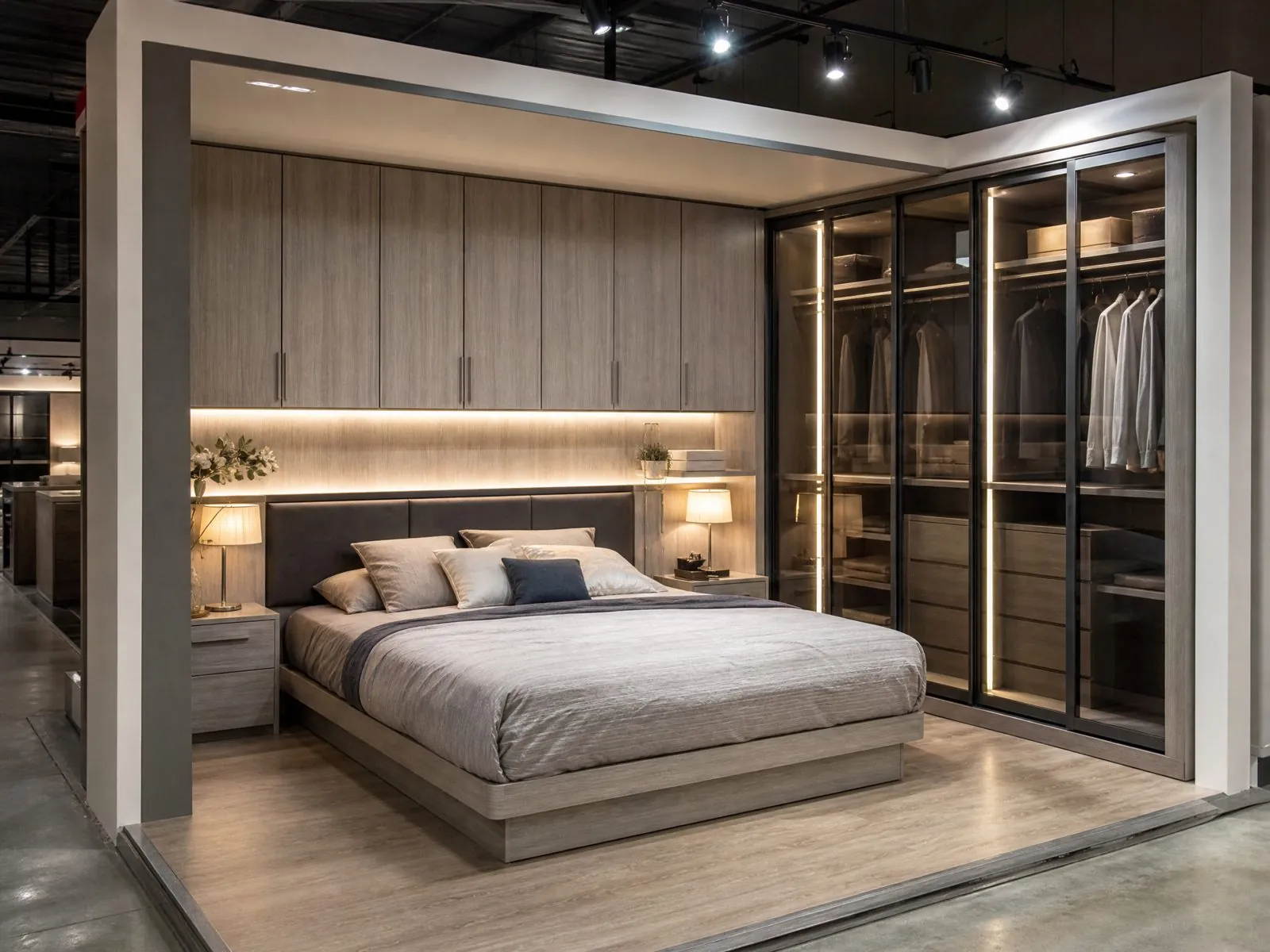
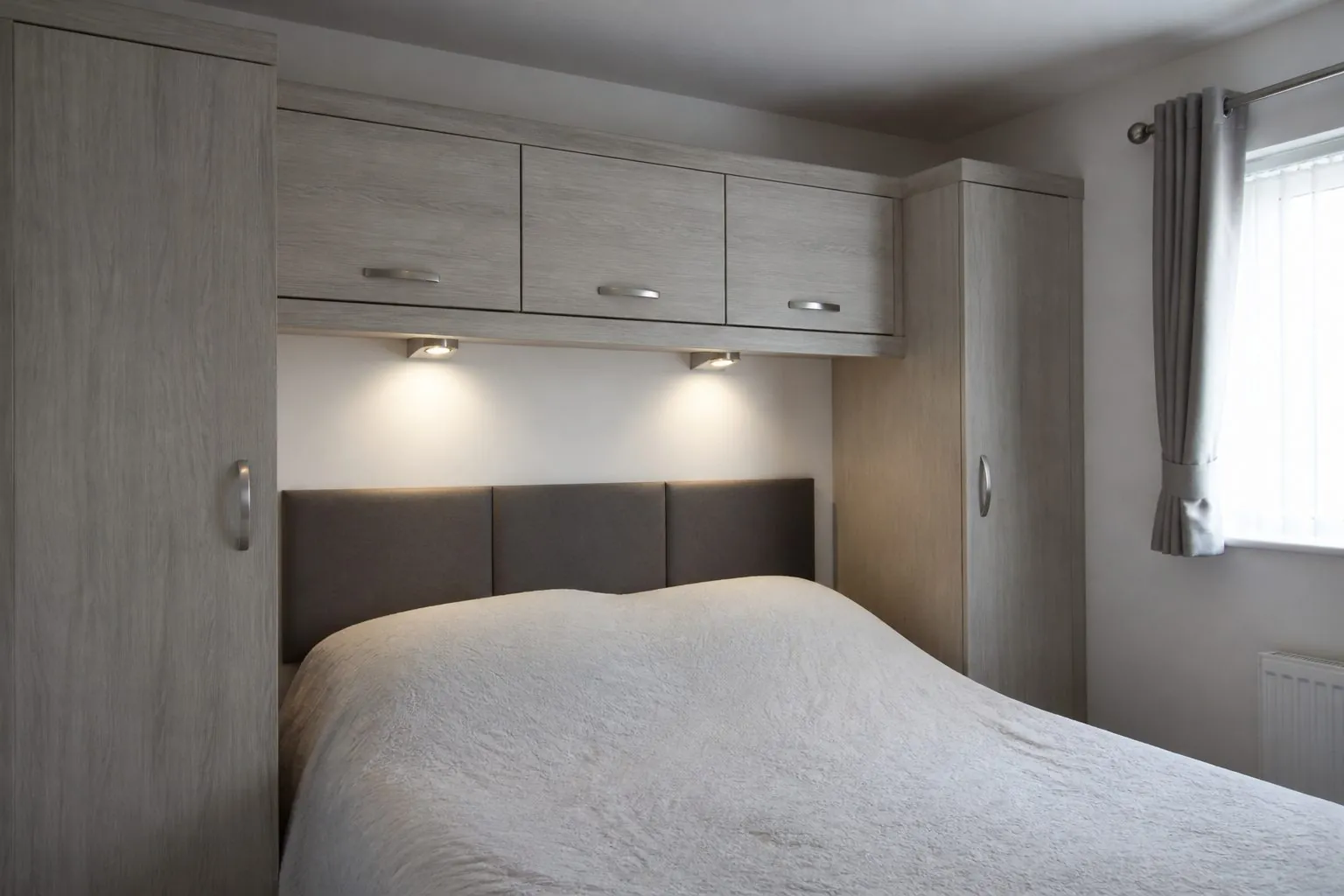
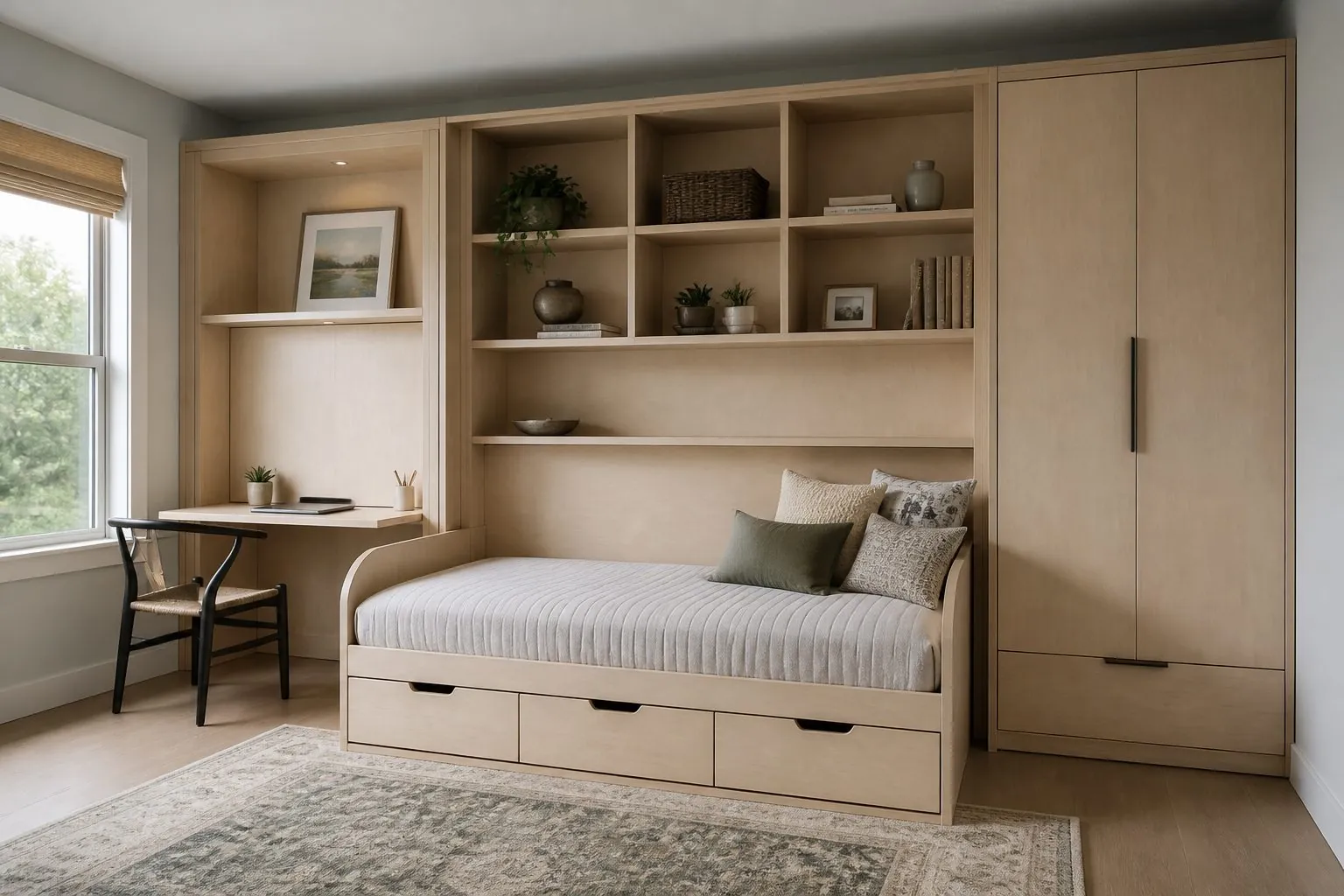
- Micro-apartments and studios: wall beds with side storage, over-bed cabinets and slim floating nightstands.
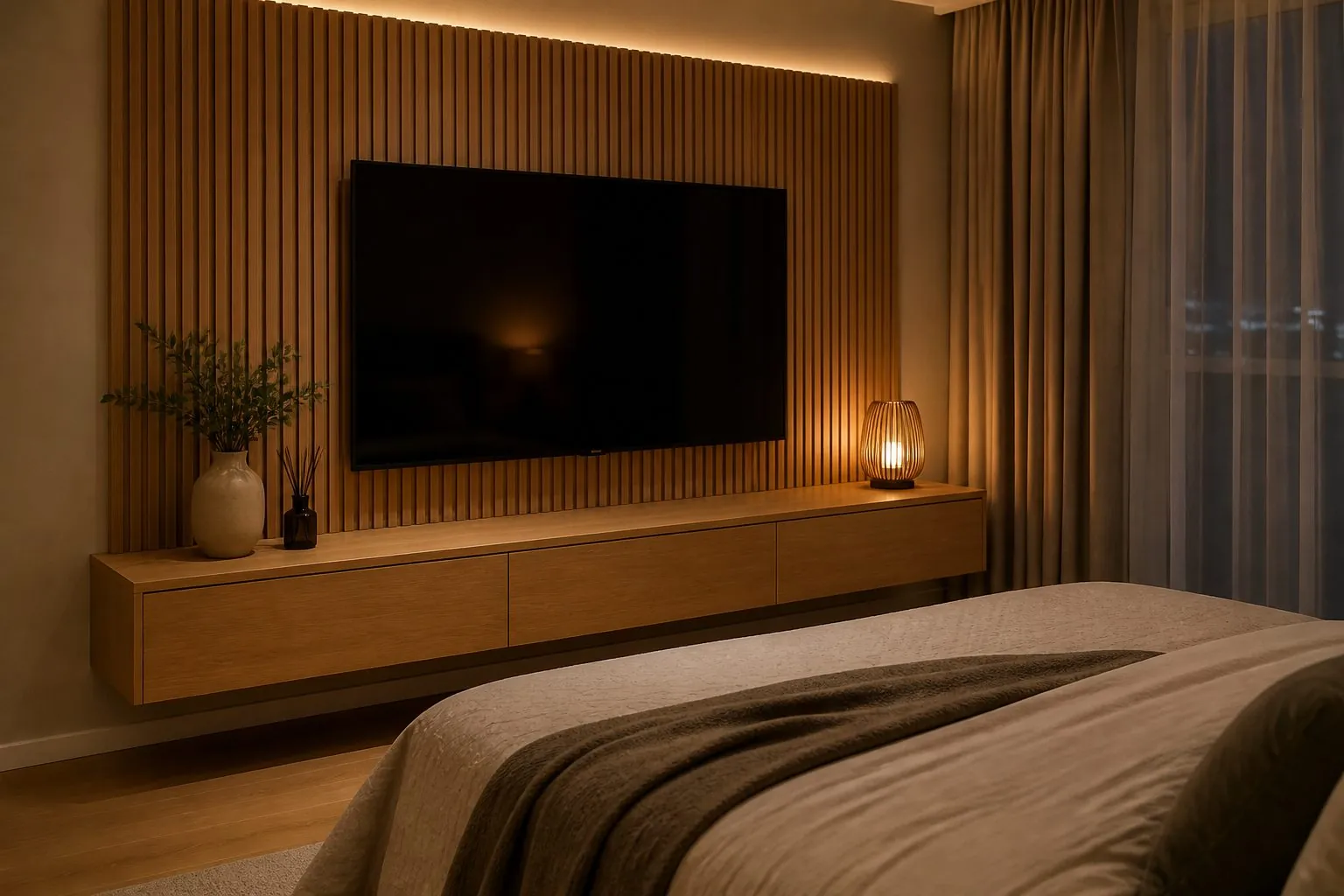
- Hotels: fixed headboard walls with integrated nightstands, bedroom TV cabinets and luggage-friendly dressers.
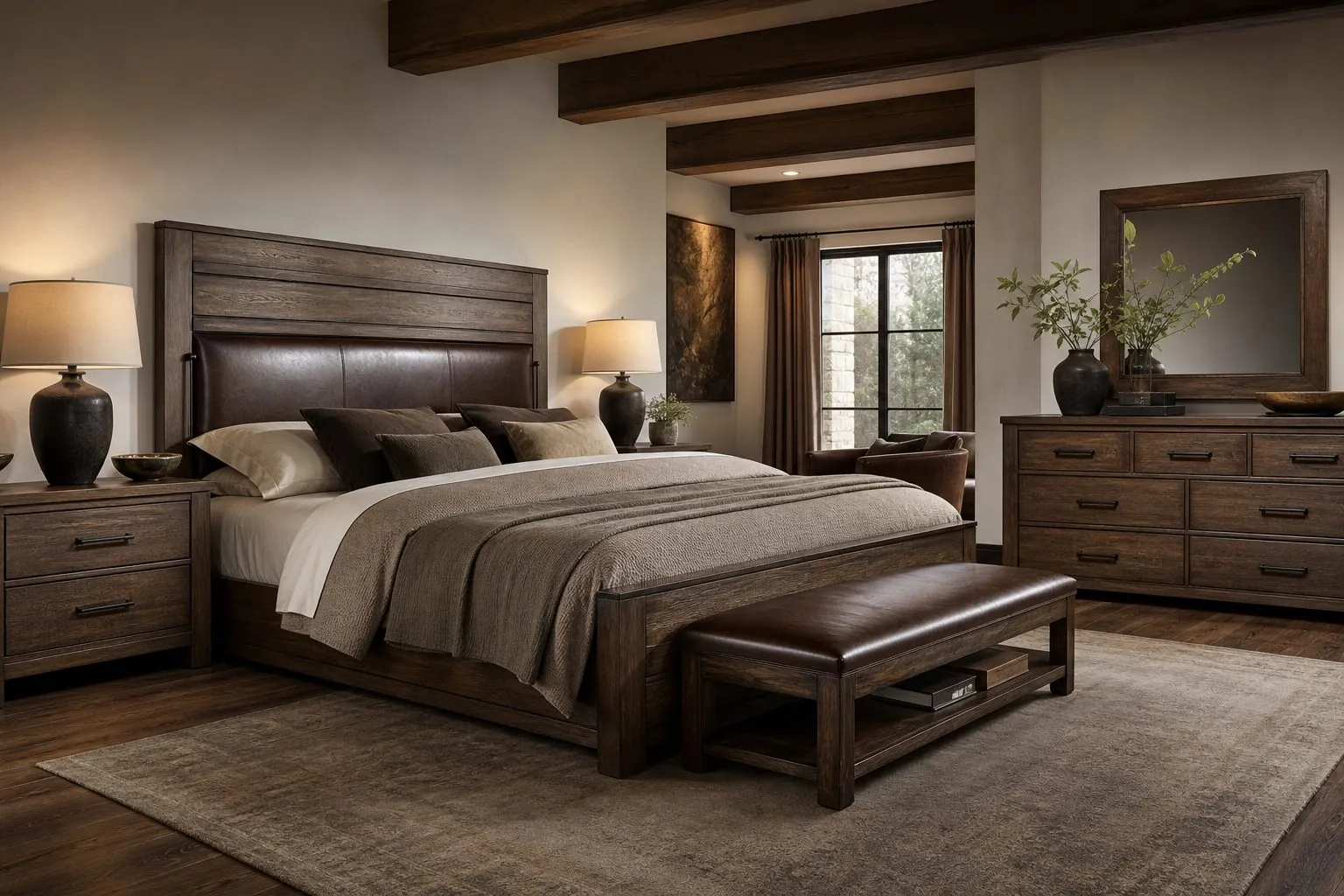
- Villas: master bedroom sets in veneer or lacquer, dressing table vanities and upholstered headboard walls.
- Guest rooms: guest bedroom wall units that combine a bed, a desk and wardrobe space.
How Are Beds and Bedroom Casegoods Packed for Export?
Bed frames and platform modules are usually shipped knocked-down to save container volume, while dressers and nightstands are often shipped assembled so drawers arrive aligned. Wall beds are a special case: the mechanism is pre-set at the factory, and the cabinet and bed frame are packed as a labelled kit with fixing hardware and instructions.
Upholstered headboard panels are wrapped in film and protected on corners to avoid crushing. Each carton is labelled by unit and room, and hardware is bagged per item. For hotel projects, we pack by floor or room range so installation teams can move straight from the loading dock to the rooms.