Which Handleless Opening Method Should a Project Use?
For most multi-unit projects, an integrated J-profile or C-profile aluminium channel is the safest handleless choice, because it needs no electrical work and survives heavy daily use. Push-to-open mechanisms suit tall units and wall cabinets, while routed finger grips in the door edge suit veneer and thick lacquer doors where a metal line is not wanted.
| Opening Method | How It Works | Best Fit | Watch Point |
|---|---|---|---|
| Horizontal C-profile channel | Recessed aluminium rail between drawer fronts and below the worktop | Base runs, drawer stacks | Reduces usable drawer front height; plan the stack early |
| Vertical C-profile channel | Recessed rail on the side of tall units | Tall pantry and appliance columns | Needs a side gap in the carcass layout |
| J-pull profile on door top | Aluminium lip fixed to the door edge | Rental and mid-range kitchens | Profile color must match the finish code |
| Routed finger grip | Angled groove machined into the door edge | Veneer and lacquer doors | Grip edge needs careful sealing and painting |
| Mechanical push-to-open | Spring latch releases the door on pressure | Wall cabinets, tall doors | Fingerprints at the push point; not ideal with soft-close on every door |
| Electric servo drive | Motor opens drawer at a light touch | Premium villa kitchens | Requires power points in the plinth and certified components |
Mixing methods is normal: a channel on base units and push-to-open on wall units is a common combination that keeps the look consistent without overloading the budget.
How Do the Five Finish Routes Compare on Price and Durability?
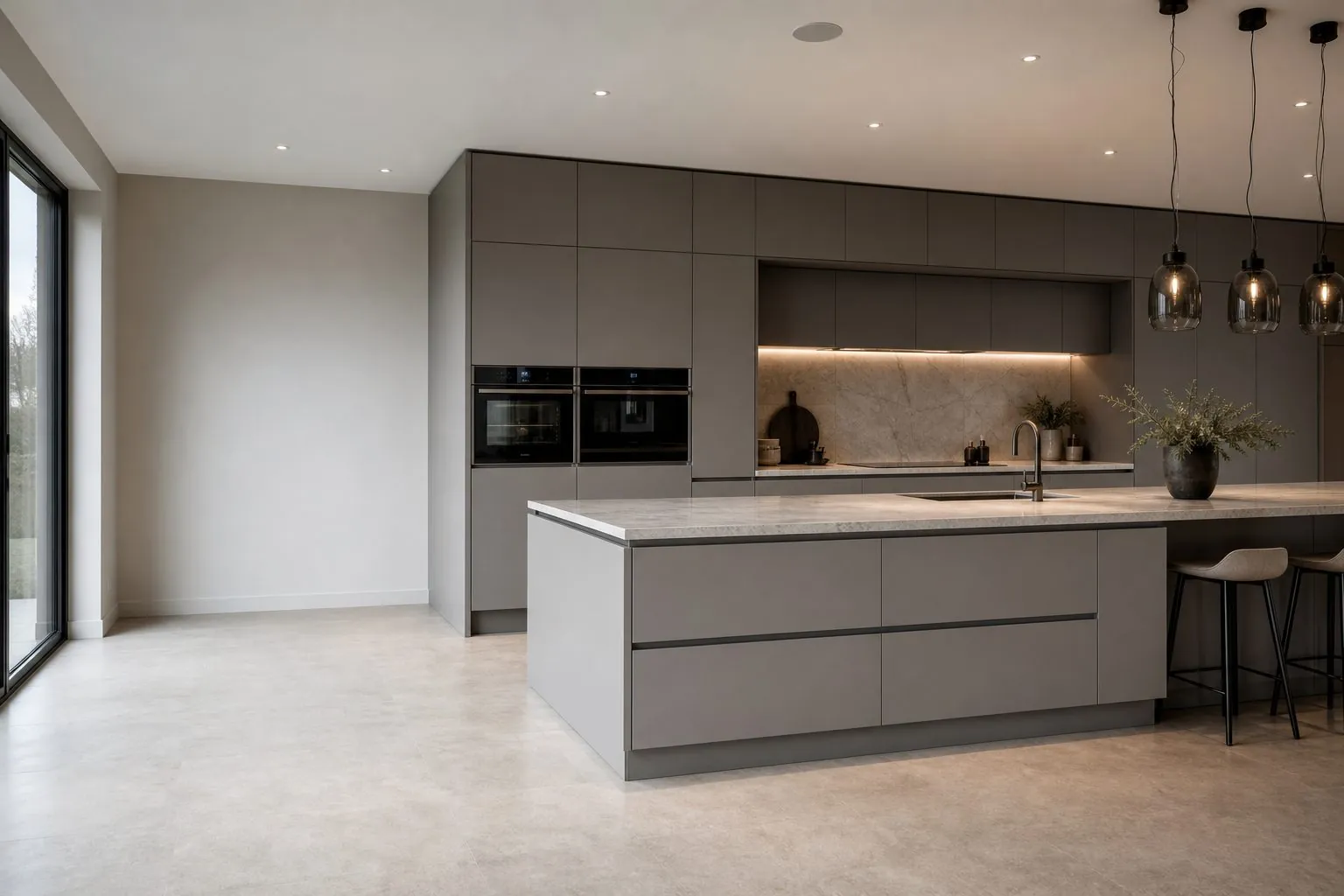
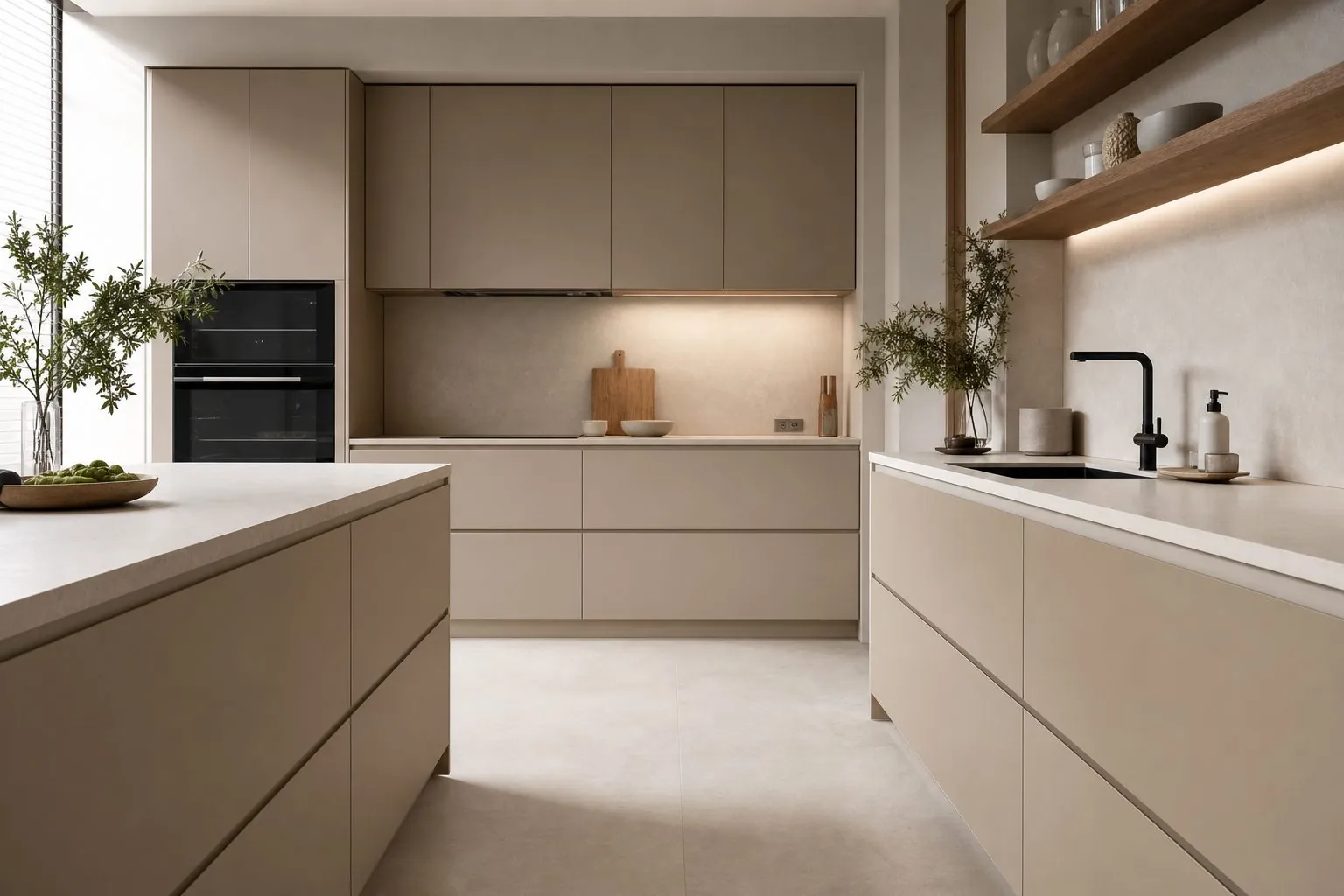
Melamine is the lowest-cost handleless finish and the most forgiving in rentals; high-gloss lacquer is the most expensive to produce and to repair. Our handleless range covers five finish routes, and each changes edge treatment, lead planning and site care.
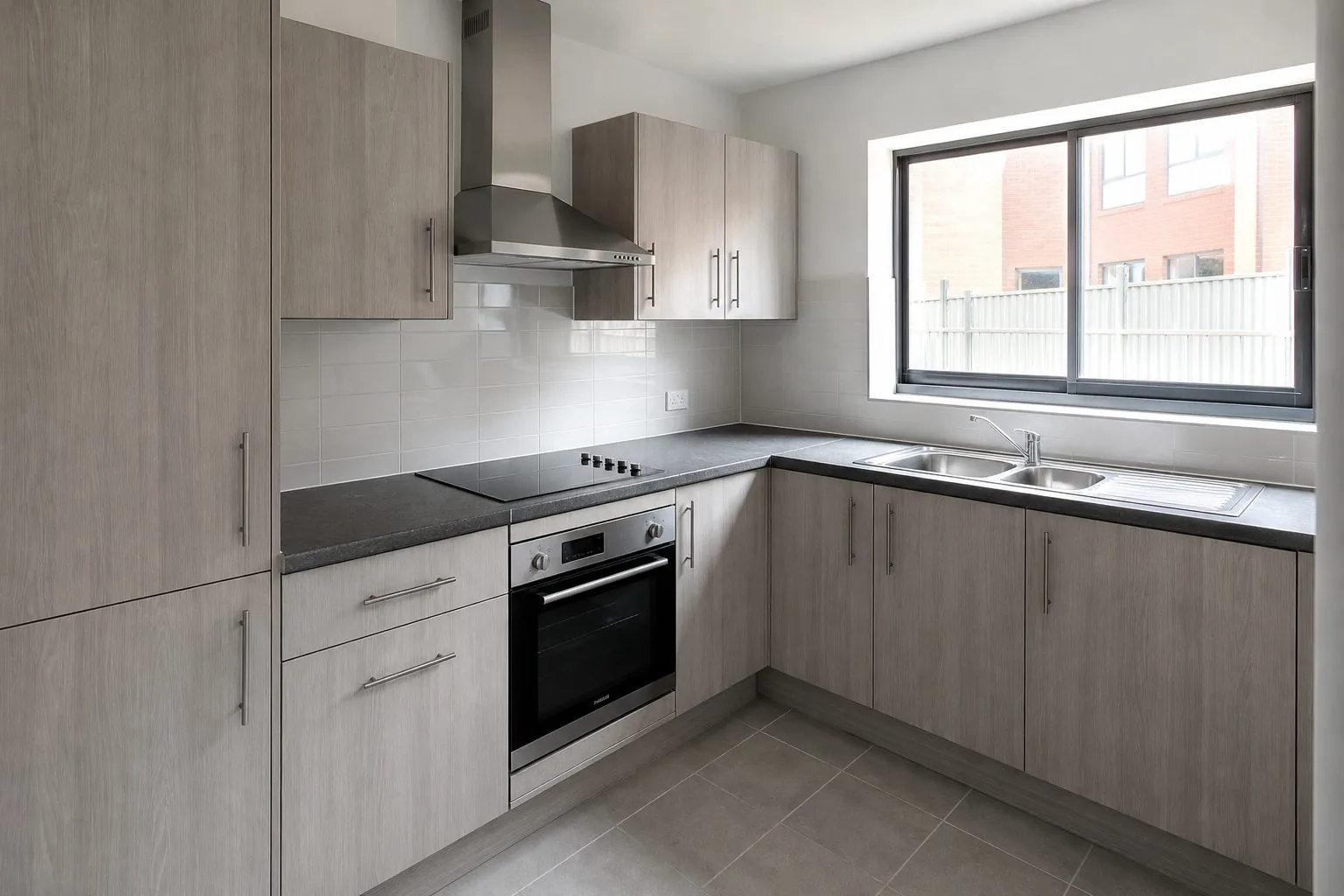
- Melamine Rental Apartment Kitchen: board surface pressed at the board mill, edges banded on our automated lines. Hard-wearing and easy to replace panel by panel.
- PET Super-Matte Kitchen: PET film laminated to MDF, with a soft low-sheen surface that resists most fingerprints. Edges are banded in matching PET or laser-type edge band.
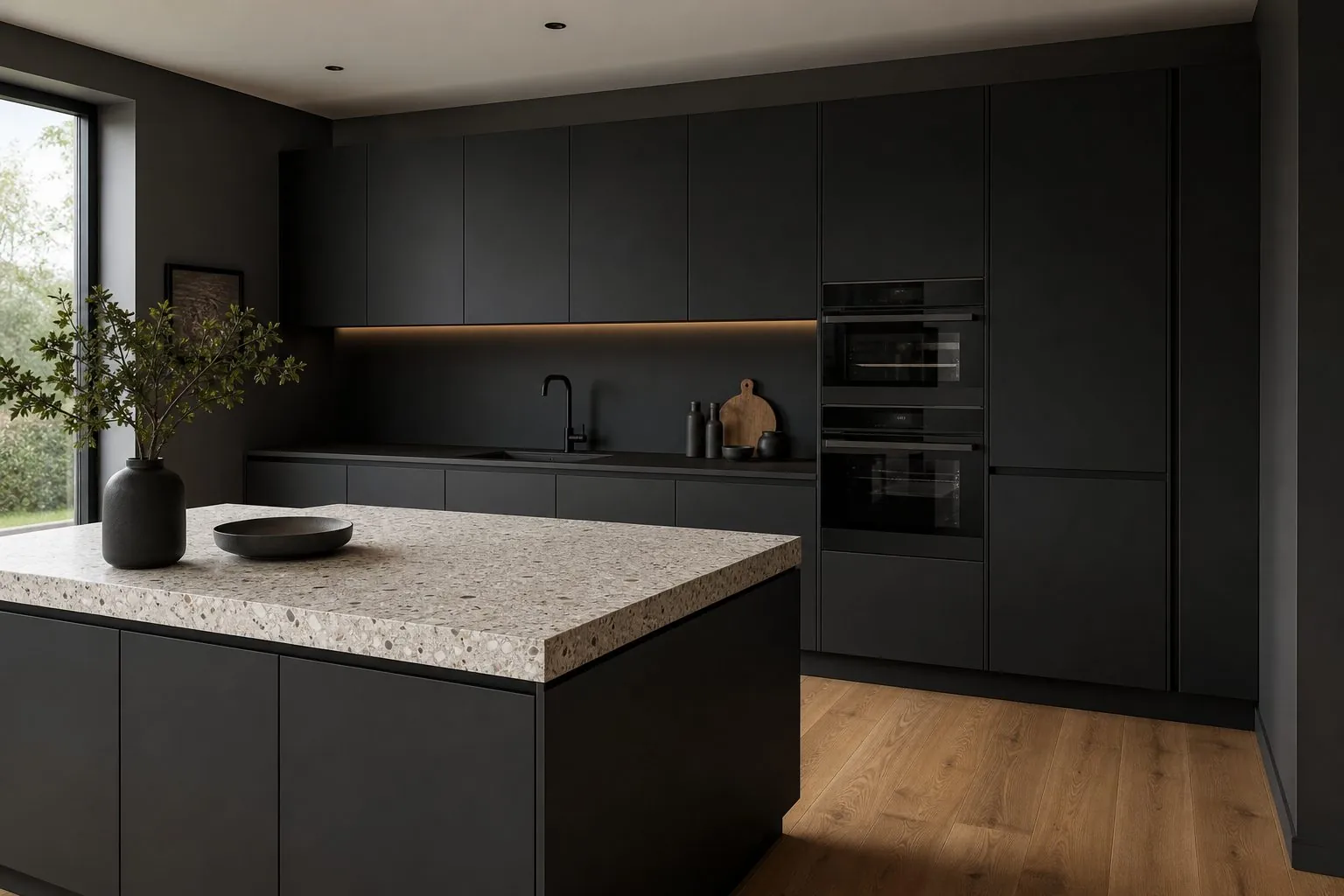
- Matte Black Handleless Kitchen: available in PET, matte lacquer or melamine; black profiles and black carcass interiors are specified so no light edges show.
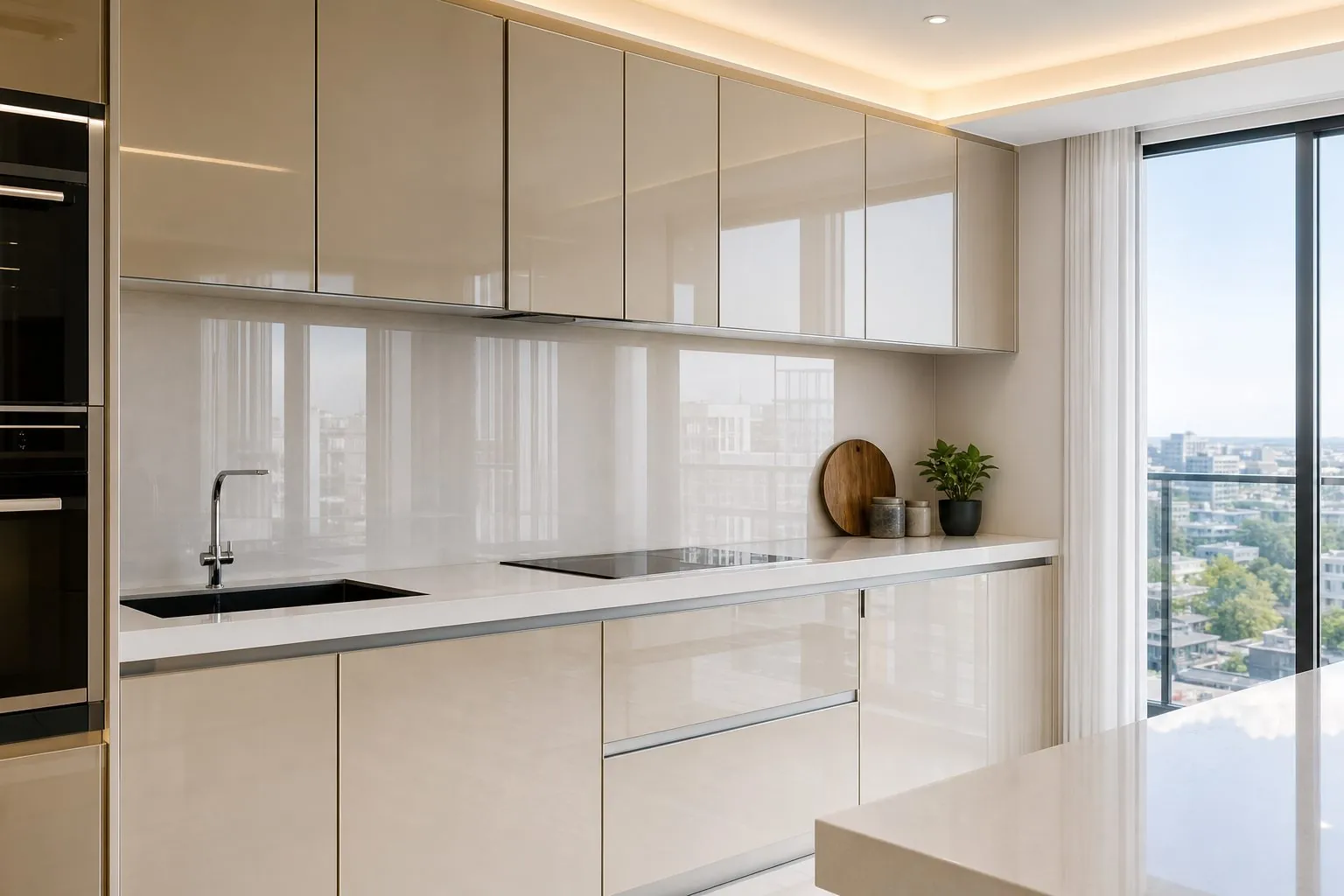
- High-Gloss Lacquer Kitchen: multi-coat sprayed and polished MDF with fully wrapped edges. Strong visual impact, but scratches show and repairs need a spray booth.
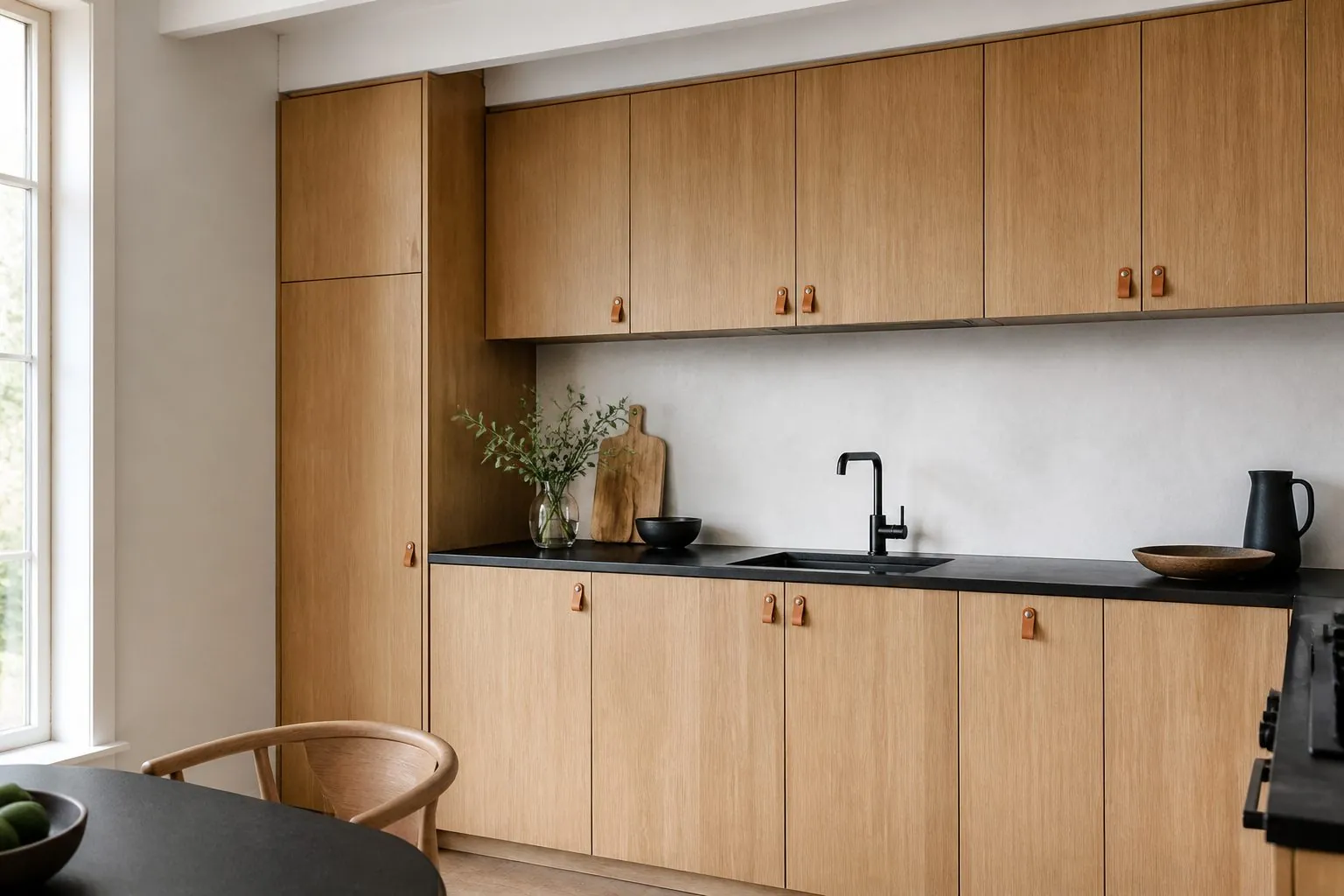
- Oak Veneer Kitchen Cabinets: natural oak veneer with routed grips; grain direction and leaf matching are agreed on the drawing.
Why Does Matte Black Need a Different Specification?
Matte black kitchens fail on details, not on the door face. Any white carcass edge, grey hinge or silver profile becomes visible in a dark kitchen, so the whole set must be specified in black from the start.
- Carcass interior and edge band in black or anthracite, not white.
- Black anodized or powder-coated C-profiles and J-profiles.
- Black hinge cover caps and, where available, black drawer side panels from the chosen hardware brand.
- Plinth and scribe fillers in the same finish code as the doors.
Super-matte black surfaces also show grease marks more than mid-tones. For family homes we usually suggest an easy-to-clean surface finish with anti-fingerprint performance stated by the board or film supplier, and we send a sample panel so buyers can test cleaning before approval.
What Makes High-Gloss Lacquer Kitchens Harder to Ship and Install?
High-gloss lacquer needs more protection at every stage after spraying. A door that leaves the factory perfect can be scratched by grit inside a carton or by an installer's ring, and site repairs rarely match the factory gloss level.
- Each door is protected with film on the face and corner guards before packing.
- Doors are packed separately from carcasses so hardware does not press against the face.
- We recommend installers remove the film only after the worktop and appliances are fitted.
- Spare doors for high-traffic positions, such as the sink base, can be ordered with the main batch.
For rental stock, gloss is rarely the right choice. For show apartments and sales galleries, it remains popular because it reflects light and makes compact kitchens feel larger.
How Is a Handleless Rental Kitchen Engineered for Turnover?
A rental handleless kitchen should be designed so any damaged door, drawer front or profile can be replaced without remaking the cabinet. That means standard module widths, a single finish code per building and documented hardware references.
- Limit door widths to a small set of sizes so spare fronts are interchangeable.
- Use J-profiles that clip or screw onto doors, so a bent profile is replaced in minutes.
- Choose melamine or PET over lacquer for surfaces tenants touch every day.
- Record the board decor code and edge band code on the unit label for future reorders.
What Happens to Drawer Heights and Worktop Lines Without Handles?
Removing handles changes the vertical dimensions of the base run. Each horizontal channel takes part of the cabinet height, so the drawer fronts become shorter than in a handled kitchen of the same total height. This has to be resolved in the shop drawings before carcass drilling.
Typical points to confirm include the worktop thickness, plinth height, channel depth and whether the dishwasher door will have its own grip. Integrated appliances need panels cut to the appliance manufacturer's template, and the grip on the appliance panel must line up with the adjacent drawer channel. We check appliance model numbers against the layout so these lines meet cleanly.
How Should Oak Veneer Handleless Doors Be Ordered?
Order oak veneer handleless doors by elevation, not by single door, so grain flows across the run. Veneer is a natural material, and panels from different leaves vary in color and figure.
- Agree on grain direction: vertical for most doors, horizontal for long drawer runs if specified.
- Ask for sequence matching on feature walls and islands.
- Confirm lacquer sheen level for the veneer topcoat and approve a signed sample.
- Expect slight variation between batches; order the full kitchen in one batch where possible.
What Should Buyers Check on the Mock-Up Before Mass Production?
Use a mock-up kitchen to test the handleless details that drawings cannot show. The main items are grip comfort, gap consistency and how profiles meet at corners.
- Door and drawer gaps are even across the full run after hinge adjustment.
- Channel ends are capped or finished neatly at the end panels.
- Push-to-open doors release reliably and do not open when bumped.
- Finish color matches the approved sample under the site's lighting.
- Drawer fronts can be opened easily by users with wet or full hands.
How Can Arcova Help With Handleless Kitchen Projects?
Arcova prepares shop drawings that coordinate profiles, appliances and drawer heights, then produces carcasses on automated CNC cutting, edge banding and drilling lines in a 40,000 m² factory. We offer Blum, Hettich, Häfele, Salice, DTC and Hutlon hardware and EGGER, Kronospan and DARE boards, with finish sample approval and mock-ups before mass production. See our wider kitchen cabinets range or send your drawings.