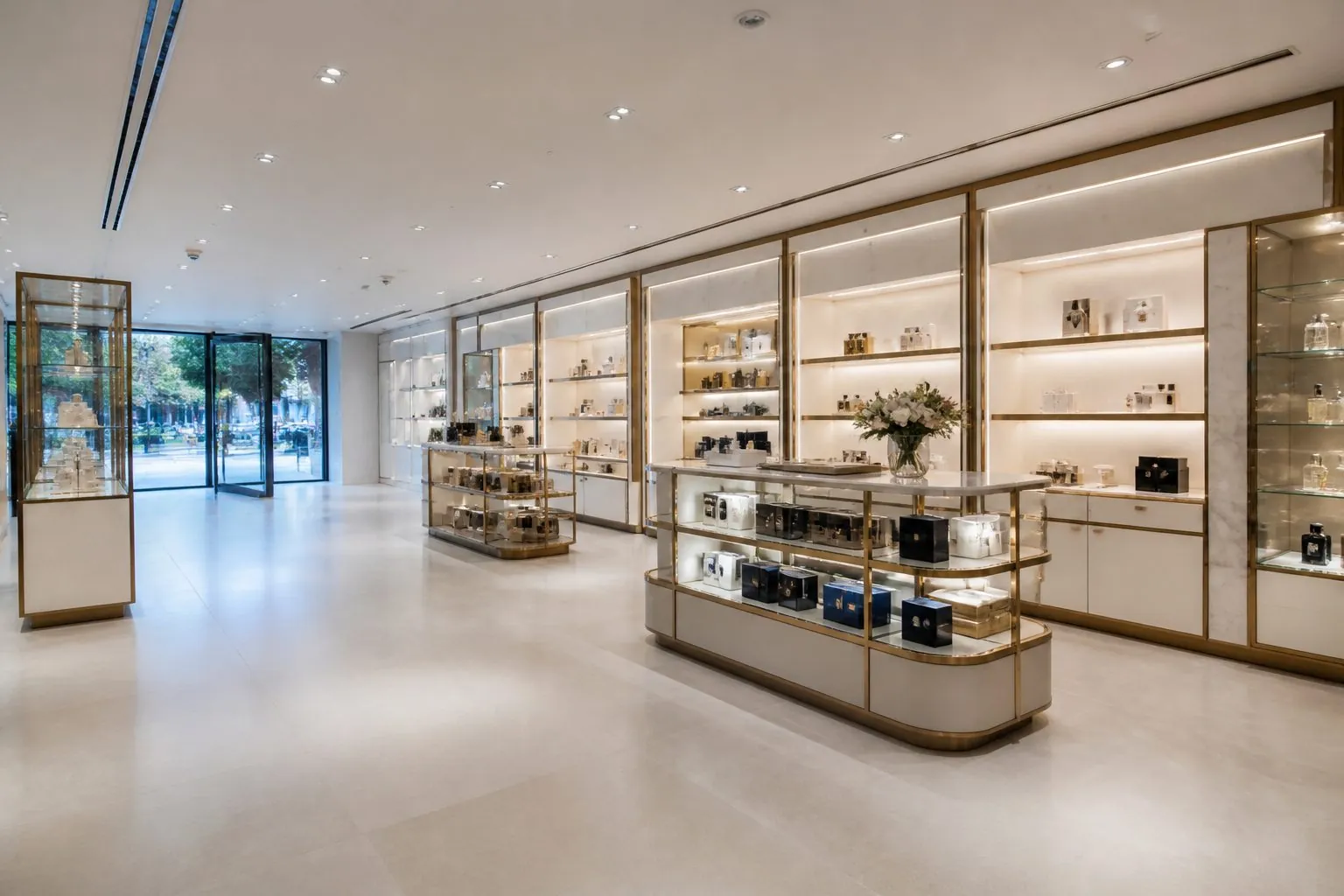
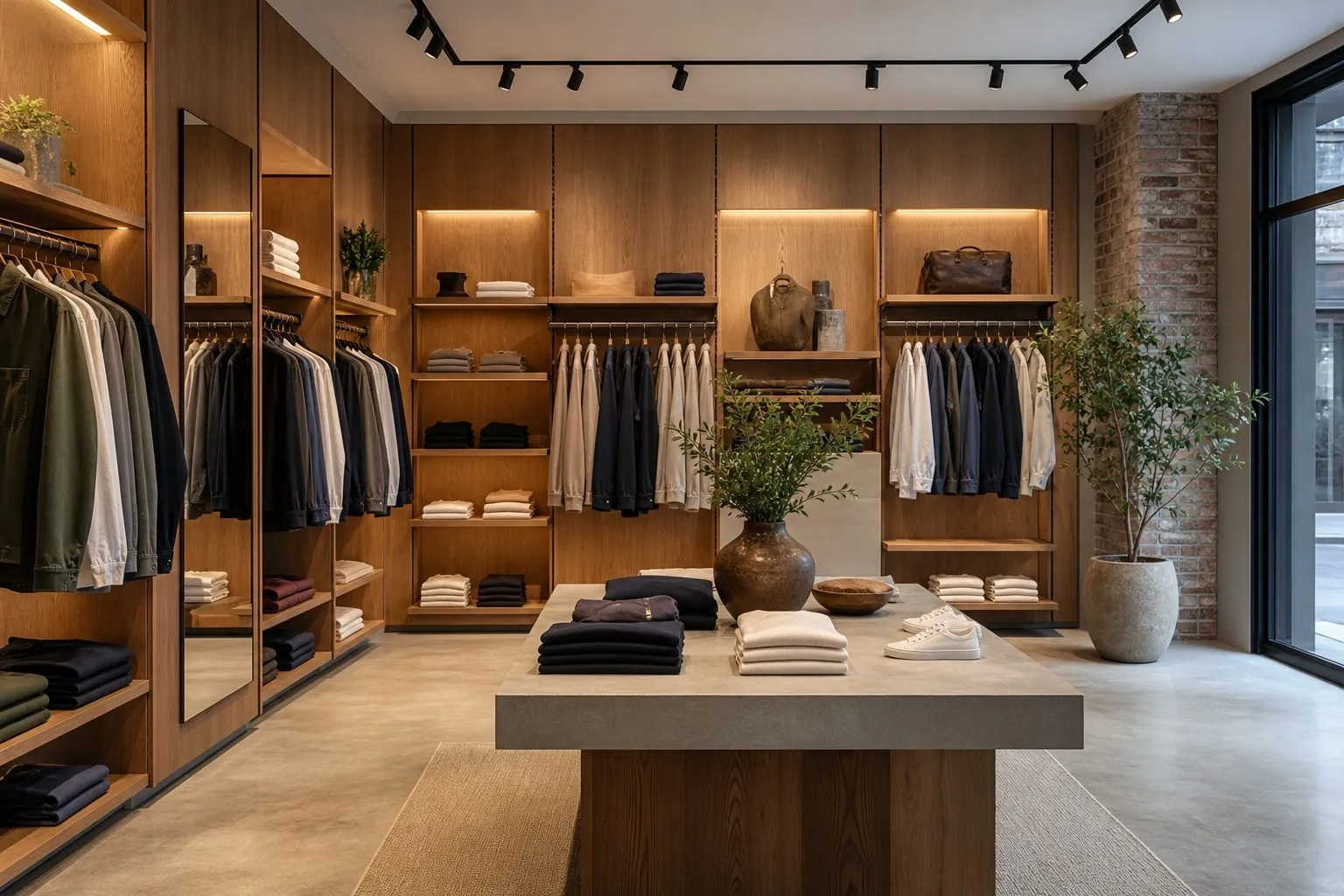
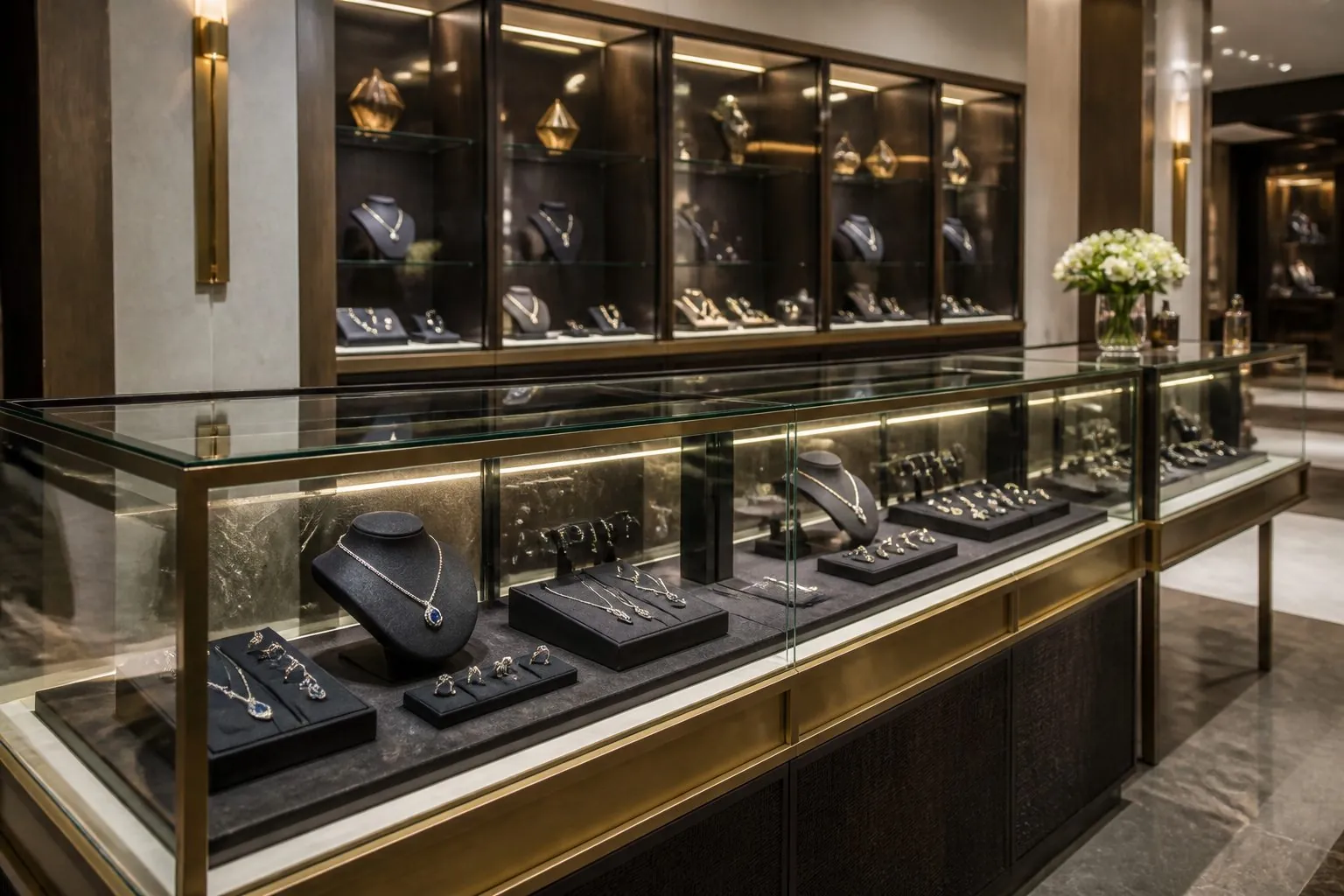
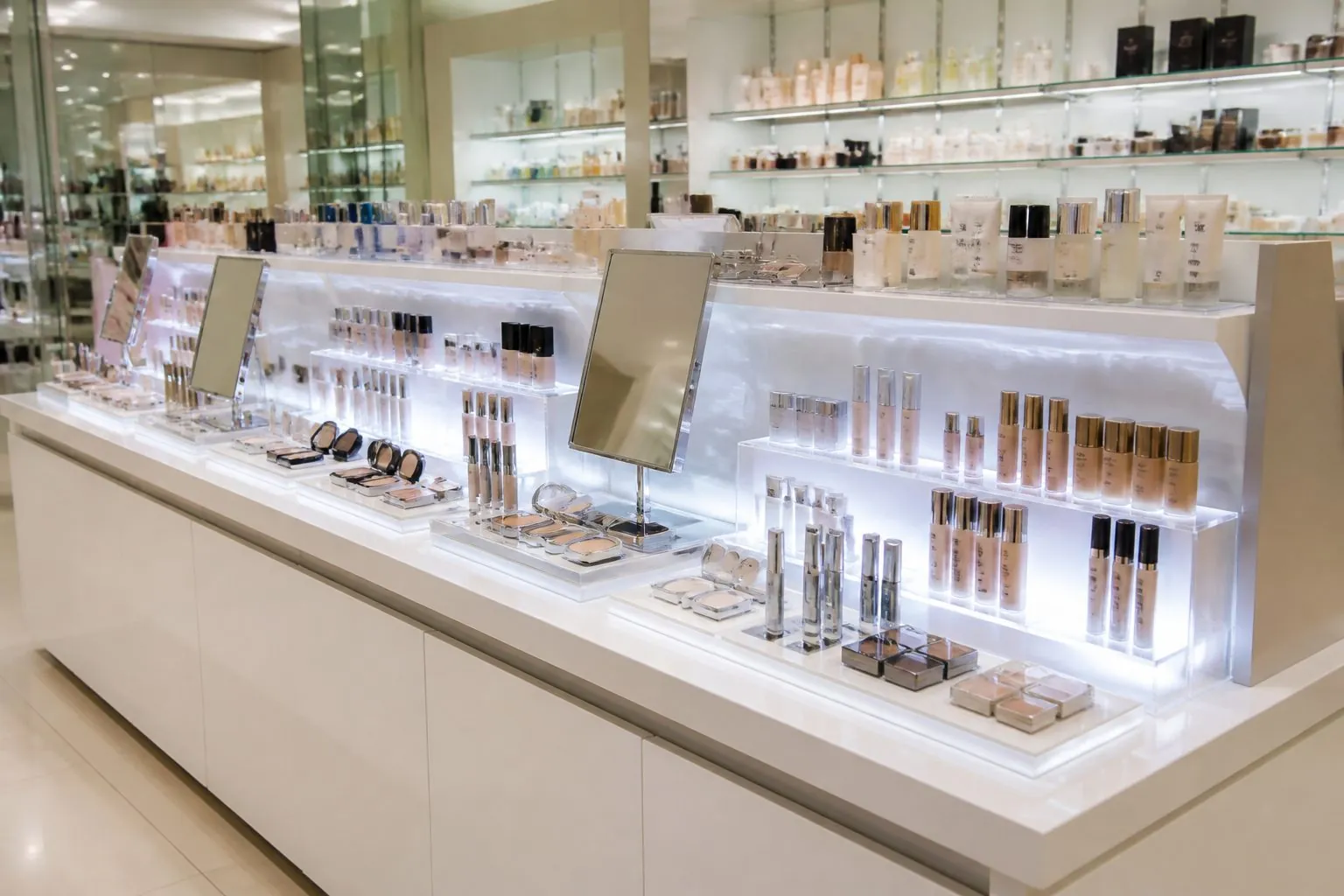
Which Retail Display Cabinet Type Does Each Store Format Need?
Match the cabinet to the product's value and how customers handle it. Low-value, try-on products such as clothing and shoes go on open display walls; high-value, small products such as jewelry and eyewear go in locked glass showcases; regulated or fragile products such as medicines and wine need dedicated shelving with controlled access or load-rated racks.
| Model | Display Mode | Security Level | Key Specification |
|---|---|---|---|
| Clothing Store Display Wall | Open, slatwall or rail system | Low | Adjustable hanging and shelf positions |
| Shoe Store Display Wall | Open shelves, often lit | Low | Shelf angle and pitch for single shoes |
| Jewelry Display Showcase | Glass case, internal lighting | High | Locks, glass type, light color |
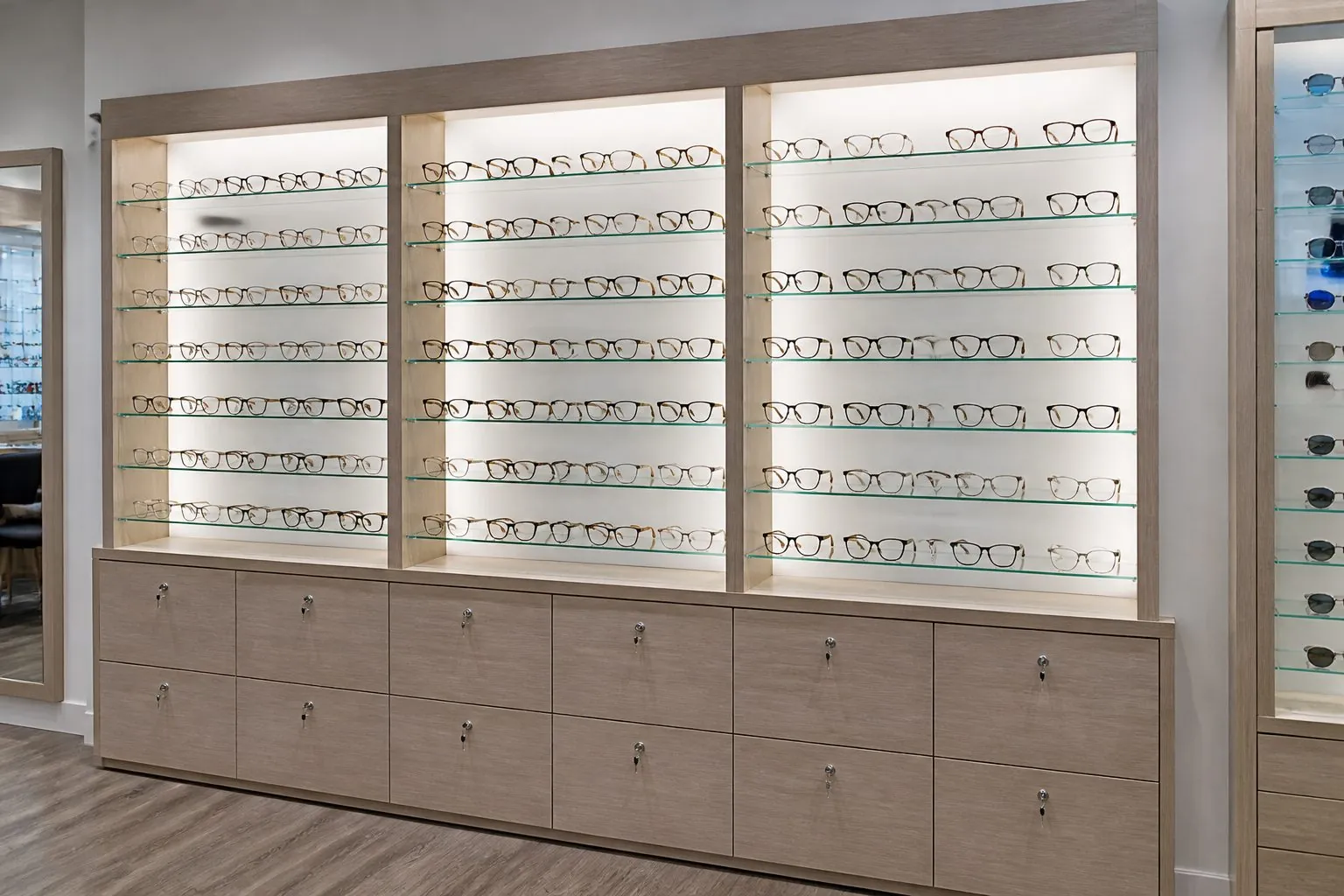
| Eyewear Display Cabinet | Wall frames rack plus locked base | Medium to high | Frame rods or ledges, mirror position |
| Cosmetic Display Counter | Tester top with storage below | Medium | Easy-to-clean top, tester trays |
| Pharmacy Shelving Cabinet | Front-of-house shelves plus dispensary storage | Medium to high | Drawer systems, locking sections |
| Wine Shop Display Rack | Bottle racks and feature shelves | Low to medium | Load rating, bottle angle |
| Retail Cash Counter | Service point | High for cash area | Equipment cut-outs, cable routes |
How Should a Jewelry Display Showcase Be Specified?
Specify a jewelry showcase by glass, locks and lighting before finish, because these three decide both security and how the pieces sell. A beautiful case with a weak lock or cold light is a poor investment.
- Glass: tempered or laminated glass per market rules; low-iron glass shows stones without a green tint.
- Locks: keyed or electronic locks on sliding rear doors, keyed alike or individually per case.
- Lighting: LED spot or strip lighting inside the case, with color temperature chosen for gold, silver or diamonds.
- Base: lockable drawers below for stock and display trays.
- Interior: fabric or leather-wrapped display boards that can be replaced as collections change.
Security ratings for glass and locks are confirmed per project; tell us your insurer's requirements before design.
What Makes a Cosmetic Display Counter Practical for Daily Use?
A cosmetic counter is a working surface, not only a display. Testers spill, cotton pads collect and staff clean the top many times a day, so durability and cleaning come first.
- Easy-to-clean surface finishes on the top, such as solid surface, stone or high-pressure laminate.
- Removable tester trays that lift out for washing.
- Back-lit brand panel with access to the LED driver for maintenance.
- Closed stock drawers on the staff side with full-extension runners.
- A mirror and a power point for consultation or testing tools.
Brand counters often follow a brand-owner design manual. Send it with the drawings so dimensions, logo positions and colors follow the guideline.
How Are Clothing and Shoe Store Display Walls Made Flexible?
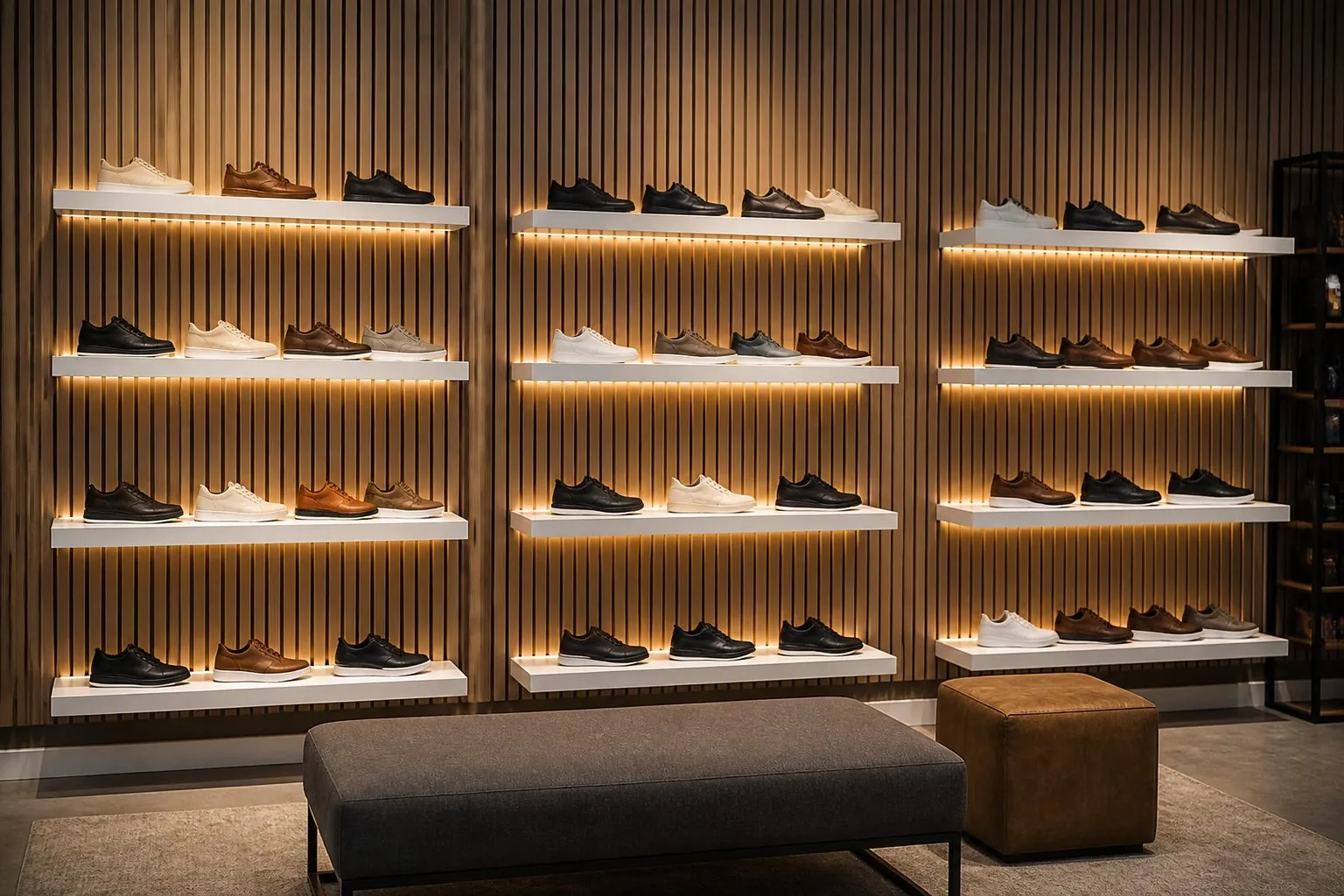
Build display walls on an adjustable system so merchandise layouts can change every season without new joinery. The wall structure stays fixed; rails, shelves and hooks move.
- Choose a system: slatwall panels, recessed aluminium channels or wall uprights with brackets.
- Specify accessories: hanging rails, face-out arms, angled shoe shelves, folded-garment shelves.
- Integrate lighting into the wall bays rather than relying only on ceiling spots.
- Add mirror panels and storage drawers at the base for stock.
Shoe walls usually use angled or lipped shelves for single display shoes, with backlit or edge-lit shelves in premium stores. Accessory load ratings depend on the system brand and are confirmed per project.
How Should an Eyewear Display Cabinet Be Laid Out?
Eyewear cabinets combine a high-density frame wall with a secure base. The aim is to show many frames at eye level while keeping premium frames locked.
- Frame rods, ledges or acrylic holders at viewing height for try-on frames.
- Locked glass sections for premium or sunglasses ranges.
- Drawers with dividers below for stock and cases.
- Mirrors placed beside, not behind, the frame wall so customers can try frames without moving.
- Even lighting with good color rendering so lens tints read correctly.
What Does a Pharmacy Shelving Cabinet System Include?
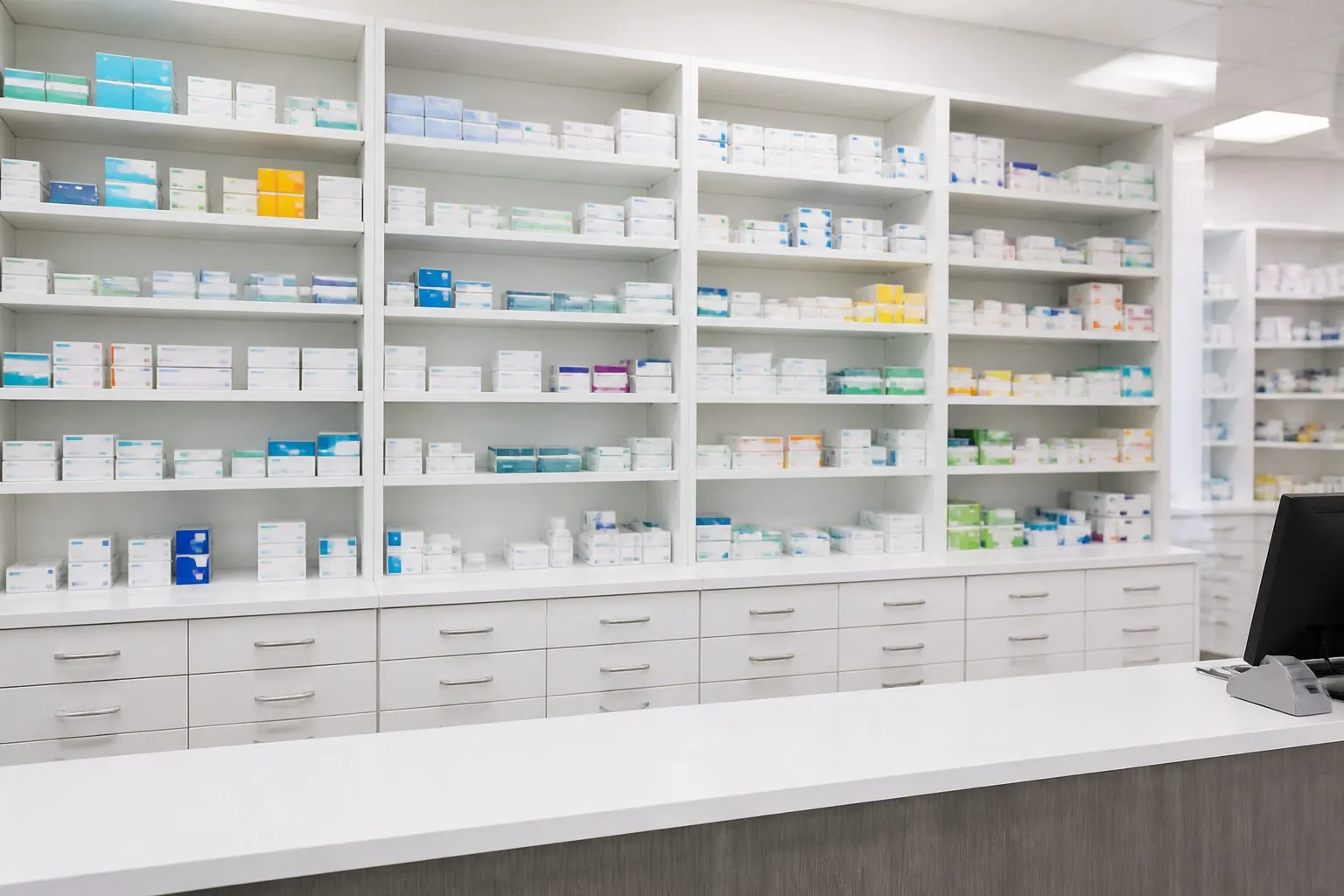
A pharmacy fit-out is two systems: open retail shelving at the front and controlled storage in the dispensary. Plan them separately, because loads, access and regulations differ.
- Front shelving with price-strip edges and adjustable shelf heights.
- Dispensary drawer systems with dividers and labelling for fast picking.
- Lockable sections for controlled items, with lock types per local rules.
- Counter with a consultation area and space for screens and printers.
Pharmacy regulations vary widely by country; local compliance requirements are confirmed at quotation with the operator.
How Are Wine Shop Display Racks Engineered for Load?
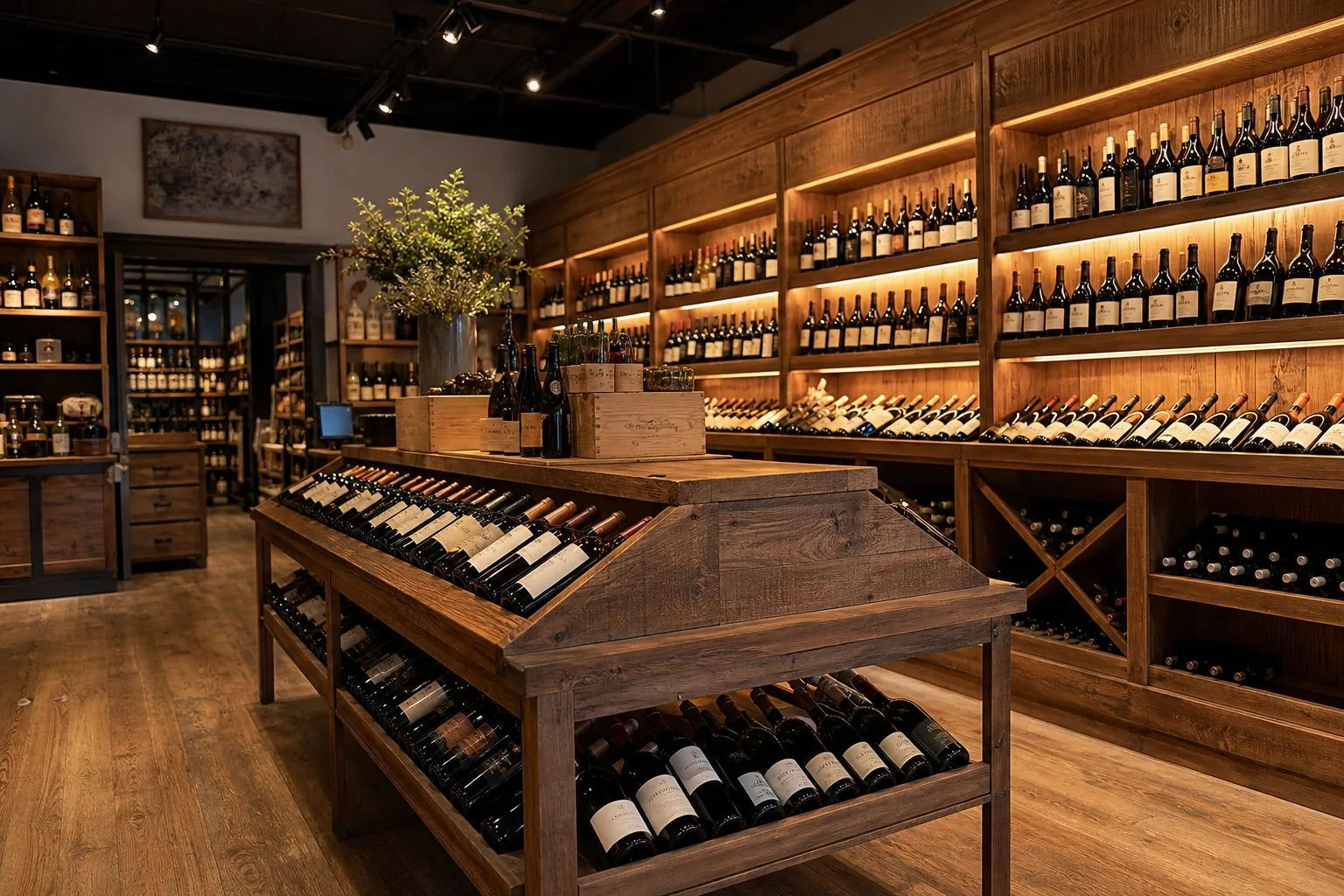
Wine racks carry heavy, concentrated loads, so structure and wall fixing matter more than on any other retail cabinet. A full wall of bottles weighs far more than a clothing wall of the same size.
| Feature | Purpose |
|---|---|
| Short shelf spans and solid uprights | Limit sag under bottle weight |
| Bottle cradles or angled slots | Keep corks moist and labels visible |
| Feature shelves for face-out bottles | Promote selected wines |
| Wall anchoring at the top rail | Prevent tipping when loaded unevenly |
| Closed base cabinets | Stock storage and tasting accessories |
What Must a Retail Cash Counter Accommodate?
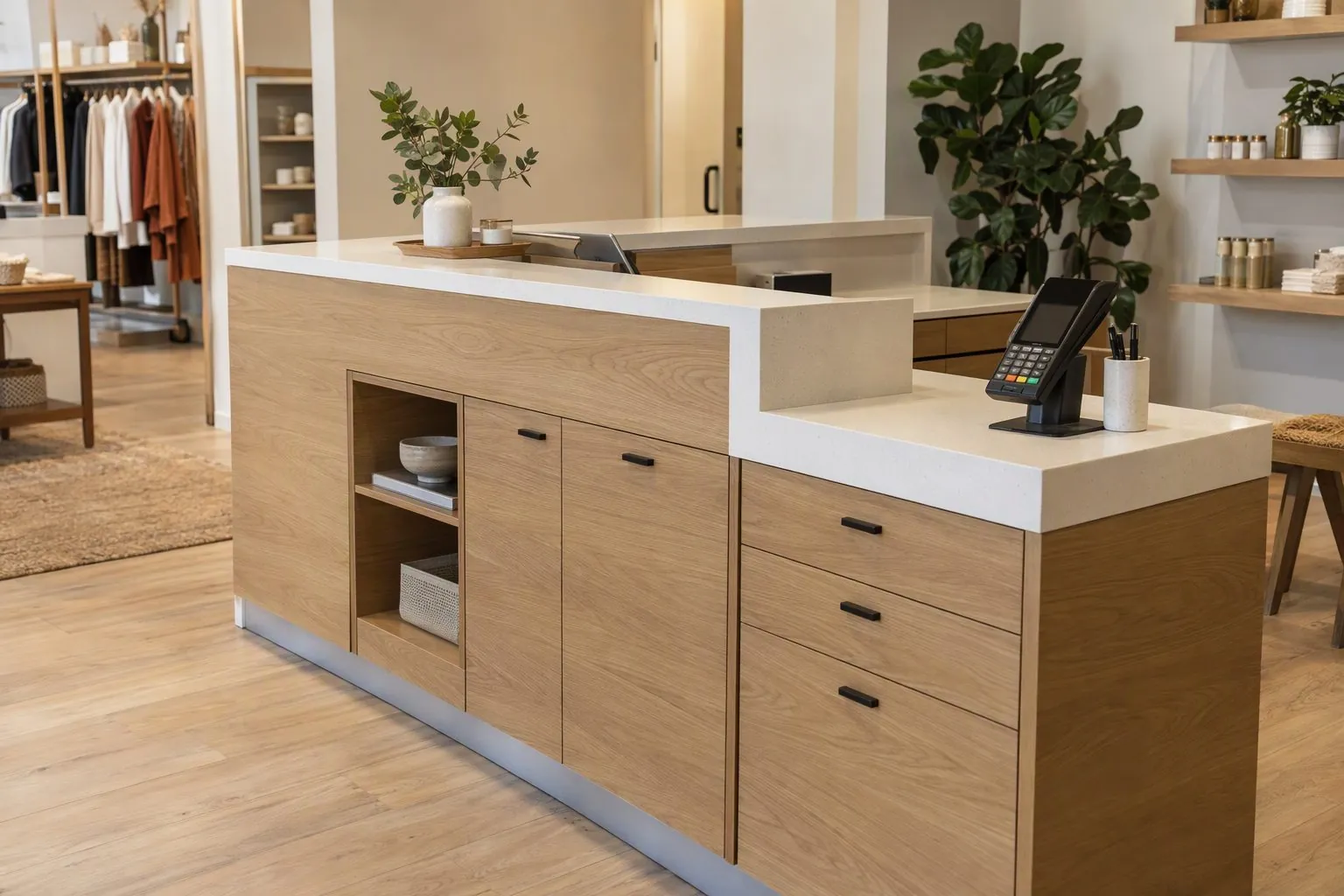
Design the cash counter around the equipment list. POS terminals, receipt printers, cash drawers, card readers, scanners and bag storage all need defined positions, cut-outs and power.
- Cash drawer housing sized to the drawer model, with lock access.
- Cable routes and grommets to every device position.
- A lower customer-facing section where accessibility rules apply.
- Durable top edges and a kick plinth that resists shoe marks.
- Bag and wrapping storage within reach of the cashier.
How Should Chain Store Rollouts Be Managed?
For multi-store rollouts, standardize cabinet modules and record every finish code, lighting specification and accessory reference. This lets new stores and replacement parts match the first store.
A practical sequence is: prototype store or mock-up bay, signed finish and lighting samples, module library on shop drawings, then batch production labelled by store and zone. Inspection photo reports per store help remote teams confirm each shipment before installation.
How Can Arcova Help With Retail Display Cabinet Projects?
Arcova produces retail display cabinets from shop drawings in a 40,000 m² factory with automated CNC and edge banding lines, supporting brand fit-outs, chain rollouts and single stores. We offer finish sample approval, mock-ups, inspection with photo reports and export packing labelled by store. See our commercial display cabinets or send your store layout.