Five-Piece or Machined One-Piece Shaker Doors: Which Should a Project Specify?
For painted Shaker fronts in projects, a five-piece door (separate rails, stiles and a center panel) gives the most authentic look, while a one-piece MDF door with a CNC-machined recess gives the most stable paint finish. The right choice depends on finish, climate and budget rather than appearance alone.
| Door Build | How It Is Made | Strength | Watch Point |
|---|---|---|---|
| Five-piece MDF frame and panel | Rails and stiles joined around a flat panel | True frame-and-panel shadow lines | Joint lines can show through paint as seasons change |
| One-piece machined MDF | Recess routed into a single MDF board | No joints, very even painted surface | Inside corners are slightly rounded by the router |
| Solid wood frame with veneered panel | Hardwood rails and stiles, veneer center | Natural grain, strong edges for stained looks | Wood movement; best with stain or clear lacquer |
| Thermofoil or PET-wrapped Shaker | Film pressed over a routed MDF door | Lower cost, easy to clean | Limited colors; heat near ovens must be managed |
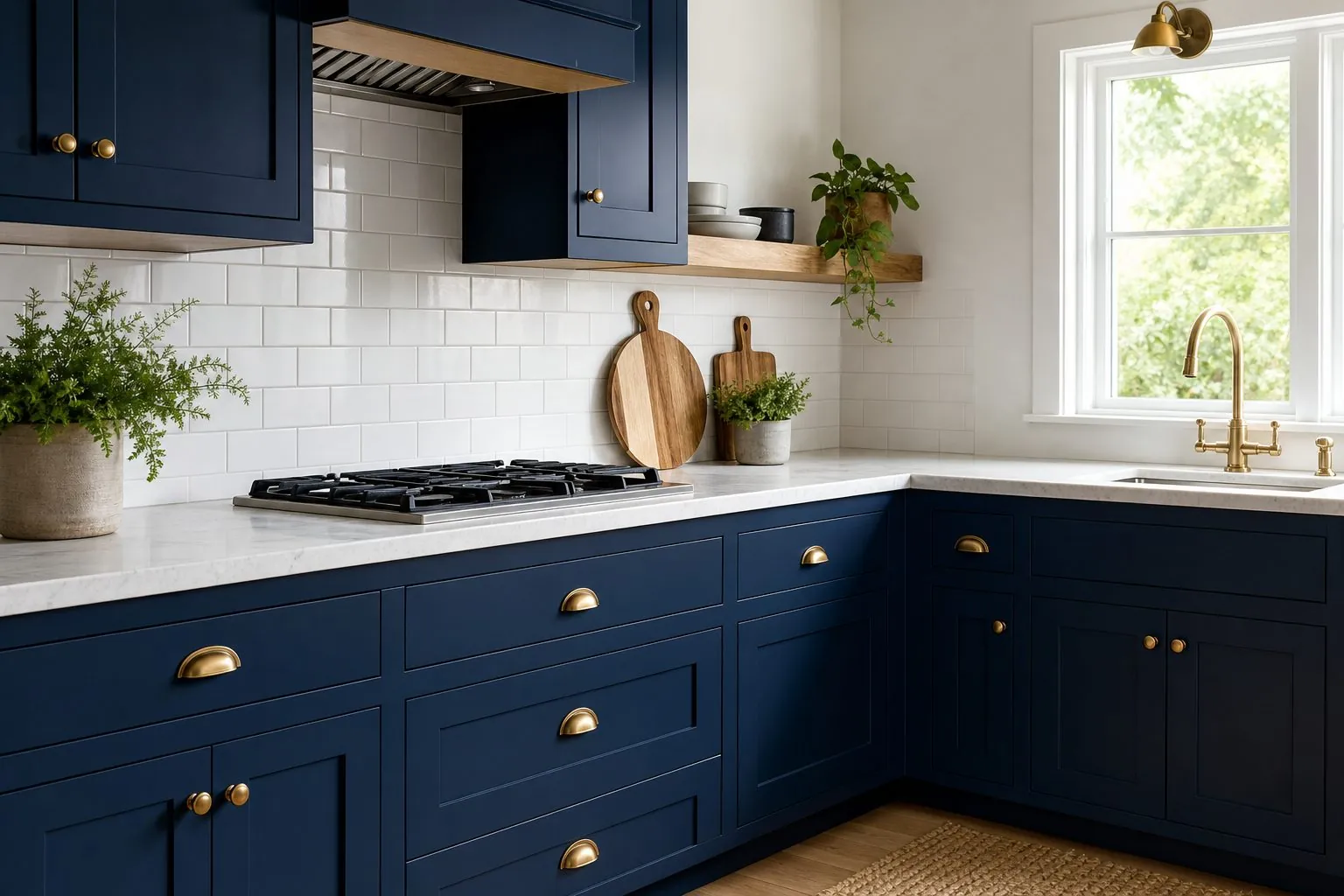
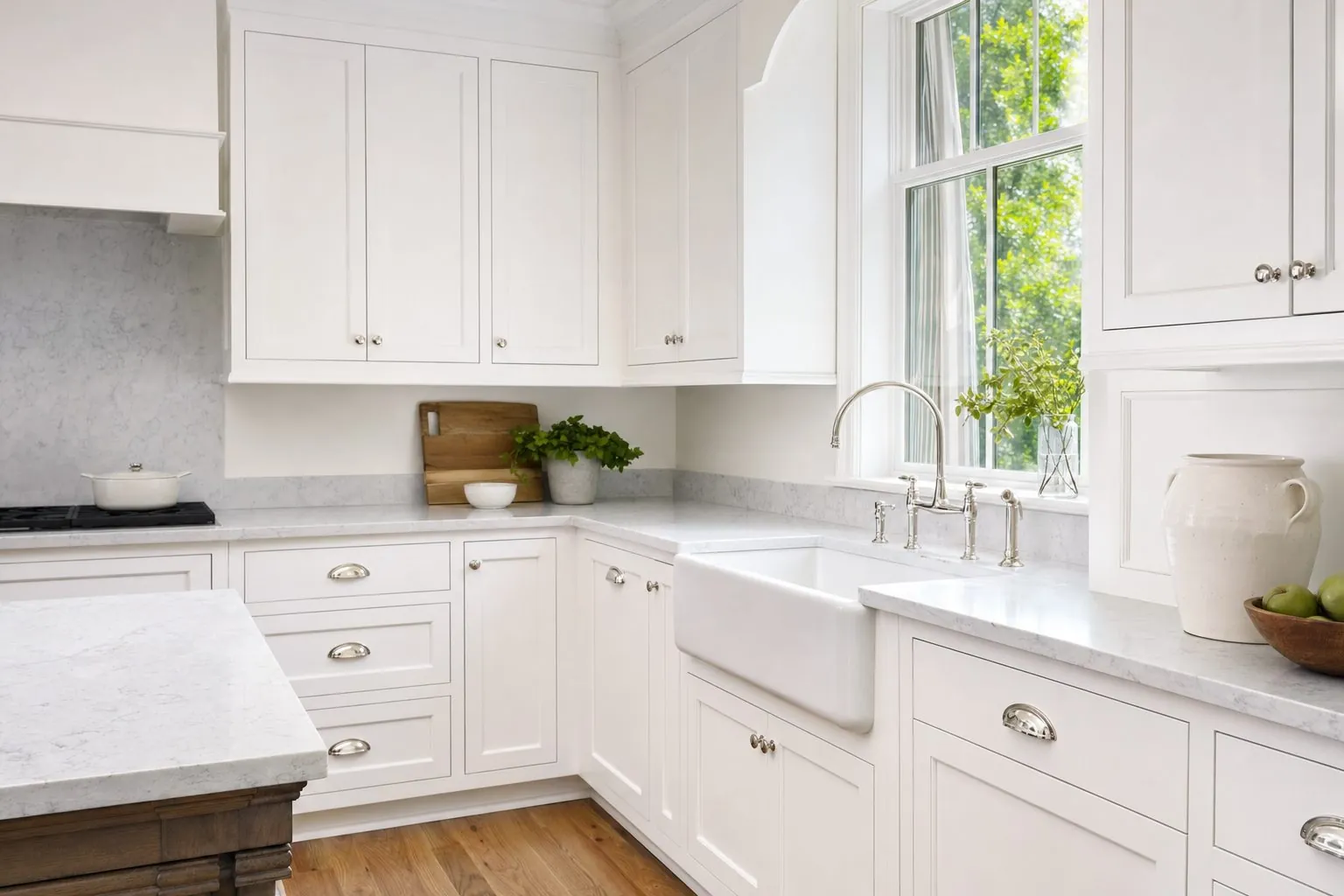
For navy and white painted kitchens sold into apartments, many buyers choose machined one-piece doors for consistency across hundreds of units. For villas where clients expect visible joinery, five-piece doors are usually specified and the owner is told in advance that a fine hairline at the joints is normal.
What Rail Width and Panel Profile Make a Shaker Door Look Right?
The Shaker look depends on proportions. Rails and stiles that are too narrow look modern; too wide and the door looks heavy. Approve the profile on a full-size sample door before ordering the full kitchen.
- Rail and stile width: many traditional designs use frames somewhere around 50 to 75 mm wide; slim Shaker variants go narrower. Fix your preferred width on the drawing.
- Inside edge: a square inside edge is classic; a small bevel or bead gives a softer, more decorative look.
- Center panel: flat recessed panels are standard; V-groove or beadboard panels suit cottage styles.
- Drawer fronts: narrow drawer fronts often become slab fronts or slim-frame versions, because a full frame on a short front can look crowded.
- Tall doors: pantry and fridge doors may need a mid-rail to keep proportions and reduce warping risk.
How Do Navy, White and Two-Tone Shaker Kitchens Differ in Production?
Color affects sampling, touch-up planning and inspection more than most buyers expect. Dark colors show sanding marks and dust under raking light, while whites show yellowing differences between paint batches.
- Navy Shaker Kitchen Cabinets: deep colors need careful sanding between coats and a uniform sheen. Ask for the gloss level to be written on the sample label, because a navy door at a different sheen reads as a different color.
- White Shaker Kitchen Cabinet Set: specify the exact white by color code. Warm whites, bright whites and off-whites look similar on screen but very different beside a white worktop or white appliances.
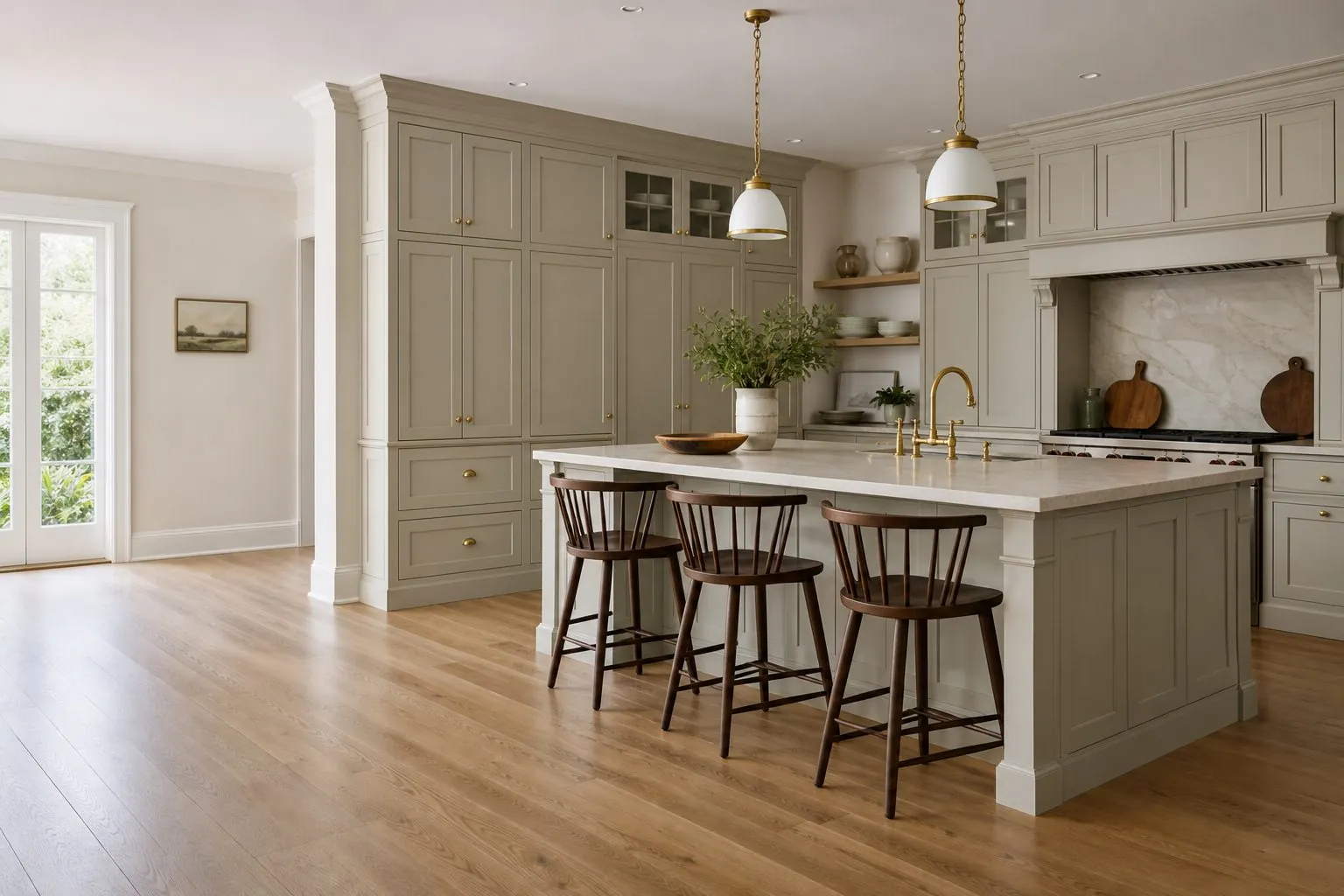
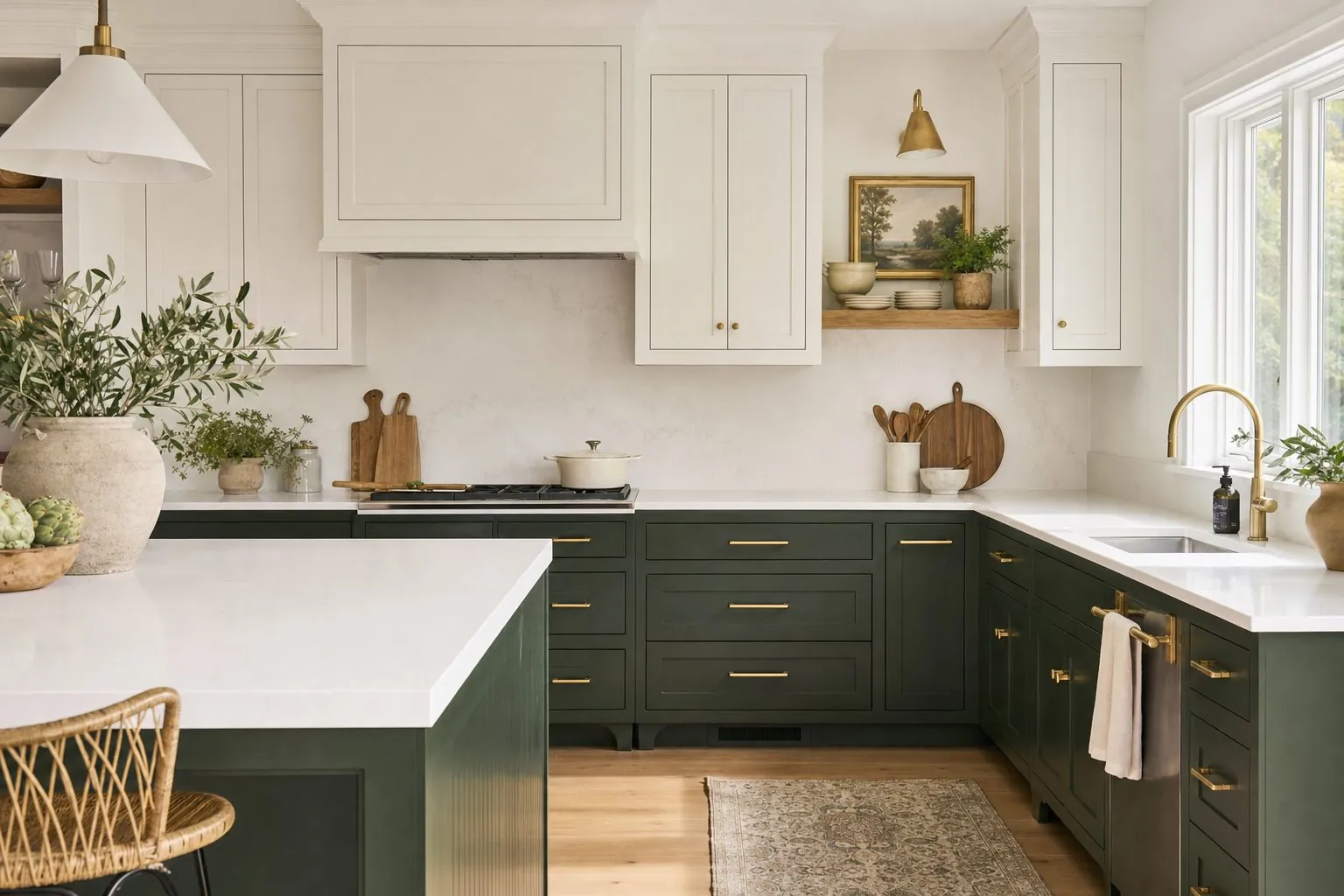
- Two-Tone Kitchen Cabinets: the common combination is a darker base or island with lighter wall cabinets. Both colors must be approved on the same sample board so they are checked together under the same light.
For two-tone projects, decide where the color break sits on tall units, panels and end gables. That detail is often missed on design renderings and creates questions on site.
Framed or Frameless Carcass Behind the Shaker Door?
A Shaker door can be fitted to a face-frame carcass or a frameless (European-style) carcass. Frameless construction is usually the more efficient option for export projects because it suits CNC drilling, flat-pack shipping and concealed European hinges.
Face-frame cabinets are familiar in North American traditional kitchens and allow inset doors, where the door sits flush inside the frame. Inset doors look high-end but need tight tolerances and periodic hinge adjustment. Overlay doors on a frameless box are more forgiving on site and faster to install. If you need the inset look, confirm the hinge type, gap size and whether a sample cabinet should be approved first.
What Should a Kitchen Sink Base Cabinet Include?
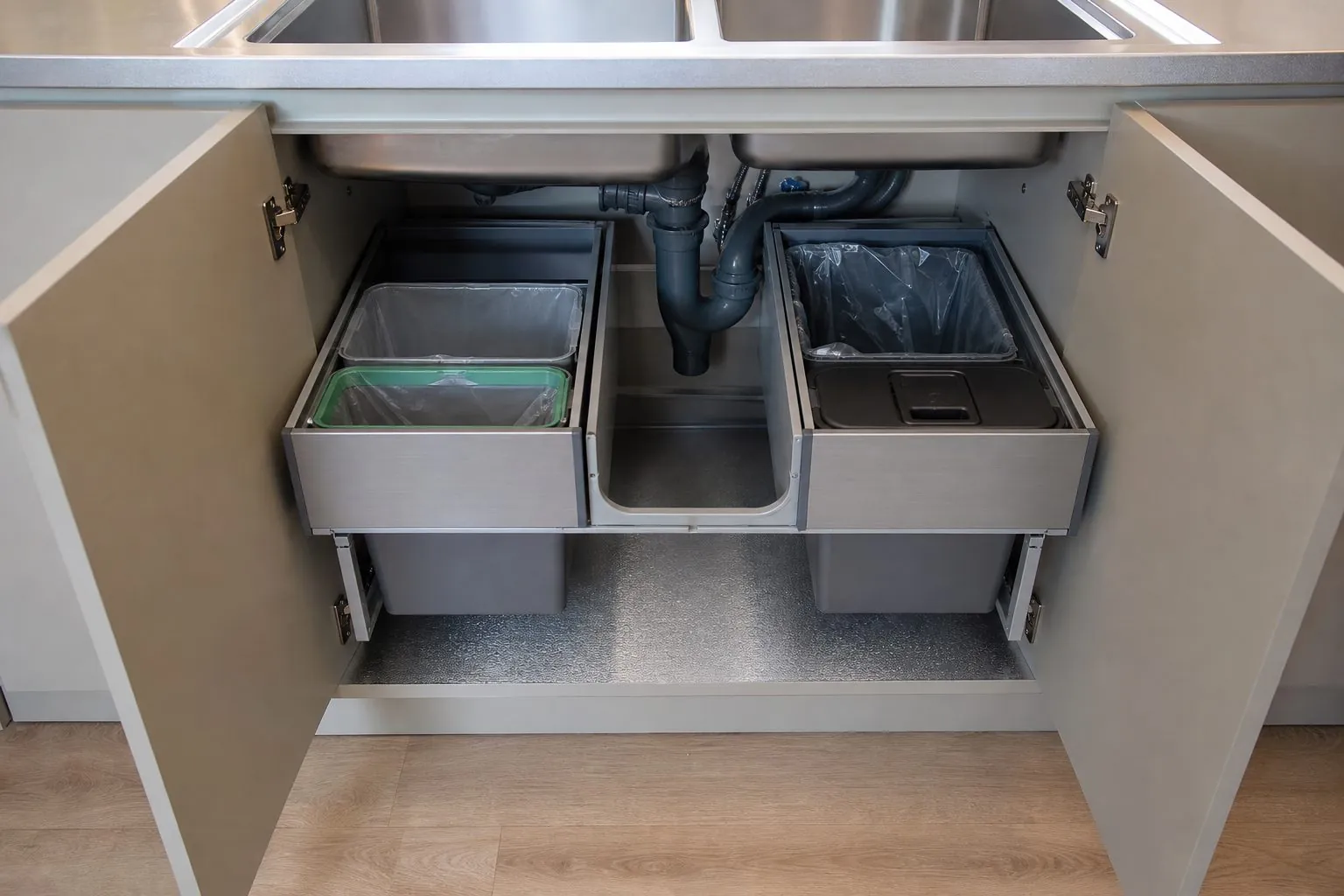
The sink base is the cabinet most likely to fail, because it is exposed to leaks, steam and cleaning chemicals. Specify it separately rather than treating it as a standard base unit.
- Moisture-resistant board for the carcass bottom, or a removable protective liner or tray.
- Sealed edges on all cut-outs for pipes and waste lines.
- No fixed back panel, or a cut-out back, so plumbers can reach valves.
- Sink size and bowl position confirmed before drilling, especially for farmhouse (apron-front) sinks that need a modified face.
- Space checked for a waste disposal unit, water filter or under-sink water heater if the market uses them.
- False drawer front or tip-out tray on the front, matched to the Shaker door style.
Which Finishes Survive Daily Use on Painted Shaker Doors?
Painted Shaker doors last when the paint system and edge sealing are matched to the door build. The weak points are door edges, the inside corner of the recess and the area around the handle.
Ask the supplier to describe the full coating sequence: sealer, primer, color coats and topcoat. Ask how door backs are finished, because an unfinished or lightly finished back absorbs moisture differently from the front and can cause slight bowing. For high-traffic rental kitchens, PET or thermofoil Shaker doors are a practical alternative with Easy-to-Clean Surface Finishes, while painted lacquer remains the choice for premium sales units.
How Are Hardware and Accessories Chosen for a Shaker Kitchen?
Shaker kitchens use visible handles, so hardware is part of the design and part of the specification. Agree on handle position, size and finish on the drawings so holes are pre-drilled at the factory.
- Knobs on doors and cup pulls on drawers are a classic combination; bar pulls suit transitional designs.
- Brushed brass, matte black and nickel finishes are common with navy and white fronts.
- Soft-close hinges and drawer runners can come from Blum, Hettich, Häfele, Salice, DTC or Hutlon depending on budget.
- Internal accessories such as cutlery inserts, pull-out bins and corner solutions should be fixed before production.
If handles are supplied locally, send samples or drawings so drilling patterns match.
What Details Separate a Good Shaker Kitchen from an Average One?
Most complaints about Shaker kitchens come from finishing details rather than the doors themselves. Specify these items on the shop drawings:
- Matching finished end panels and decorative gables on exposed sides.
- Crown or cornice molding on tall and wall units, with the profile approved on a sample.
- Light rail under wall cabinets to hide LED strips.
- Plinth or toe-kick finish matched to the base color.
- Scribe fillers along uneven walls, supplied oversized for site trimming.
- Touch-up paint or color-matched filler packed with each order.
How Can Arcova Help With Shaker Kitchen Cabinets?
Arcova builds Shaker Kitchen Cabinets in a 40,000 m² factory with 12 production lines, including automated CNC cutting, edge banding and drilling lines. Our team prepares shop drawings, 3D design and finish sample approval, and can build a mock-up kitchen before mass production. Orders are inspected with photo reports and packed by unit and room. Monthly capacity is 40 × 40HQ containers, and certifications include ISO9001, BSCI and FSC. See our kitchen cabinet range, quality process or send your drawings.