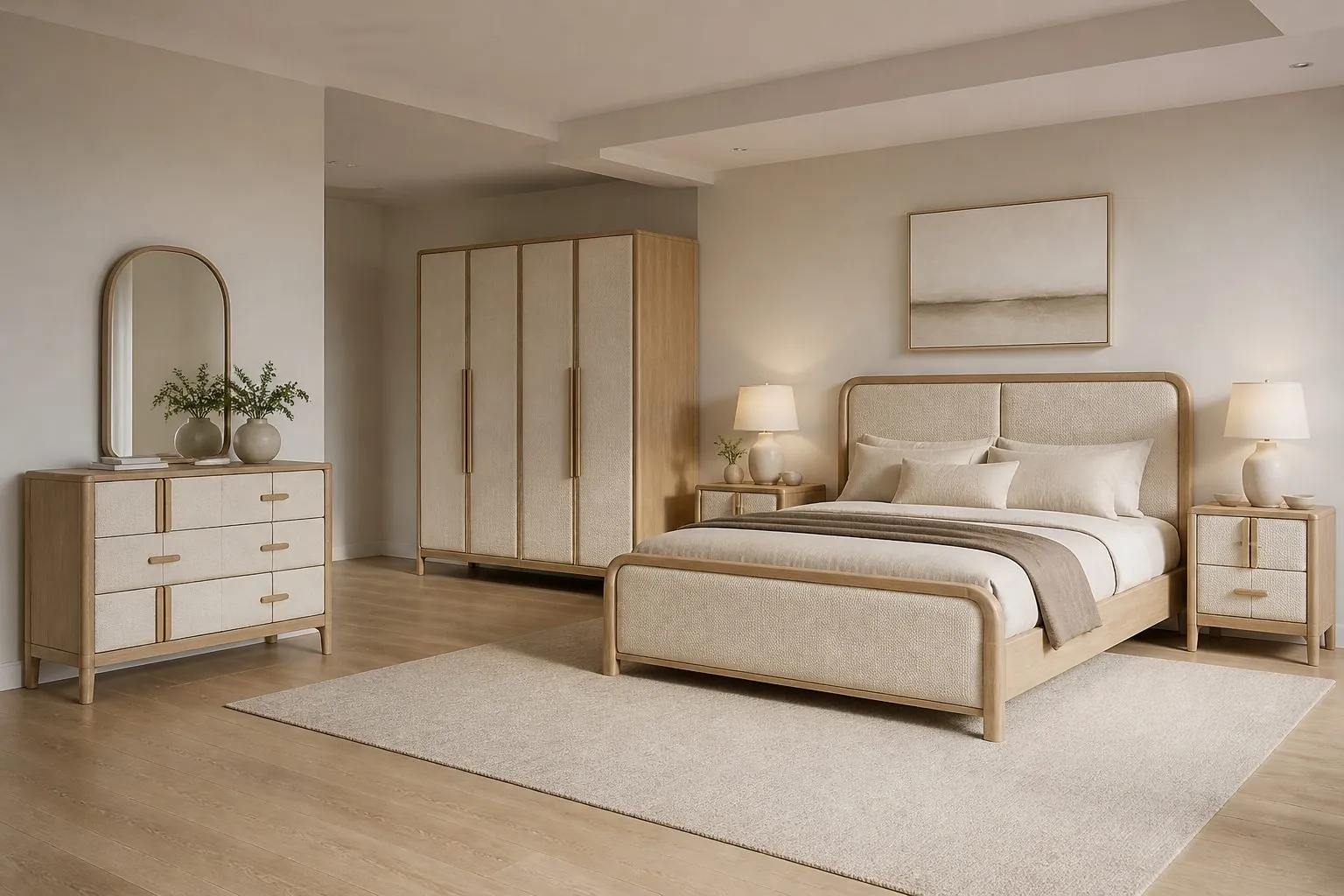
Compare melamine, laminate, lacquer, veneer and PET finishes for bedroom furniture, with edge details, emissions, sample testing and practical choices for each piece.
What Makes a Bedroom Furniture Finish Durable?
A durable bedroom furniture finish resists scratches, impact, moisture, cosmetics, cleaning products and light over years of daily use. No single finish wins on every point, so the best choice balances wear resistance, appearance, repairability and budget for the specific room and user.
Bedroom furniture sees different wear from kitchens. Damage tends to come from rings left by cups, perfumes on dressers, luggage scuffs, children's toys, sunlight from windows and cleaning by housekeeping teams. Understanding these risks helps you match finish to piece.
- Nightstands: cups, phones, lamps, water rings.
- Dressers and dressing tables: cosmetics, perfume, hair products.
- Headboards: hair oils, rubbing, cleaning.
- Wardrobe doors: hand contact, fingerprints, door edges hitting other furniture.
- Hotel furniture: luggage, chemical cleaners, frequent guest turnover.
Start by listing who will use the room and how it will be cleaned. A family home with children, a luxury villa and a budget hotel room need very different finishes, even when the furniture design looks similar on paper.
How Do the Main Finish Types Compare?
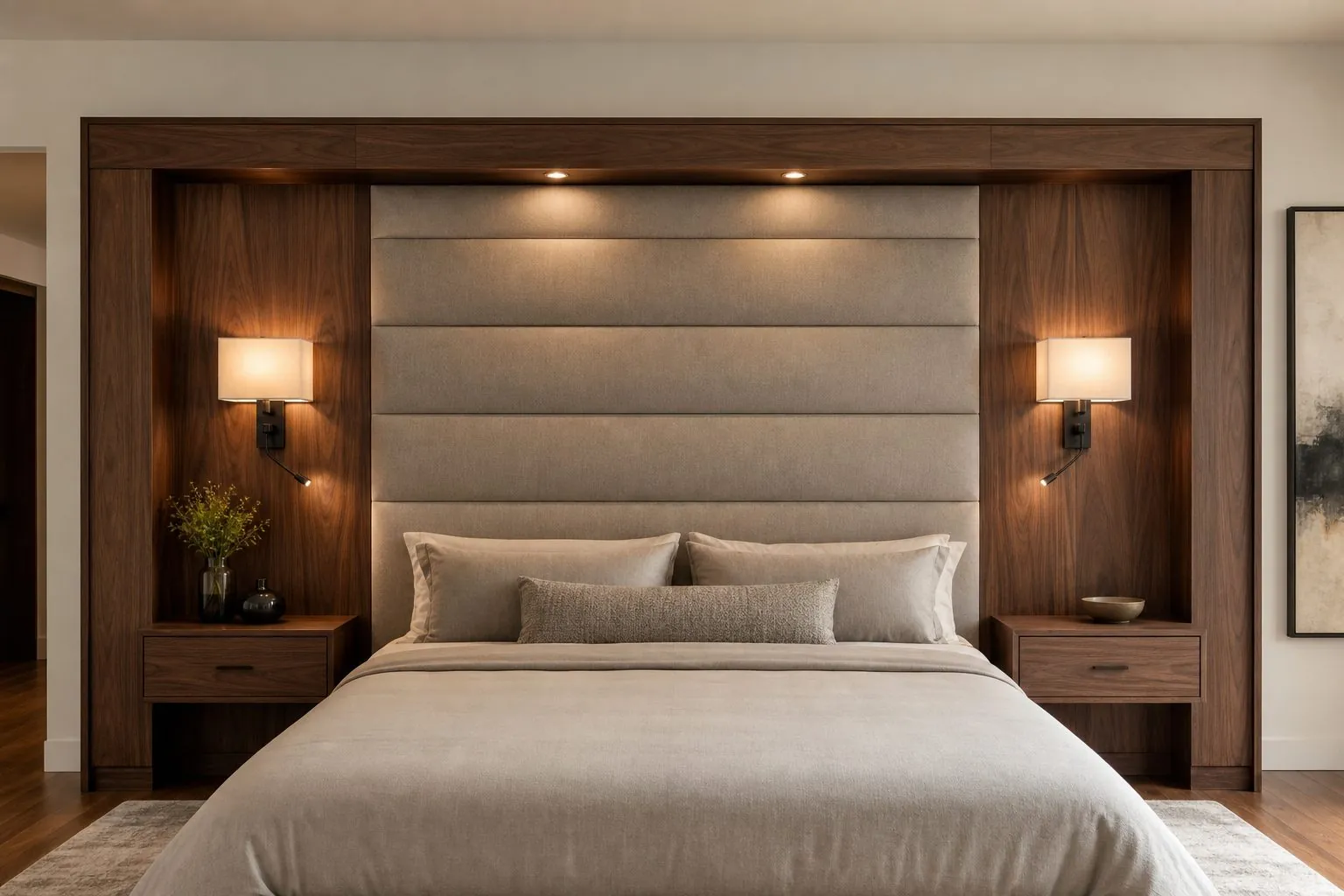
Melamine and high-pressure laminate offer the best wear resistance for cost; lacquer offers color freedom and a smooth painted look but marks more easily; wood veneer gives natural character with moderate durability depending on the coating; PET and acrylic offer smooth, modern surfaces between laminate and lacquer.
| Finish | Scratch resistance | Stain and chemical resistance | Repairability | Typical use |
|---|---|---|---|---|
| Melamine-faced board | Good | Good | Low; panels replaced | Wardrobe interiors, rental and hotel carcasses |
| High-pressure laminate (HPL) | Very good | Very good | Low; panels replaced | Hotel casegoods, nightstand tops |
| Lacquer (matte to gloss) | Moderate | Moderate | Good; can be touched up | Wardrobe doors, painted dressers |
| Wood veneer with lacquer | Moderate | Moderate to good | Moderate; refinishing possible | Headboards, premium dressers |
| PET film | Good | Good | Low | Modern doors and fronts |
| Acrylic | Moderate; shows scratches on gloss | Good | Low to moderate; can be polished | High-gloss fronts |
| Solid wood with oil or lacquer | Moderate | Varies by coating | Good; can be sanded | Bed frames, premium pieces |
These are general comparisons. Actual results depend on the specific product, coating system and supplier. Ask for samples and test them in your own conditions.
Which Finish Suits Hotels and Rentals?
For hotels, serviced apartments and rentals, HPL and melamine are usually the most practical choices for high-wear surfaces, with veneer or lacquer reserved for features where appearance matters most. This mix controls cost and keeps rooms looking good between refurbishments.
- Use HPL on nightstand tops, desk tops, luggage benches and dresser tops.
- Use melamine on wardrobe interiors, drawer boxes and hidden carcass parts.
- Use veneer or upholstery on headboards and feature panels that guests see but touch less.
- Add metal or HPL protection where luggage and trolleys hit furniture.
- Choose edge banding that matches face durability, since edges fail first.
Planning for refurbishment cycles
Hotels and rental operators refurbish rooms on a cycle. Finishes that can be refreshed or panels that can be replaced individually keep rooms presentable between full renovations. Ask whether doors, tops and headboard panels can be removed and reordered by reference, and keep a spare stock of the most damaged items, such as nightstand tops and luggage bench surfaces.
Hotel brands often specify finish performance in their standards. Collect those requirements before sampling, and ask the factory to confirm which documents can be provided; any test values are confirmed at quotation.
When Is Lacquer the Right Choice?
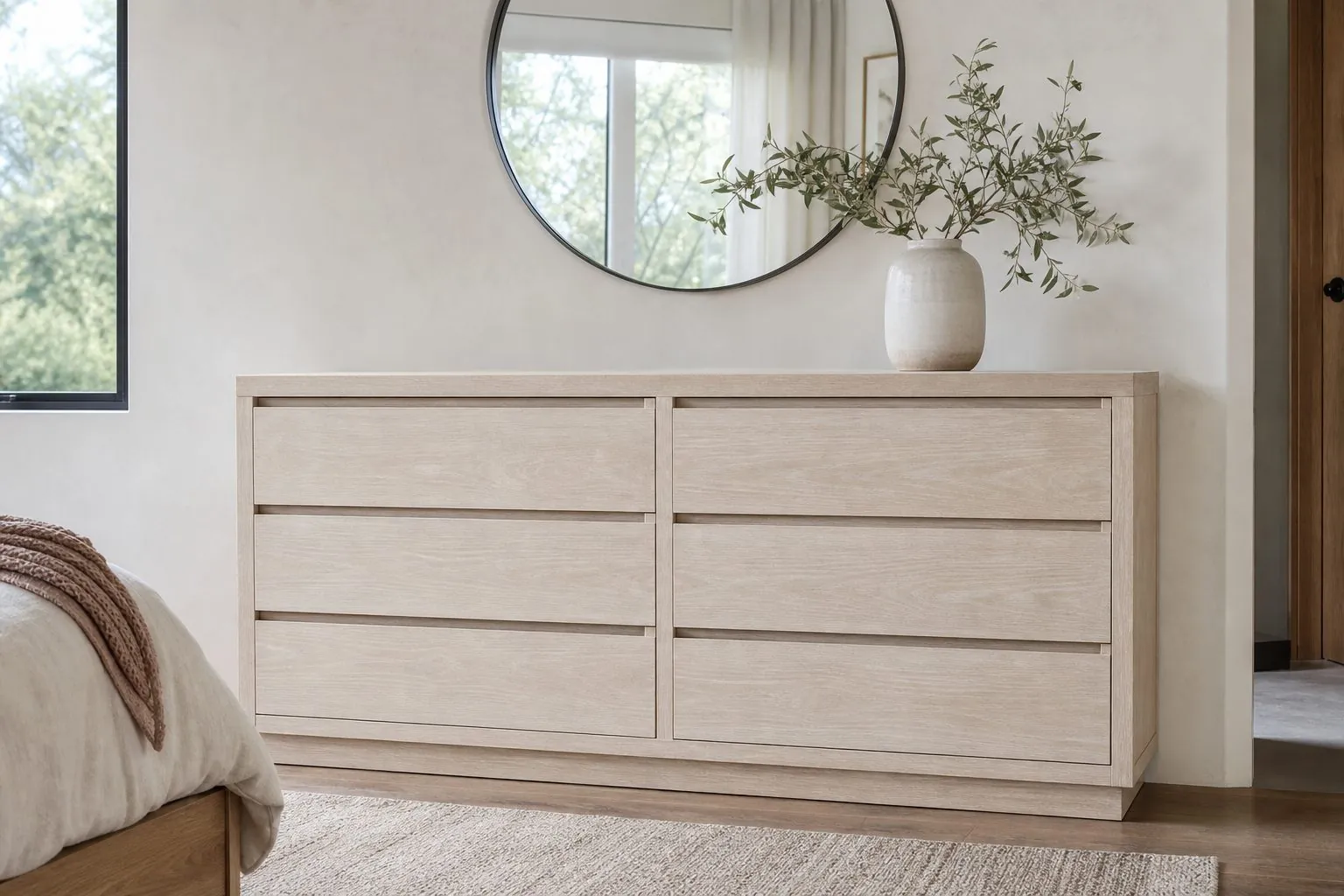
Lacquer is right when you want a seamless painted look in any color, soft rounded edges or a smooth matte or high-gloss surface without visible edge bands. It is less suitable where furniture will be knocked often or cleaned aggressively.
Lacquer is sprayed onto MDF in several coats, sanded between coats and cured. The sheen level affects durability: high gloss shows scratches and fingerprints more, while matte hides fine marks but can polish to a shine where hands touch often.
Tips for specifying lacquer
- Approve a color sample with sheen level stated, such as matte, satin or gloss.
- Ask about the coating system used and whether it is low-emission.
- Request a touch-up kit with the shipment for small site repairs.
- Pack lacquer doors with protective film and corner guards.
- Avoid lacquer on tops that hold cosmetics unless a glass or stone top is added.
How Should You Choose Wood Veneer Finishes?
Choose wood veneer when natural grain and warmth matter, and protect it with a durable clear coat rated for the use. The coating, not the veneer itself, decides most of the durability.
| Decision | Options | Buyer consideration |
|---|---|---|
| Species | Oak, walnut, ash, teak and others | Availability, color stability, FSC certification |
| Cut | Crown cut, quarter cut, rift cut | Grain pattern and cost |
| Matching | Book match, slip match, random | Visual consistency across doors |
| Coating | Matte lacquer, open-pore, oil | Wear and stain resistance |
| Color | Natural, stained, smoked | Fading and batch variation |
Natural veneer changes color with light over time. Walnut tends to lighten and oak tends to warm. Bedrooms with large windows age veneer faster on the side facing the light, so furniture placed near glazing may need a UV-resistant coating or curtains to slow the change. If furniture will be replaced or extended later, keep finish references and order extra panels to manage variation. FSC-certified veneer is available where projects need certified sourcing.
Do Edge Details Affect Durability?
Yes. Edges are where most finishes fail first, through chips, peeling bands and water entry. Good edge treatment often matters more than the face finish itself.
- ABS or PVC edge banding: common on melamine and laminate; check that the color matches and that corners are rounded.
- Laser or zero-joint edge banding: reduces visible glue lines and improves moisture resistance where available.
- Solid wood lipping: protects veneer edges and can be sanded and refinished.
- Wrapped lacquer edges: seamless, but sharp edges chip; small radiused edges last longer.
- Metal edge protectors: useful on hotel luggage areas and corners.
Corner radius matters too. Sharp 90-degree corners chip easily and feel hard in children's rooms. A small radius on edges and corners spreads impact, holds coatings better and is safer, while still looking crisp. On drawer fronts and door edges that people grip, a slightly rounded profile also reduces wear from hands over time.
Ask the factory to show edge samples, and inspect them closely during pre-shipment inspection. Lifting or poorly trimmed edges are a clear quality warning.
How Do Emissions and Certifications Fit In?
For bedrooms, low-emission boards and coatings matter because people spend many hours in the room with doors and windows often closed. Specify certified low-emission materials and ask for documents rather than relying on general claims.
Common references include CARB compliance for composite wood products and FSC certification for responsibly sourced wood. Your market may also have its own emission classes or labels. Confirm which ones apply before ordering.
- List the certifications your market or client requires.
- Ask which boards and coatings in the order are covered.
- Request copies of certificates with the quotation.
- Check that the certified material is the one actually used in production.
Boards from suppliers such as EGGER, Kronospan or DARE can be specified where projects require recognized board sources.
How Should You Test Finish Samples Before Ordering?
Test finish samples under realistic conditions before approving them. A short, simple test routine reveals more than any brochure and prevents expensive surprises after installation.
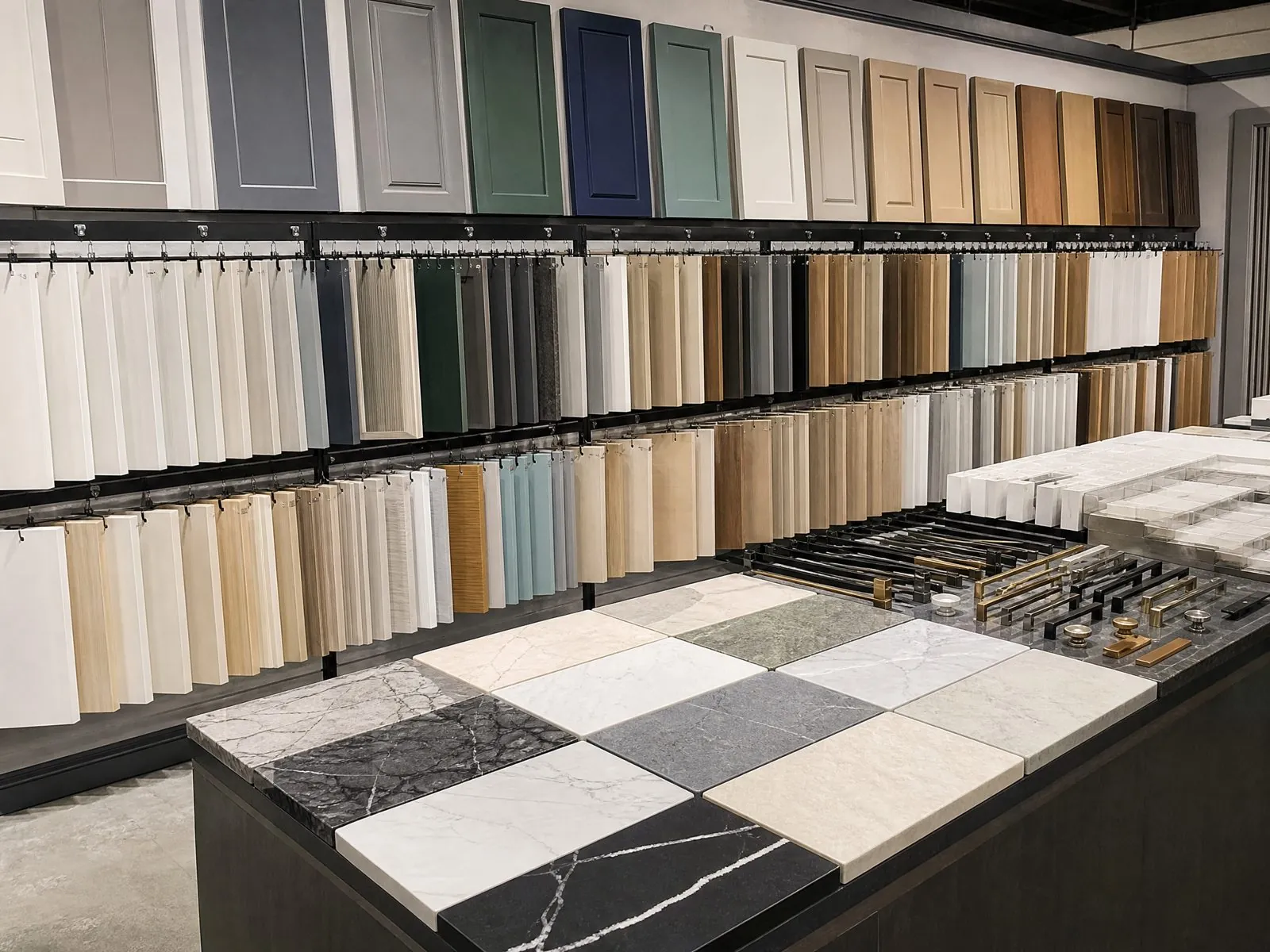
- View samples under the room's actual lighting, both daylight and warm artificial light.
- Scratch lightly with a key and a coin to compare resistance.
- Leave water, coffee and perfume on the surface for some time and wipe it off.
- Clean with the cleaning products your housekeeping or users will use.
- Touch with oily fingers to check fingerprint visibility.
- Compare edge samples alongside face samples.
- Keep approved samples as the reference for production and inspection.
Checking consistency across batches
For large orders, the risk is not only the finish itself but whether it stays consistent. Veneer, lacquer color and even melamine decors vary slightly between batches. Ask the factory to compare production pieces against the approved sample during inspection and to include close-up photos in the inspection report. If the order is split over several shipments, keep the approved sample available for each one.
These are informal buyer checks, not laboratory tests. Where a project needs formal test results, ask for them in writing and mark any figure as confirmed at quotation until documents are received.
Which Finish Should You Choose for Each Bedroom Piece?
Match each piece to its wear level rather than using one finish everywhere. This approach controls cost and keeps the room looking coordinated.
| Piece | Practical finish | Premium option |
|---|---|---|
| Wardrobe carcass and interior | Melamine | Wood grain melamine or veneer |
| Wardrobe doors | Melamine, PET | Lacquer, veneer, glass |
| Nightstand top | HPL, melamine | Stone or veneer with glass |
| Dresser top | HPL | Stone or veneer with durable lacquer |
| Headboard | Melamine or fabric | Upholstery, fluted veneer |
| Bed frame | Melamine or laminate | Solid wood or veneer |
Keep the number of different finishes in one room small. Two or three coordinated finishes, for example a wood grain carcass, a painted door and a stone or HPL top, look intentional and are easier to replace later than five or six unrelated materials. This also simplifies sampling, inspection and spare part stock for project buyers.
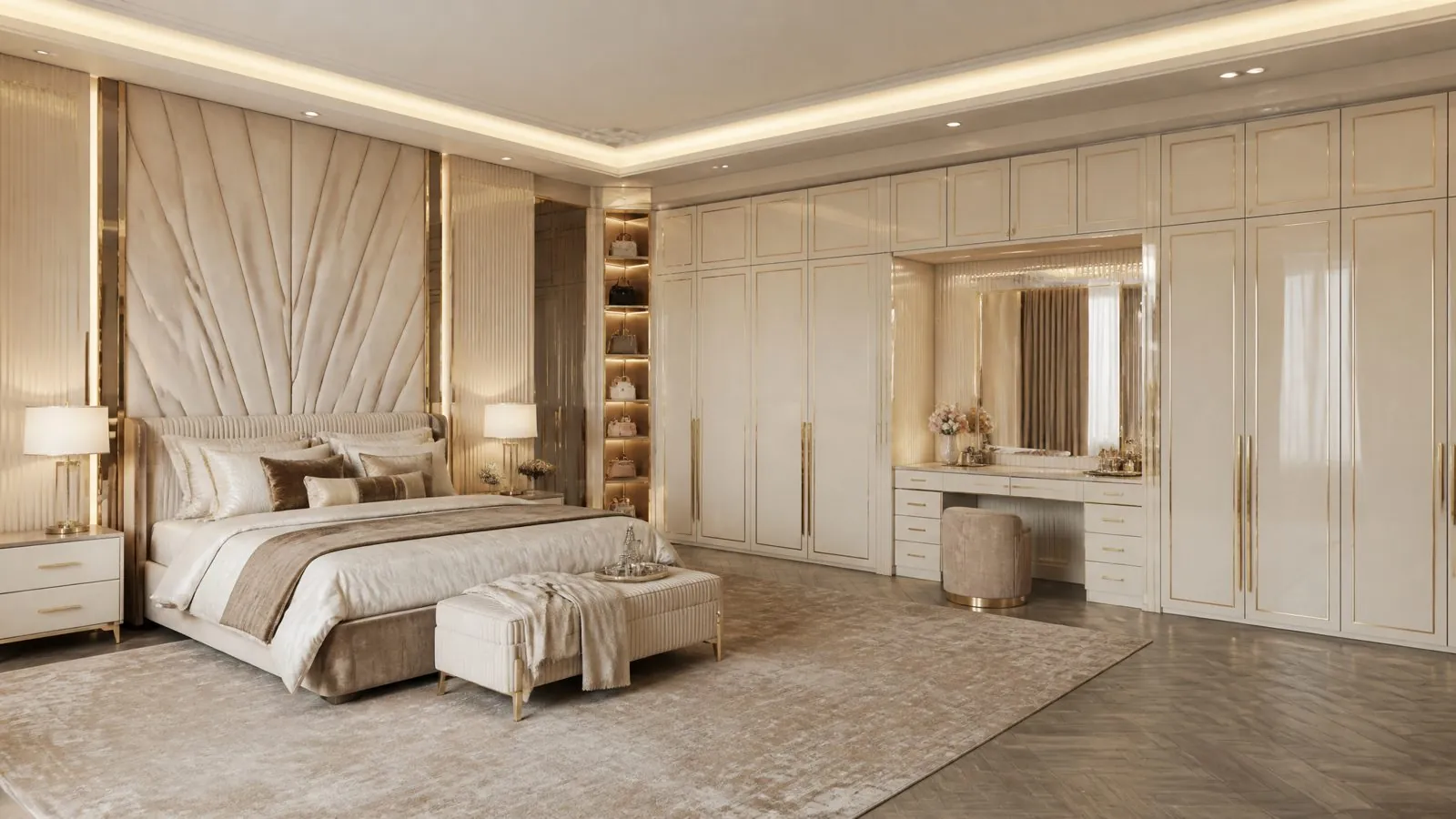
How Can Arcova Help With Bedroom Furniture Finishes?
Arcova manufactures custom bedroom furniture, built-in wardrobes and hotel casegoods with melamine, laminate, PET, lacquer and veneer finishes. With 12+ years of manufacturing experience, a 40,000 m² factory and 12 production lines including automated edge banding, we produce consistent finishes across large orders.
- Finish sample approval and mock-ups before mass production.
- Boards from EGGER, Kronospan or DARE; ISO9001, BSCI and FSC certifications.
- Inspection with photo reports and export packing labelled by unit or room.
- Monthly capacity of 40 × 40HQ containers for multi-room projects.
- 24-hour online technical support.
Browse our bedroom furniture and hotel furniture ranges, or request finish samples. Test values, MOQ and lead time are confirmed per project.