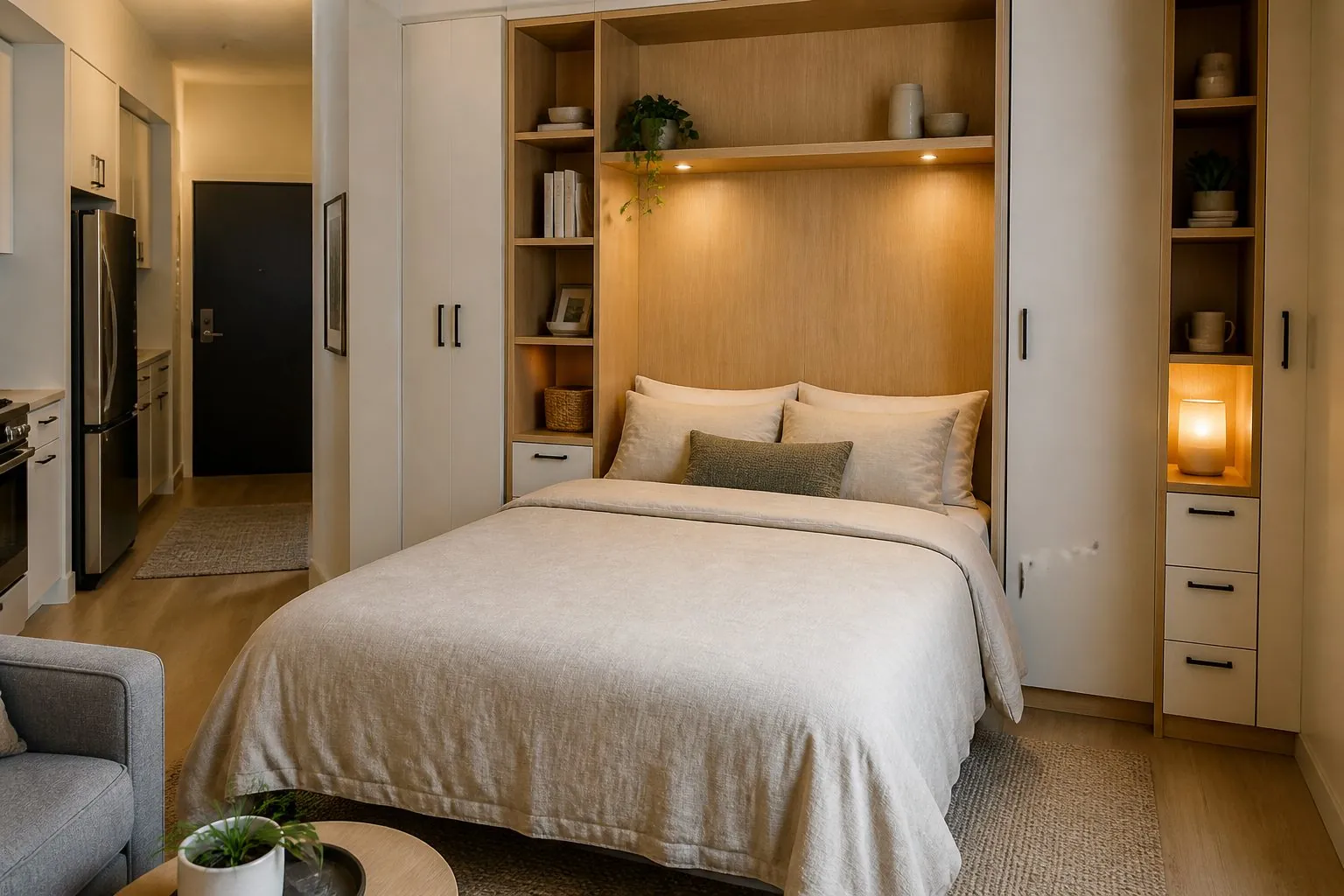
How to choose wall beds for small units: orientation, spring or gas mechanisms, mattresses, wall requirements, integrated storage, safety features, ordering checks and installation.
When Does a Wall Bed Make Sense in a Small Unit?
A wall bed makes sense when one room must work as both a bedroom and a living or working space, and the user is willing to fold the bed away most days. In studios, micro-apartments, serviced apartments and guest rooms, it can free most of the bed footprint for a sofa, dining table or desk during the day.
It makes less sense when the bed will stay open permanently, when the wall cannot carry anchoring loads, or when the occupants are elderly or have limited strength and would struggle with the folding action. In those cases, a platform bed with storage drawers or a sofa bed may be the better choice.
- Good fit: studios, micro-units, home offices that double as guest rooms, serviced apartments for longer stays.
- Possible fit: hotel family rooms, children's rooms with a fold-down second bed.
- Poor fit: master bedrooms with ample space, rooms with weak partition walls, users who never fold the bed.
Before committing, measure how the room will be used in both positions. Draw the bed open and closed on the floor plan, including clearance in front of the cabinet and access to windows, sockets and air conditioning controls.
Which Wall Bed Orientation Should You Choose?
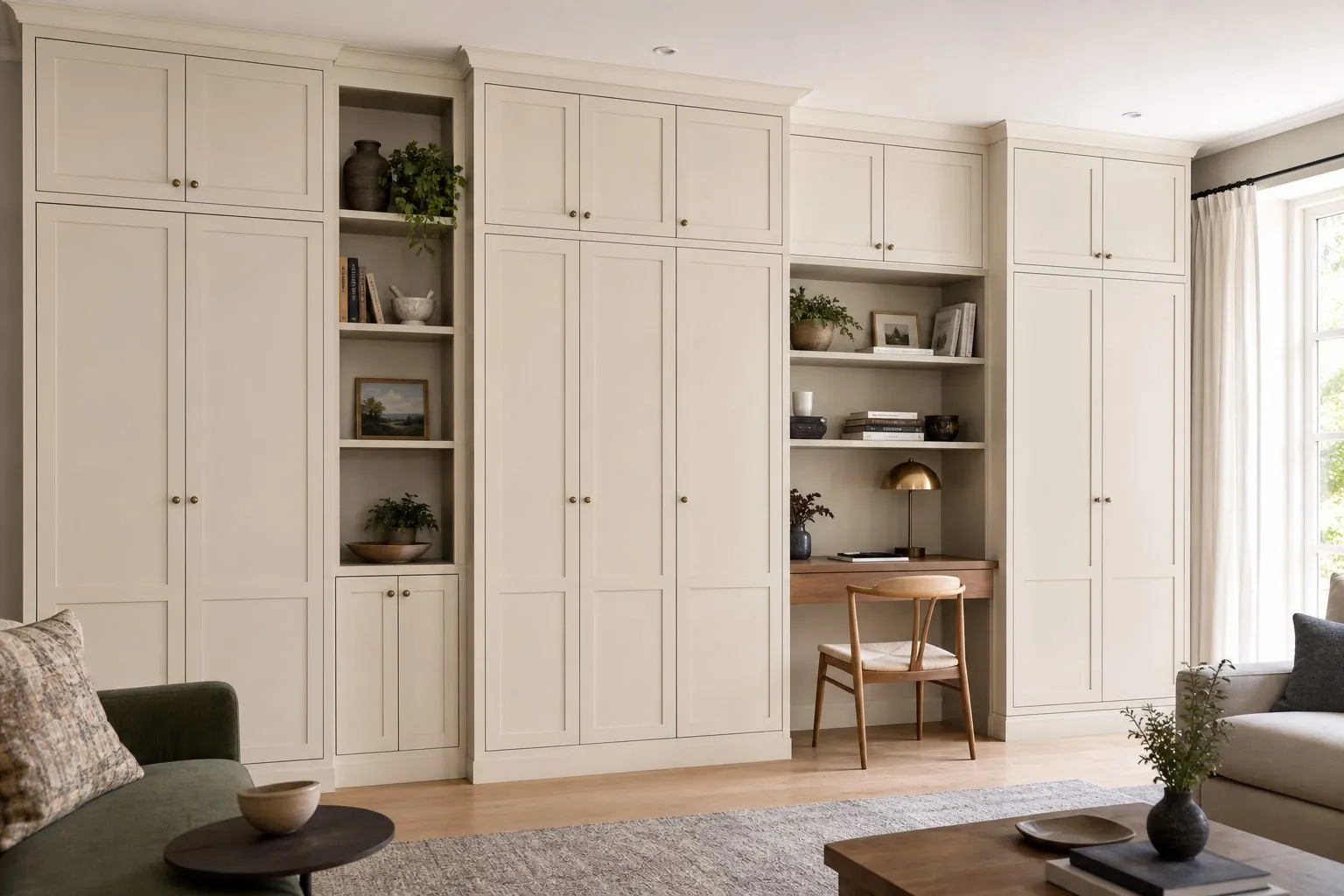
Choose vertical wall beds for rooms with enough ceiling height and a deep room, and horizontal wall beds for low ceilings, sloped ceilings or narrow rooms. The orientation decides how far the bed projects into the room and how tall the cabinet must be.
| Orientation | How It Folds | Best For | Limitations |
|---|---|---|---|
| Vertical | Head of bed against the wall, folds up lengthwise | Double and queen beds, standard ceiling heights | Tall cabinet; projects the full bed length into the room |
| Horizontal | Long side against the wall, folds up sideways | Single beds, low ceilings, rooms under windows | Wider cabinet; less space for overhead storage |
| Bunk wall bed | Two horizontal beds stacked | Kids rooms, staff housing, family hotel rooms | Upper bed needs guard rail and ladder |
Ceiling height, window position and the wall length available usually make the decision. Check where light switches and sockets sit, because a tall cabinet can block them.
Also consider who makes the bed. Vertical beds are made up while open and fold with the bedding held by straps, so the bedding must be reasonably flat. Hotels with duvets and several pillows may need a pillow niche in the side cabinet, since bulky pillows can prevent the bed from closing.
How Do Spring and Gas Piston Mechanisms Compare?
Spring mechanisms suit heavier mattresses and long-term daily use because tension can be adjusted, while gas piston mechanisms are quieter and simpler but have fixed force ratings that must match the mattress weight closely.
| Factor | Spring Mechanism | Gas Piston Mechanism |
|---|---|---|
| Adjustment | Tension adjustable for different mattresses | Fixed force; replace pistons to change |
| Noise | Can be audible in operation | Usually quieter |
| Mattress changes | Easier to rebalance | Need new pistons if weight changes a lot |
| Maintenance | Periodic tension check | Pistons lose force over time and need replacement |
| Typical use | Hotels, serviced apartments, heavier beds | Residential, lighter single beds |
Whatever the mechanism, the bed should stay in position when partly open and close smoothly without slamming. Load ratings depend on the specific mechanism and are confirmed for each design.
What Mattress Should Be Used With a Wall Bed?
Use a mattress whose size, thickness and weight match the frame and mechanism. A mattress that is too thick may prevent closing, and one that is much heavier than planned can overload the lift system.
- Confirm mattress size by market standard, since single, double, queen and king sizes vary by country.
- Check maximum thickness so the bed closes with the bedding strap in place.
- Prefer lighter mattresses such as foam or pocket spring designs made for wall beds.
- Avoid adding toppers later without checking the mechanism.
- Use straps to hold the mattress and bedding when folded.
If the operator or owner supplies the mattress, send the exact model and weight before production. Changing the mattress after ordering should be checked with the manufacturer.
Who opens the bed?
Think about the weakest likely user. A well-balanced bed should open and close with modest effort, but heavy mattresses, poor tensioning or worn pistons make it difficult for some guests. In serviced apartments, ask the operator who will use the units most often and test the opening force during the mock-up.
What Wall and Floor Conditions Are Required?
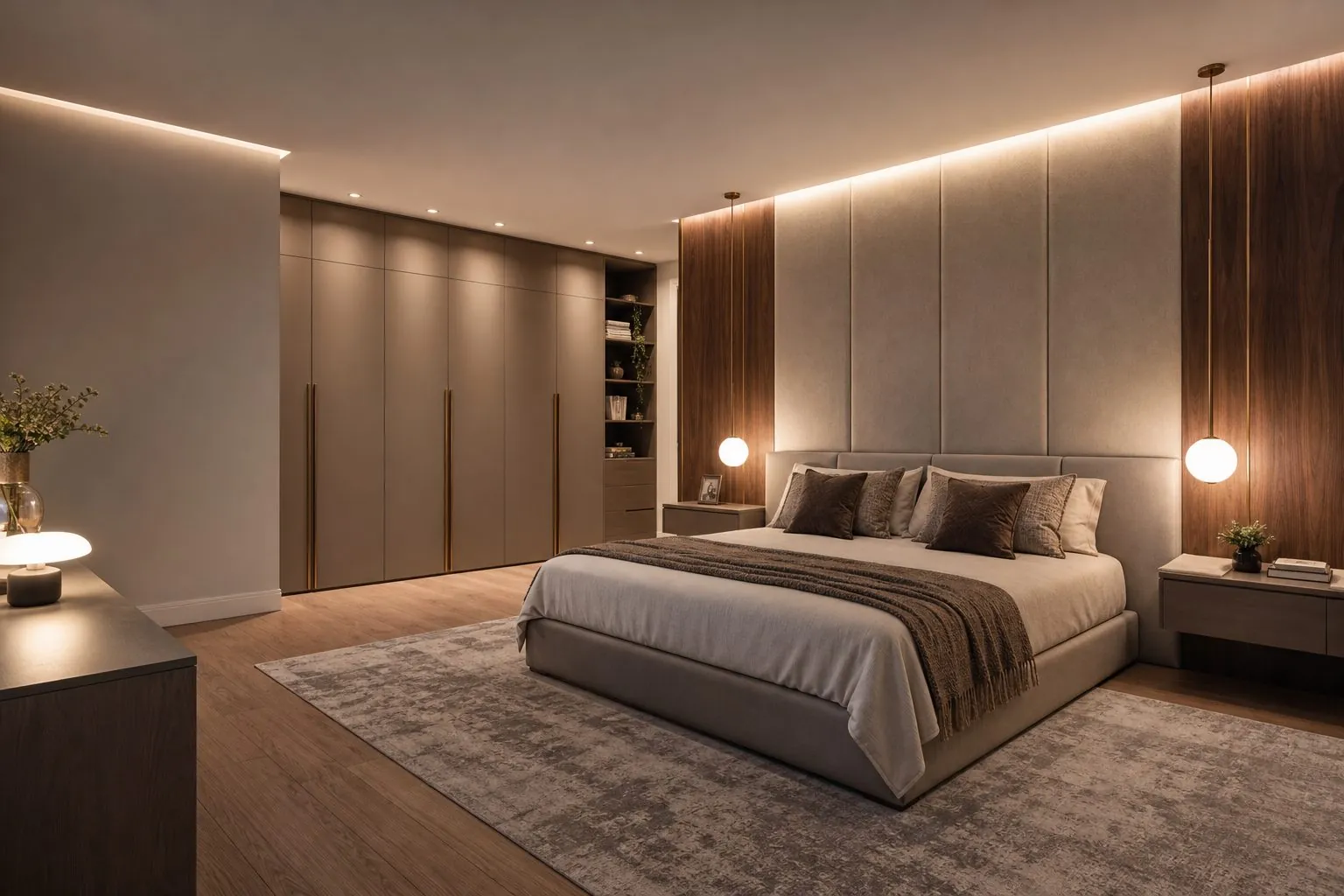
Wall beds must be anchored to solid masonry, concrete or reinforced stud walls. The cabinet carries the bed weight, the mattress and the forces of opening and closing every day, so a weak wall is the most common safety risk.
- Masonry or concrete: suitable with the right anchors.
- Stud walls: need timber or steel blocking at fixing points before boarding.
- Lightweight partitions: not suitable without reinforcement.
- Floors: must be level where the bed legs land; thick carpets affect leveling.
The fixing points should be marked on shop drawings, and the site engineer should approve the wall construction. In new buildings, coordinate blocking with the drywall contractor before walls are closed.
Which Storage and Furniture Can Be Integrated?
Integrated storage turns a wall bed into a complete room wall. Side cabinets, overhead units and fold-down desks are the most common additions.
- Side wardrobes: hanging space and shelves on one or both sides.
- Overhead cabinets: above horizontal beds, or above vertical beds where ceiling height allows.
- Fold-down desk: a desk on the bed underside that stays level as the bed opens.
- Sofa integration: a sofa in front of the bed that stays in place or moves aside.
- Shelving and niches: open shelves for books and decor.
- Lighting and power: reading lights, USB sockets and LED strips.
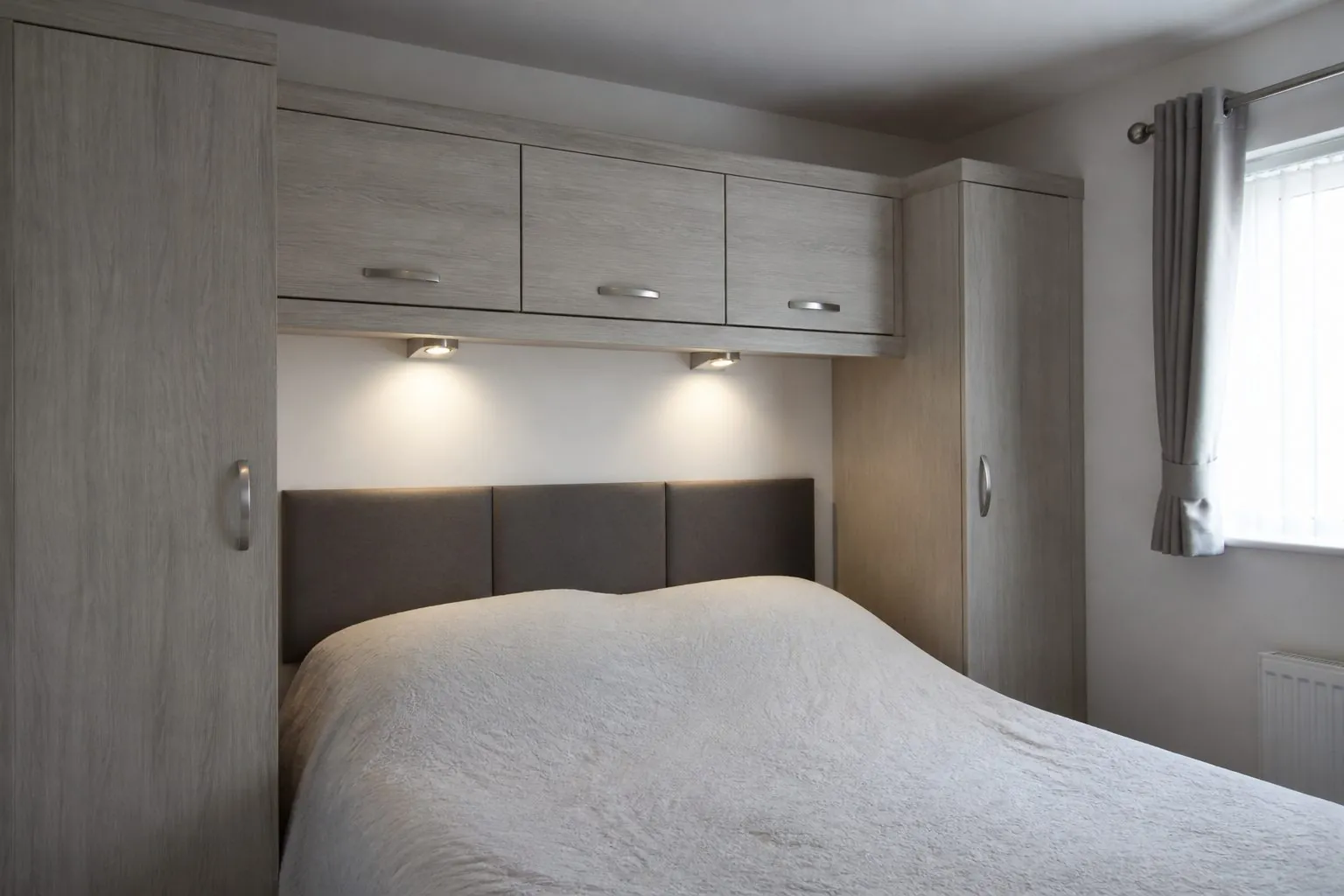
Every integration adds weight and complexity, so plan it during design rather than adding it later. Desk and sofa systems need exact mechanism coordination. See our bedroom furniture range for related storage pieces.
Finishes should match the rest of the room so the closed bed reads as a wardrobe or storage wall rather than an obvious bed. Popular choices are melamine wood grains for rental units, PET or lacquer fronts for modern apartments, and veneer for premium suites. Handles must be strong enough to pull the bed down, so recessed grips or sturdy bar handles are better than delicate knobs.
When a sofa is placed in front of the bed, it must be moved or designed to stay clear of the bed's swing. Integrated sofa systems solve this, but cost more and add weight to the mechanism.
What Safety Features Should Be Specified?
Specify safety features that prevent the bed from opening unexpectedly, falling or tipping. These are especially important in hotels, rental units and children's rooms.
- Anchoring to the wall with fixings rated for the load.
- Locking device to keep the bed closed when not in use.
- Smooth, balanced mechanism that does not drop or spring up.
- Legs that fold out automatically and stand firmly.
- Mattress and bedding straps.
- Rounded edges and finger-safe gaps around moving parts.
- Clear user instructions fixed inside the cabinet.
For hotels and serviced apartments, staff should receive a short briefing on how to open, close and check the bed. Misuse is a common cause of maintenance calls.
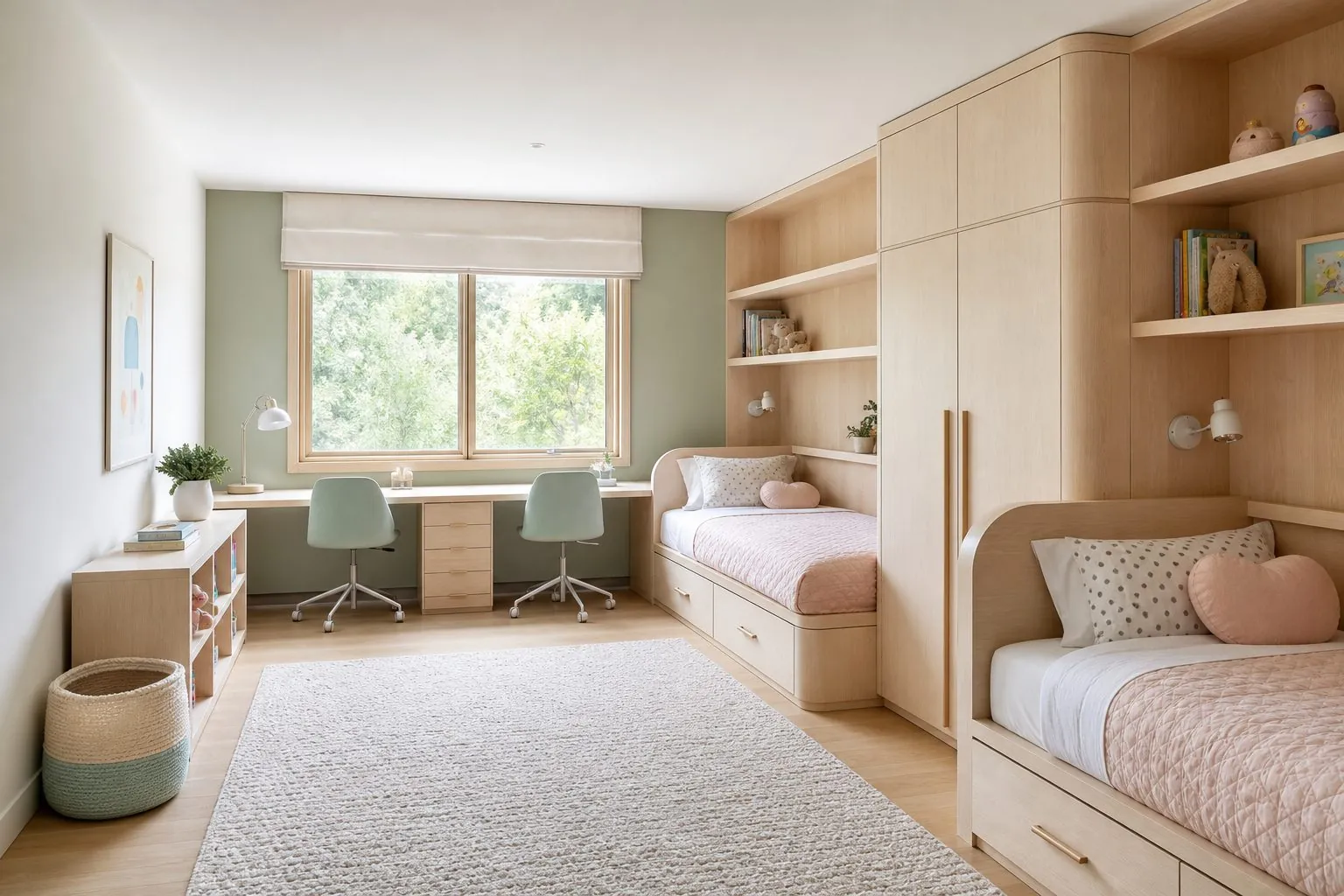
Children's rooms need extra attention. Use locks that young children cannot release, and teach older children how to open the bed safely. Bunk wall beds need guard rails and ladders that meet local rules, and their mechanisms should be checked more often because they carry more weight.
What Should Buyers Confirm Before Ordering?
Most problems come from missing information at the drawing stage. Confirm these items before shop drawings are approved:
- Room dimensions, ceiling height and window positions.
- Wall construction and fixing approval.
- Bed orientation and mattress size, thickness and weight.
- Mechanism type and opening force.
- Integrated storage, desk or sofa requirements.
- Finish to match the room joinery.
- Lighting and power positions.
- Number of units per type and delivery schedule.
For serviced apartment and hotel projects, a mock-up room helps operators test opening force, housekeeping access and bed making before mass production.
Ask the manufacturer which parts are standard and which are custom. Standard mechanisms with local spare part availability are easier to maintain than fully bespoke systems. Also confirm packing: wall beds are heavy, so cartons should be labelled by unit and room and kept to weights that two installers can carry.
How Are Wall Beds Installed and Maintained?
Wall beds are installed by two people after walls and floors are finished. The cabinet is leveled and anchored first, then the bed frame and mechanism are fitted and tensioned.
- Check that the wall is ready and fixing points are marked.
- Assemble and level the cabinet.
- Anchor the cabinet to the wall before fitting the bed.
- Fit the bed frame and mechanism and set tension to the mattress weight.
- Test opening, closing and locking several times.
- Fit side units, lights and finishing panels.
Maintenance teams should check fixings, mechanism tension and locks periodically. Keep spare parts such as pistons, springs and legs referenced by model, so repairs do not require a new bed.
How Can Arcova Help With Wall Beds for Small Units?
Arcova builds wall beds to shop drawings, sources mechanisms by budget and tests fold operation before packing. We coordinate wall beds with wardrobes, desks and side storage in one finish, and pack units labelled by room. Our services include 3D design, finish sample approval, mock-up, inspection with photo reports, installation guidance and 24-hour online technical support. We hold ISO9001, BSCI and FSC certifications. Learn more about our factory, hotel furniture and quality control, or send your room plans.