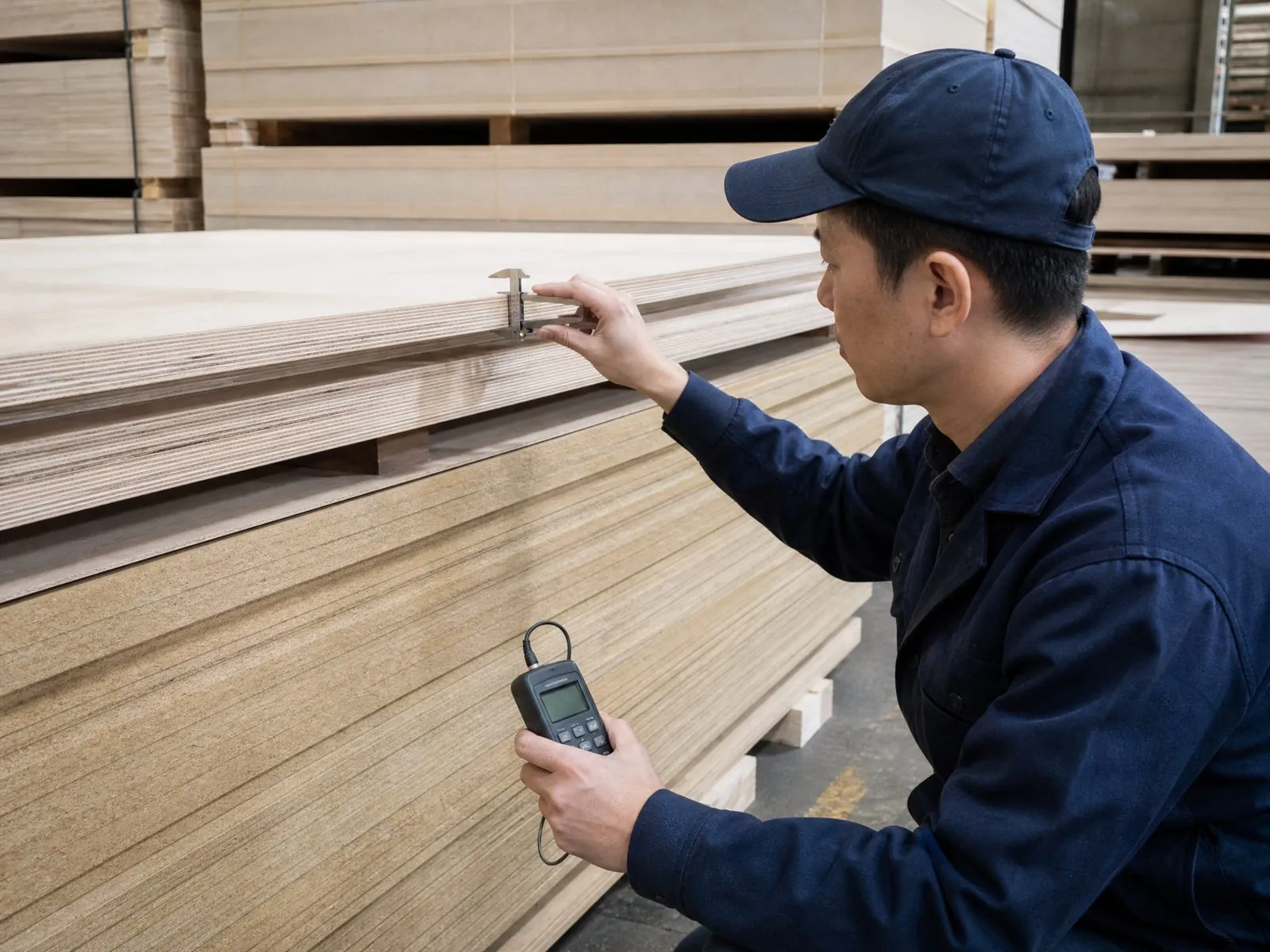
Compare CARB Phase 2, TSCA Title VI, EN 717-1 E1, the EU 0.062 mg/m³ limit and GB/T 39600 E0 and ENF grades, with documents buyers should request.
Why Do Formaldehyde Emission Standards Matter to Cabinetry Buyers?
Emission standards decide whether your cabinets can legally enter a market and whether your project passes handover inspections. Most custom cabinetry is built from wood-based panels such as particleboard, MDF and plywood, and the resins that bond these panels can release formaldehyde into indoor air. Regulators therefore set maximum emission levels for the panels and, in some markets, for the finished furniture.
For a B2B buyer the risk is practical, not theoretical. A container of kitchen cabinets with the wrong documentation can be held at customs, rejected by a developer's consultant or delisted by a retailer. Labels such as "E0", "E1", "CARB" and "ENF" appear on almost every quotation from Asian factories, yet they come from different standards, use different test methods and are expressed in different units. Treating them as interchangeable is one of the most common sourcing mistakes.
This guide explains what each label means, the limit values we have confirmed from current published sources, and what documents to request before production starts.
What Are the Main Emission Standards Used in Cabinetry?
Four standard families cover most export cabinetry: the US rules (CARB Phase 2 and EPA TSCA Title VI), the European E1 class based on EN 717-1 together with the newer EU REACH limit, and the Chinese national standard GB/T 39600-2021 with its E1, E0 and ENF grades. Each has its own scope and unit.
| Standard | Region | What It Regulates | Unit |
|---|---|---|---|
| CARB Airborne Toxic Control Measure, Phase 2 | California, USA | Hardwood plywood, particleboard, MDF and products made from them | ppm |
| TSCA Title VI (EPA) | United States, nationwide | Same panel types, plus finished goods containing them | ppm |
| EN 13986 E1 class, tested to EN 717-1 | Europe | Wood-based panels for construction use | mg/m³ |
| Commission Regulation (EU) 2023/1464 (REACH Annex XVII, entry 77) | European Union | Articles, including furniture and wood-based articles | mg/m³ |
| GB/T 39600-2021 | China | Wood-based panels and their finished products | mg/m³ |
Two points stand out. First, ppm and mg/m³ are different units, so numbers cannot be compared directly without conversion and attention to the test method. Second, some rules apply to the raw panel, while others apply to the finished article, which changes what has to be tested.
What Are the CARB Phase 2 and TSCA Title VI Limits?
CARB Phase 2 and TSCA Title VI use the same emission limits for composite wood panels: 0.05 ppm for hardwood plywood, 0.09 ppm for particleboard, 0.11 ppm for MDF and 0.13 ppm for thin MDF. TSCA Title VI was modeled on the California rule, so a panel that meets one is generally aligned with the other, but the paperwork requirements must still be met separately.
| Panel Type | CARB Phase 2 / TSCA Title VI Limit |
|---|---|
| Hardwood plywood (veneer core or composite core) | 0.05 ppm |
| Particleboard | 0.09 ppm |
| Medium-density fiberboard (MDF) | 0.11 ppm |
| Thin MDF | 0.13 ppm |
The US rules also define reduced-testing categories for panels made with no-added formaldehyde (NAF) or ultra-low-emitting formaldehyde (ULEF) resins. Published EPA guidance states that NAF/ULEF hardwood plywood test values cannot exceed 0.05 ppm, and NAF/ULEF particleboard, MDF and thin MDF test values cannot exceed 0.06 ppm.
What do US buyers need besides the limit?
- Panels certified by an approved third-party certifier (TPC), with the certifier number shown on the panel or bundle
- Labels on finished goods stating TSCA Title VI compliance, or CARB and TSCA compliance where both apply
- Records that link each production lot to compliant panel purchases
EPA has continued to update procedural parts of the rule, including a final rule published in October 2026. The emission limits above remained unchanged in reporting on that update, but importers should check the current regulatory text for testing and recordkeeping details.
What Does E1 Mean Under EN 717-1?
In Europe, E1 is the emission class for wood-based panels defined in EN 13986, and the limit is 0.124 mg/m³ when tested in a chamber according to EN 717-1. E1 has been the effective market baseline for panels across the EU for many years, and many board producers outside Europe also quote E1 for export.
A practical consequence is that "E1" on a Chinese quote may mean two different things: E1 under the European system or E1 under GB/T 39600-2021. Both currently use 0.124 mg/m³ as the limit, but the test method, test laboratory and certificate format can differ. Always ask which standard the E1 claim refers to and request the test report.
What changed in the EU in 2026?
Commission Regulation (EU) 2023/1464 added formaldehyde to REACH Annex XVII as entry 77. From 6 August 2026, furniture and wood-based articles placed on the EU market must not release more than 0.062 mg/m³ of formaldehyde under the conditions set in the regulation. The same regulation sets 0.080 mg/m³ for the interior of road vehicles, which is not relevant for cabinetry but often appears in summaries.
For cabinetry buyers this matters because 0.062 mg/m³ is half of the E1 panel threshold, and the limit applies to the article. Using standard E1 panels alone does not automatically prove compliance; buyers selling into the EU should ask for lower-emitting board grades and for test evidence that covers the finished product or a representative configuration.
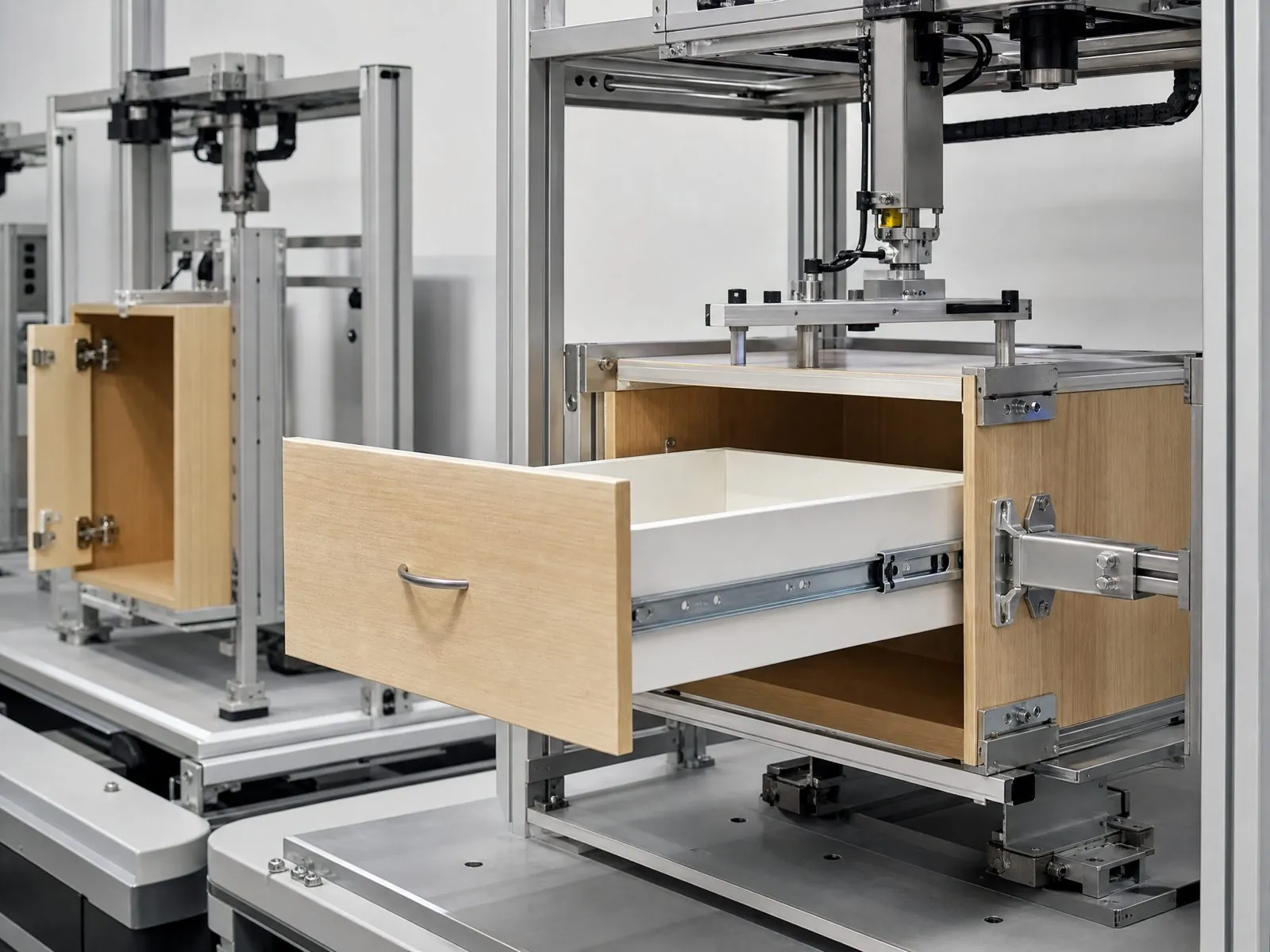
What Are E0 and ENF Under the Chinese GB/T 39600 Standard?
GB/T 39600-2021 grades wood-based panels and their finished products into three emission classes: E1 at ≤0.124 mg/m³, E0 at ≤0.050 mg/m³ and ENF at ≤0.025 mg/m³. The standard took effect on 1 October 2021 and uses a 1 m³ climate chamber method.
| GB/T 39600-2021 Grade | Limit | Typical Use in Quotations |
|---|---|---|
| E1 | ≤0.124 mg/m³ | Basic compliant grade for the Chinese market |
| E0 | ≤0.050 mg/m³ | Common upgrade grade for residential cabinetry |
| ENF | ≤0.025 mg/m³ | Lowest-emission grade in the standard |
Before this standard, "E0" was widely used as a marketing term with no single national definition, and some suppliers still use it loosely. Since 2021, buyers can ask for an E0 or ENF claim to be backed by a GB/T 39600-2021 test report from a qualified laboratory. If a supplier cannot name the standard, treat the claim as unverified.
Is ENF the same as no-added formaldehyde?
No. ENF is an emission grade with a measured limit, while NAF in the US system refers to the resin chemistry used to make the panel. A panel can be graded ENF without being made with NAF resin, and the documentation for each is different.
How Do These Standards Compare Side by Side?
The quickest way to compare the standards is by market requirement rather than by trying to convert every number. Choose the rule that applies where the cabinets will be installed, then confirm the grade with the correct test report.
| Target Market | Rule to Follow | Confirmed Limit Values | Key Document |
|---|---|---|---|
| United States | TSCA Title VI; CARB Phase 2 in California | Plywood 0.05 ppm, particleboard 0.09 ppm, MDF 0.11 ppm, thin MDF 0.13 ppm | TPC panel certification, compliance labels |
| European Union | REACH Annex XVII entry 77; EN 13986 E1 for panels | Furniture and wood-based articles 0.062 mg/m³; E1 panels 0.124 mg/m³ (EN 717-1) | Chamber test report for article or panel |
| China | GB/T 39600-2021 | E1 0.124, E0 0.050, ENF 0.025 mg/m³ | GB/T 39600 test report |
| Other markets | Local building or project specification | confirmed per project | As required by consultant |
Many Middle East, Southeast Asian and African projects do not have a dedicated national furniture emission rule but follow the specification written by the consultant, which often references CARB, E1 or E0. Read the project specification first, then match the board grade and documents to it.
Which Standard Should You Specify for Your Project?
Specify the rule of the destination market as the minimum, and upgrade only where the contract, brand standard or end user requires it. Paying for the lowest-emission grade everywhere raises costs without always adding commercial value.
- US residential and hotel projects: TSCA Title VI compliant panels are the legal baseline; California projects also follow CARB Phase 2.
- EU furniture imports: plan for the 0.062 mg/m³ article limit rather than relying on panel E1 status alone.
- Projects with green building targets: check whether the rating system asks for NAF or ULEF panels or specific test evidence.
- Children's rooms, healthcare and education: buyers often choose E0 or ENF grade boards to give a margin below the legal limit.
- Mixed-market distributors: one board grade that satisfies the strictest market simplifies stock and documentation.
Write the exact standard and grade into the purchase contract, for example "particleboard compliant with TSCA Title VI" or "ENF grade per GB/T 39600-2021", rather than a general phrase such as "environmentally friendly board."

How Can You Verify a Supplier's Emission Claims?
Verify claims with documents that trace back to the actual boards used in your order. A certificate shown on a website is not enough; the evidence has to cover the board supplier, the grade and the production period.
- Ask for the board brand and grade for each component: carcass, doors, back panels and shelves.
- Request test reports that name the standard (TSCA Title VI, EN 717-1, GB/T 39600-2021) and are current.
- For US orders, check the third-party certifier number and how finished goods will be labelled.
- Ask for purchase records or delivery notes linking compliant board lots to your production run.
- For high-risk orders, arrange independent sample testing of finished parts before shipment.
- Keep sealed reference samples from production in case questions arise after delivery.
Edge banding, adhesives and lacquers can also affect emissions from the finished article, especially under rules that test the whole product. Ask how edges and hidden surfaces are sealed, since unsealed panel edges are a common emission path.
What Mistakes Do Buyers Make With Emission Grades?
The most expensive mistakes come from assuming that a label means the same thing everywhere. Watch for these issues during sourcing:
- Comparing ppm values with mg/m³ values without considering the unit and test method
- Accepting "E0" without asking which standard defines it
- Assuming E1 panels automatically meet the new EU article limit
- Approving a sample made from compliant board, then receiving production made from another board source
- Forgetting labelling requirements for finished goods entering the US
- Specifying ENF everywhere when the market only requires a lower grade, which raises cost without a buyer benefit
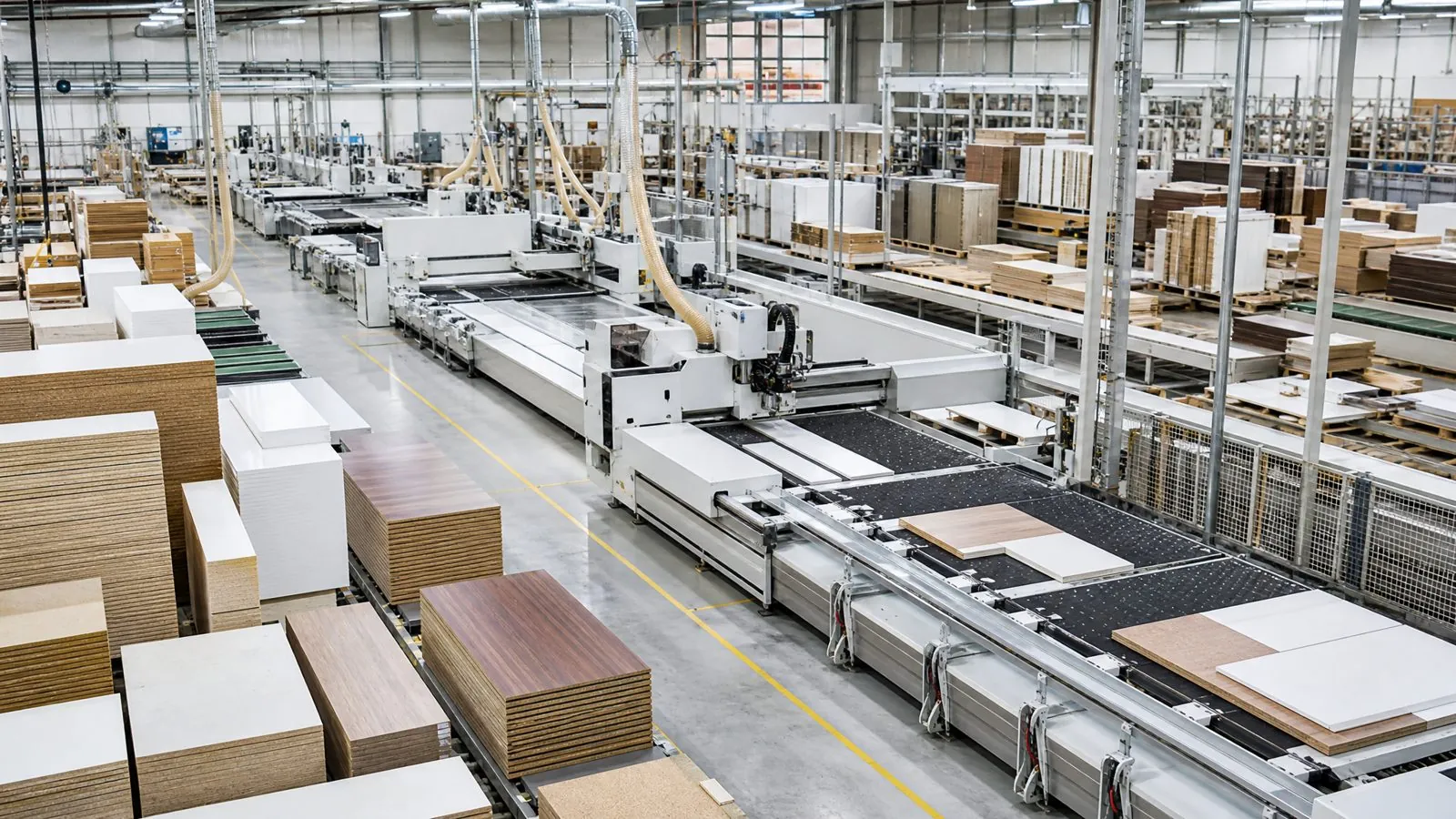
How Can Arcova Help With Emission Compliance?
Arcova can match board grades and documents to your target market before production starts. The company holds ISO9001, BSCI and FSC certifications and sources boards from suppliers including EGGER, Kronospan and DARE.
- Board specification by component and target market, confirmed in shop drawings
- Finish sample approval and mock-ups before mass production
- Inspection with photo reports and export packing labelled by unit and room
- 24-hour online technical support for specification questions
Specific test values for a given order are confirmed at quotation with the relevant board batch and test report. Send your project specification and target market through our contact page, or read more about our quality control process.