A practical checklist for auditing a custom furniture factory: documents, capacity, production floor, quality control, engineering, red flags and how to score the results.
Why Should You Audit a Custom Furniture Factory Before Ordering?
A factory audit tells you whether a supplier can actually deliver your project at the agreed quality, volume and schedule, which a quotation and a few samples cannot prove. Samples are usually made by the best workers with extra care; an audit shows how the factory performs on an ordinary production day.
Custom furniture carries more risk than standard furniture because every order is different. Each project needs drawing interpretation, programming, cutting to unique sizes, matching finishes and packing by unit. Weakness in any of these steps shows up only after the containers arrive on site, when fixing problems is slow and expensive.
An audit is most valuable before a first large order, before a project with a fixed handover date, and when you are moving production from one supplier to another. It also gives you a baseline for later inspections and a shared vocabulary with the factory team.
How should you plan the audit day?
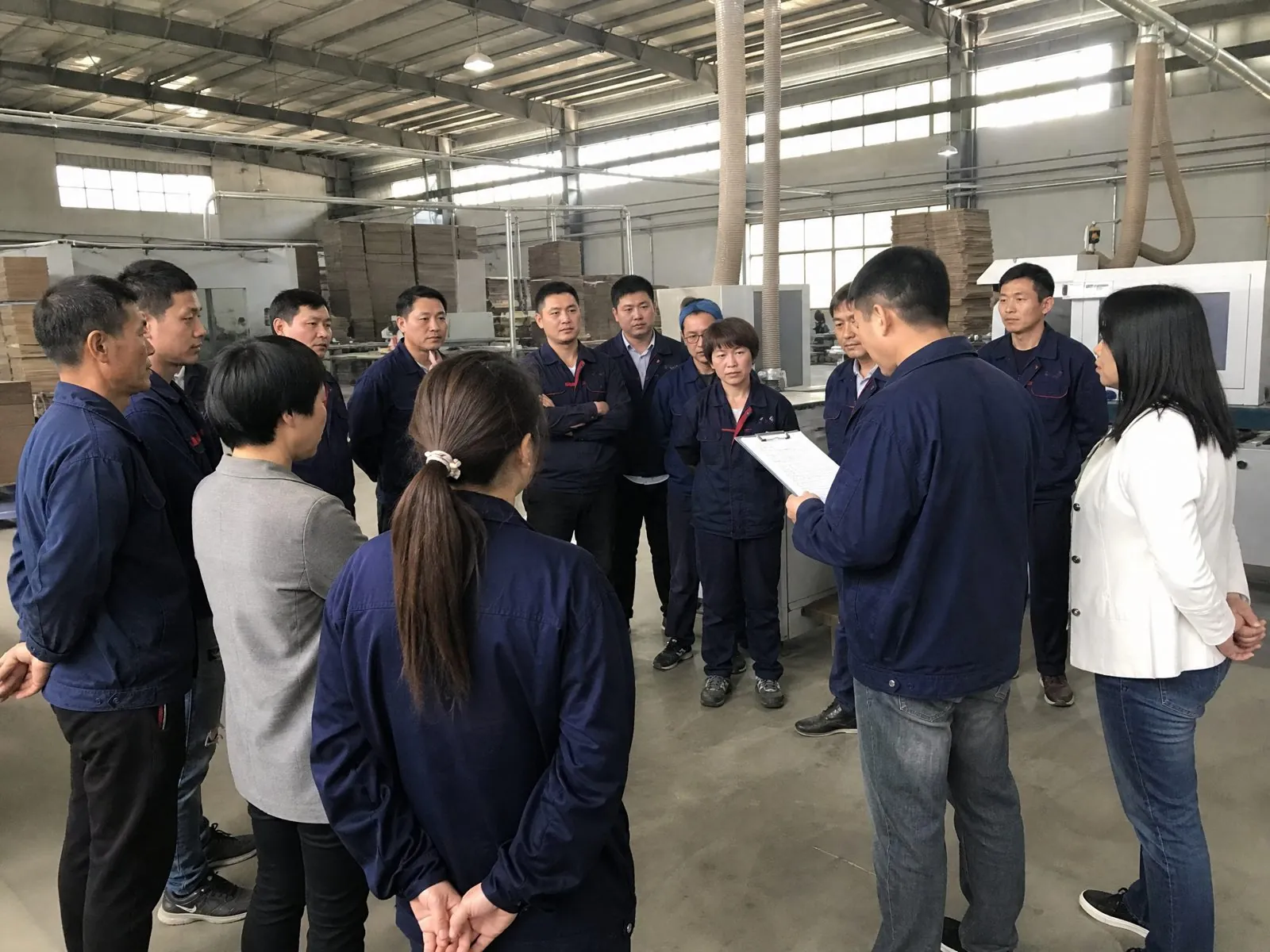
Plan a full working day for an on-site technical audit and agree the agenda with the factory in advance. A practical sequence is:
- Opening meeting with management, project and quality leads (about one hour)
- Walk-through following the material flow, from board storage to the loading area
- Focused review of the quality office, engineering team and records
- Check of a live order in production, ideally one similar to your project
- Closing meeting to share findings and agree follow-up actions
Visit on a normal production day, not a holiday or shutdown, and bring your own drawings so you can test how the team reads them.
What Types of Factory Audits Can Buyers Use?
Buyers can choose between desk reviews, remote video audits, on-site technical audits and third-party audits, and most first-time buyers combine at least two. The right mix depends on order value, project risk and whether your team can travel.
| Audit Type | What It Covers | Strength | Limitation |
|---|---|---|---|
| Desk review | Business license, certificates, test reports, references | Fast and low cost | Documents may not reflect daily practice |
| Remote video audit | Live walk-through of lines, warehouse and QC area | No travel needed | Camera shows only what the host chooses |
| On-site technical audit | Machines, process, quality system, project management | Most complete picture | Requires travel and technical knowledge |
| Third-party audit | Standardized checklist by an inspection company | Independent and documented | Generic checklists may miss cabinetry-specific risks |
| Social compliance audit | Labor, safety and ethics, for example BSCI | Required by many retailers | Does not assess product quality |
If you use a third-party company, add cabinetry-specific items to their checklist, such as edge banding quality, drilling accuracy and finish consistency, rather than relying on a general manufacturing template.
What Documents Should You Request Before the Visit?
Request documents in advance so the visit can focus on checking practice, not reading paperwork. A supplier that cannot send basic documents before a visit is already giving you useful information.
- Business license and export registration
- Management system certificates, for example ISO9001, with scope and validity dates
- Product and material certificates relevant to your market, such as CARB, FSC or CE
- Social compliance reports, for example BSCI, if your customers require them
- Board and hardware supplier list with brands and grades
- Recent emission test reports for the boards used
- Equipment list for cutting, edge banding, drilling, finishing and packing
- Sample inspection report and sample shop drawings from a previous project, with client details removed
- Organization chart showing project, design, production and quality roles
Check that certificate names, addresses and scopes match the factory you are visiting. A certificate held by a trading company or a sister factory does not cover the production site you will use.
How Do You Assess Production Capacity Realistically?
Assess capacity by checking machines, shifts and current workload against your order, not by accepting a headline figure. A factory may have strong monthly capacity in total but limited free capacity during your production window.
- Ask for monthly output in containers or cabinets, and which product mix that figure assumes.
- Count the main lines: panel saws or CNC cutting, edge banders, drilling machines and finishing lines.
- Identify the bottleneck. In painted cabinetry it is usually the spray and drying area, not cutting.
- Ask what share of capacity is already booked for the months you need.
- Check warehouse space for finished goods waiting for loading, especially for staged projects.
- Ask how rush orders or changes are handled without disrupting other projects.
For whole-house projects, also confirm that the factory can produce all categories in-house. If doors or countertops are outsourced, the audit should cover who makes them and how quality is controlled.
What Should You Check on the Production Floor?
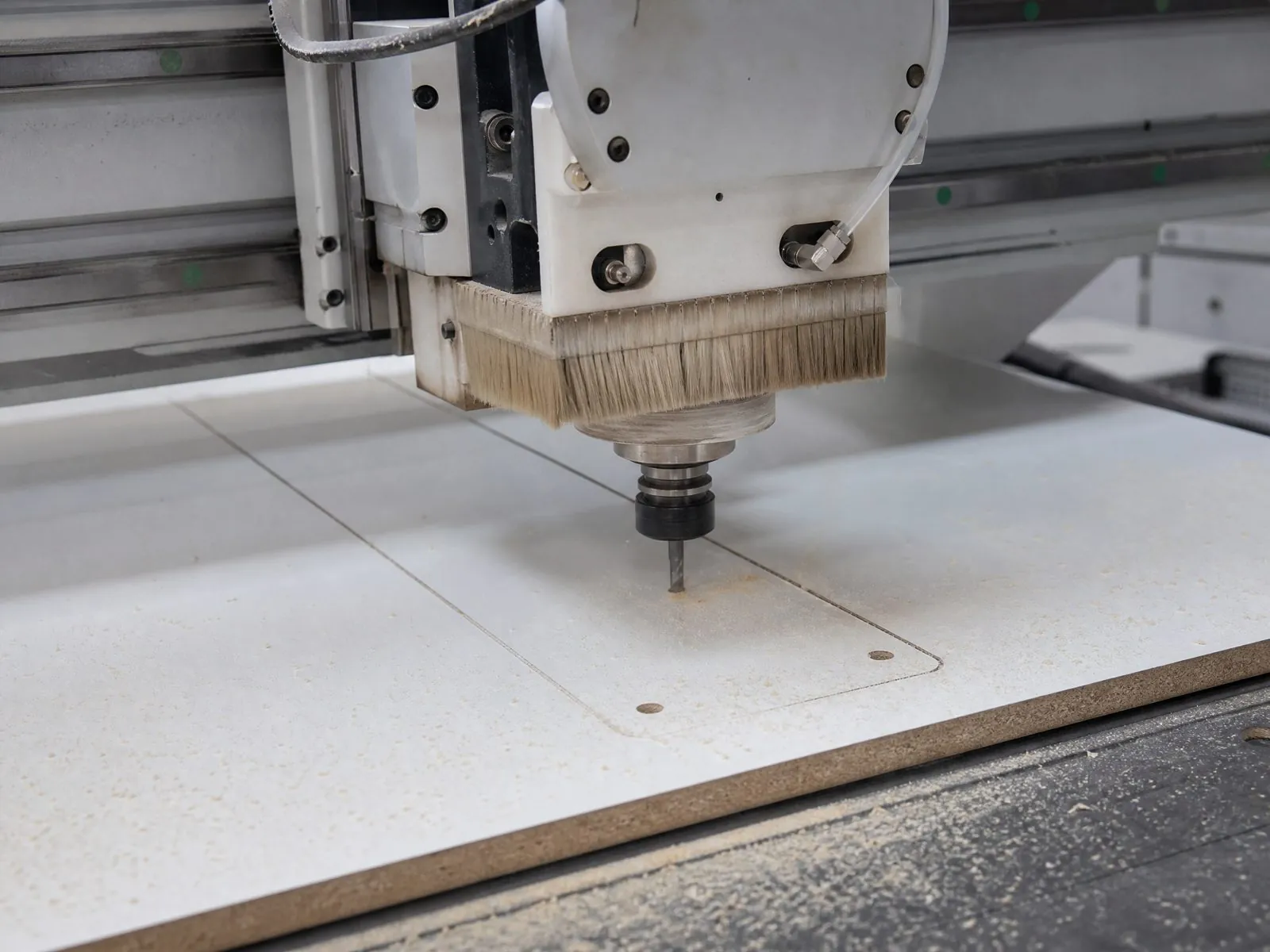
On the floor, look at process control at each workstation rather than at the machines alone. Good equipment run without checks produces consistent errors at high speed.
| Process Area | What to Look For | Warning Signs |
|---|---|---|
| Board storage | Boards stored flat, off the floor, labelled by grade and brand | Mixed grades, boards leaning or exposed to moisture |
| Cutting | Cutting lists from shop drawings, part labels or barcodes | Handwritten sizes, no part identification |
| Edge banding | Clean glue lines, consistent trimming, first-piece checks | Glue squeeze-out, chipped corners, peeling edges |
| Drilling | Programmed hole positions matching hardware templates | Manual marking for standard holes |
| Finishing | Dust control, sample references at the line, controlled drying | Dust in paint, no master sample visible |
| Assembly and dry fit | Trial assembly of key units, hardware adjustment | No pre-assembly before packing |
| Packing | Corner protection, labels by unit and room, packing lists | Generic cartons with no room reference |
Ask an operator to show how they know the correct size and color for the part in front of them. The answer tells you whether information flows from drawings to the floor in a controlled way.
How Do You Evaluate the Quality Control System?
A credible quality system has defined checkpoints, written standards, trained inspectors and records you can trace to a specific order. Look for evidence that defects are recorded, analyzed and corrected, not only sorted out.
Key checkpoints to confirm
- Incoming material inspection: board thickness, surface, grade and supplier documents; hardware models and quantities
- In-process checks: first-piece approval after each setup, dimensional checks during cutting and drilling
- Finish checks: comparison against signed master samples under consistent lighting
- Final inspection: sampling plan, defect classification and photo records before packing
Ask to see an inspection report from a recent order and the corrective action taken when a problem was found. Also ask who has authority to stop shipment. If the quality team reports to production management, it may be under pressure to release goods on time even when issues remain.
How Do You Assess Engineering and Project Management?
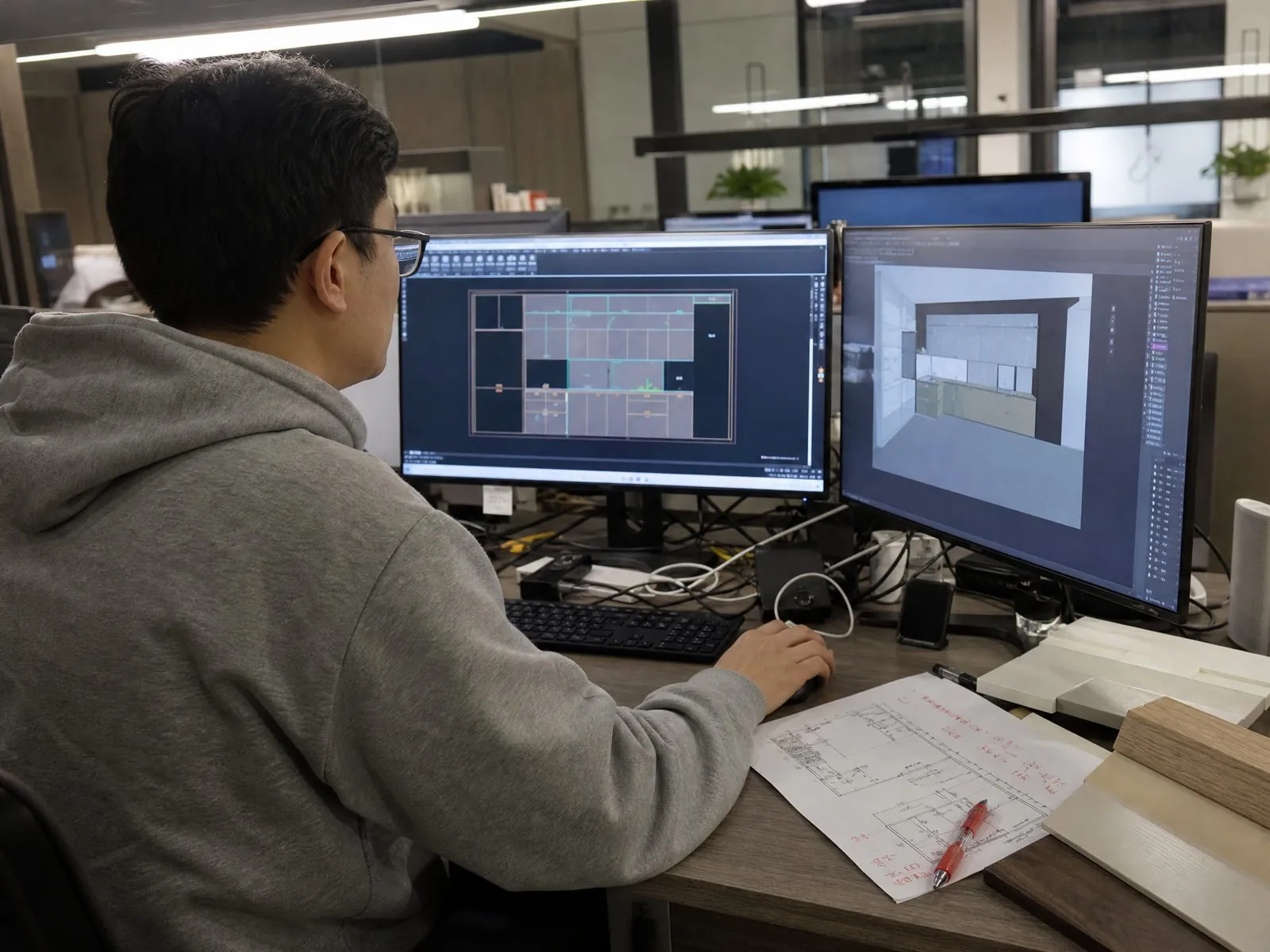
For custom cabinetry, the engineering team matters as much as the production line, because most site problems start with drawings. Evaluate how the factory turns your design into buildable shop drawings and how it controls changes.
- Who prepares shop drawings, and what software and drawing standards do they use?
- How are site measurements checked against architectural drawings?
- How are revisions numbered, approved and communicated to the floor?
- Is there a single project manager who speaks your language and owns the schedule?
- Can the factory produce 3D views and a mock-up for approval?
- How does the factory handle interfaces such as appliances, sinks and countertops?
Ask the team to walk you through a past project from drawing to shipment. Clear, specific answers indicate a repeatable process; vague answers suggest the project depends on one or two individuals.
Which Red Flags Should Stop or Delay an Order?
Some findings should pause a purchase decision until they are resolved. Treat the following as serious red flags:
- Certificates that belong to a different company or address
- Refusal to show certain production areas without a clear reason
- No traceable link between board purchases and emission claims
- Samples made in a different workshop from mass production
- No written inspection records for recent orders
- Large parts of production outsourced without disclosure
- Unclear answers on who signs off shop drawings and changes
Not every gap is a deal breaker. A factory with honest answers and a clear improvement plan can be a better partner than one with perfect documents and evasive staff. Record findings and agree corrective actions in writing.
How Should You Score and Follow Up on the Audit?
Score the audit with a simple weighted checklist and turn the results into contract terms and inspection points. An audit only reduces risk when its findings change how the order is managed.
| Area | Suggested Weight | Example Evidence |
|---|---|---|
| Quality system and records | 25% | Inspection reports, corrective actions |
| Engineering and drawings | 20% | Shop drawing samples, revision control |
| Production process control | 20% | First-piece checks, part labelling |
| Materials and compliance | 15% | Board grades, test reports, certificates |
| Capacity and scheduling | 10% | Line count, booked workload |
| Packing and logistics | 10% | Packing method, labelling, loading plans |
The weights above are an example; adjust them to your project. After scoring, add the most important findings to the purchase contract, schedule a pre-production meeting, and plan in-process and pre-shipment inspections around the weak areas the audit identified.
How Can Arcova Support Your Factory Audit?
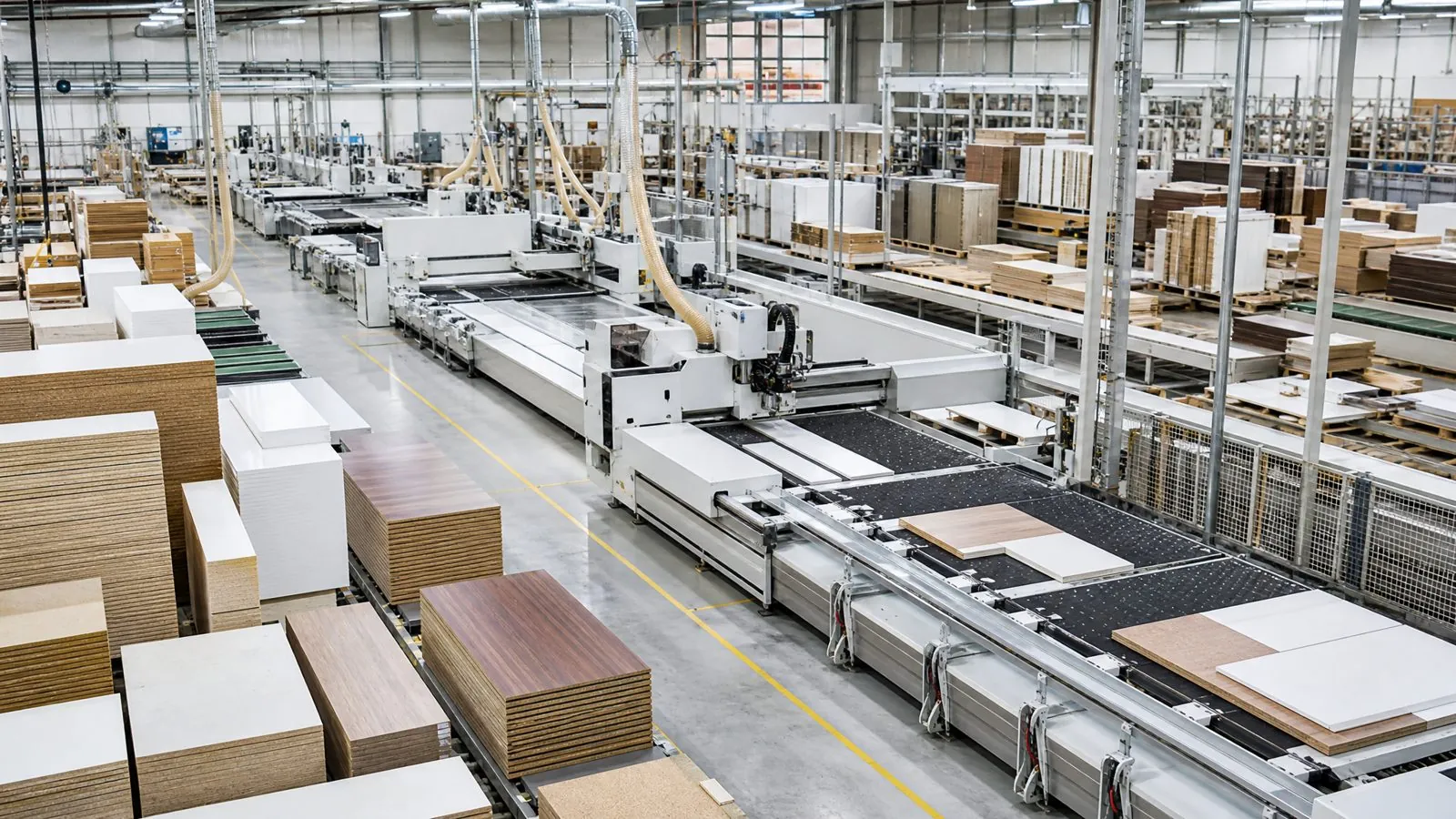
Arcova welcomes on-site and remote audits of the Arcova Contract Manufacturing Base. Buyers can review the facts below before planning a visit:
- 12+ years of manufacturing and a 40,000 m² factory
- 12 production lines, including automated CNC cutting, edge banding and drilling lines
- Monthly capacity of 40 × 40HQ containers
- Certifications: ISO9001, BSCI and FSC
- Drawing deepening, 3D design, finish sample approval, mock-ups and inspection with photo reports
- Export packing labelled by unit and room, installation guidance and 24-hour online technical support
Visit our factory page for an overview of the production base, or use the contact page to request documents and arrange a video or on-site audit.