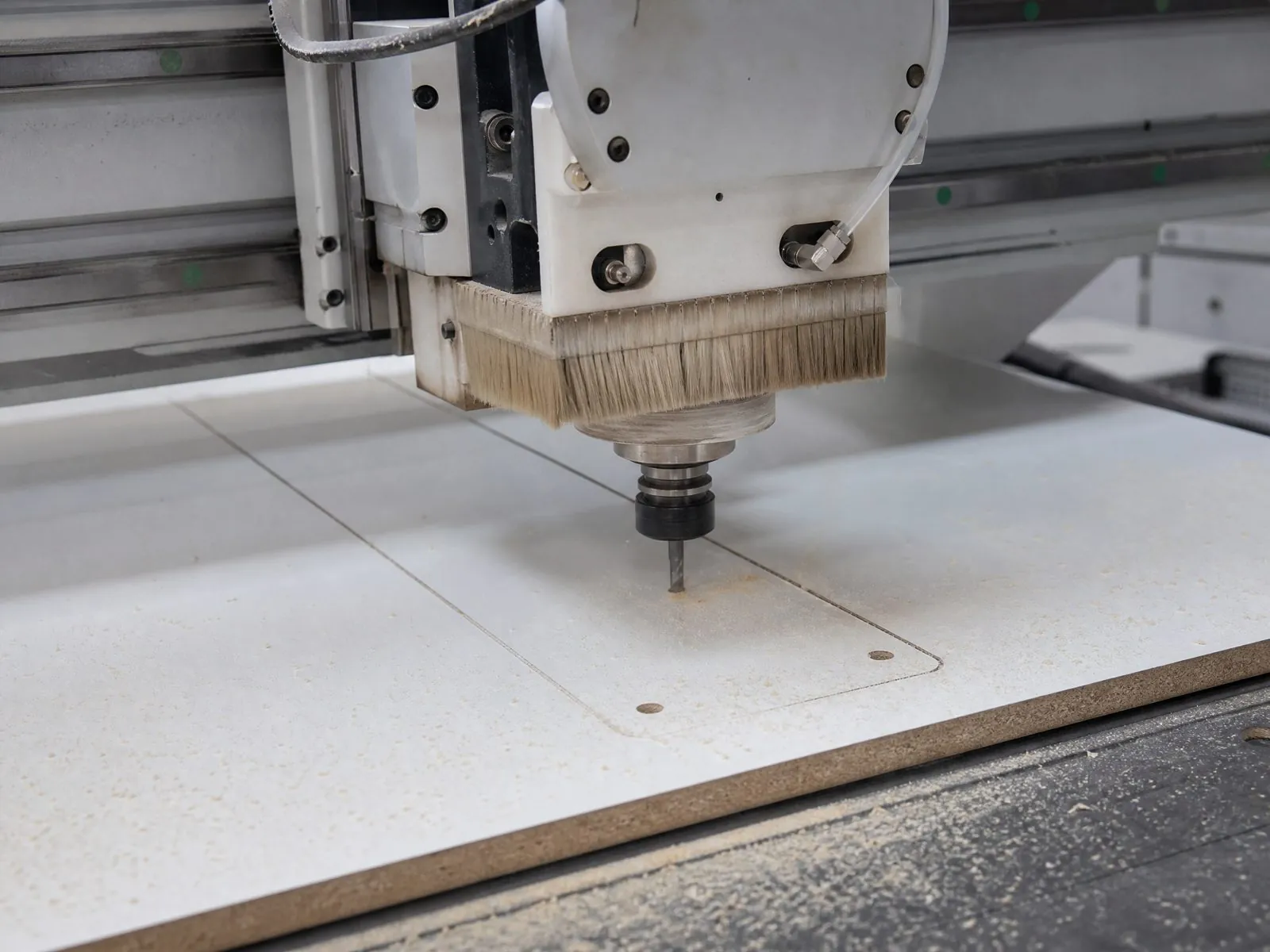
Particleboard, MDF, plywood and solid wood compared for custom furniture: where each works, emission standards, finishes, project specifications and common board problems.
Which Board Material Is Best for Custom Furniture?
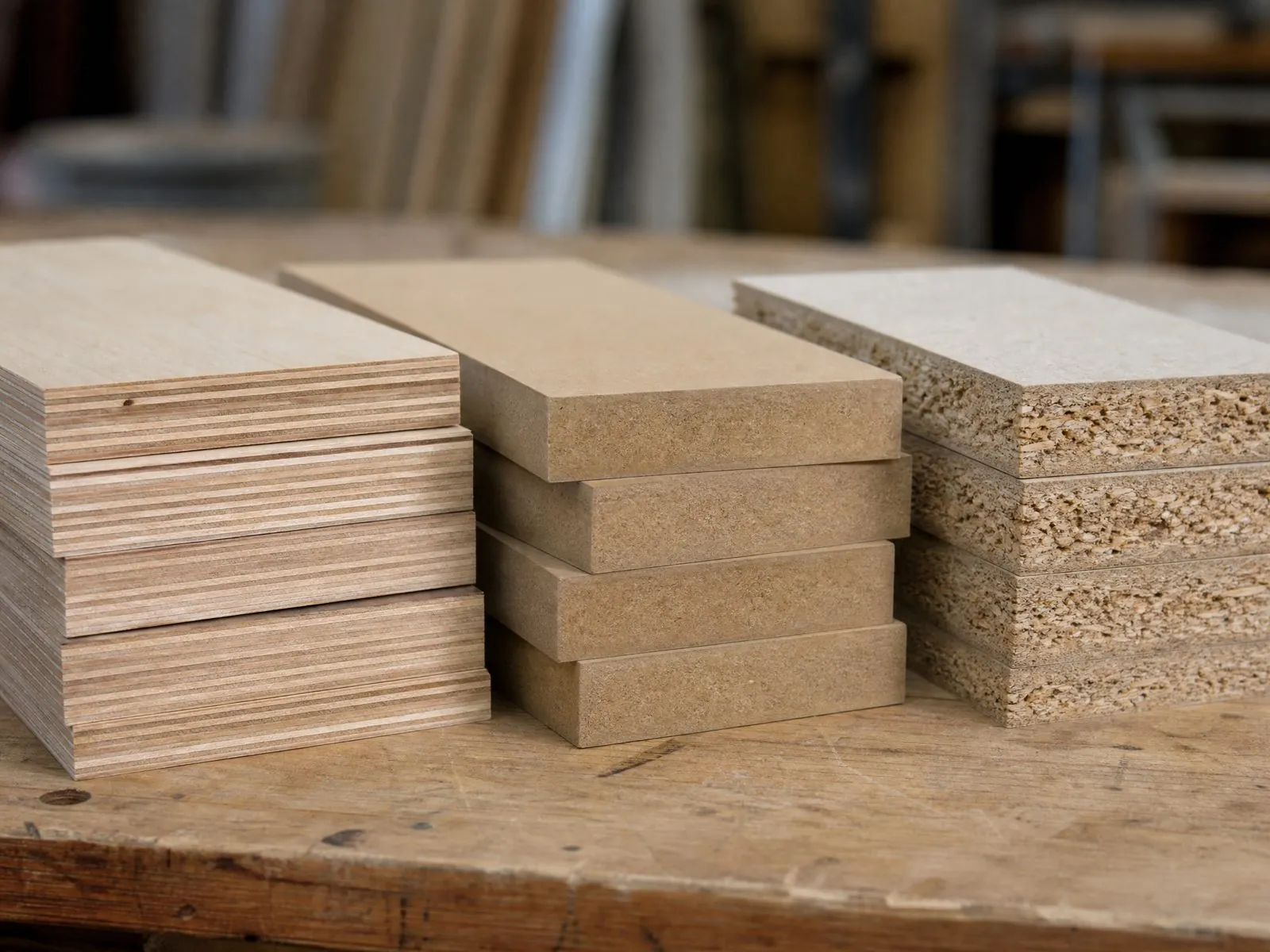
There is no single best board. Melamine-faced particleboard is the best value for carcasses and repeated project furniture, MDF is best for painted, shaped and fluted fronts, and plywood is best where strength, screw holding and moisture tolerance matter most. Most custom furniture combines two or three boards, each used where it performs best.
Board choice affects cost, weight, durability, finish quality and emissions. It also affects how the factory machines, edges and assembles each part, so it should be fixed early in the design process rather than changed during production.
| Board | Best Use | Main Strength | Main Weakness |
|---|---|---|---|
| Melamine-faced particleboard | Carcasses, wardrobes, office storage | Cost-effective, consistent, wide decor range | Weaker screw holding; edges sensitive to water |
| MDF | Painted doors, fluted and routed fronts | Smooth, machinable, ideal for lacquer | Heavy; swells if water reaches the core |
| Plywood | Kitchens, vanities, heavy-duty furniture | Strong, good screw holding, lighter than MDF | Higher cost; surface may need facing |
| Moisture-resistant grades | Kitchens, bathrooms, laundries | Better tolerance to humidity | Still needs sealed edges |
| Solid wood | Frames, edges, feature pieces | Natural character, repairable | Moves with humidity; higher cost |
Buyers often compare quotations without checking which boards are included. Two kitchens that look the same in drawings can differ greatly in durability if one uses standard particleboard at the sink and the other uses moisture-resistant plywood. Always ask for a component-by-component board schedule before comparing prices.
How buyers should read a board quotation
A quotation should name the board type, grade, emission class and supplier for each component, not just say "E1 board" for the whole order. If it does not, ask for a board schedule before comparing prices. The cheapest quotation is often the one with the lowest board grade at the sink, the thinnest backs or the weakest shelf material.
What Is Melamine-Faced Particleboard and Where Does It Work?
Melamine-faced particleboard is wood particles bonded with resin and faced with decorative melamine paper. It is the standard material for carcasses and many fronts in kitchens, wardrobes and office furniture.
- Consistent quality and color across large batches.
- Wide range of solid colors, wood grains and textures.
- Ready-finished surface, no painting required.
- Machined accurately on CNC cutting and drilling lines.
- Matching edge banding for each decor.
Its limits are screw holding at edges and water sensitivity at unsealed cuts. Use quality fittings designed for particleboard, and seal edges and cut-outs near sinks and dishwashers. Board suppliers such as EGGER, Kronospan and DARE offer extensive decor ranges.
Melamine decors are produced in batches, and colors can vary slightly between them. For large projects, order boards for each finish in one batch where possible, or approve a range of acceptable variation in advance. Wood-grain decors with synchronized texture look more realistic but cost more than flat prints.
For rental and hospitality projects, melamine's ready-finished surface also means no on-site painting and fewer finish defects at handover.
When Should You Choose MDF?
Choose MDF when the surface will be painted, lacquered, routed, fluted or wrapped. Its fine, uniform structure gives smooth surfaces and crisp machined profiles that particleboard cannot match.
- Painted and lacquered doors: smooth, seamless finish.
- Shaker and routed fronts: clean profiles and grooves.
- Fluted panels: consistent groove spacing.
- PET and PVC wrapped doors: stable substrate.
- Curved parts: flexible MDF grades for bending.
MDF is heavy, so large doors need stronger hinges. It swells if water enters, so all edges must be sealed. Moisture-resistant MDF is recommended for kitchens and bathrooms.
MDF density matters. Higher-density MDF machines more cleanly and gives better results for fluted and routed details, while lower-density grades may show rough grooves after painting. Ask for a routed sample in the chosen finish to check quality before approving production.
Thin MDF backs are common in carcasses because they are stable and cheap. For tall units that must be fixed to walls, a thicker back or fixing rail gives a secure anchor point, which matters for wardrobes and bookcases in homes with children.
When Is Plywood Worth the Extra Cost?
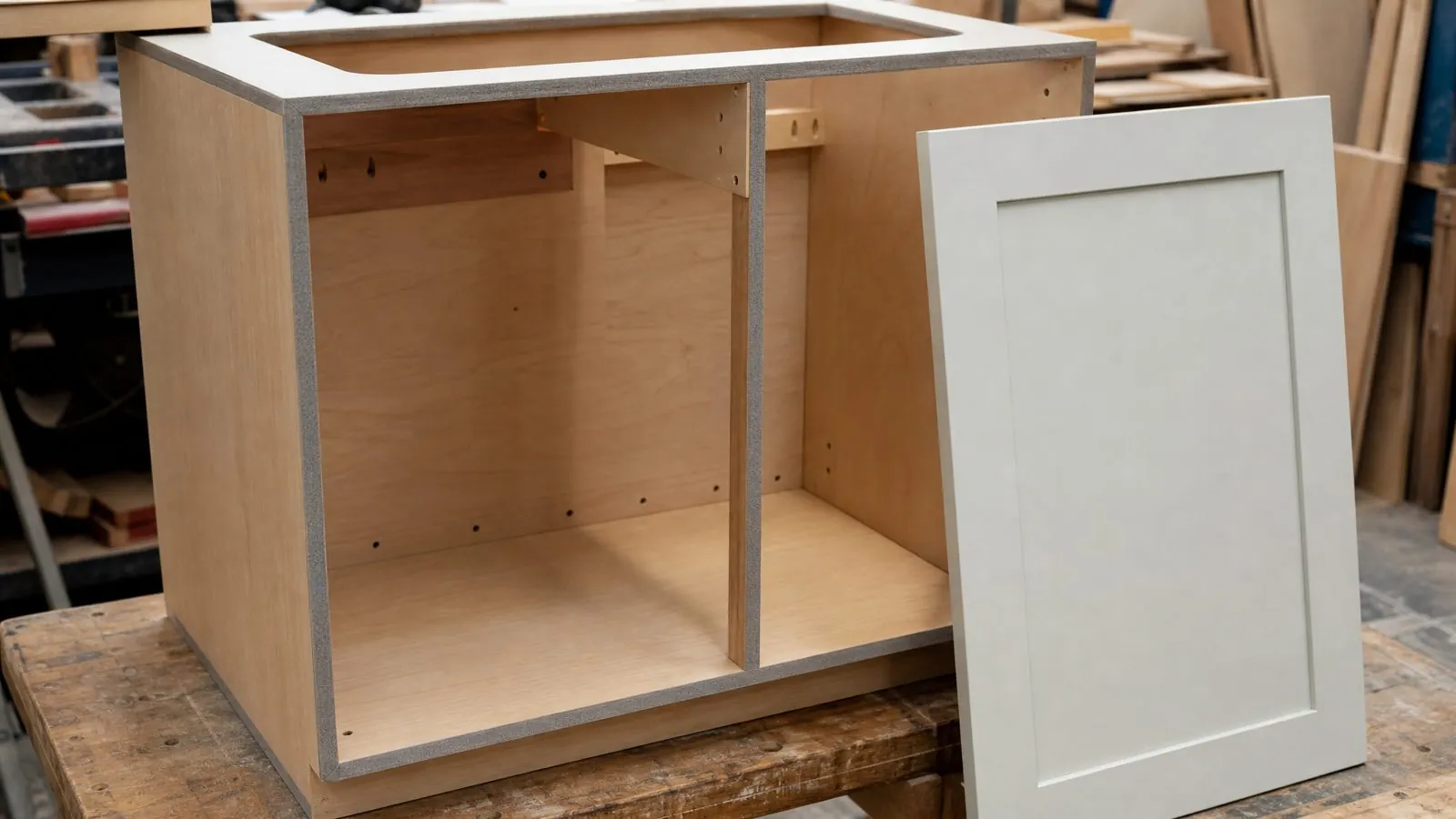
Plywood is worth it for parts that carry heavy loads, need strong screw holding or face higher moisture risk. Its cross-laminated veneers make it strong and dimensionally stable.
- Sink base cabinets and vanities.
- Heavy shelves and long spans.
- Reception desks and commercial counters.
- Furniture that will be moved or disassembled.
- Markets that prefer plywood for perceived quality.
Plywood quality varies widely by species, core construction and glue type. Specify the grade and glue standard required and ask for samples. Panel thickness is confirmed per design and supplier.
In some markets, buyers specify plywood for the whole kitchen for perceived quality. A common compromise is plywood for sink base cabinets and vanities, where moisture risk is highest, and melamine particleboard elsewhere. This keeps costs controlled while improving performance where it matters.
Plywood edges can be shown as a design feature in modern furniture, with clear lacquer over the visible layers. This requires a higher grade with void-free inner veneers, which should be specified explicitly and checked on samples.
How Do Emission Standards Affect Board Choice?
Emission standards limit formaldehyde released from boards and are often legal requirements in the destination market. Specify the required standard before production, because boards cannot be upgraded after cutting.
| Standard | Typical Market | What It Means |
|---|---|---|
| CARB Phase 2 / TSCA Title VI | United States | Legal formaldehyde limits for composite wood |
| E1 | Europe and many export markets | Common emission class for furniture boards |
| E0 and lower-emission classes | Projects with stricter requirements | Lower formaldehyde emissions than E1 |
| Project or brand specifications | Hotels, developers, retailers | May exceed legal minimums |
Arcova supplies SGS-tested low-emission boards and can can source boards meeting CARB requirements on request for markets that require them. Ask for board certificates and test documents as part of your submittals.
Emission performance also depends on finishes and adhesives, not only the raw board. Lacquers, glues and edge banding adhesives should be compatible with the required standard, and documents should cover the finished product when the market requires it.
How Do Surface Finishes Relate to Board Choice?
The finish and board must suit each other. Some finishes are pressed onto boards at the supplier, others are applied in the furniture factory.
- Melamine: on particleboard or MDF, pressed at the board supplier.
- HPL laminate: bonded to particleboard, MDF or plywood for high-wear surfaces.
- PET and acrylic: laminated or wrapped on MDF.
- Lacquer: sprayed on MDF for painted finishes.
- Veneer: pressed on MDF or plywood, then lacquered.
Edge banding should match the face finish, and visible edges should be specified in the drawings. See our quality control for how finishes are inspected.
Balance is important. A door with a heavy laminate on one face and a thin finish on the other may bow over time. Factories counter this with balancing layers on the back face, which should be included in the specification even if they are not visible.
Compact laminate is a special case. It is a solid laminate board without a wood core, used for worktops, toilet partitions and wet-area cabinets where water resistance is critical. It needs special cutting tools and edge treatment, but it does not swell.
How Should Boards Be Specified in a Project?
Write the board specification by component, not by product. A kitchen, for example, may use different boards for carcasses, sink bases, doors and worktops.
- List components: carcass sides, backs, shelves, doors, drawer fronts, worktops.
- Assign board type and moisture grade to each.
- Specify emission standard for all boards.
- Define face finish and edge banding per component.
- State thickness per component as confirmed at quotation until agreed.
- Name approved board suppliers if required.
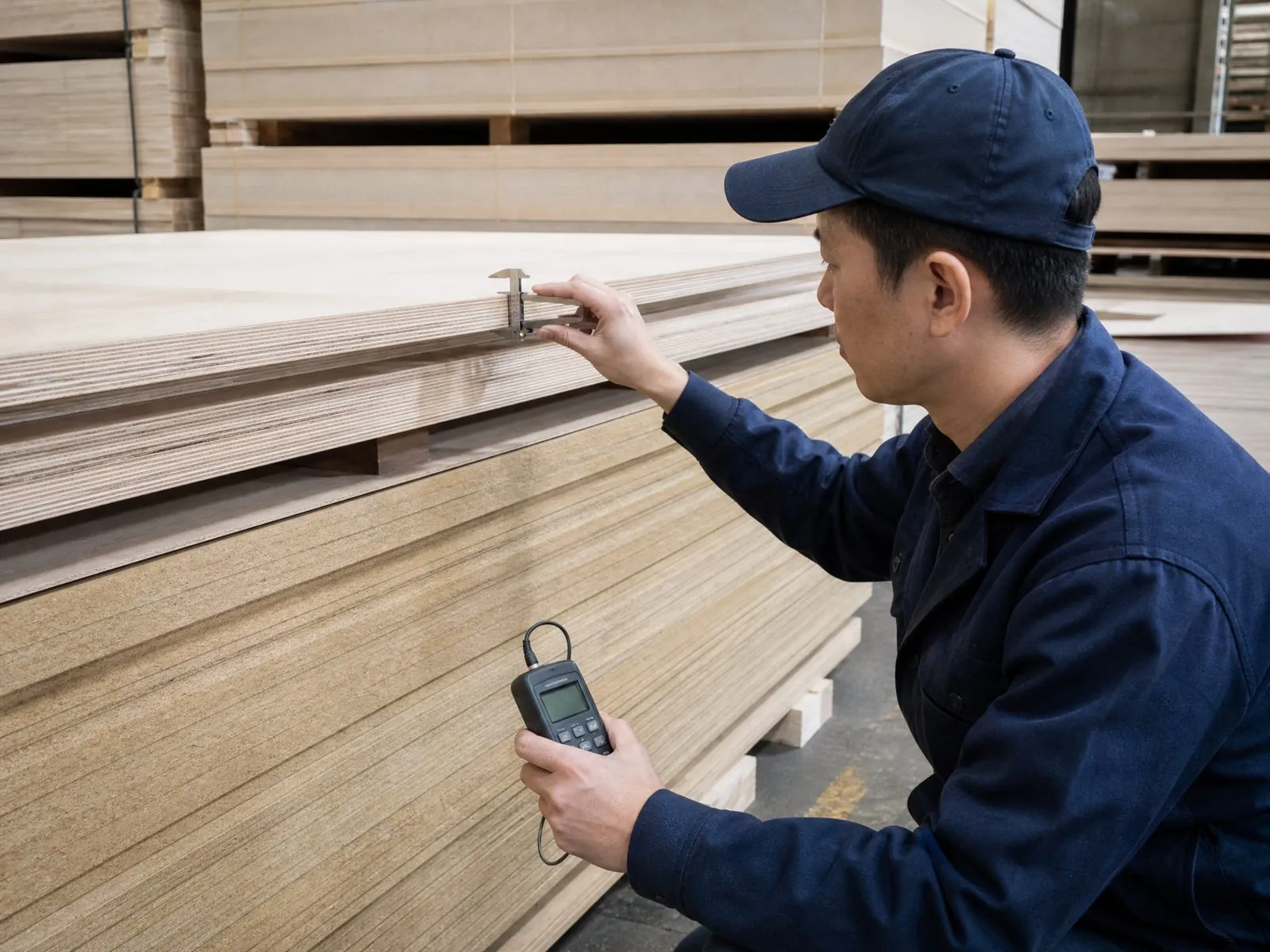
Also define how boards will be inspected. Incoming material checks should confirm board type, thickness, moisture grade and emission certificates against the specification before cutting starts. Photo reports of board labels give buyers traceability without visiting the factory.
When the designer specifies only the finish, the factory chooses the core. That can work for experienced buyers who trust the supplier, but for projects with defined performance needs, specify both finish and core so quotations are comparable and the result is predictable.
FSC-certified boards can also be specified where the project requires certified wood sources. Arcova holds FSC certification and is FSC certified; chain-of-custody paperwork for specific orders is confirmed at quotation.
What Are Common Board-Related Problems and How Are They Prevented?
Most board problems come from using the wrong board for the location or poor edge sealing.
- Swelling at sink bases: use moisture-resistant boards and sealed edges.
- Sagging shelves: choose suitable thickness and spans, or plywood for heavy loads.
- Loose hinges: use correct fittings and inserts for particleboard.
- Warped doors: balance finishes on both faces and use stable cores.
- Color mismatch: order from one batch and approve signed samples.
Climate during shipping and storage matters too. Boards and finished furniture stored in damp warehouses or containers can absorb moisture before installation. Good export packing, desiccants for long sea journeys and dry site storage protect the furniture until it is installed.
Packing is the last line of defense. Edge protectors, corner guards and moisture-resistant wrapping keep finished panels in good condition through loading, sea freight and site handling. Labels by unit and room reduce unnecessary handling on site, which is when many edges get chipped.
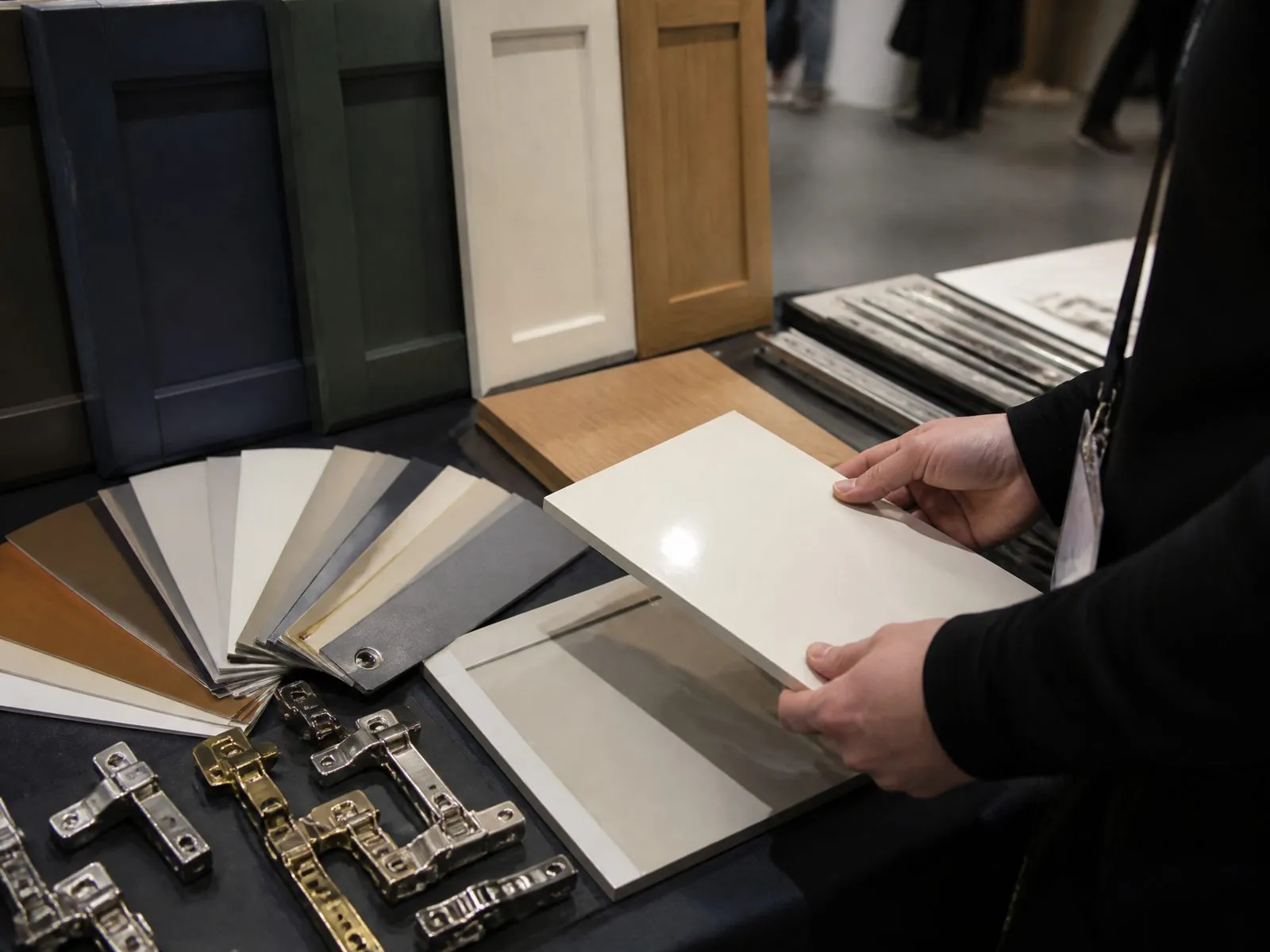
How Can Arcova Help With Board Materials for Custom Furniture?
Arcova works with board suppliers including EGGER, Kronospan and DARE and machines boards on automated CNC cutting, edge banding and drilling lines across 12 production lines. We recommend boards per component, can source boards meeting CARB requirements on request where required and approve finish samples before production. We hold ISO9001, BSCI and FSC certifications. See our factory and OEM service, or send your specifications.