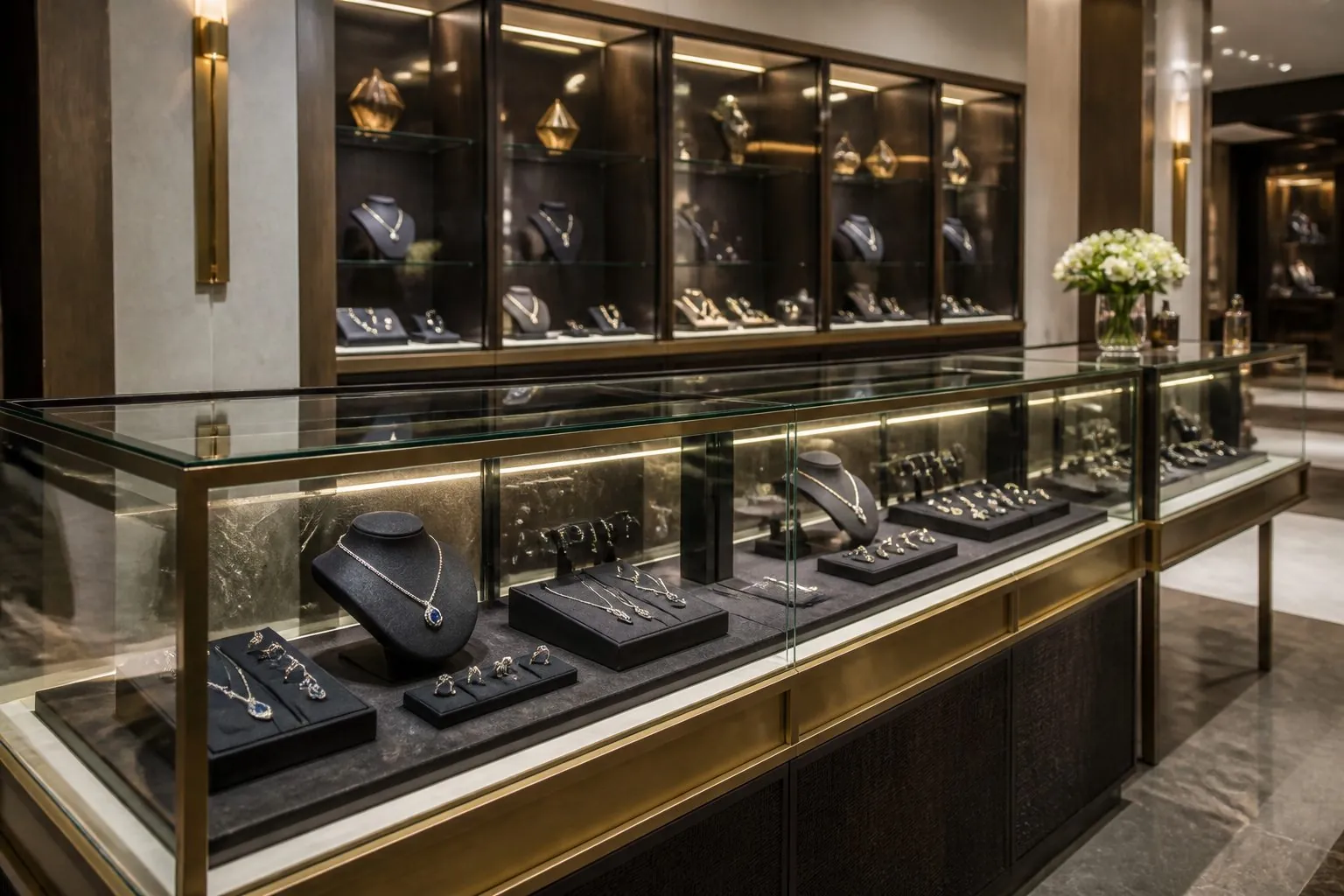
A buyer's guide to jewelry showcases covering showcase types, safety and low-iron glass, LED lighting, locks and security, counter workflow, finishes and installation.
What Makes a Good Jewelry Showcase?
A good jewelry showcase does three jobs at once: it presents small, high-value items under flattering light, protects them with secure glass and locks, and supports staff who serve customers across it every day. The decisive choices are the glass type, the lighting system and the security level, followed by the cabinet construction and finishes that frame the products.
Jewelry showcases are used by independent jewelers, mall kiosks, department-store counters, watch boutiques, hotel retail outlets and museum gift shops. Each setting balances visibility, security and budget differently. Before ordering, confirm the store layout, product types, lighting preference, security requirements and any brand guidelines.
- Visibility: clear glass, minimal frames and accurate lighting.
- Security: suitable glass, locks and construction to slow forced entry.
- Service: comfortable counter height, staff-side storage and easy access.
- Brand: finishes, logos and details that match the store identity.
Which Showcase Types Suit Different Store Layouts?
Choose showcase types by store layout and selling style. Most stores combine counter showcases for serving with tall cases for display.
| Showcase Type | Description | Best Use |
|---|---|---|
| Counter showcase | Waist-height case with glass top and front, staff access at rear | Main selling counters |
| Tall tower showcase | Full-height glass case, often four-sided | Feature displays, store entrances |
| Wall showcase | Glass cabinet fixed to or recessed into the wall | Perimeter displays, collections |
| Island showcase | Freestanding case visible from all sides | Center of store, kiosks |
| Window display case | Case designed for shop window viewing | Street-facing displays |
| Kiosk unit | Compact combined counter and tower | Malls, airports, hotel lobbies |
Counter showcases are the workhorse of most jewelry stores. Tall and island cases create focal points and draw customers into the space.
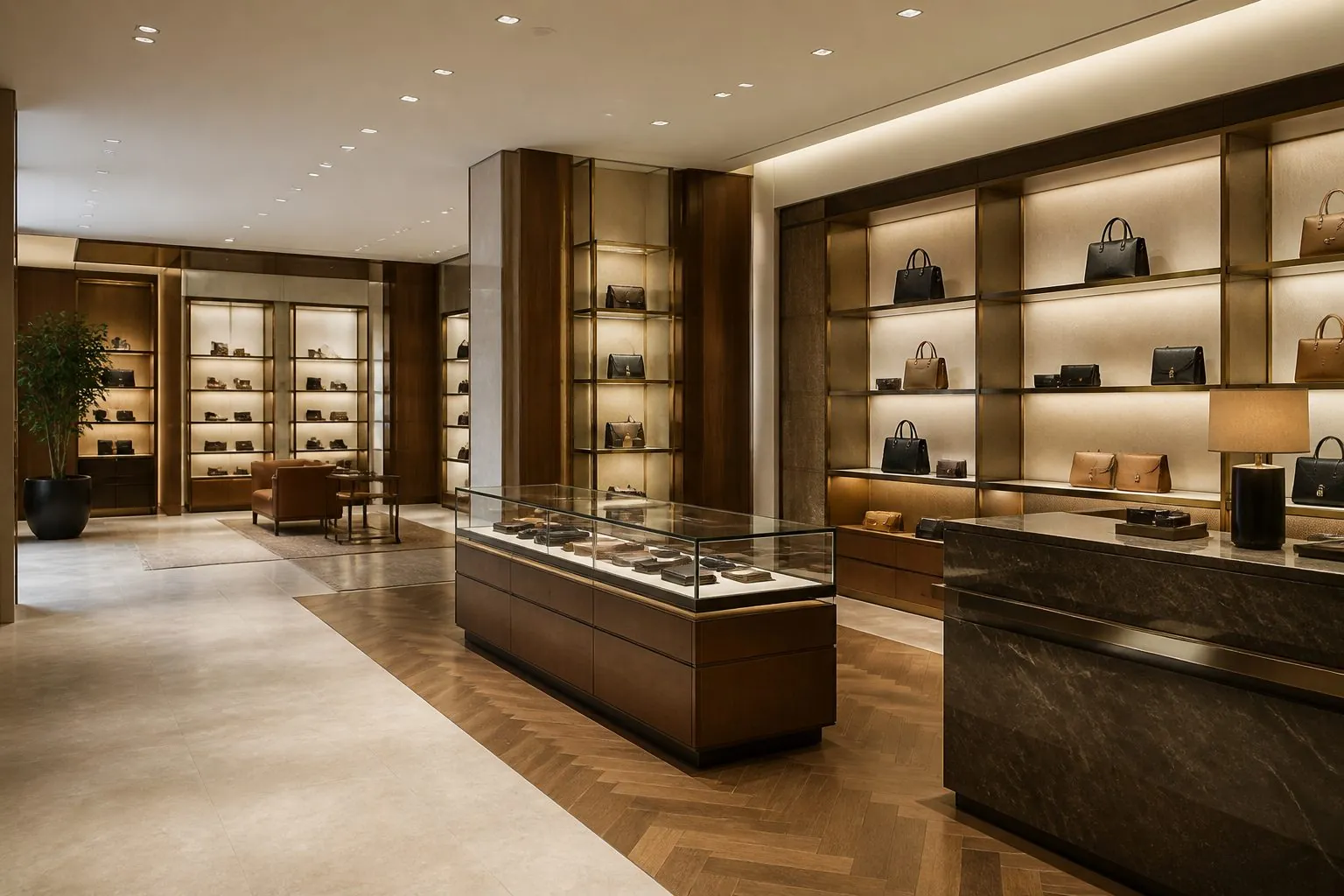
Which Glass Should You Specify?
Use safety glass for all showcase glazing, and choose low-iron glass where color accuracy matters. Standard clear glass has a green tint visible at edges and in thicker panels, which affects how gold, diamonds and gemstones look.
| Glass Type | Main Benefit | Typical Use |
|---|---|---|
| Tempered glass | Higher strength; breaks into small fragments | Standard showcase panels |
| Laminated glass | Interlayer holds glass together when broken | Higher security cases, tops |
| Low-iron glass | Clearer, more neutral color | Premium jewelry and watches |
| Anti-reflective glass | Reduces glare and reflections | High-end boutiques, window displays |
| Security glazing | Rated resistance to attack | High-value stock; per insurer requirements |
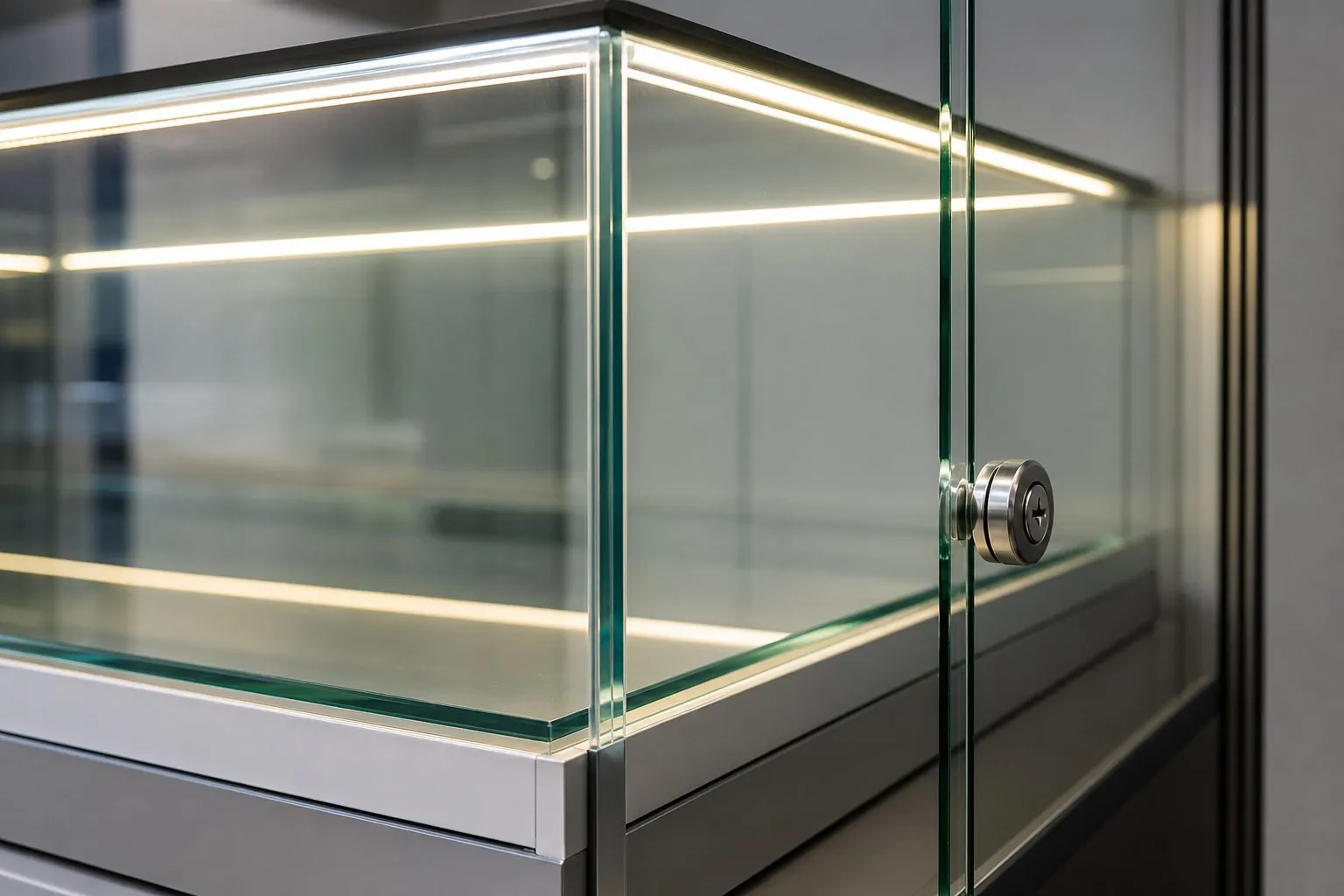
Glass edges should be polished, and joints between panels should be clean and minimal. Bonded or silicone-joined glass corners give a lighter look than metal corner profiles but need careful production. Confirm glass type and thickness requirements with your insurer and local standards.
How Should Showcase Lighting Be Designed?
Lighting sells jewelry. The aim is high brightness, accurate color and controlled sparkle, without heat that can damage displays or glare that annoys customers.
- LED only: modern showcases use LED for low heat and long life.
- Color temperature: cooler white light often flatters diamonds and silver; warmer light flatters gold. Many stores use different temperatures by case.
- Color rendering: choose LEDs with high color rendering so gemstones look true; request data from the lighting supplier.
- Light positions: top lighting for sparkle, vertical side profiles for even fill, and under-shelf strips for multi-level displays.
- Spotlights: small adjustable spots highlight key pieces.
- Drivers and heat: place drivers in ventilated, accessible compartments outside the display area.
Lighting should be designed with the showcase, not added afterwards. Grooves, cable routes and driver compartments are machined during production.
Controlling glare and reflections
Glare is the most common lighting complaint in jewelry stores. Light sources should be hidden from the customer's line of sight, typically recessed in the top frame or behind a vertical profile facing inward. Overhead store lighting can reflect in horizontal glass tops, so coordinate showcase positions with ceiling lights. Anti-reflective glass helps in window displays and premium counters where reflections are hardest to control.
Dimming and scenes
Dimmable drivers let staff balance showcase brightness against ambient store lighting, which changes between daytime and evening. Some stores group showcases into lighting zones controlled from the staff side. Plan switch or control positions so they are reachable by staff but not by customers.
What Security Features Should a Jewelry Showcase Have?
Showcase security is about slowing and deterring theft, both during opening hours and after closing. The required level depends on stock value, location and insurer requirements.
- Locks: high-quality showcase locks on sliding or hinged doors; consider keyed-alike or master-keyed systems for staff management.
- Door type: staff-side sliding glass doors are common; check that doors cannot be lifted out of tracks when locked.
- Glass: laminated or rated security glass for high-value stock.
- Construction: solid cabinet construction and concealed fixings that cannot be undone from the customer side.
- Fixing: anchor tall and island cases to floor or wall where appropriate.
- Alarms and sensors: provisions for vibration sensors, door contacts or cameras, installed by the security contractor.
Many stores remove high-value stock to a safe overnight. Showcase design should allow fast loading and unloading with trays.
Security planning should involve the store's insurer and security contractor from the start. Insurers may specify glass ratings, lock types or the need to remove stock overnight, and these requirements affect showcase construction and cost. Ask the security contractor where they need cable routes, sensor mounting points or space for cameras, so the factory can prepare them. Keep keys under strict control and consider changing lock cylinders when staff change.
Rolling out showcases to multiple stores
Jewelry and watch brands opening several stores or shop-in-shops benefit from a standard showcase family. Once one store's cases are approved, the same designs, finishes and lighting can be repeated, with only lengths and quantities adjusted per site. Keep master drawings and finish references, and order a sample case for the first store to confirm quality before rollout.
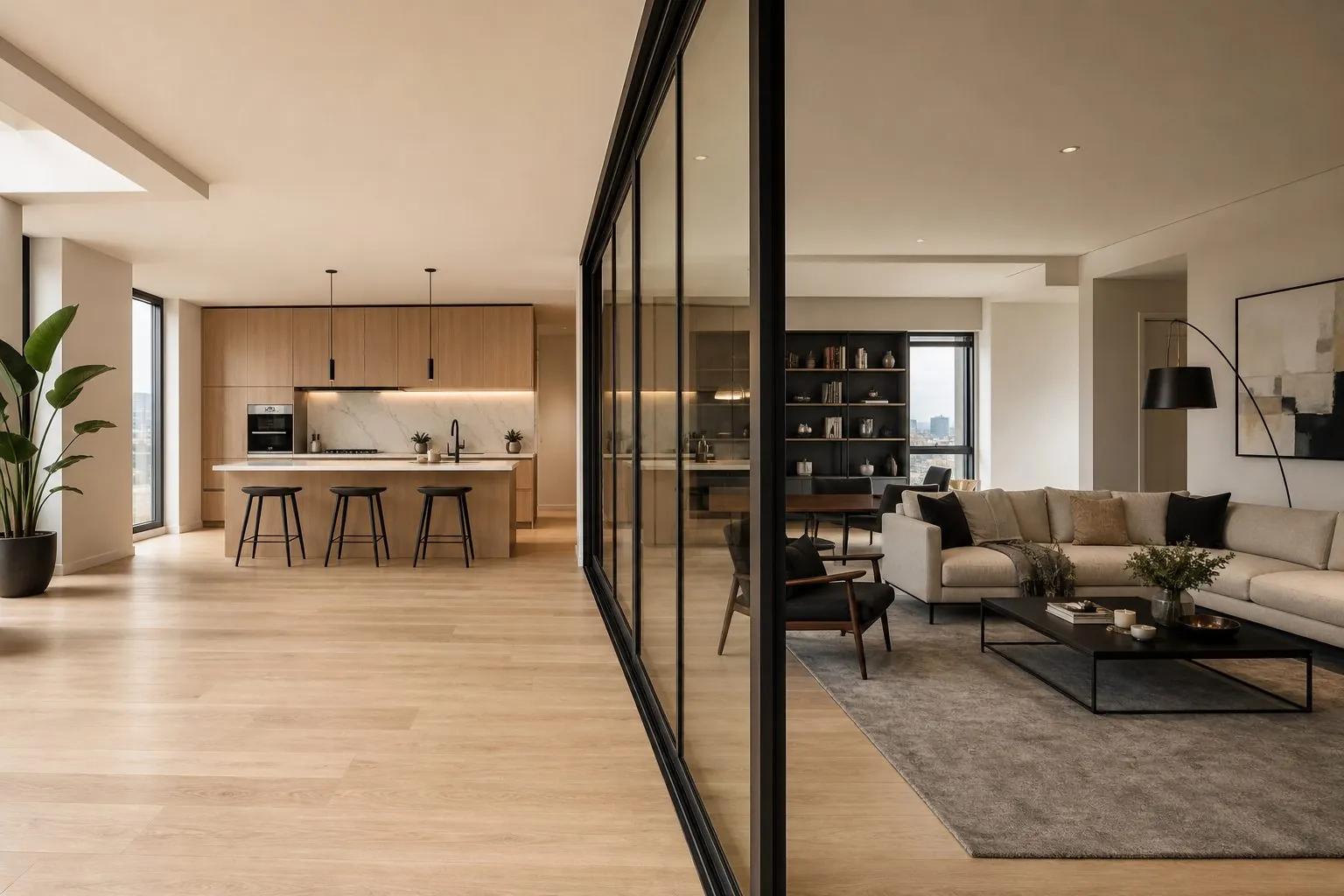
How Do Counter Height and Staff Workflow Affect Design?
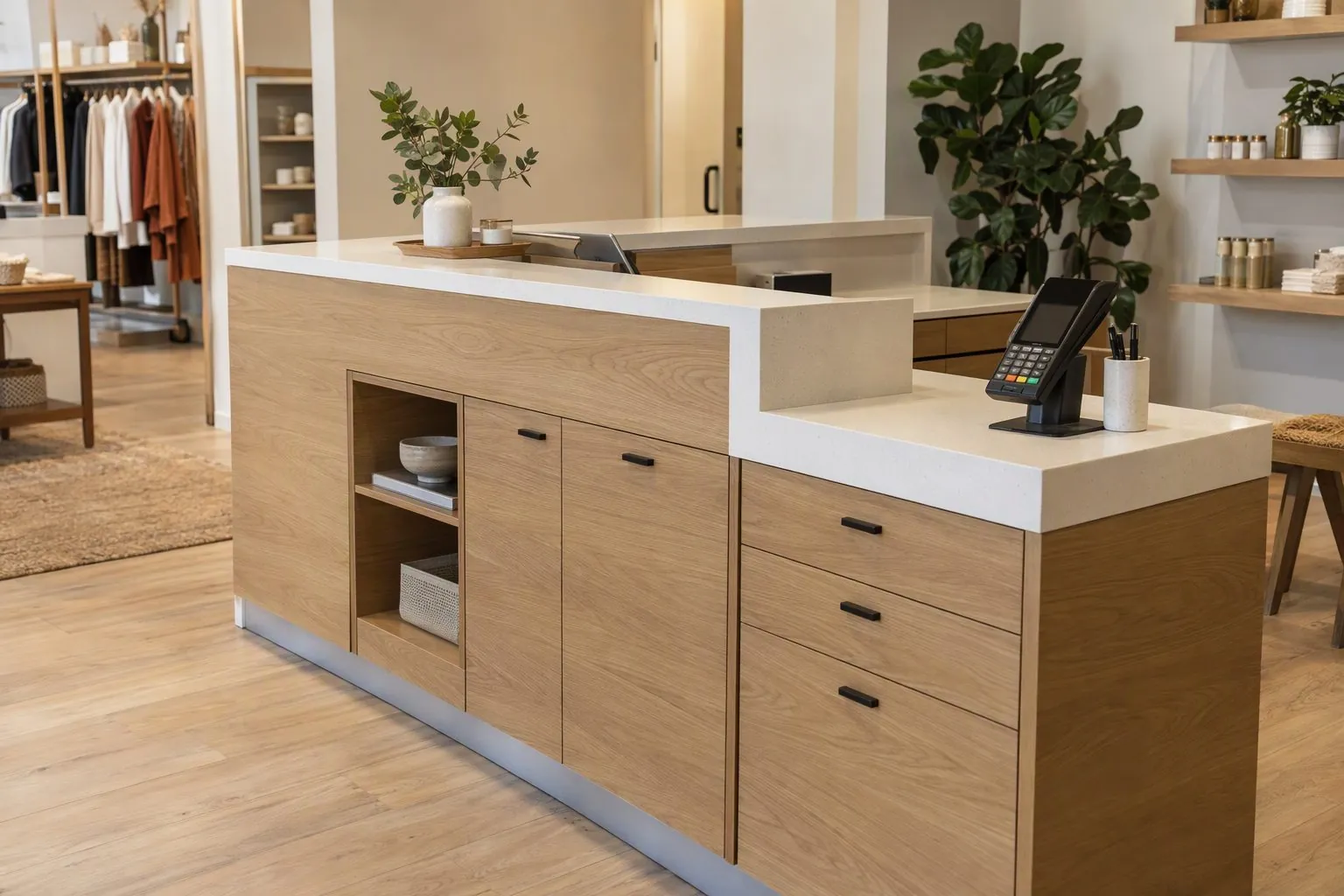
Counter showcases should be comfortable for customers to view and for staff to serve. Customer side: a viewing height that brings products close to eye level when leaning, and a top that can hold a velvet pad and mirror. Staff side: easy access to trays, storage below for packaging and paperwork, and space for a till or tablet.
- Provide lockable drawers and cabinets on the staff side.
- Allow knee clearance or a footrest where staff sit.
- Include cable routes for POS, card terminals and lighting switches.
- Consider an accessible counter section for customers using wheelchairs where local rules require.
Check that the staff-side doors open fully without hitting back counters or walls. Leave enough aisle width behind counters for two staff members to pass each other, and keep frequently used trays nearest the serving position.
Which Materials and Finishes Suit Jewelry Showcases?
The showcase body frames the product, so finishes should be refined but not compete with the jewelry. Common choices are lacquer in brand colors, wood veneer, metal-clad bases and stone or quartz details.
- Lacquer: smooth, custom colors; high gloss shows fingerprints, so satin or matte suits staff-handled areas.
- Wood veneer: warm, premium; consistent selection is needed across multiple cases.
- Metal trims and bases: durable kick zones and refined detailing.
- Display surfaces: velvet, suede, leather or microfiber in neutral tones; ensure easy replacement.
Use Easy-to-Clean Surface Finishes on counter tops and edges that customers and staff touch often.
Display inserts, such as ring rolls, necklace busts, watch pillows and earring stands, should be coordinated with the showcase interior. Choose a consistent color family for all inserts and bases, typically neutral greys, creams, blacks or deep blues, so the jewelry stands out. Modular inserts on removable trays let staff change displays quickly and take stock to the safe at night. Confirm whether inserts are part of the showcase order or supplied by a specialist display vendor, so dimensions and colors are agreed early.
How Are Jewelry Showcases Packed, Shipped and Installed?
Showcases combine glass, lighting and finished panels, so packing and installation need care. Glass is usually packed separately in wooden crates, with cabinet bodies wrapped and edge-protected.
- Pack glass in crates with separators and edge protection.
- Pre-wire lighting and test it in the factory before packing.
- Label every panel and crate by showcase code and position.
- Provide installation drawings showing glass installation and lighting connection.
- Level showcases carefully on site so glass joints align and doors run smoothly.
Final electrical connection should be completed by a local electrician in line with local regulations. Clean glass only with non-abrasive products after installation.
What Information Should You Send for a Showcase Quotation?
A complete brief allows accurate drawings and pricing. Send:
- Store plan and elevations with showcase positions.
- Showcase types, sizes and quantities.
- Product types to be displayed, such as rings, watches or necklaces.
- Lighting preferences and color temperature.
- Glass and security requirements, including insurer requirements.
- Finish, material and brand guidelines.
- Store opening date and installation arrangements.
Photos of existing showcases you like, or of current cases that need replacing, are also helpful. They show the expected level of detail and help the manufacturer understand which features matter most, such as frame thickness, lighting style or hidden locks, before the first drawing is prepared.
How Can Arcova Help With Jewelry Showcases?
Arcova manufactures jewelry showcases and commercial display cabinets in a 40,000 m² factory with automated CNC cutting, edge banding and drilling lines. We prepare shop drawings and 3D views showing glass, lighting and lock details, approve finish samples, pre-test lighting and inspect production with photo reports before crated export packing.
Our factory holds ISO9001, BSCI and FSC certifications and provides 24-hour online technical support and installation guidance. OEM supply for retail display brands is available through our OEM service. Send your store layout for a showcase proposal.