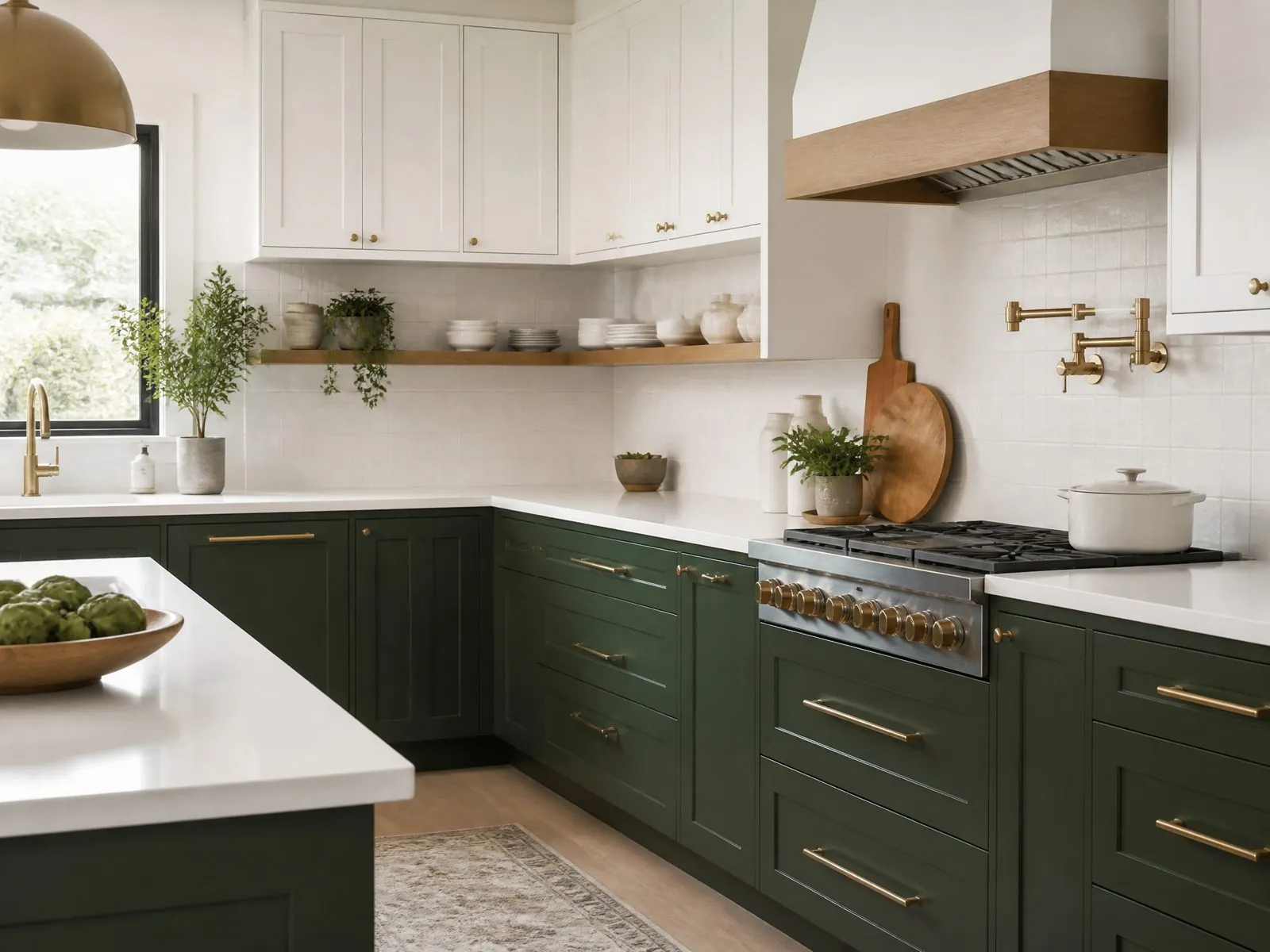
A project buyer guide to custom kitchen cabinet cost drivers: door finishes, carcass materials, hardware tiers, layout complexity, services and landed cost, with practical ways to save.
What Actually Determines the Price of Custom Kitchen Cabinets?
The price of custom kitchen cabinets is driven by five things: the board material, the door finish, the hardware, the cabinet count and complexity of the layout, and the project services you need around production. Change any one of these and the quote moves, often more than buyers expect.
That is why two quotes for "the same kitchen" can look far apart. One supplier may have priced melamine doors with basic hinges, while another priced lacquer doors with soft-close drawer systems from a premium brand. Before comparing numbers, compare specifications line by line.
For project buyers such as developers, contractors and importers, the useful question is not "how much does a kitchen cost?" but "which specification level fits my market, and what does each upgrade add?" This guide walks through each cost driver and the relative price tiers, so you can build a brief that produces comparable quotes.
- Materials: carcass board, door substrate and surface finish.
- Hardware: hinges, drawer runners, lift systems, internal fittings.
- Design complexity: number of cabinets, special sizes, corner solutions, tall units.
- Services: shop drawings, samples, mock-ups, inspection, labelled packing.
- Logistics: flat-pack versus assembled, container loading, destination charges.
How Do Door Finishes Change the Cost of a Kitchen?
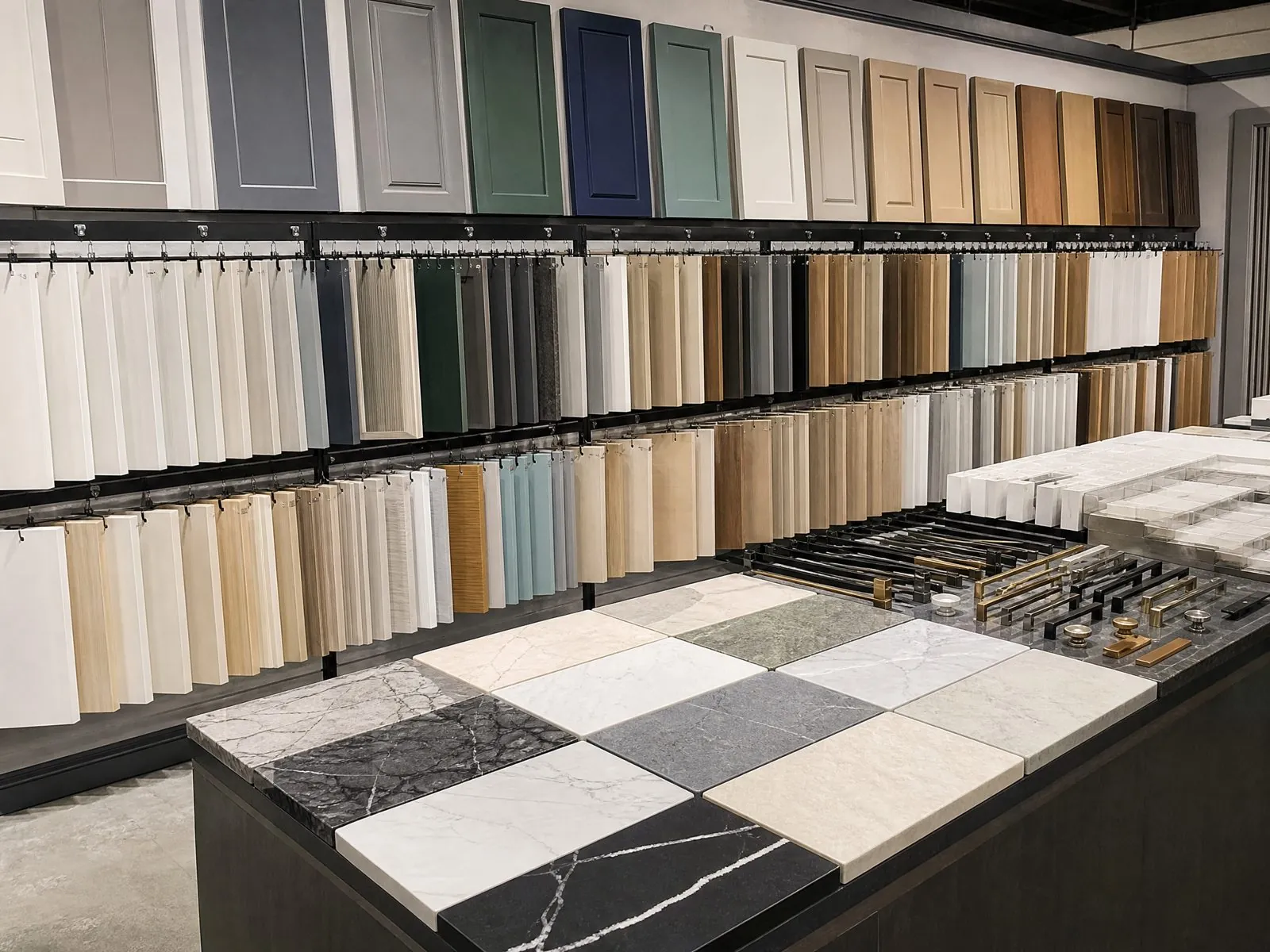
Door finish is usually the single biggest variable in a cabinet quote, because doors are the most visible and most processed part of the kitchen. Moving from a laminated panel to a multi-coat painted door can shift the overall kitchen price into a different tier.
Melamine and laminate doors are pressed or edge-banded on automated lines, so labor per door is low. Lacquer, veneer and solid wood doors need sanding, spraying, drying and hand inspection, which adds both time and reject risk. Profiled doors such as Shaker add machining steps on top of the finish.
| Door Finish | Relative Cost Tier | Main Cost Factors | Typical Market Fit |
|---|---|---|---|
| Melamine (MFC) | Entry | Board price, edge banding | Rental housing, budget apartments |
| High-pressure laminate (HPL) | Entry to mid | Laminate grade, pressing, edging | Student housing, mid-market rentals |
| Thermofoil / PVC wrap | Mid | Membrane quality, vacuum pressing | Profiled doors at controlled budget |
| Matte or gloss lacquer | Mid to upper | Coats, sanding, drying space, rejects | Mid-to-premium residential |
| Wood veneer | Upper | Veneer species, matching, lacquer | Premium apartments, hotel suites |
| Solid wood | Premium | Timber grade, joinery, finishing | Luxury villas, heritage-style projects |
A practical approach for multi-unit projects is to mix finishes: a lacquer or veneer door on visible islands and tall units, with laminate inside pantry areas or on secondary units. This keeps the look while controlling the total.
Which Carcass Materials Offer the Best Value?
For most project kitchens, a melamine-faced particleboard or MDF carcass offers the best value, while plywood carcasses cost more and are chosen mainly where moisture resistance or market preference requires them.
The carcass is mostly hidden, so buyers often over-specify it. What matters is that the board meets the emission standard of your market, holds screws well, and resists moisture around the sink. Board brand and grade also matter: suppliers such as EGGER, Kronospan and DARE offer different decor ranges and price positions.
- Particleboard (MFC): lowest cost, flat and stable, widely used in European-style kitchens.
- MDF: smoother edges, good for painted parts, moderate cost.
- Moisture-resistant board: recommended for sink base units in humid climates.
- Plywood: higher cost, preferred in some North American and Australian markets.
Ask every supplier to state carcass material, emission class (for example CARB compliance for the US market) and back panel specification. Panel thickness should be confirmed per project rather than assumed.
How Much Does Hardware Add to a Cabinet Quote?
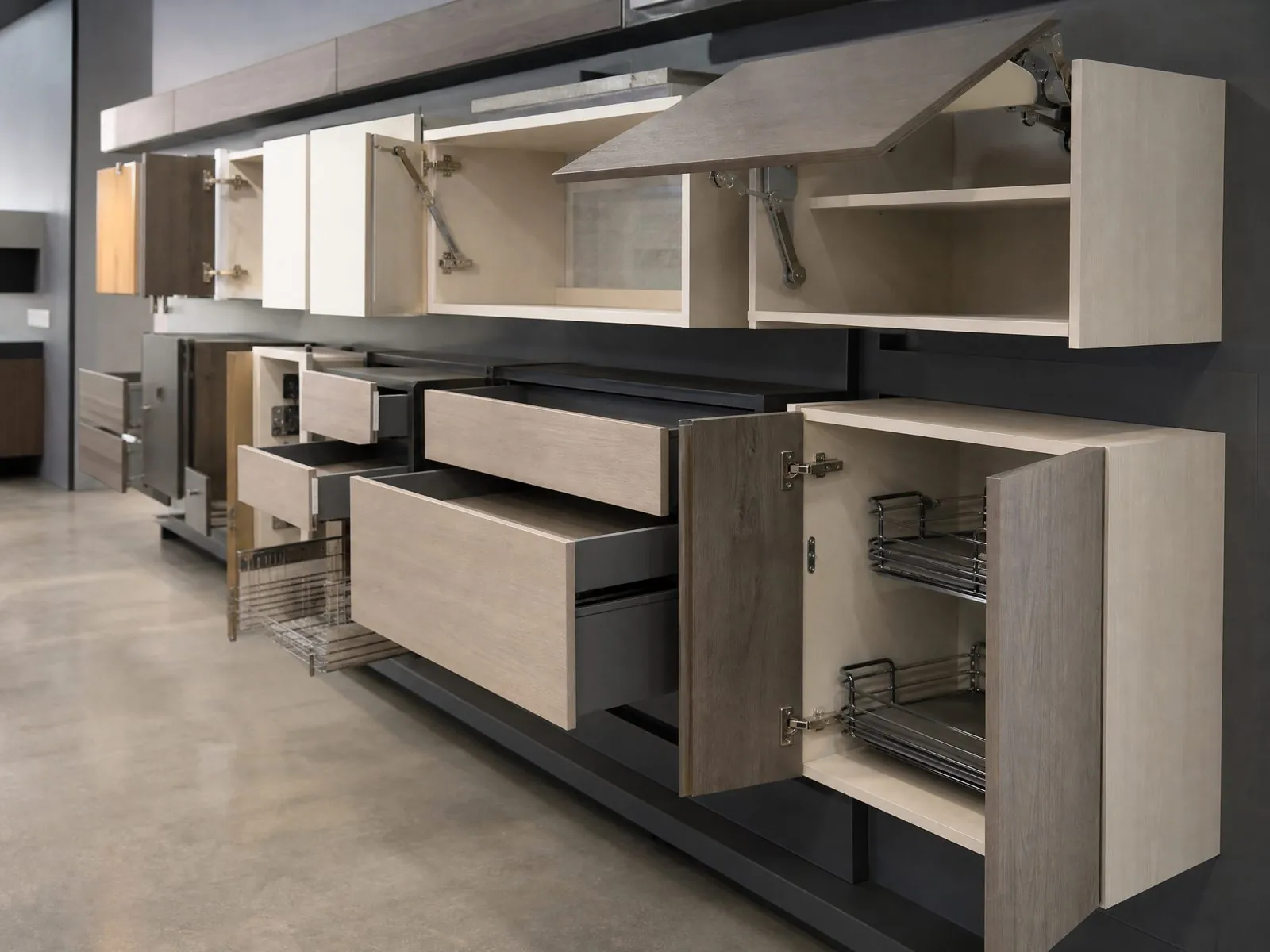
Hardware can account for a large share of the kitchen price, especially in drawer-heavy layouts. The brand tier you choose, and the number of drawers and lift-up doors, matter more than the number of hinges.
A kitchen with mostly doors and shelves uses inexpensive hinges. A kitchen with deep pan drawers, inner drawers, corner carousels and lift-up door systems can see hardware rise to a major cost line. That is why we always recommend listing drawer count separately in your brief.
| Hardware Tier | Example Brands | Relative Cost | When to Choose It |
|---|---|---|---|
| Value tier | DTC, Hutlon | Lower | Rental and budget projects, high unit counts |
| Mid tier | Häfele, Salice | Medium | Mid-market residential, hotel apartments |
| Premium tier | Blum, Hettich | Higher | Premium residential, buyers who expect brand names |
Many buyers split tiers: premium soft-close runners on drawers that are used daily, value-tier hinges elsewhere. Make sure the quote specifies brand, series and load rating, not just "soft-close."
How Does Kitchen Layout and Cabinet Count Affect Price?
Cost rises with the number of cabinet boxes, the share of non-standard sizes, and the number of tall and corner units. Linear meters alone are a weak predictor of price.
A straight-run kitchen with repeated standard widths is the most efficient to produce. An L-shaped or U-shaped kitchen adds corner units and fillers. An island adds finished end panels, back panels and often extra drawers. Tall pantry and appliance housings use more board and more hardware per unit than base cabinets.
- Straight run: lowest complexity, easiest to repeat across units.
- Galley: two runs, moderate complexity, few corners.
- L-shape: one corner solution, more fillers.
- U-shape: two corners, higher hardware and panel count.
- Island kitchens: finished panels on all sides, more drawers, highest per-meter cost.
For developers, standardizing two or three kitchen types across a building is one of the most effective ways to lower price, because it reduces engineering time and allows batch production.
Are Countertops, Appliances and Sinks Usually Included?
Usually not by default. Most cabinet manufacturers quote cabinets, doors, panels and hardware, and treat countertops, sinks, appliances and lighting as separate optional lines.
This matters when comparing quotes. One supplier might include quartz tops and a sink while another excludes them, making the second look cheaper. Ask for a scope table that clearly marks each item as included, optional or excluded.
- Countertops: quartz, sintered stone, laminate or solid surface, each with different shipping risk.
- Sinks and taps: often sourced locally to match plumbing codes.
- Appliances: almost always local, but cabinet openings must match chosen models.
- Lighting and power: under-cabinet LED and in-drawer sockets add electrical certification questions.
Even if you buy appliances locally, send the model list early. Appliance housings and panel-ready dishwashers must be engineered to exact model dimensions.
What Project Services Are Built Into a Factory Quote?
A factory quote for project kitchens often includes engineering and quality services that retail suppliers charge separately or do not provide. Knowing what is included prevents surprise costs later.
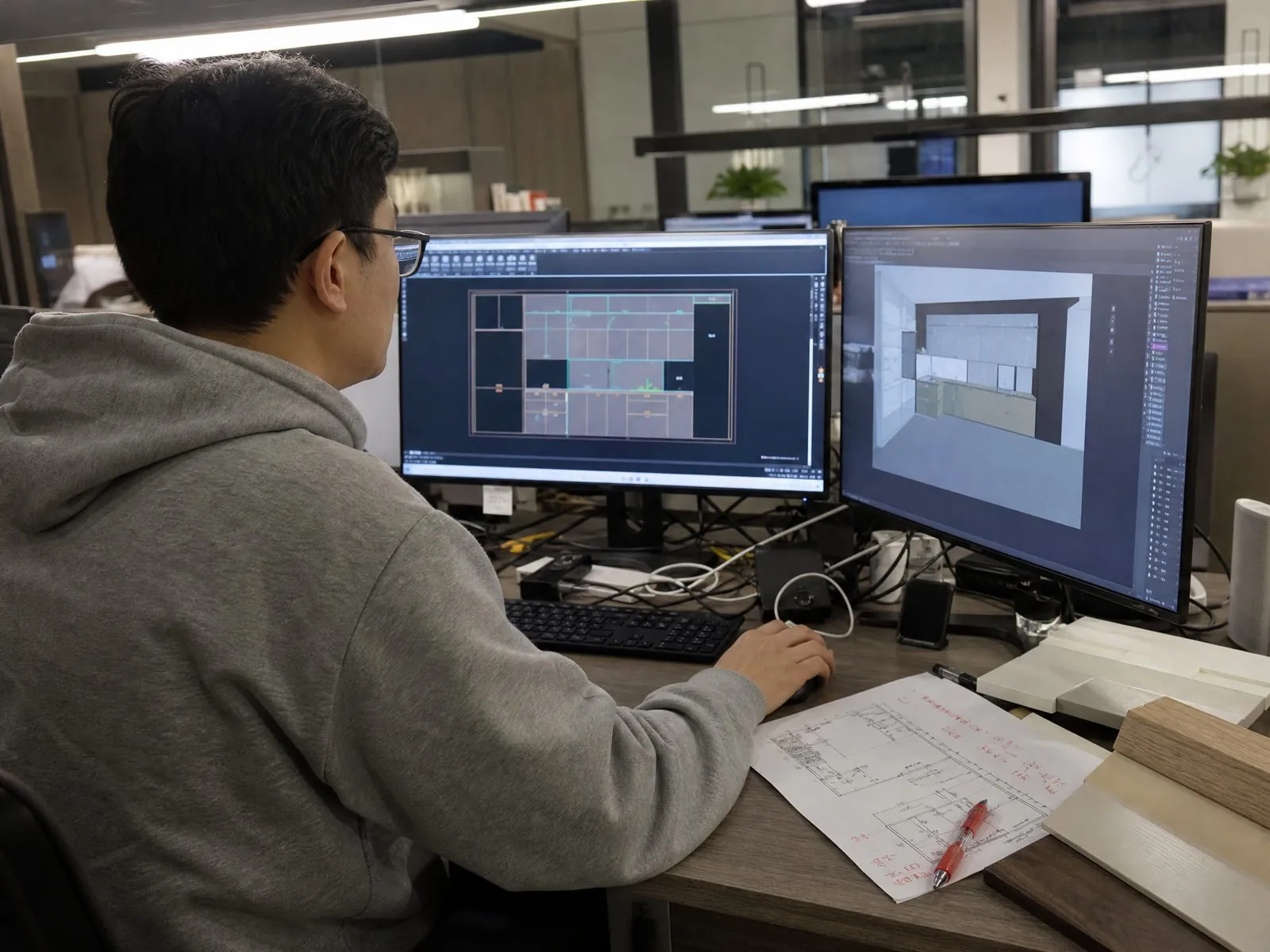
Typical services that affect total cost include drawing deepening, finish sample approval, a mock-up unit, inspection and labelled packing. Each one reduces risk on site, and some save more than they cost.
| Service | What It Covers | Why It Matters for Cost |
|---|---|---|
| Shop drawings | Detailed drawings from architect plans | Prevents wrong sizes and site rework |
| 3D design | Visual check of layout and finishes | Speeds client approval |
| Finish samples | Physical door and board samples | Avoids color disputes after production |
| Mock-up | One full kitchen produced first | Confirms details before mass production |
| Inspection with photo reports | Pre-shipment checks documented | Reduces defects found on site |
| Labelled packing | Cartons marked by unit and room | Cuts installation sorting time |
Ask whether samples and mock-ups are charged, credited against the order, or included. Terms vary by project size and are worth confirming in writing.
How Do Shipping and Packing Affect Landed Cost?
Landed cost, not ex-factory price, is what you should compare. Freight, duties, destination handling and installation labor can change the ranking of two quotes.
Flat-pack cabinets load more units per container and lower freight per kitchen, but require more assembly labor on site. Pre-assembled cabinets ship fewer units per container but install faster. The right choice depends on labor costs in your market.
- Flat-pack: lower freight per unit, higher site labor, more parts to manage.
- Assembled carcasses: higher freight, faster installation, fewer site errors.
- Hybrid: assembled base units, flat-pack wall units or panels.
Also check import duties for your destination and whether specific certifications are required for customs or for the project tender. Packing quality affects cost too: damaged doors replaced by air freight are expensive.
How Can You Lower Kitchen Cabinet Cost Without Lowering Quality?
The most effective savings come from standardization and smart specification, not from cheaper boards or hardware. Buyers who plan for production efficiency get better prices without visible compromises.
- Standardize cabinet widths and repeat kitchen types across units.
- Use premium finishes only where they are seen most, such as islands and tall units.
- Split hardware tiers between high-use drawers and low-use doors.
- Reduce special shapes, angled cabinets and curved ends.
- Choose board decors in stock with major suppliers rather than custom colors.
- Consolidate kitchens, wardrobes and vanities in one order to fill containers efficiently.
- Approve samples and a mock-up early to avoid rework costs later.
Combining several product categories with one manufacturer, for example kitchen cabinets, built-in wardrobes and bathroom vanities, also simplifies coordination and inspection.
What Should You Send to Get an Accurate Kitchen Quote?
Accurate quotes come from complete briefs. The more of the following you send, the closer the first quote will be to the final contract price.
- Floor plans and kitchen elevations, ideally in CAD format.
- Number of units per kitchen type.
- Preferred door finish and color references.
- Carcass material and emission standard required.
- Hardware brand tier or budget level.
- Countertop, sink and appliance scope.
- Destination port and preferred packing (flat-pack or assembled).
- Target delivery schedule, so the factory can confirm feasibility.
If you do not have a full specification yet, ask for two or three priced options, for example a value, mid and premium version of the same kitchen. This shows you exactly what each upgrade adds.
How Can Arcova Help With Kitchen Cabinet Budgeting?
Arcova can quote the same kitchen layout at different specification levels, so you see the impact of each cost driver before you commit. We have 12+ years of manufacturing experience, a 40,000 m² factory with 12 production lines including automated CNC cutting, edge banding and drilling lines, and a monthly capacity of 40 × 40HQ containers.
Hardware can be supplied from Blum, Hettich, Häfele, Salice, DTC or Hutlon depending on budget, and boards from suppliers such as EGGER, Kronospan and DARE. Our project services include shop drawings, 3D design, finish sample approval, mock-ups, inspection with photo reports and export packing labelled by unit and room. Certifications include ISO9001, BSCI and FSC.
Send your drawings through our contact page, or learn more about our factory and quality control. Our team offers 24-hour online technical support for project buyers.