A step-by-step guide to importing kitchen cabinets from China: briefing, supplier verification, quote comparison, samples, quality control, packing, customs documents and installation planning.
What Does the Process of Importing Kitchen Cabinets from China Look Like?
Importing kitchen cabinets from China follows a clear sequence: define your specification, shortlist and verify manufacturers, approve drawings and samples, place the order, monitor production and inspection, ship, clear customs and install. Most problems come from skipping or rushing one of the early steps, not from the shipping itself.
Unlike standard furniture, custom kitchen cabinets are made to your drawings, so you are buying an engineering and manufacturing process, not a finished catalog product. The steps below are written for developers, contractors, distributors and importers buying container quantities for projects or resale.
- Prepare your specification and target market requirements.
- Find and shortlist manufacturers.
- Verify the factory and its certifications.
- Request quotes on a like-for-like basis.
- Approve shop drawings, finish samples and a mock-up.
- Agree contract terms, payment and Incoterms.
- Monitor production and arrange pre-shipment inspection.
- Book shipping and prepare import documents.
- Clear customs, deliver and install.
What Should You Prepare Before Contacting Suppliers?
Prepare a written brief before you send the first inquiry. Suppliers quote what they are given, so an incomplete brief produces quotes that cannot be compared.
Your brief should describe both the product and the market rules it must meet. A kitchen for a US apartment project needs different emission compliance, sizes and appliance integration than a kitchen for a European or Middle Eastern project.
- Drawings: floor plans and kitchen elevations, ideally CAD files.
- Quantities: number of kitchens per layout type.
- Materials: carcass board, door finish, countertop scope.
- Hardware: brand tier or named brand and series.
- Compliance: emission standards, certifications needed for tenders or customs.
- Appliances: model list for built-in units.
- Logistics: destination port, flat-pack or assembled, site delivery schedule.
Also note local sizing conventions. For example, a typical base cabinet depth in many markets is around 600 mm and countertop heights vary by region, so confirm the values that apply to your project rather than relying on factory defaults.

How Do You Find and Shortlist the Right Manufacturer?
Shortlist three to five manufacturers whose existing production matches your product type and market, then compare them on capability rather than price alone.
Sources include B2B platforms, trade shows, industry referrals and manufacturer websites. The key is to separate true manufacturers from trading companies. Trading companies can be useful for mixed sourcing, but for custom project kitchens you usually want direct access to the engineering team that prepares drawings.
| Criteria | What to Ask | Why It Matters |
|---|---|---|
| Factory ownership | Do you own the production lines? | Direct control of quality and schedule |
| Production equipment | Which processes are automated? | Consistency across large orders |
| Capacity | How many containers per month? | Shows whether your order fits their load |
| Engineering | Do you prepare shop drawings? | Converts architect plans into production files |
| Export experience | Which markets do you ship to? | Familiarity with your standards |
| Product range | Kitchens only, or also wardrobes and vanities? | One supplier for whole-unit packages |
How Do You Verify a Chinese Cabinet Factory?
Verify the factory with documents, a video or in-person audit, and a sample order before committing to a full project. Never rely on photos or website claims alone.
- Request business license and copies of certifications such as ISO9001, BSCI, FSC, CE or CARB, and check them with the issuing body where possible.
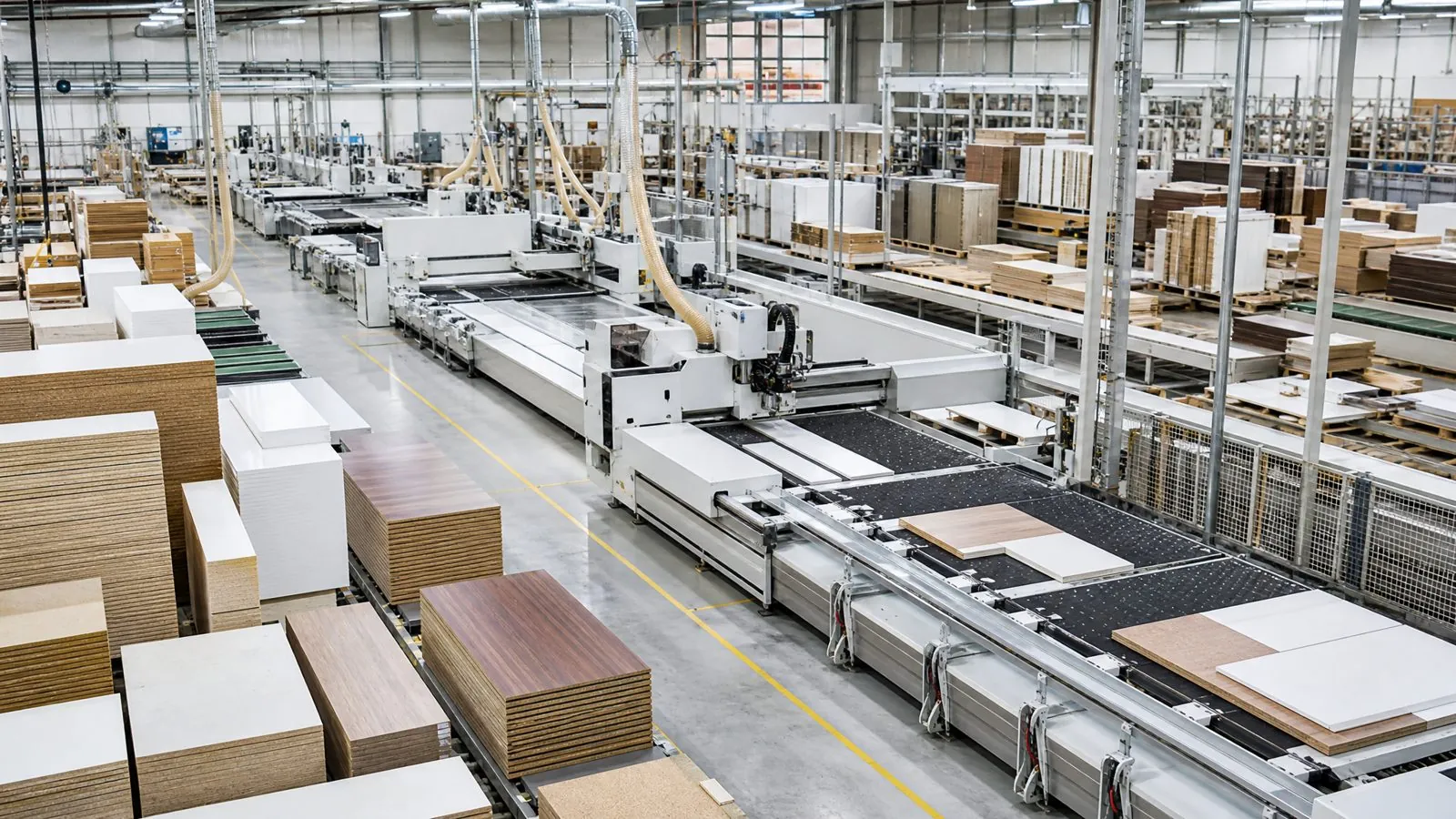
- Ask for a live video tour of cutting, edge banding, drilling, finishing and packing areas.
- Visit in person or hire a third-party audit company for larger orders.
- Ask for references or case details from similar projects, and confirm what can be shared.
- Check how the factory handles drawing approval and change requests.
Pay attention to how the team responds to technical questions. A supplier that asks detailed questions about your appliances, wall conditions and installation method usually understands project work.
A paid sample order is a low-risk way to test the relationship. Order one or two complete cabinets with your chosen door finish and hardware, and review the edge banding, drilling accuracy, finish quality, packing and paperwork. How the supplier handles the small order tells you a lot about how it will handle a large one.
How Should You Compare Quotes?
Compare quotes on an identical specification and scope, then on landed cost. The lowest ex-factory price is often not the lowest total cost.
Ask every supplier to quote using the same cabinet list, materials, hardware brand and packing method. Then add freight, insurance, duties, destination charges and installation labor to calculate landed cost per kitchen.
| Quote Line | Check |
|---|---|
| Carcass | Board type, brand, emission class |
| Doors and panels | Finish, edge treatment, color reference |
| Hardware | Brand, series, soft-close, load rating |
| Countertops | Included, optional or excluded |
| Services | Drawings, samples, mock-up, inspection |
| Packing | Flat-pack or assembled, labelling method |
| Incoterm | EXW, FOB, CIF or other |
| Payment terms | Deposit and balance schedule |
Lead time should be confirmed in writing for your specific order, as it depends on order size, finish type and the factory's current load.
Why Are Shop Drawings, Samples and Mock-Ups So Important?
They are your main protection against costly errors. Once mass production starts, changes are expensive, and once containers ship, mistakes are very expensive to fix.
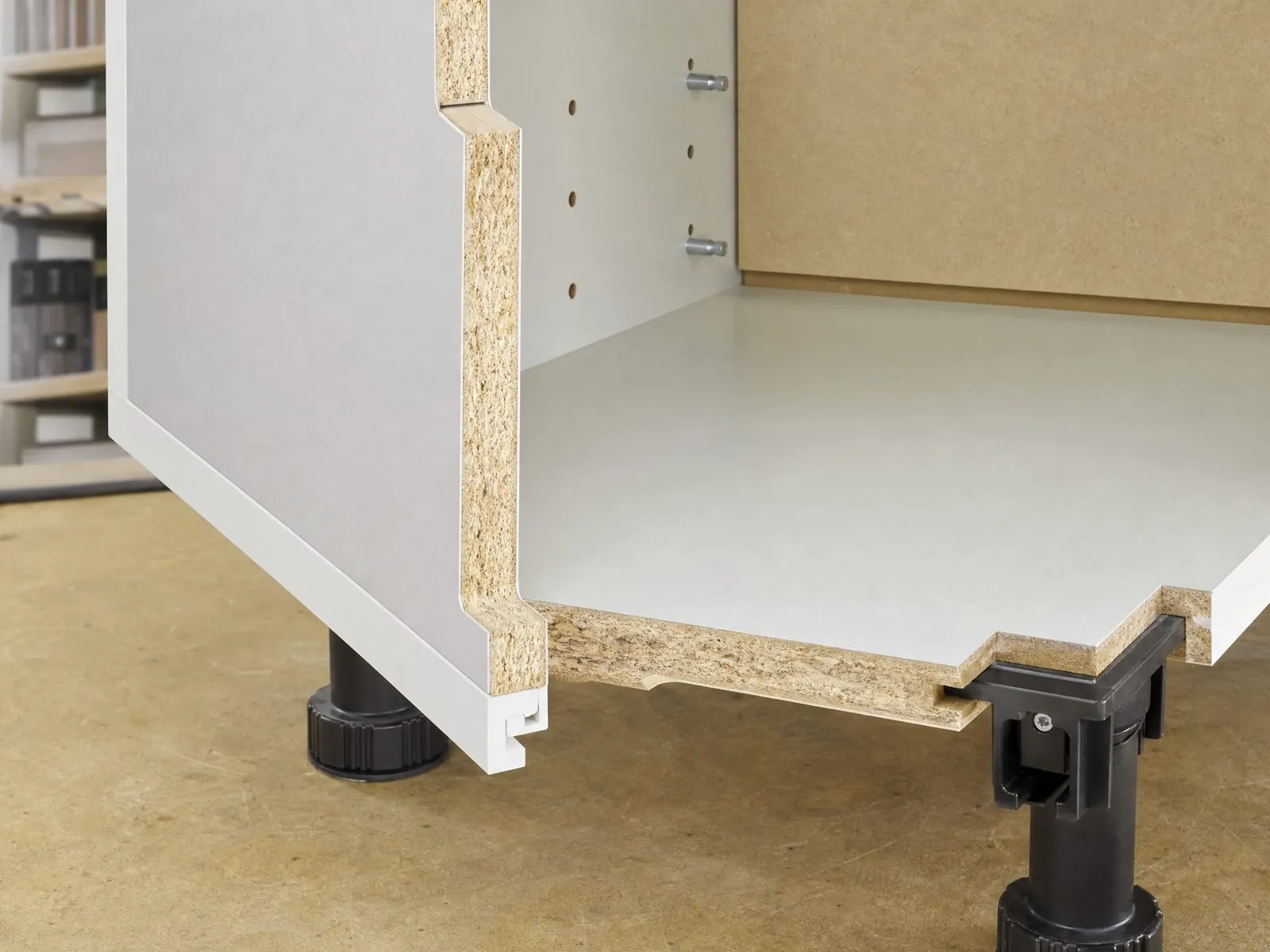
- Shop drawings: the factory converts your plans into detailed cabinet drawings. Check every dimension, appliance opening and filler.
- 3D design: helps clients and designers approve layout and finishes visually.
- Finish samples: approve physical door and board samples and keep a signed set as the reference.
- Mock-up: for projects with many identical units, have one complete kitchen produced and checked, ideally installed in a show unit.
Document every approval in writing with dated drawing revisions. This avoids disputes later about what was agreed.
Common errors caught at this stage include appliance openings that do not match the final model, wall cabinets that clash with windows or range hoods, and missing fillers at uneven walls. Ask your site team to measure walls after plastering where possible, because architect drawings and built dimensions often differ. If the project has several layout types, approve each type separately rather than assuming one approval covers all.
How Do You Control Quality During Production?
Quality control should run through the whole order: incoming materials, in-process checks and a final pre-shipment inspection with photo reports.
Ask the factory to describe its QC checkpoints and agree an inspection checklist before production starts. Many importers also book third-party inspection for the final check.
- Board and material checks against approved specifications.
- Dimension checks on cut panels and drilled parts.
- Edge banding adhesion and finish quality.
- Color match against approved samples.
- Hardware brand and function checks.
- Packing strength, carton labels and loading plan.
See how we approach this on our quality control page.
How Should Kitchen Cabinets Be Packed and Shipped?
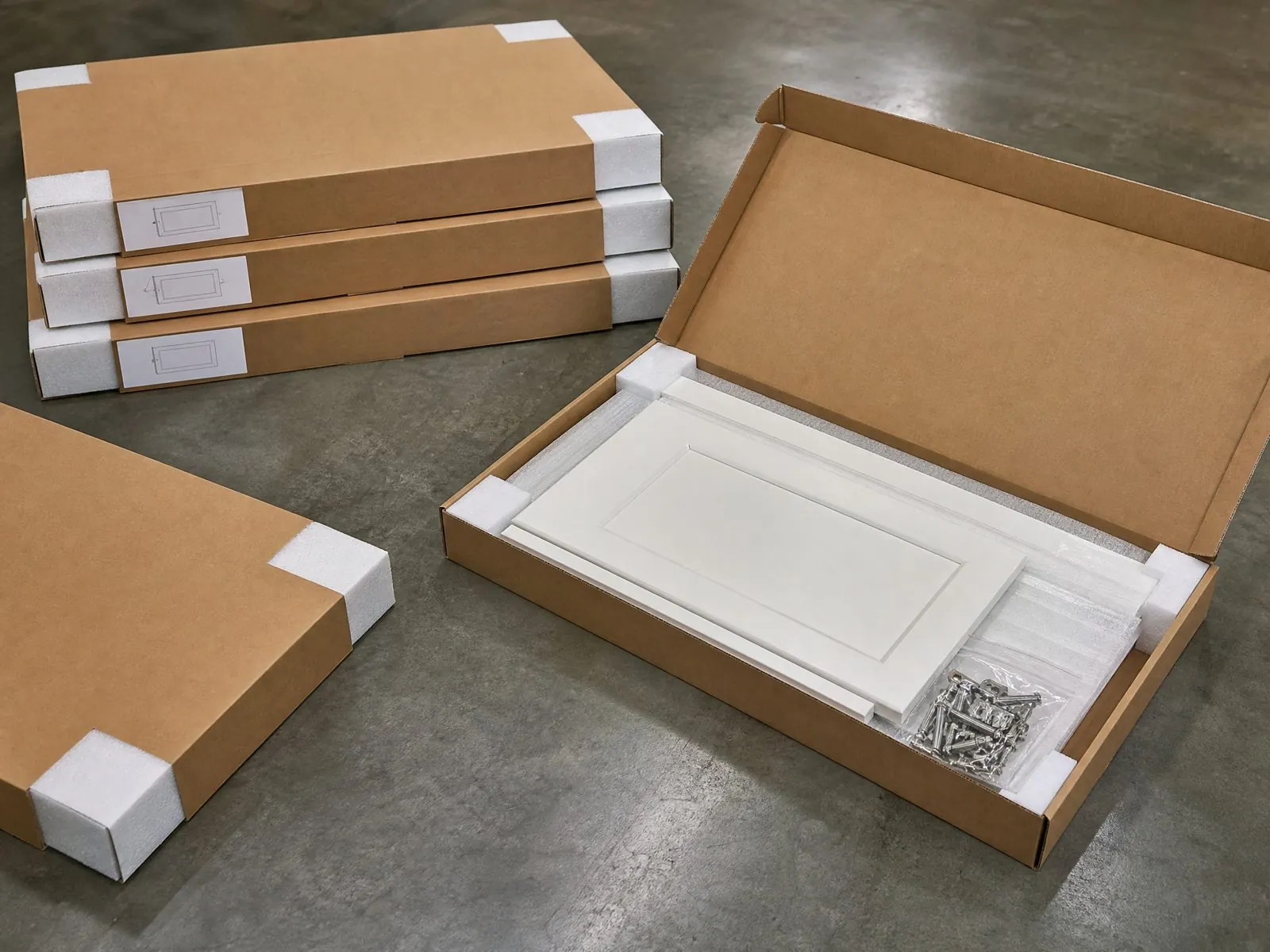
Cabinets should be packed to survive long sea freight and labelled so the site team can find every part quickly. Good packing reduces both damage and installation time.
- Choose flat-pack for lower freight per unit, or assembled carcasses for faster installation.
- Use corner protectors, foam and strong cartons for finished doors.
- Label cartons by building, unit and room so kitchens are delivered to the right apartments.
- Request a packing list that matches carton labels.
- Agree a container loading plan to avoid crushing heavy items onto doors.
Use a freight forwarder experienced with furniture. Confirm whether you are buying EXW, FOB or CIF, and who arranges insurance.
What Documents and Customs Steps Are Needed?
You will typically need a commercial invoice, packing list, bill of lading, and certificates required by your market, such as emission compliance or wood-related documentation. Requirements differ by country, so check with your customs broker early.
| Document | Purpose |
|---|---|
| Commercial invoice | Declares value for duty calculation |
| Packing list | Lists cartons, weights and contents |
| Bill of lading | Proof of shipment and ownership |
| Certificate of origin | May affect duty rates |
| Compliance certificates | For example CARB for formaldehyde emissions in the US |
| Fumigation or wood treatment documents | Required in some markets for solid wood packing |
Duty rates and anti-dumping measures on wooden cabinets vary by country and change over time. Confirm the current HS code classification and rates with your broker before you finalize the purchase price.
How Do You Manage Installation and After-Sales Support?
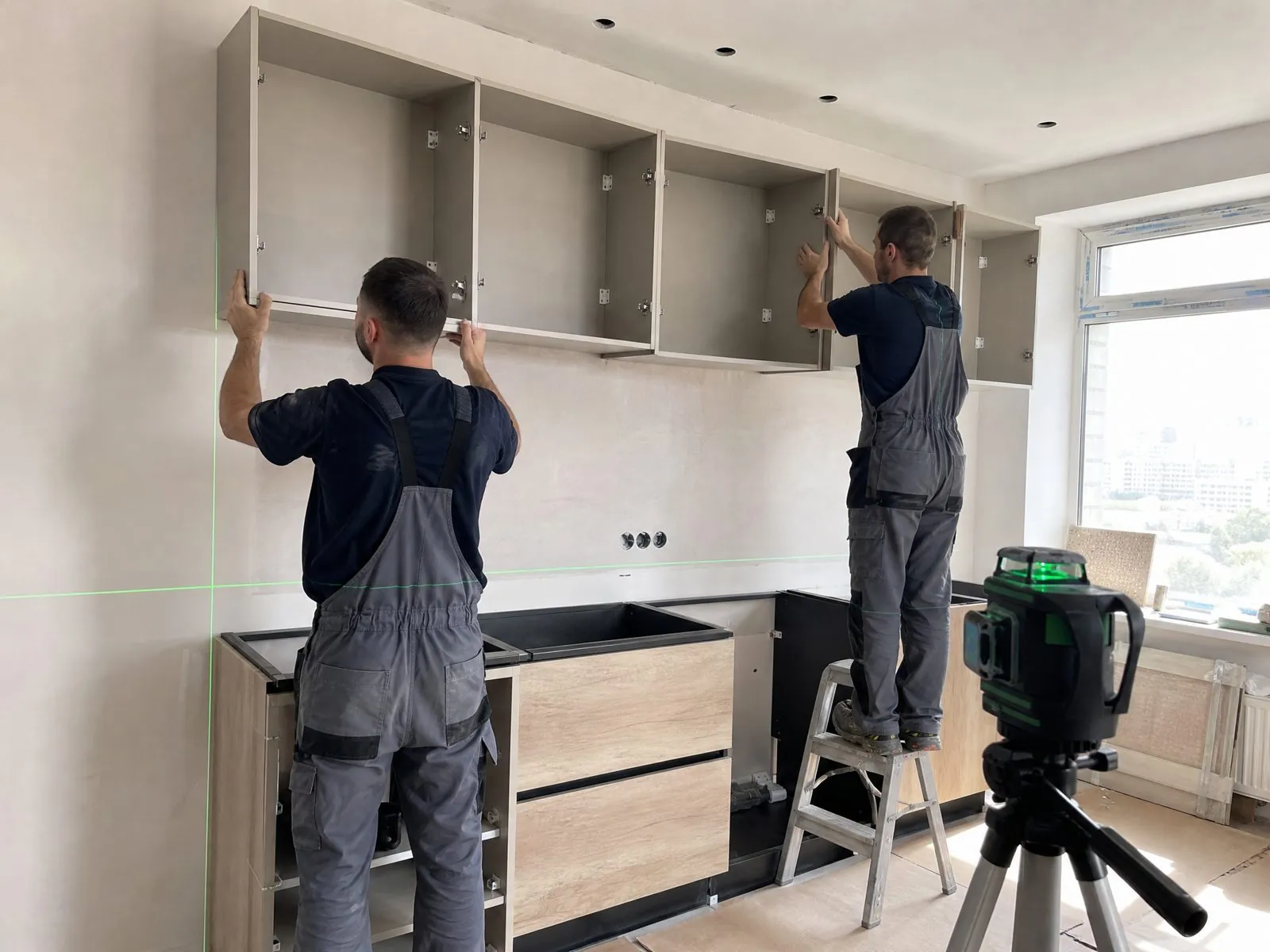
Plan installation before shipping, not after delivery. Clear instructions, labelled packing and a spare parts plan make the difference between a fast install and weeks of site problems.
- Request installation guidance documents and drawings per kitchen type.
- Order a small quantity of spare hinges, handles, panels and fittings with the shipment.
- Agree how damaged or missing parts will be reported, with photos and carton numbers.
- Confirm the support channel and response times for technical questions.
For first orders, consider having an experienced installer from your own team on site for the first few kitchens. Feedback from those units, such as a filler that is too narrow or a template that is unclear, can be passed to the factory before later batches ship. Keep a simple issue log with photos, carton labels and drawing references so every problem can be traced and fixed at the source.
Agree in the contract how warranty claims will be handled, including what evidence is needed and whether replacement parts ship with the next container or by express. Warranty terms should be confirmed in writing for each order.
How Can Arcova Help With Importing Kitchen Cabinets?
Arcova is a direct manufacturer with 12+ years of experience, a 40,000 m² factory and 12 production lines including automated CNC cutting, edge banding and drilling. Our monthly capacity is 40 × 40HQ containers, and we hold ISO9001, BSCI and FSC certifications.
We support each step of the import process: shop drawings, 3D design, finish sample approval, mock-ups, mass production, inspection with photo reports, export packing labelled by unit and room, and installation guidance, backed by 24-hour online technical support. Explore our kitchen cabinets, visit our factory page, or send us your drawings to start.