Compare Shaker and handleless kitchen cabinets by market fit, cost structure, production precision, finishes and range planning to decide which style sells better for your projects.
Which Sells Better: Shaker or Handleless Kitchen Cabinets?
Neither style wins everywhere. Shaker cabinets tend to sell better in traditional and transitional markets such as much of North America, the UK and Australia's family-home segment, while handleless cabinets sell better in modern apartment projects, urban European markets and premium contemporary developments.
The right answer for your business depends on who your end buyer is, what kind of property you supply, and the price tier you compete in. A distributor serving suburban renovation customers and a developer fitting out city-center apartments will often make opposite choices, and both can be right.
This article compares the two styles from a seller's and project buyer's viewpoint: market fit, cost structure, production complexity, hardware, durability and how to build a range that covers both without overloading your inventory.
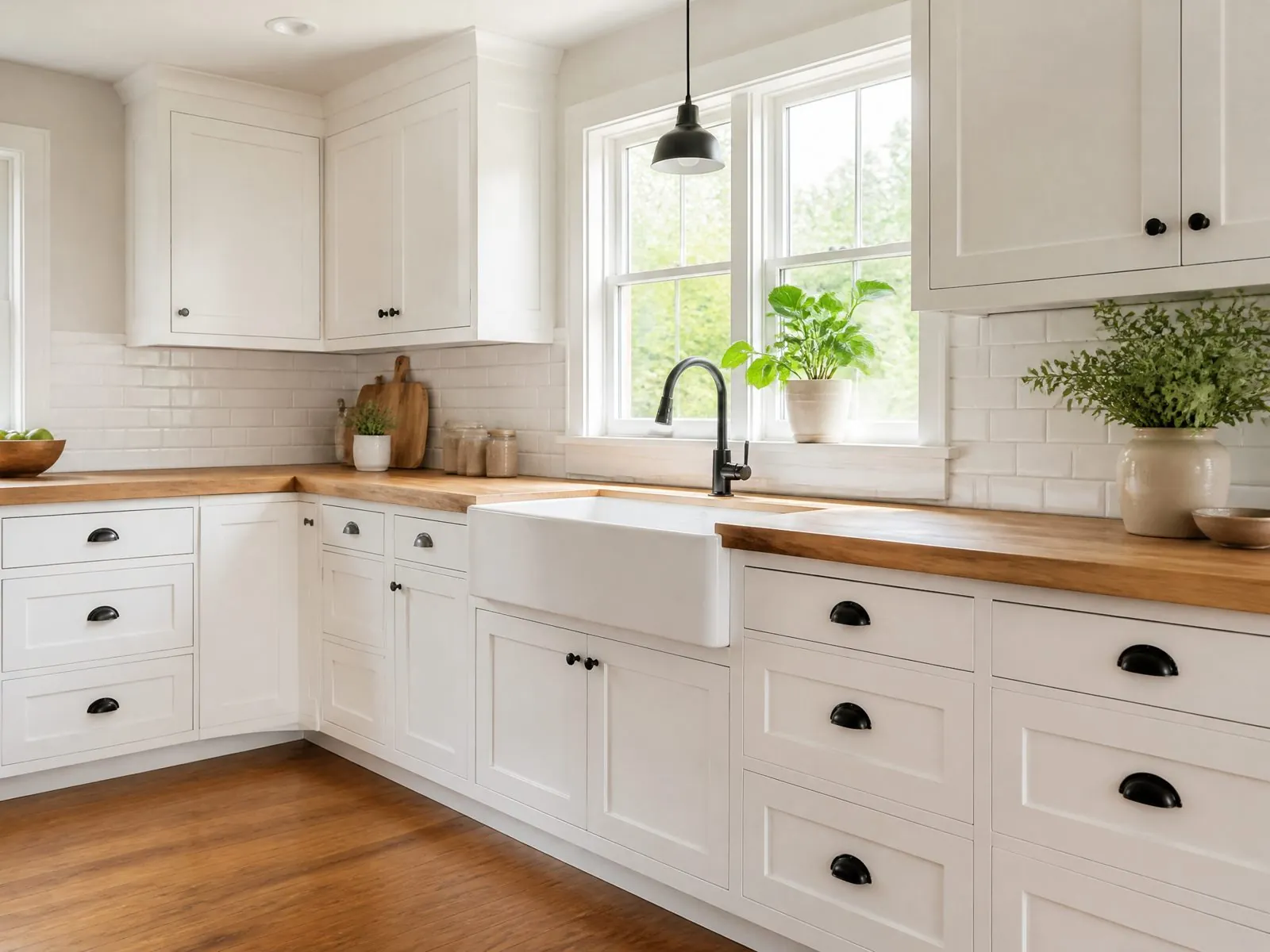
- Shaker: five-piece or routed door with a recessed center panel and square frame, usually with visible handles or knobs.
- Handleless: flat slab door opened by an integrated profile (J-pull or channel), push-to-open mechanism, or edge grip.
What Are the Key Differences Between Shaker and Handleless Designs?
The differences go beyond appearance. The two styles use different door construction, different hardware and different installation tolerances, and each one affects price and after-sales risk.
| Factor | Shaker Cabinets | Handleless Cabinets |
|---|---|---|
| Look | Classic, framed, timeless | Minimal, linear, contemporary |
| Door construction | Five-piece frame or routed MDF | Flat slab with profile or push-latch |
| Typical finishes | Painted lacquer, wood veneer, solid wood, thermofoil | Matte or gloss lacquer, laminate, melamine, veneer, PET |
| Opening method | Knobs or pull handles | J-pull, gola-type channel, push-to-open, or electric assist |
| Installation tolerance | More forgiving; frame hides small gaps | Strict; uneven gaps are obvious |
| Cleaning | Recessed corners collect dirt | Flat surfaces wipe easily |
| Style lifespan | Long, rarely looks dated | Strong now, finish trends change faster |
For buyers, the most important row is installation tolerance. Handleless kitchens look premium only when gaps and lines are perfectly aligned, which places more demands on both the factory and the installer.
Where Does Shaker Style Sell Best?
Shaker style sells best in markets where buyers value warmth, familiarity and resale appeal, and where homes are larger and renovation-driven.
In the US and Canada, Shaker has been a dominant kitchen door style for years and remains a safe default for single-family homes, builder-grade upgrades and renovation retail. In the UK, painted Shaker kitchens are strongly associated with country and period homes. In Australia and New Zealand, Hamptons-inspired Shaker kitchens remain popular in the family-home segment.
- Single-family homes and townhouses.
- Renovation and home-improvement retail channels.
- Farmhouse, Hamptons, coastal and transitional interiors.
- Buyers seeking a design that will not date before resale.
- Rental properties where landlords want broad tenant appeal.
Shaker also offers flexibility: the same door can be paired with modern bar handles for a transitional look or with brass knobs for a classic feel, which lets one door program cover several design directions.
Where Do Handleless Kitchens Perform Better?
Handleless kitchens perform better in urban apartments, open-plan living spaces and premium contemporary developments, where the kitchen is part of the living room and visual calm matters.
Across much of continental Europe, handleless kitchens are a mainstream choice rather than a niche. In fast-growing city markets in the Middle East and Asia, developers use them to signal a modern, high-spec product. In small apartments, removing handles also reduces visual clutter and protrudes less into tight walkways.
- High-rise apartments and serviced residences.
- Open-plan layouts where the kitchen faces the living area.
- Hotel apartments and extended-stay suites, see our hotel furniture range.
- Premium contemporary villas.
- Show apartments designed to photograph well.
One caution: in family homes with young children, push-to-open doors can be opened accidentally and fingerprints show on dark matte or gloss finishes. Recommend easy-to-clean surface finishes and anti-fingerprint options for these buyers.
How Do Costs Compare Between the Two Styles?
Neither style is automatically cheaper. Total cost depends on the door material and finish more than the style itself, but each style has its own hidden cost lines.
Shaker doors require extra machining or frame assembly and, when painted, more sanding around the inner profile. Handleless doors are simpler slabs, but integrated profiles, aluminum channels and push-to-open or electric opening systems add hardware cost, and the cabinet carcass may need to be adapted to accept the channel.
| Cost Element | Shaker | Handleless |
|---|---|---|
| Door machining | Higher (profiling or frame assembly) | Lower for slab doors |
| Finishing labor | Higher when painted, due to corners | Lower on laminate, high on gloss lacquer |
| Handles | Needed for every door and drawer | Not needed |
| Profiles or channels | Not needed | Aluminum profiles add cost per meter |
| Opening hardware | Standard hinges and runners | Push-to-open or electric systems may add cost |
| Installation labor | Standard | Higher precision needed |
In practice, an entry-tier handleless kitchen in melamine with a J-pull edge can be very cost-effective, while a gloss lacquer handleless kitchen with electric opening sits in the premium tier. Likewise, a thermofoil Shaker is very different in price from a solid wood Shaker.
Which Style Is Easier to Produce and Install Consistently?
Shaker is more forgiving on site; handleless demands tighter manufacturing and installation control. For projects with mixed-skill installation teams, this is often the deciding factor.
A Shaker frame visually breaks up the door, so a slightly uneven gap is less noticeable. On a handleless run, horizontal lines continue across the whole kitchen, so a few millimeters of misalignment between a drawer front and a door is obvious to the end buyer.
- Confirm the channel or profile system before shop drawings are finalized.
- Check that appliance heights match the handleless line positions.
- Specify adjustable legs and hinges with enough adjustment range.
- Request a mock-up kitchen to verify alignment before mass production.
- Provide installation guidance documents to site teams.
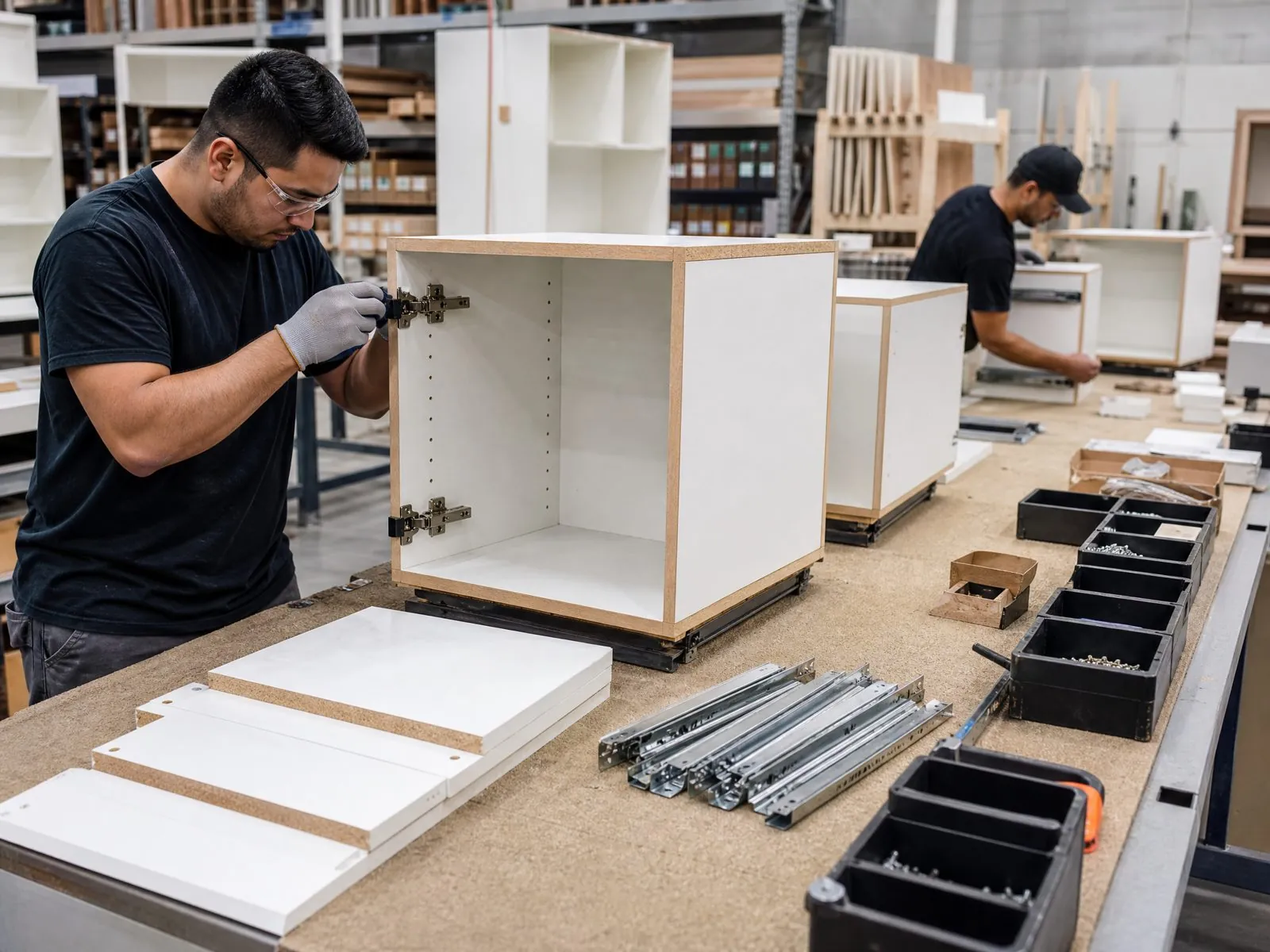
Automated CNC cutting, edge banding and drilling help keep door sizes and hole positions consistent across hundreds of units, which is essential for handleless lines.
How Do Finishes and Colors Influence Sales for Each Style?
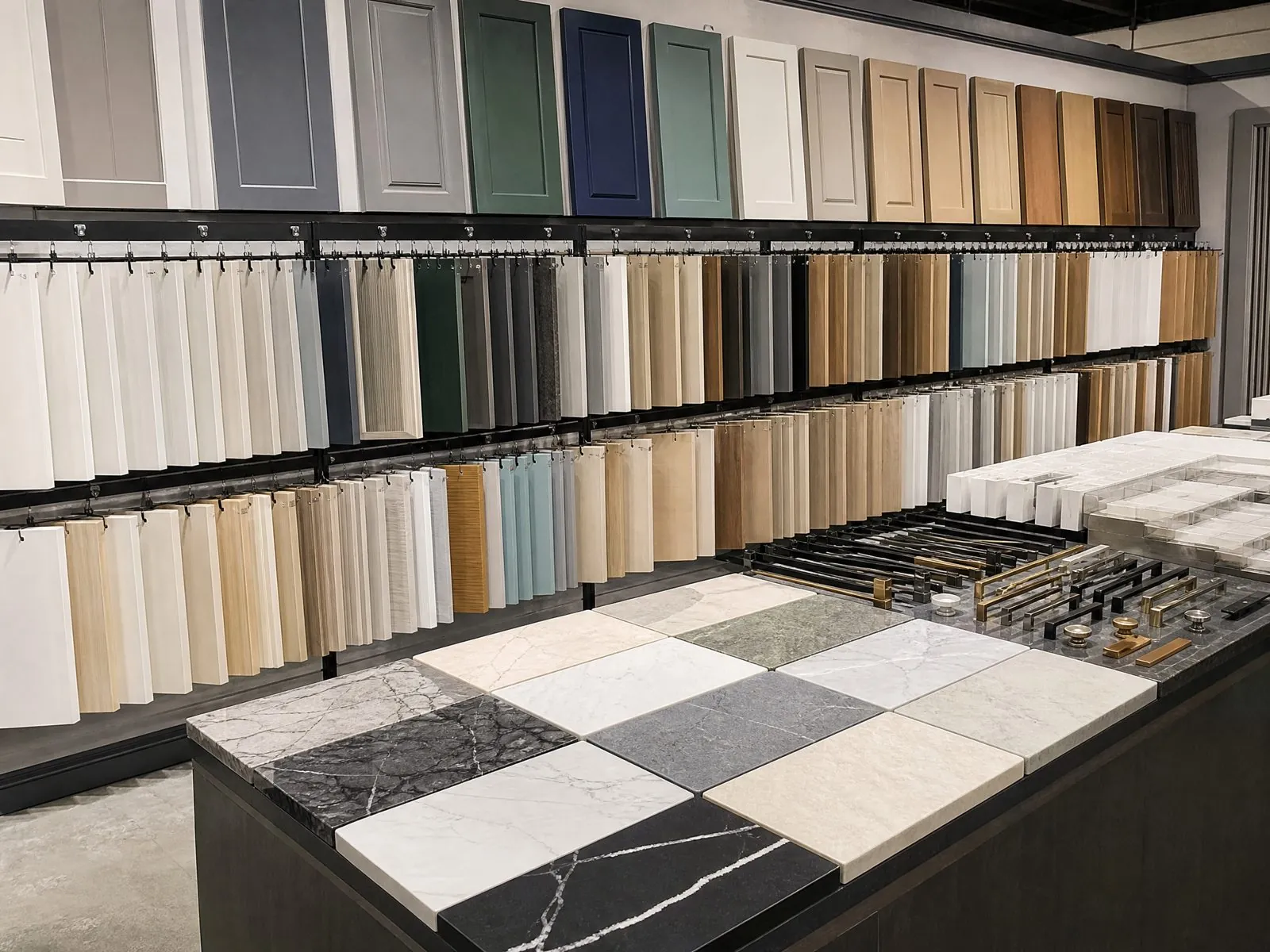
Finish and color often matter more to the end buyer than the door profile. Pair each style with the finishes its market already expects.
Shaker sells best in painted colors such as white, off-white, sage, navy and grey, or in natural wood veneer. Handleless sells best in matte neutrals, wood-grain laminates, and two-tone combinations such as wood base units with light wall units.
- Shaker best-sellers: painted white and warm neutrals, muted greens and blues, oak veneer.
- Handleless best-sellers: matte white, greige, anthracite, oak-effect laminate, two-tone.
- Durability tip: matte anti-fingerprint and easy-to-clean surface finishes reduce complaints on dark handleless doors.
Approving physical finish samples before production is essential for both styles, because screen colors rarely match painted or laminated surfaces.
Should Distributors Stock Both Styles?
Most distributors should offer both, but not in equal depth. Lead with the style that matches your core customer and offer the other as a smaller curated range.
A practical approach is to choose one carcass system and hardware platform for both styles. Then the difference is mainly in doors, handles and profiles, which keeps inventory, spare parts and installer training simple.
- Share carcass sizes and board colors across both door ranges.
- Limit Shaker to three to five core colors and handleless to a similar number.
- Offer one transitional option, such as a slim Shaker with integrated pull, to bridge both groups.
- Use private label branding so the range looks unified, see our OEM/ODM service.
How Should Developers Choose for a Specific Project?
Developers should choose the style that matches the buyer profile and price point of the development, then check that the style works with the floor plan and installation team.
| Project Type | Usually Better Fit | Reason |
|---|---|---|
| Suburban family homes | Shaker | Broad appeal, forgiving on daily use |
| City-center apartments | Handleless | Clean lines in open-plan spaces |
| Build-to-rent | Either, in durable finishes | Durability and easy replacement matter most |
| Luxury villas | Either, at premium spec | Driven by architect's design direction |
| Hotel apartments | Handleless | Modern image, easy cleaning |
If unsure, run a show-unit test: fit one style in a show apartment and gather buyer feedback before finalizing the full order.
Which Style Holds Up Better in Daily Use?
Both styles can last for many years when the right finish and hardware are specified. The practical difference is where wear shows: Shaker doors show wear on frame edges and inner corners, while handleless doors show wear around the grip profile and on flat surfaces.
On painted Shaker doors, the joint between frame and center panel is the most common complaint point, because seasonal movement in timber or MDF can cause hairline cracks in the paint. Routed one-piece MDF doors reduce this risk compared with five-piece painted doors. On handleless kitchens, repeated hand contact on the top edge of a J-pull or the lip of a channel can wear lacquer and leave marks, which is why many buyers choose aluminum channels or laminate in high-traffic kitchens.
- Shaker wear points: paint at frame joints, inner corners collecting grease, handle screw holes.
- Handleless wear points: grip edges, fingerprints on flat matte or gloss faces, push-latch adjustment.
- Hardware wear: push-to-open mechanisms need correct adjustment; soft-close runners and hinges should be specified by load.
- Replacement: slab doors are generally simpler to remake and match than profiled doors.
For rental and hospitality buyers, ask the factory which finish has the best record for wipe-down cleaning and minor repairs in your climate. A finish that is easy to touch up on site can save more over the life of the kitchen than a small difference in initial price.
How Can Arcova Help You Build a Shaker or Handleless Range?
Arcova manufactures both Shaker and handleless kitchen cabinets for distributors, developers and contractors. With 12+ years of manufacturing, a 40,000 m² factory and 12 production lines including automated CNC cutting, edge banding and drilling, we can run both styles on a shared carcass platform.
We offer hardware from Blum, Hettich, Häfele, Salice, DTC and Hutlon by budget, finish sample approval, mock-ups, inspection with photo reports and OEM/private label packaging. Monthly capacity is 40 × 40HQ containers and we hold ISO9001, BSCI and FSC certifications. Contact our team with your target market and drawings, and we will suggest a range structure that fits.