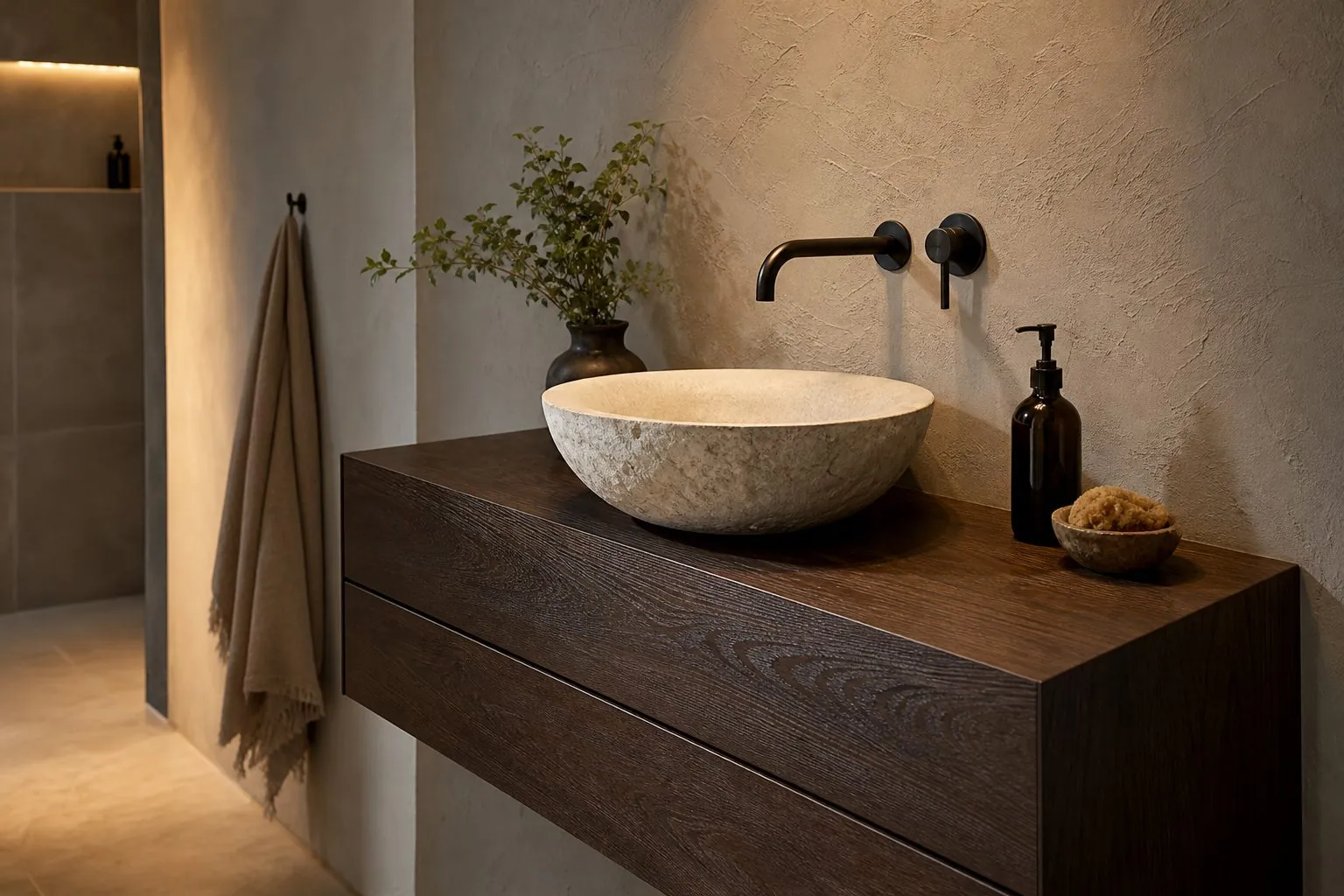
Compare vanity countertop materials and basin styles by durability, maintenance, cabinet impact and project fit, so buyers can specify hotel and residential bathrooms with confidence.
Which Vanity Countertop and Basin Combination Is Best?
For most projects, the safest choice is a quartz or integrated solid-surface top with an undermount or one-piece basin, because it combines easy cleaning with few joints. Natural stone suits premium projects with a maintenance plan, ceramic one-piece tops suit tight budgets, and vessel basins work best where appearance matters more than splash control or daily housekeeping time.
Choose the countertop and basin together, not separately. The basin controls the cut-out, the plumbing position, the top's support and the drawer layout below. Treating them as a late selection is a common cause of redesign.
How Do Countertop Materials Compare?
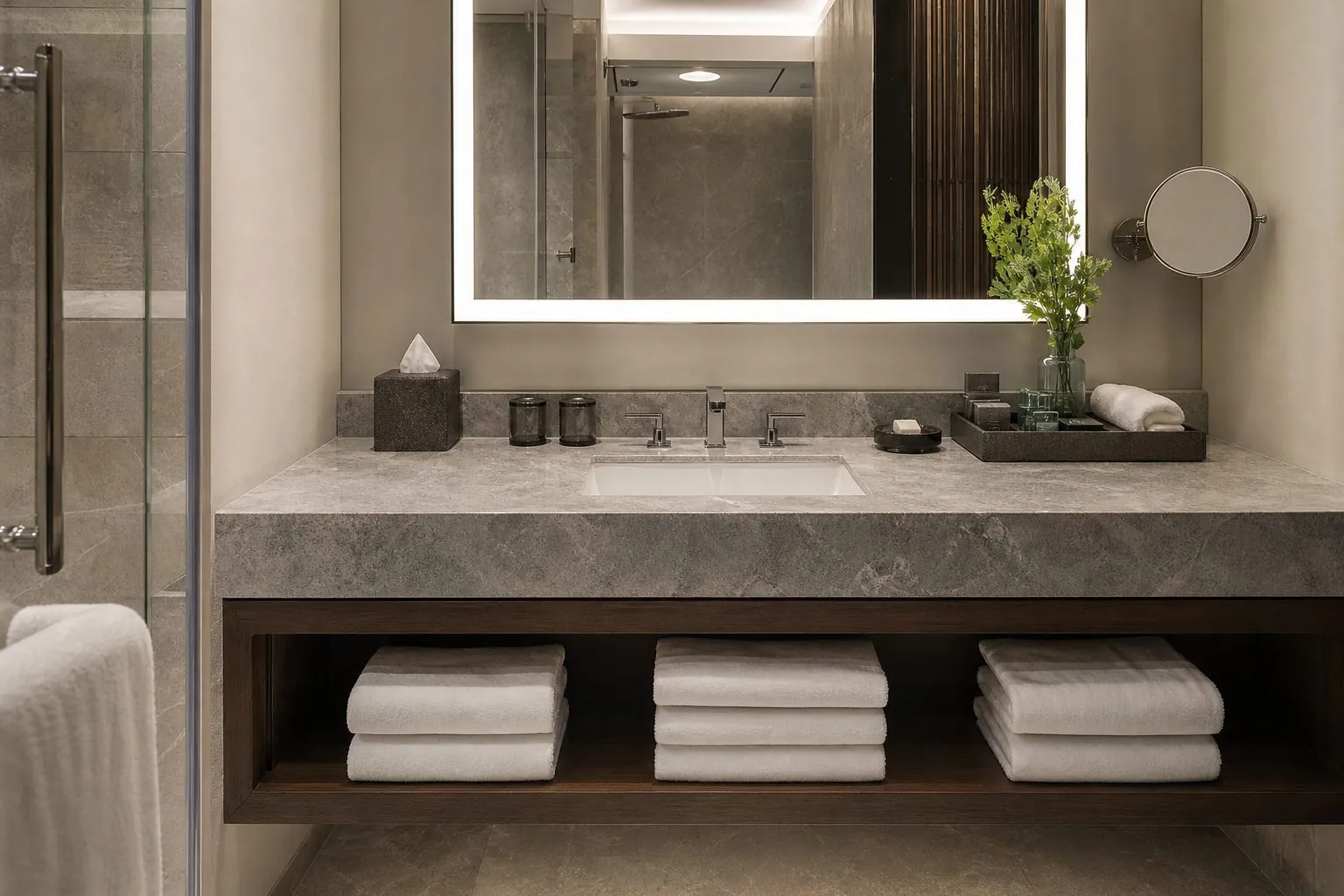
Quartz and sintered stone are the usual low-maintenance options, while marble is chosen for appearance and accepts some aging. Ratings below are general comparisons, not test results; check the product data for your actual selection.
| Material | Stain Resistance | Heat and Impact Notes | Maintenance | Typical Fit |
|---|---|---|---|---|
| Engineered quartz | Good | Sensitive to high direct heat; edges can chip | Low | Hotels, apartments |
| Sintered stone | Very good | Good heat resistance; thin edges can be brittle | Low | Modern premium projects |
| Marble | Lower, porous and acid-sensitive | Etches easily, needs sealing | Higher | Luxury hotels, villas |
| Granite | Good when sealed | Hard-wearing; patterns vary | Moderate | Commercial, traditional designs |
| Solid surface (acrylic-based) | Good; repairable | Can scratch; not ideal with hot tools | Low to moderate | Integrated basins, healthcare-style rooms |
| Ceramic one-piece top | Very good | Can crack on heavy impact | Low | Rental and volume housing |
| HPL or compact laminate | Good | Seal cut-outs carefully | Low | Budget projects, public washrooms |
Ask for a sample and test it with what the bathroom will really encounter: hair dye, nail polish remover, cosmetics, hot styling tools and cleaning chemicals. Hotel cleaning products in particular can dull some surfaces faster than domestic use would.
Which Basin Type Should You Choose?
Choose the basin by how the bathroom is cleaned, how much bowl depth is needed, and how much space the plumbing takes. Undermount basins are easy to wipe down, integrated basins remove the joint entirely, and vessel basins take less cabinet space but raise the rim height.
| Basin Type | Advantages | Watch Out For | Cabinet Impact |
|---|---|---|---|
| Undermount | Clean top surface; wipes straight into the bowl | Joint needs sealing; replacing it is difficult | Bowl reduces drawer depth |
| Integrated (one-piece) | No joint; quick to clean | A chip may mean replacing the entire top | Bowl shape sets drawer cut-outs |
| Vessel | Strong design statement; more space inside the vanity | Rim height, splashes and cleaning around the base | Less bowl intrusion; lower cabinet height may be needed |
| Semi-recessed | Works in shallow rooms | Protrudes at the front and may be knocked | Reduces depth needed |
| Drop-in (self-rimming) | Lowest cost; easy to replace | Rim collects dirt | Moderate intrusion |

How Does the Basin Change the Vanity Cabinet?
The basin often dictates the drawer layout. An undermount or integrated bowl sits in the top drawer's space, so top drawers usually need a U-shaped cut-out, or a false front with a shallow tray instead. Decide this before the carcass is drawn.
- Rim height: a vessel basin may add 100-150 mm or more to the rim, so the cabinet is typically made lower to suit.
- Trap space: wall-mounted bottle traps and floor drains need different cut-outs in shelves and drawers.
- Drawer sides: plan U-shaped drawers using slide maker data, so that runners clear the bowl and waste.
- Water supply: a wall-mounted faucet needs a concealed valve and exact height coordination.
- Overflow: some basins have no overflow, so check that the waste valve matches.
As a reference, many finished vanity rims sit somewhere near 800-900 mm above the floor. Confirm the right height with your market's habits and with any accessibility requirements, as they vary between projects.
How Should Tops Be Sealed and Supported?
Seal every cut-out and every edge where water can reach the cabinet. Water usually damages a vanity through the joint or through raw board at the basin cut-out, not through the door face. This is one of the most valuable checks on any sample unit.
- Seal the raw edges of the carcass and any cut-outs in the cabinet.
- Bond the basin to the top with the adhesive and support method that the maker recommends.
- Run a backsplash or sealed joint along the wall, with the correct sanitary-grade sealant.
- Support stone tops along their length, with extra support near cut-outs.
- Include drip edges or a shaped underside at the front if water runs along it.
Wall-hung vanities need particular attention. A long stone top is heavy, and the combined load of cabinet, top and basin must be carried by the wall fixings or a steel frame, so confirm the total weight with the contractor before shop drawings are approved.
How Do Hotel and Residential Requirements Differ?
Hotels prioritize cleaning speed and replaceable parts; homes prioritize storage and appearance. A specification copied between them often fails, as the two types of bathroom are used and maintained very differently.
- Hotel housekeeping: choose fewer joints, and make sure cleaning staff can reach behind the basin.
- Guest amenities: reserve space for trays, tissue boxes and hairdryers, and check socket positions.
- Durability: avoid soft or acid-sensitive tops where cleaners cannot be closely controlled.
- Replacement: attic stock of tops is expensive to arrange later, so consider it at the order stage.
- Residential storage: drawers and internal organizers usually justify a shallower basin.
- Family bathrooms: deeper bowls reduce splashing with children present.
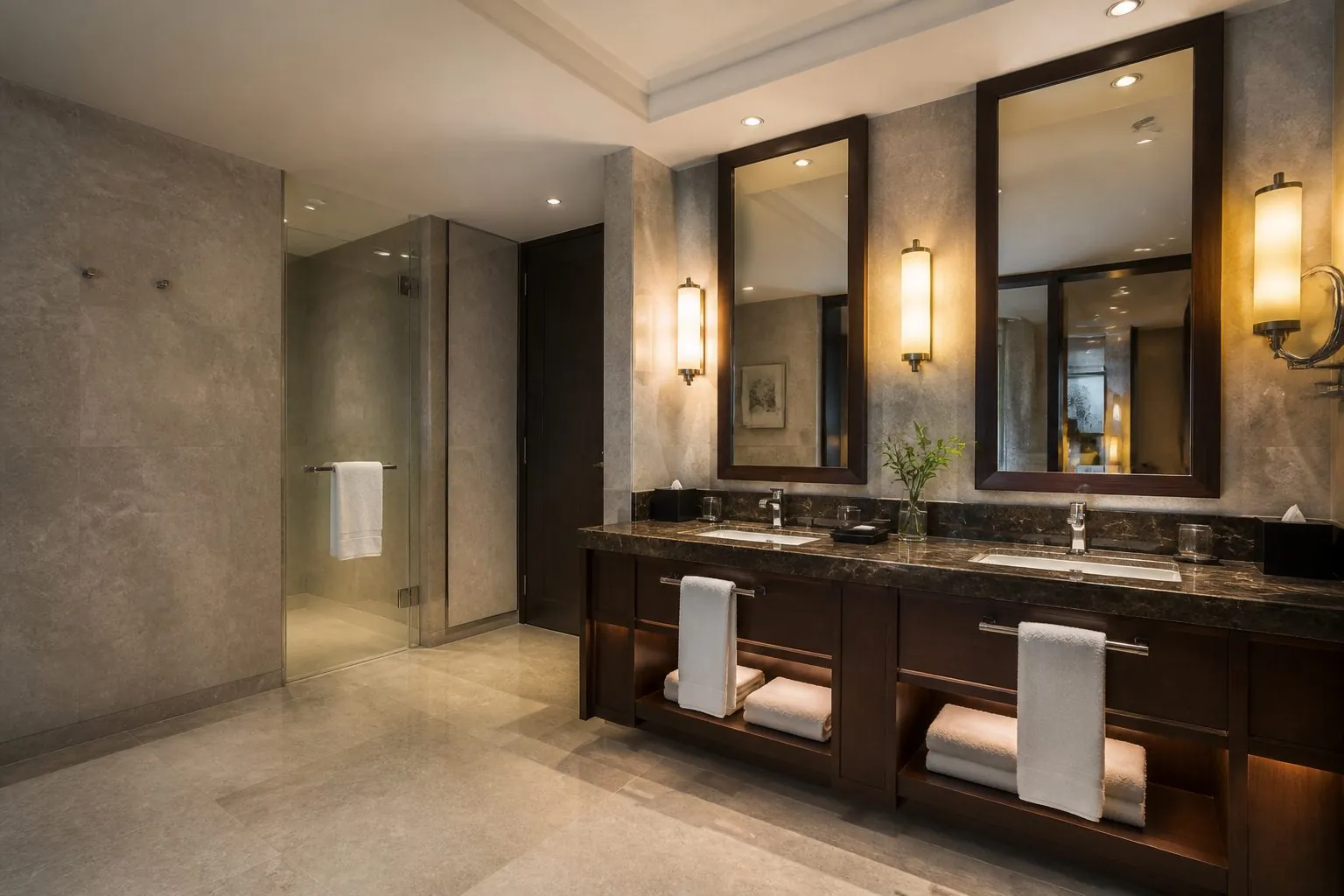
In double vanities, decide whether one continuous top is possible. A single long stone top looks better but is harder to deliver through corridors and lifts, so check site access before finalizing the length.
Should the Top Ship From the Factory or Be Sourced Locally?
Consider local sourcing for heavy stone tops, especially for long or complex shapes. Local fabrication lowers breakage risk and freight weight, while factory supply gives a single point of responsibility and a coordinated finish package. The right choice depends on your project's scope and local capability.
| Approach | Works Well When | Risks to Manage |
|---|---|---|
| Supplied with the cabinet | Repeated top sizes and short delivery chains | Crating, breakage, site handling |
| Fabricated locally | Long or irregular tops, stone chosen locally | Coordination of cut-outs and support with the cabinet |
| One-piece ceramic basin top | Volume projects with standard widths | Fewer size options; plan spare stock |
If local fabricators cut the top, supply them with basin templates and cabinet drawings early. Also make it clear who is responsible for templating, the basin bond and final sealing, because these gaps cause most on-site disputes.
What Should You Confirm Before Ordering?
Confirm the exact basin model and faucet before the shop drawings are finalized. A photo reference or a general description is not enough, as small changes to a bowl or waste can change the drawers, the cut-out and the plumbing.
- Basin data sheet, including template, overflow and waste size.
- Faucet type and hole positions, or the wall-mounted faucet rough-in height.
- Top material, thickness and edge profile, confirmed on a physical sample.
- Drain and water supply positions in each bathroom type.
- Finished rim height and any accessibility rules.
- Wall type and fixing method for wall-hung cabinets.
- Packing, breakage allowance and spare parts plan.
Run a mock-up with real plumbing where possible. A running faucet will quickly reveal splashing, drain speed and whether water runs to the joint, none of which show up on a drawing.
How Should Basin Size and Faucet Reach Be Matched?
Match the faucet to the bowl before approving either item, because a poor pairing causes splashing even with a high-quality basin. The water stream should land near the drain area and not directly on a shallow surface. Faucet reach and spout height are the two figures to compare against the basin data sheet.
- Shallow bowls: a high-flow or tall faucet can throw water onto the top and the guest.
- Vessel basins: usually need a tall deck-mounted faucet or a wall-mounted faucet with enough reach.
- Narrow tops: check that the faucet base and lever have room to operate behind the bowl.
- Wall-mounted faucets: fix rough-in height and valve access before the wall is tiled.
- Flow rate: local water rules or hotel sustainability targets may limit the choice of aerator.
Which Edge and Backsplash Details Reduce Problems?
Simple edges and well-planned wall junctions reduce both chipping and water damage. A slightly eased edge generally resists chips better than a sharp square edge, and it feels more comfortable when people lean against the vanity. Thin mitered front edges look refined, but the joint needs careful fabrication and protection during shipping.
At the wall, choose between an upstand, a full-height stone or tile splash, and a simple sealed joint. An upstand protects the wall and hides small gaps, while a flush joint looks cleaner but depends on a straight wall and well-applied sealant. Whichever you choose, confirm whether the mirror or mirror cabinet sits on the splash, since this changes the height of the upstand and the fixing plan.
How Can Arcova Help With Vanity Tops and Basins?
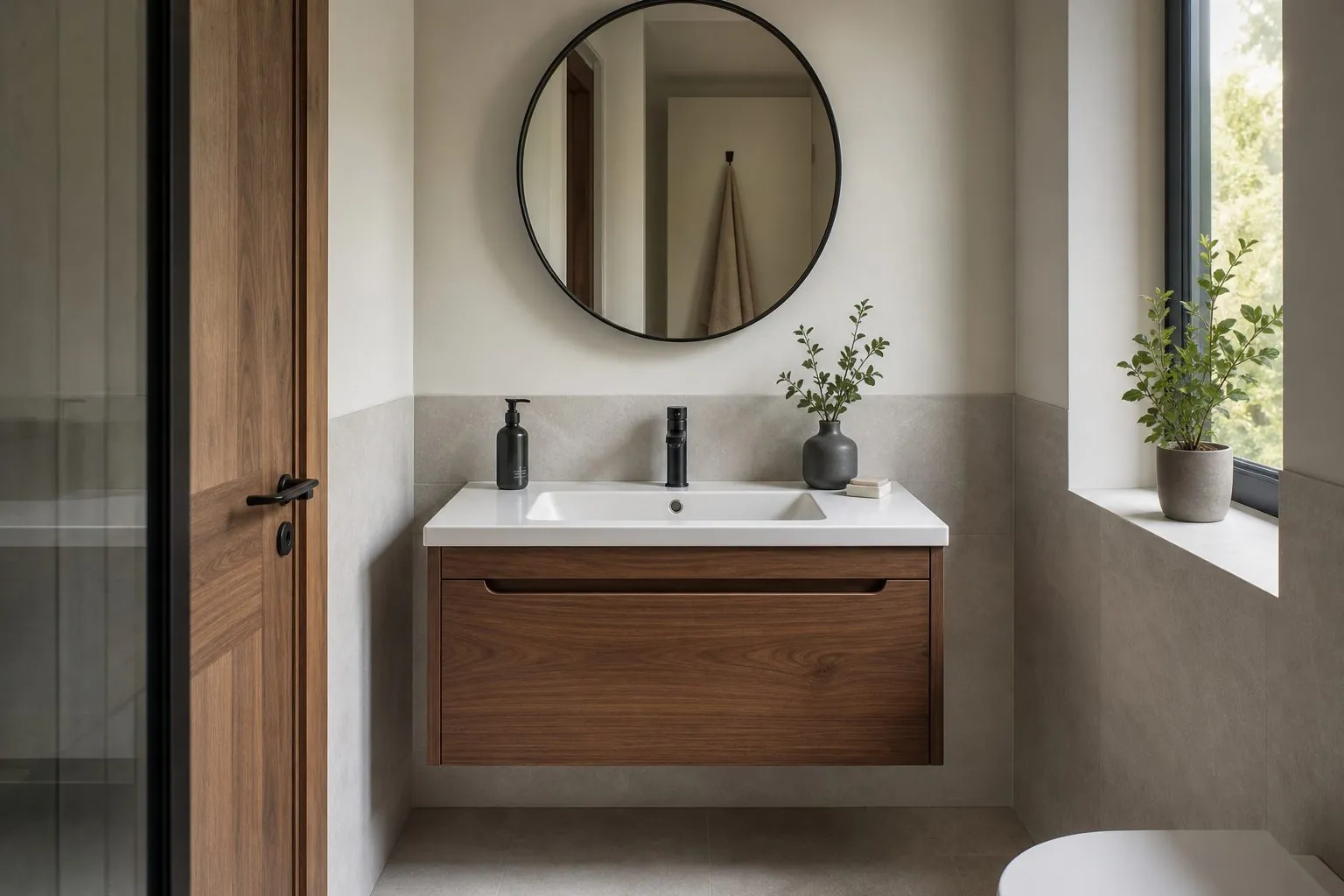
Arcova builds vanity cabinets around your chosen top and basin, and coordinates cut-outs, drawers and supports on shop drawings. Scope for supplying stone tops and basins is confirmed per project, and we can share templates and drawings with a local fabricator when tops are sourced near the site.
- Planning: shop drawings, 3D design and 24-hour online technical support.
- Consistency: automated CNC cutting, edge banding and drilling across repeated bathroom types.
- Approval: finish samples and mock-ups before mass production.
- Delivery: inspection with photo reports, plus export packing labelled by unit and room.
Browse our Bathroom Vanities range, see how we check product at each stage on the quality page, or send your bathroom schedule through our contact page.