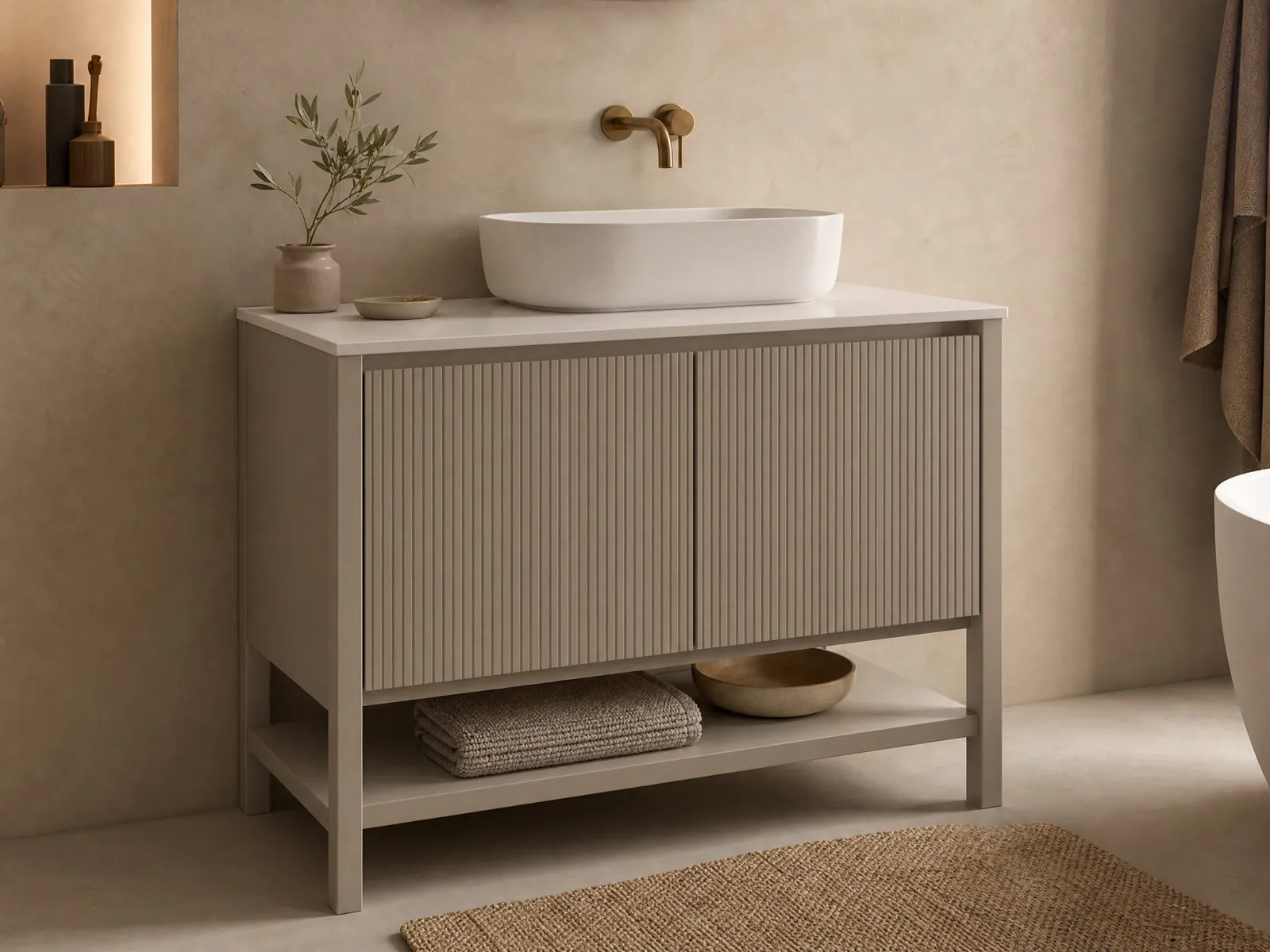
Compare carcass boards, door finishes and countertops for bathroom vanities in humid climates, plus the sealing, ventilation and hardware details that prevent swelling and mold.
What Is the Best Material for a Bathroom Vanity in a Humid Climate?
For most humid-climate projects, the best balance is a moisture-resistant plywood or moisture-resistant board carcass with fully sealed edges, a water-tolerant door finish and a non-porous countertop. No single material wins in every case; the right choice depends on budget, ventilation and how the bathroom will be used and cleaned.
In tropical and coastal markets, bathroom vanities face constant humidity, daily splashing and occasional leaks from basins and traps. Vanities that perform well in a dry climate can swell, delaminate or grow mold within a few years in Southeast Asia, the Middle East coast, Florida or northern Australia. Most of these failures start at an unsealed edge, a cut-out or the cabinet base.
This guide compares carcass boards, door finishes and countertops for humid climates, and lists the construction details that matter as much as the material itself.
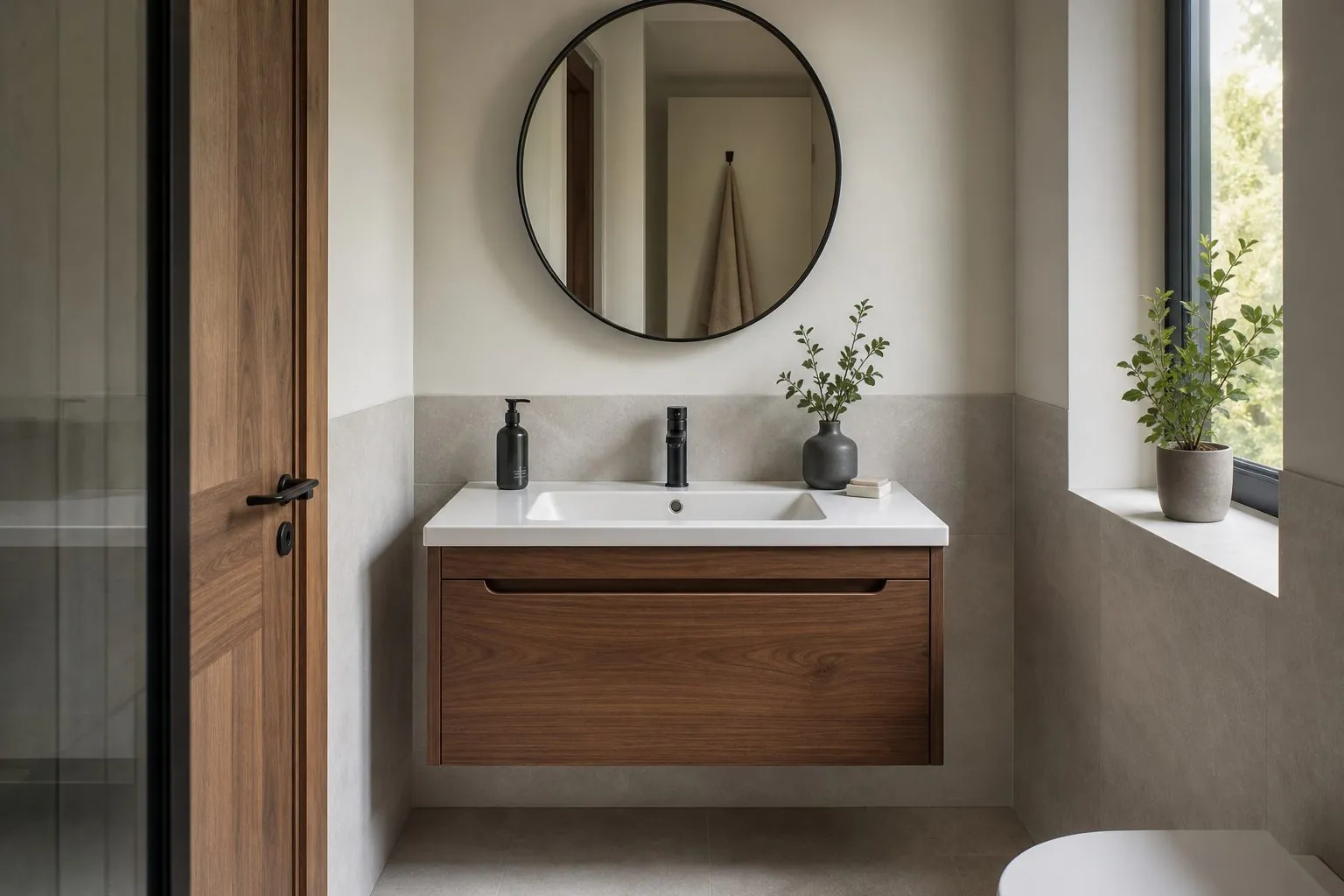
Why Do Bathroom Vanities Fail in Humid Climates?
Vanities usually fail because water reaches the board core through edges, holes and joints, not because the surface material is weak. Once moisture enters a wood-based core, it swells and loses screw strength, and the damage is rarely reversible.
- Unsealed cut-outs for basins, taps and waste pipes, often cut on site.
- Exposed bottom edges of side panels and plinths that sit in mopping water.
- Leaking traps and connections that drip unnoticed inside the sink cabinet.
- Poor ventilation in bathrooms without exhaust fans or windows.
- Silicone gaps between countertop and wall or basin.
- Wrong cleaning products that attack finishes and seals.
Understanding these failure points changes the specification. Upgrading only the door finish while leaving the sink base in standard board solves the visible problem and ignores the one that causes most claims.
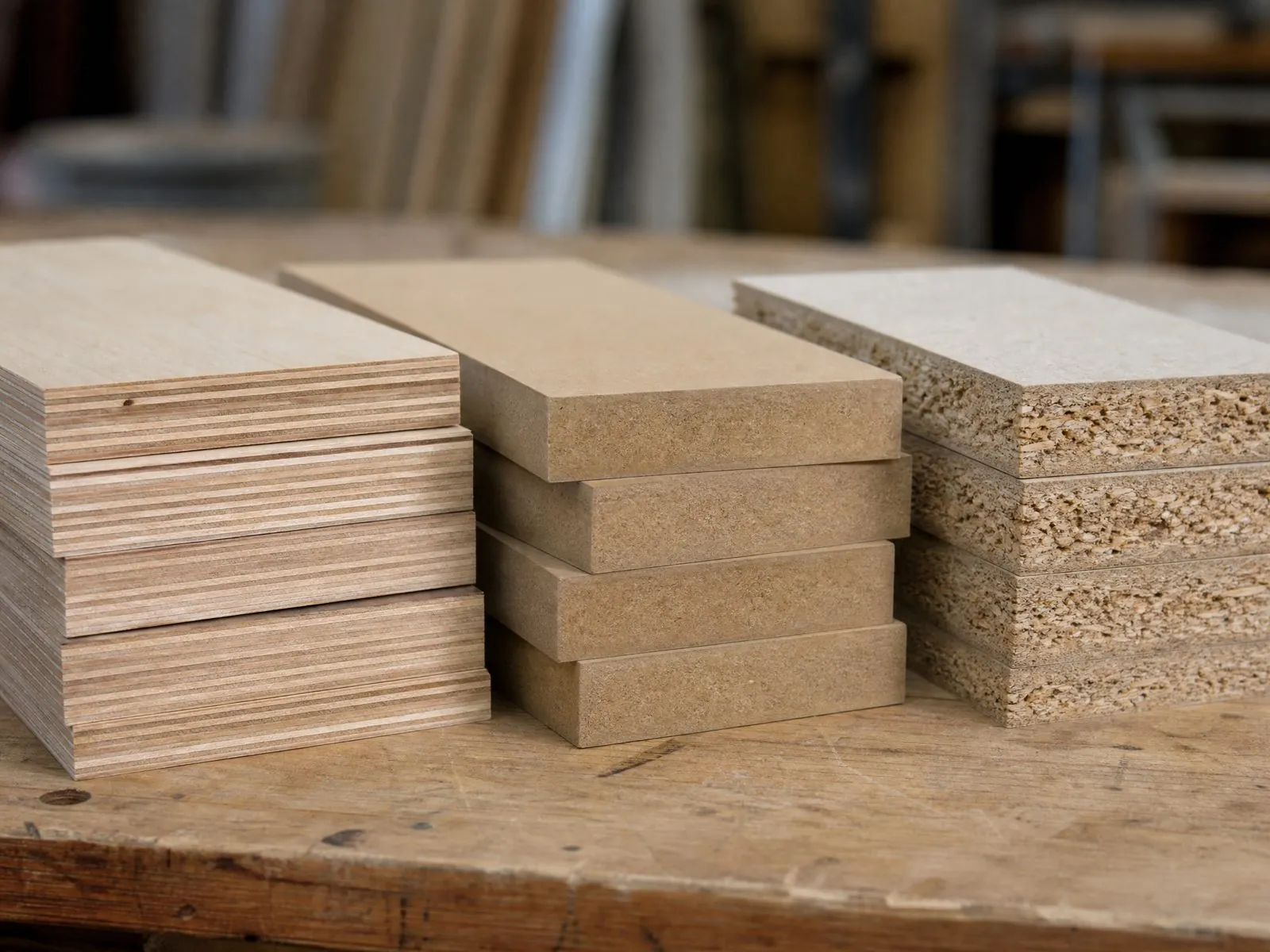
How Do Carcass Materials Compare for Humid Bathrooms?
Moisture-resistant plywood and solid surface or PVC-type carcasses handle humidity best, moisture-resistant MDF and particle board are acceptable with careful edge sealing, and standard particle board should be avoided in wet zones.
| Carcass Material | Humidity Performance | Strengths | Limitations |
|---|---|---|---|
| Moisture-resistant plywood | Good | Strong screw holding, stable | Higher cost, edges must be sealed |
| Moisture-resistant MDF | Moderate to good | Smooth for paint and lacquer | Swells if core is exposed |
| Moisture-resistant particle board | Moderate | Economical, good with melamine | Weaker at cut-outs and edges |
| Standard particle board | Poor | Low cost | Not recommended near water |
| PVC or foam board | Very good | Does not absorb water | Different look and screw holding, limited premium finishes |
| Solid wood | Variable | Natural look | Moves with humidity, needs good finish |
"Moisture-resistant" is a performance class, not a waterproof guarantee. These boards resist swelling better than standard grades, but they still need sealed edges and good detailing. Ask the supplier for the board grade, origin and documents, and request CARB or similar emission compliance for markets that require it. Boards from suppliers such as EGGER, Kronospan and DARE are common in project specifications.
Which Door and Front Finishes Hold Up Best to Moisture?
Laminate, PET and quality lacquer finishes perform well in humid bathrooms when all edges are sealed; natural veneer and solid wood need more care. The finish protects the face, but the edges decide long-term durability.
| Finish | Moisture Tolerance | Maintenance | Best For |
|---|---|---|---|
| Melamine | Good on face, edges critical | Easy wipe | Rental and affordable housing |
| High-pressure laminate | Good | Easy wipe, scratch resistant | Hotels, serviced apartments |
| PET | Good | Uniform, easy to clean | Modern apartments |
| Lacquer on MDF | Good with full sealing | Avoid abrasive cleaners | Premium residences |
| Wood veneer | Moderate | Protect from standing water | Villas with good ventilation |
| Solid wood | Moderate | Regular care, can move | Classic designs, dry zones |
For lacquered and painted doors, ask whether the back and all edges are coated, not only the visible face. A door finished on all six sides absorbs much less moisture and is less likely to warp. For melamine and laminate, ask for edge banding on all edges, including hidden ones, with a suitable adhesive.
Which Countertop Materials Work Best in Humid Bathrooms?
Non-porous tops such as quartz, sintered stone, solid surface and ceramic are the safest choices for humid bathrooms. They do not absorb water and are easy to clean, while natural stone and wood tops need sealing and care.
- Quartz: low porosity, wide color range, good for hotels and apartments.
- Sintered stone: very low absorption, heat and stain resistant, can be produced in thin profiles.
- Solid surface: seamless with integrated basins, repairable, softer surface.
- Ceramic or integrated basin tops: economical and fully water-tolerant, common in volume housing.
- Marble and natural stone: premium look, but porous and needs periodic sealing.
- Wood or veneer tops: warm look, but high risk near water; use only with strong finish and good ventilation.
Whatever the top, the joint between top, basin and wall is the weak point. Specify an upstand or splashback and continuous sealant, and make sure the basin cut-out edge in any wood-based substrate is fully sealed.
Which Construction Details Matter as Much as Material Choice?
Sealed edges, raised or protected bases, factory-machined cut-outs and ventilation make more difference than upgrading the board alone. A good material with poor detailing will still fail.
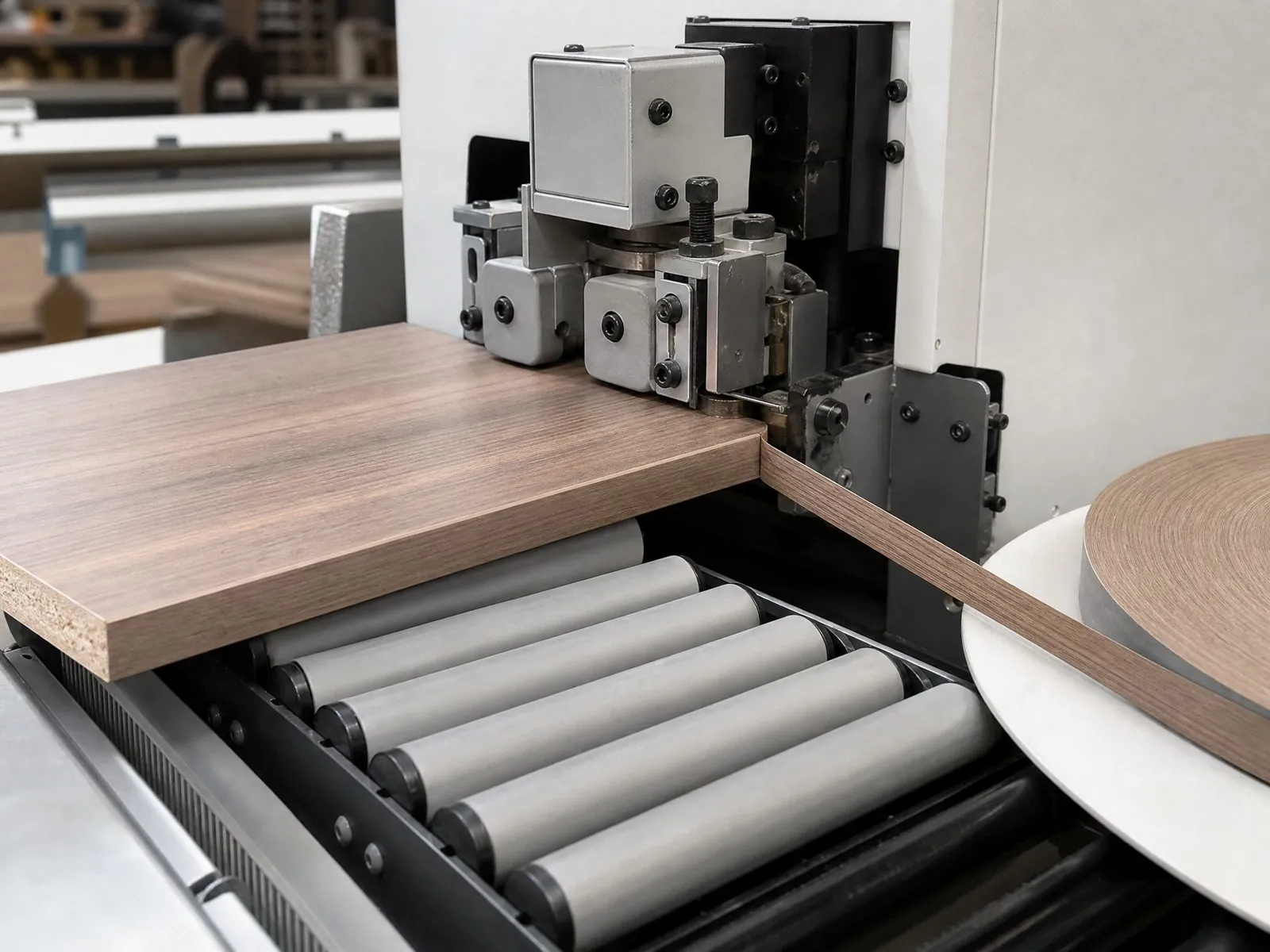
- Seal every edge, including back edges, bottoms and shelf edges, with edge banding or coating.
- Machine cut-outs in the factory and seal them before shipping.
- Use wall-hung vanities or raised legs to keep panels away from floor water.
- Protect plinths with aluminum, PVC or sealed materials if floor-standing.
- Leave a ventilation gap behind or under the cabinet to dry trapped moisture.
- Use stainless or coated hardware to reduce rust on hinges and runners.
- Add a drip tray or sealed base under the sink trap where leaks are likely.
Hardware deserves attention in coastal climates. Salt air and humidity corrode low-grade metal parts. Brands such as Blum, Hettich, Häfele, Salice, DTC and Hutlon offer options across budgets; ask which finishes and models are suited to humid bathrooms.
Should You Choose Wall-Hung or Floor-Standing Vanities?
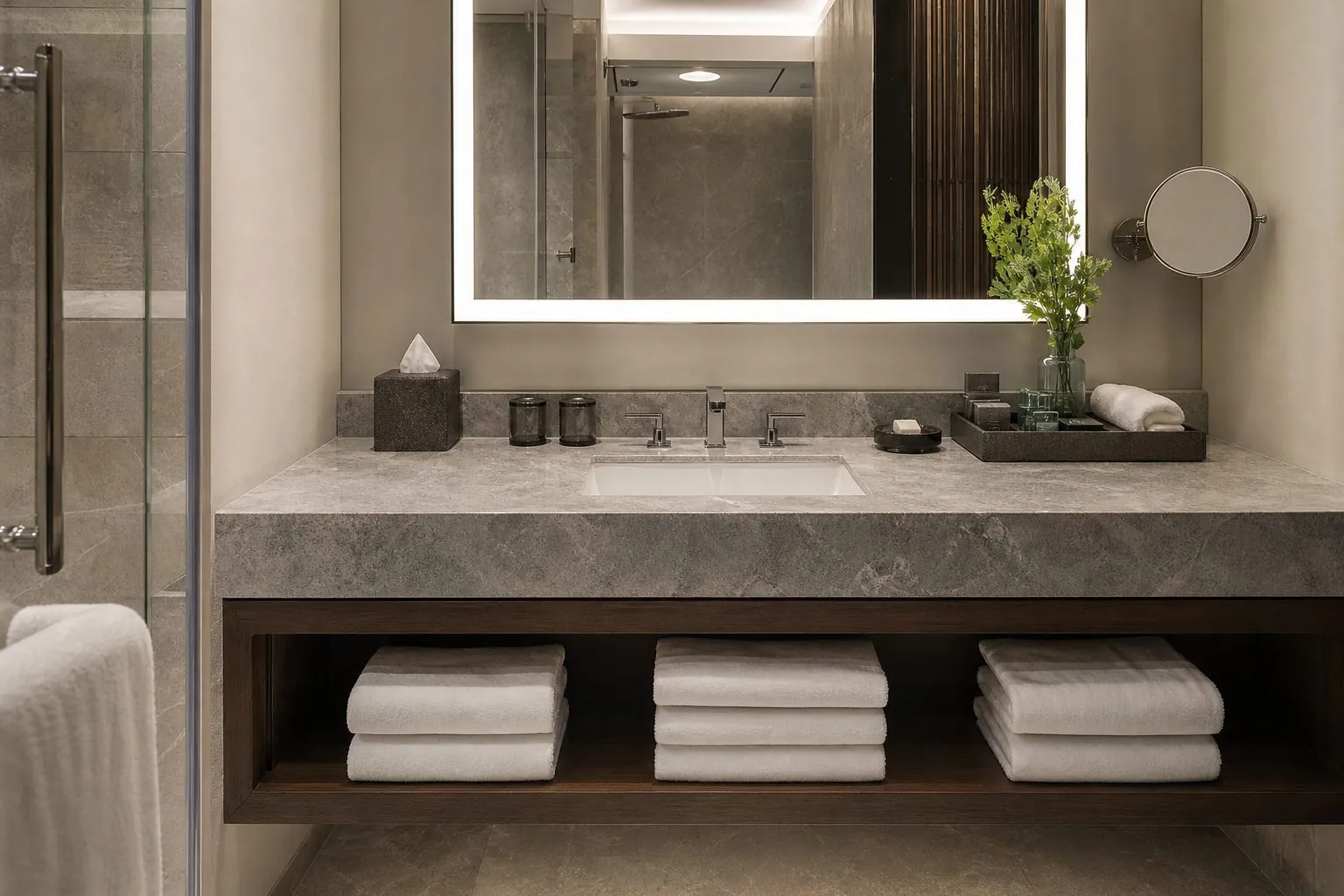
In humid climates, wall-hung vanities are usually the safer choice because they keep the cabinet away from floor water and make cleaning underneath easy. Floor-standing vanities can work well if the base is protected.
- Wall-hung: better hygiene and moisture protection, needs solid wall backing or a frame.
- Floor-standing on legs: keeps panels off the floor, simpler wall preparation.
- Floor-standing on plinth: more storage, but the plinth needs a water-tolerant material and sealed joints.
For hotels, wall-hung units also speed up housekeeping, since staff can clean the floor in one pass. Confirm the wall type early: drywall partitions need reinforcement before tiling.
How much clearance should a wall-hung vanity have from the floor?
Many designers leave a clear gap of roughly 150 to 300 mm between the floor and the cabinet bottom, which is enough for mopping and keeps panels above splash height. This is a general reference, not a fixed rule. Coordinate the final height with the basin rim height preferred in your market, the drain position and any under-cabinet lighting, and show it clearly on the elevation drawing.
How Should Specifications Differ by Project Type?
Match the specification to the usage level and budget. A hotel bathroom used by a new guest every night needs different priorities from a private villa.
- Hotels and serviced apartments: laminate or PET fronts, moisture-resistant carcass, quartz or sintered top, wall-hung, easy part replacement.
- Rental and volume housing: melamine on moisture-resistant board, ceramic integrated top, standard module sizes.
- Premium apartments and villas: lacquer or veneer fronts on moisture-resistant core, stone top, more attention to ventilation.
- Public and commercial washrooms: water-tolerant boards, robust hardware and Easy-to-Clean Surface Finishes.
Ventilation in the room should influence the specification too. A bathroom with a window or a reliable exhaust fan dries quickly after showers, so a wider range of finishes can perform well. An internal bathroom without mechanical ventilation, common in older buildings and some budget projects, stays humid for hours. In that case, choose the more water-tolerant option in each category and avoid natural veneer and solid wood fronts.
What Should Buyers Ask Suppliers About Moisture Performance?
Ask specific questions about boards, edges and documents, and request a sample that shows the construction, not only the color. These questions reveal how a supplier actually builds a vanity.
- Which carcass board grade and origin is used for sink cabinets?
- Are all edges sealed, including hidden and back edges?
- Are basin and pipe cut-outs machined and sealed in the factory?
- How are lacquered doors finished on the back and edges?
- Which hardware models are used and how are they protected from corrosion?
- Which certificates are available, such as CARB, FSC or CE?
- Can you provide a cut sample showing the edge and core?
Approve a physical sample and, for large projects, a mock-up bathroom before mass production. Test the mock-up with real water: fill and drain the basin, check sealant lines and open every drawer.
How Can Arcova Help With Vanities for Humid Climates?
Arcova builds custom bathroom vanities for hotels, apartments and villas, with board selection, edge sealing and cut-outs planned for humid markets. Arcova Contract has 12+ years of manufacturing experience, a 40,000 m² factory and 12 production lines, including automated CNC cutting, edge banding and drilling.
- Drawing deepening and shop drawings with cut-outs machined in the factory
- Boards from EGGER, Kronospan and DARE; hardware from Blum, Hettich, Häfele, Salice, DTC and Hutlon
- Finish sample approval and mock-up before mass production
- ISO9001, BSCI and FSC certifications
- Inspection with photo reports and export packing labelled by unit or room
- Installation guidance and 24-hour online technical support
Monthly capacity is 40 × 40HQ containers. Lead time, MOQ and any warranty terms are confirmed per project. Explore our bathroom vanities, review our quality control process or send your bathroom drawings.