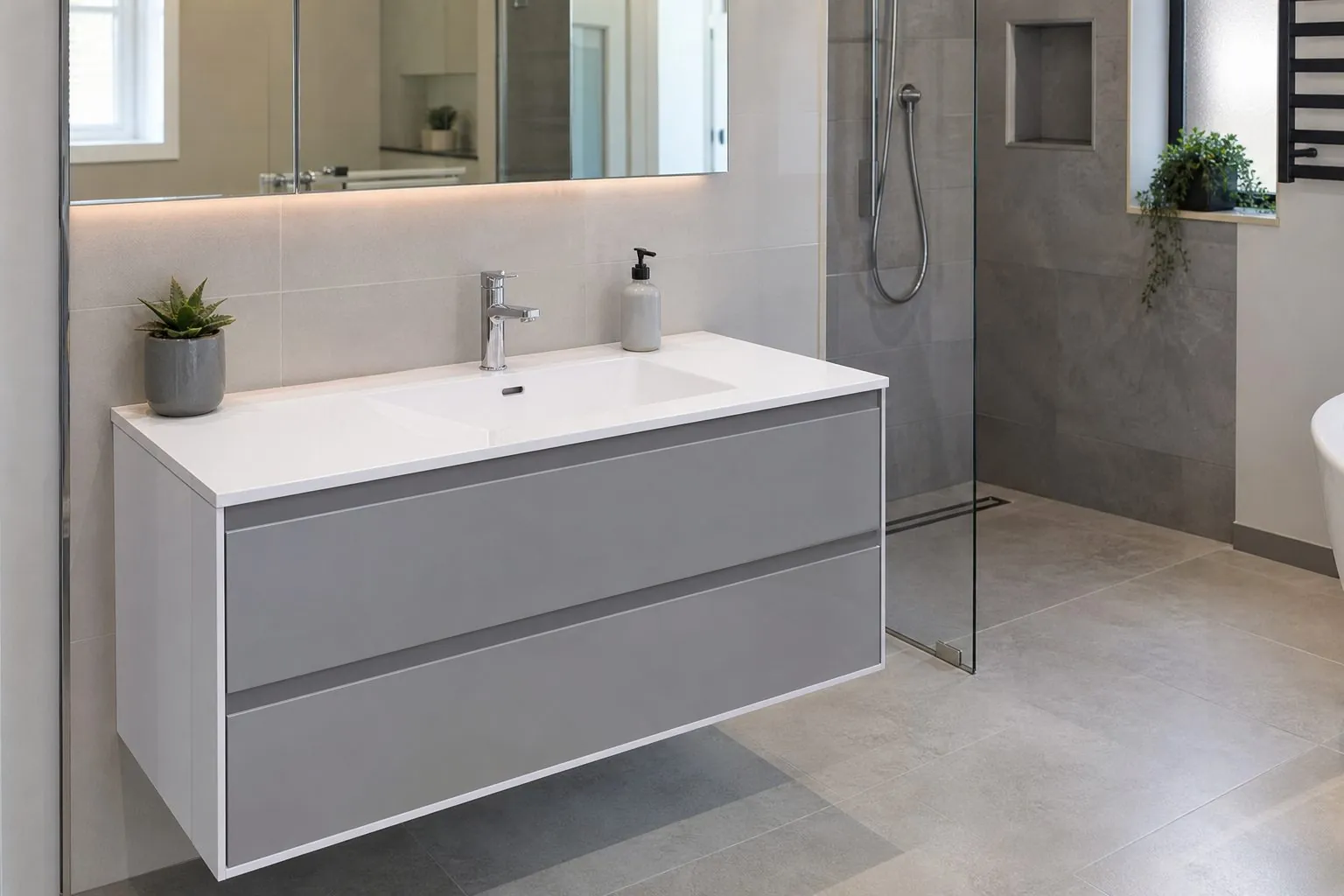
An honest look at PVC waterproof bathroom vanities: material makeup, advantages, risks, comparison with MDF and plywood, suitable projects and design tips.
Are PVC Waterproof Vanities a Good Choice?
PVC vanities are a good choice where water exposure is high and budgets are controlled, such as rental apartments, humid climates, student housing and small bathrooms with poor ventilation. The PVC foam board core does not swell like wood-based boards when it gets wet. However, PVC has lower stiffness and screw holding, a narrower range of premium finishes and different environmental and heat behavior, so it is not the best choice for every project.
Buyers should compare PVC with moisture-resistant MDF or particle board and with plywood vanities, then match the material to the bathroom, the user and the expected life of the installation.
- Choose PVC when: splashing, flooding or high humidity are frequent and the design is simple.
- Consider alternatives when: the vanity is large, wall-hung with heavy stone tops, or needs a premium veneer or lacquer look.
What Exactly Is a PVC Vanity Made Of?
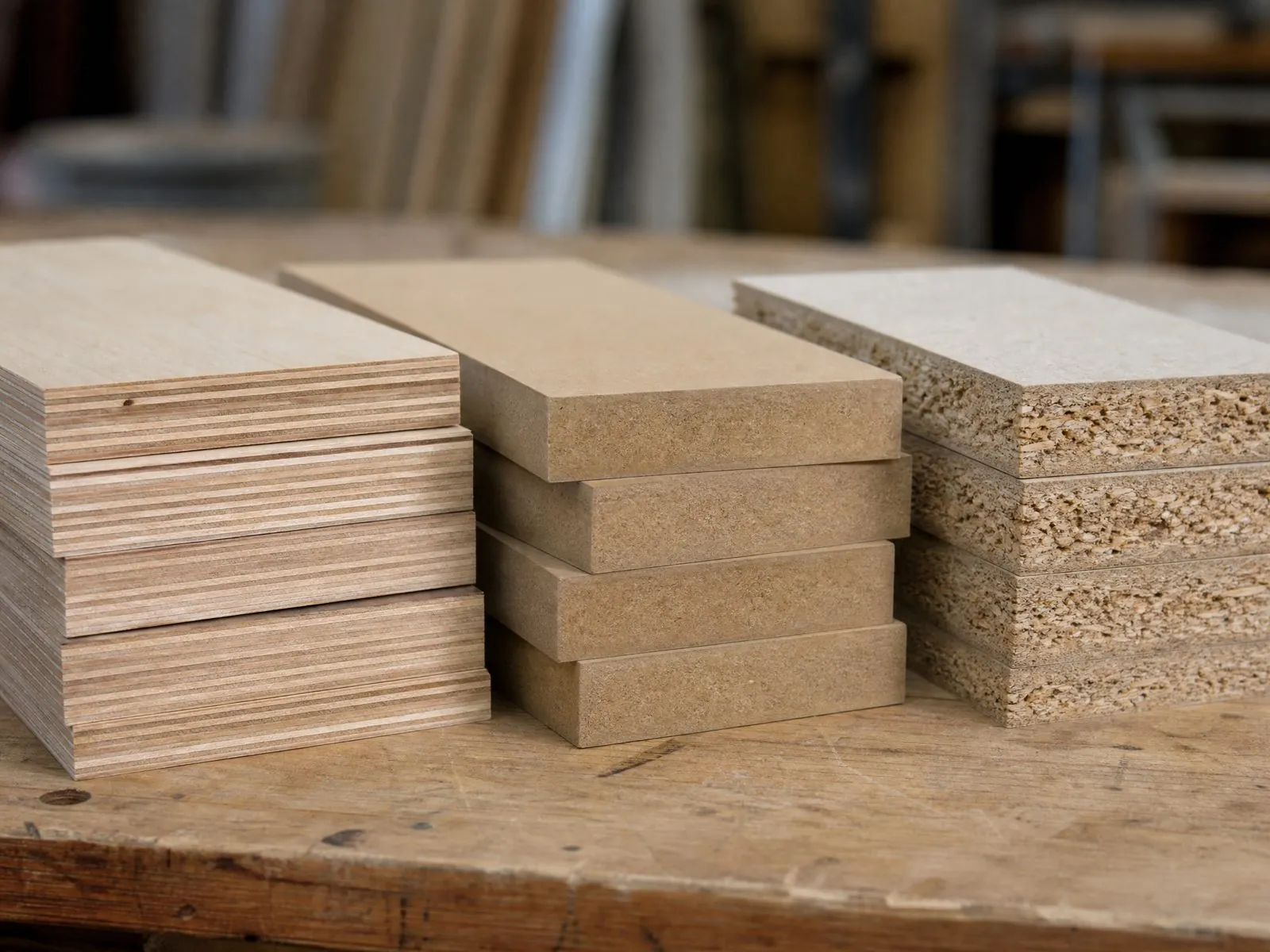
A PVC vanity carcass is usually made from PVC foam board, a rigid closed-cell plastic sheet that is light and does not absorb water significantly. Doors may be PVC board with a film, paint or acrylic surface, or they may be a different material such as moisture-resistant MDF with lacquer.
PVC boards are produced in different densities. Higher-density board is stiffer and holds screws better, but is heavier and more expensive. The density used affects how the cabinet performs, so ask the supplier to state it on the specification.
| Component | Common PVC Option | Alternative |
|---|---|---|
| Carcass | PVC foam board | Moisture-resistant MDF, particle board or plywood |
| Door core | PVC board | Moisture-resistant MDF |
| Door surface | Film, paint, acrylic | Melamine, PET, lacquer, veneer |
| Countertop | Ceramic or cultured marble basin top | Quartz or stone with undermount basin |
What Are the Main Advantages of PVC Vanities?
The main advantage is resistance to water damage, which is the most common cause of vanity failure. Other benefits follow from the material's nature.
- Water resistance: the core does not swell or delaminate when splashed or briefly flooded.
- Mold resistance: non-porous surfaces give mold less to grow on, though cleaning is still required.
- Light weight: easier handling, shipping and installation, especially on upper floors.
- Simple cleaning: surfaces wipe down easily with mild detergent.
- Suitability for humid climates: useful in tropical and coastal markets where wood-based boards struggle.
For rental and student housing, these advantages reduce maintenance calls and replacements caused by leaks under the sink.
PVC also tolerates the damp conditions of construction sites better than wood-based boards. Vanities delivered before tiling and plastering have fully dried are less likely to swell if the bathroom is still humid. This can help on fast-track projects where trades overlap, although all cabinetry should still be stored in dry, covered areas until installation.
What Are the Main Disadvantages and Risks?
The main disadvantages relate to stiffness, fixing strength, heat behavior, appearance and sustainability. These matter more as vanities get larger or more premium.
- Lower stiffness: long spans and wide doors can bow, especially in warm bathrooms; design shorter spans and add supports.
- Screw holding: hinges and runners can loosen over time; use suitable fixings and reinforced hinge zones.
- Heat sensitivity: PVC can deform near heat sources such as heated towel rails or hair tools left on top.
- Limited premium finishes: natural veneers and some lacquer effects are harder to achieve convincingly.
- Load limits: wall-hung vanities with heavy stone tops need extra structural support.
- Environmental considerations: some markets and clients prefer wood-based materials with FSC chain of custody or lower plastic content.
How Does PVC Compare With Moisture-Resistant MDF and Plywood?
PVC wins on water resistance, moisture-resistant MDF wins on finish quality and stiffness, and plywood wins on fixing strength and structural performance. The best choice depends on which risk matters most for your project.
| Criteria | PVC Board | Moisture-Resistant MDF | Plywood |
|---|---|---|---|
| Water resistance | Very high | Good if fully sealed | Good with sealed edges |
| Stiffness | Lower | Good | High |
| Screw holding | Lower | Good | High |
| Finish range | Film, paint, acrylic | Lacquer, PET, melamine, veneer | Veneer, laminate, lacquer |
| Weight | Light | Medium to heavy | Medium |
| Typical use | Rentals, humid climates | Hotels, premium apartments | Premium and structural uses |
Many hotel and premium projects choose moisture-resistant MDF or plywood with carefully sealed edges and lacquer finishes. Many rental and high-humidity projects choose PVC for peace of mind.
Is a hybrid specification worth considering?
A hybrid approach often gives the best balance. One option is a PVC carcass for water resistance with moisture-resistant MDF doors finished in lacquer or PET for a better appearance. Another is a moisture-resistant MDF or plywood carcass with a PVC bottom panel and a PVC sink-base section, the zone most likely to get wet. Hybrid designs need attention at the joints between materials, because they expand differently with temperature and humidity, but they let buyers spend money where it matters most.
Why sealing still matters with any material
Even a waterproof carcass can let water reach walls and floors if joints around the basin, countertop and wall are not sealed. Silicone joints, drip edges on the countertop and a well-fitted trap are as important as the board itself. A vanity specification should always describe how the top is sealed to the wall and how pipe penetrations are finished.
Which Bathroom Projects Suit PVC Best?
PVC is strongest where water exposure and maintenance budgets outweigh premium appearance.
- Rental and build-to-rent apartments: fewer leak-related replacements.
- Student and staff housing: heavy use and limited care.
- Tropical and coastal markets: constant high humidity.
- Small bathrooms without windows: where ventilation is poor.
- Utility and laundry sinks: where splashing is constant.
It is less suited to luxury hotels and villas where veneer, stone and lacquer finishes define the design, or to large floating double vanities carrying heavy tops.
What about budget hotels and hostels?
Budget hotels and hostels sit between these two groups. Bathrooms are cleaned daily with water and strong products, guests are not always careful and refurbishment budgets are tight, so PVC can be a sensible option. The design is usually simple, with a single basin, a small cabinet or open shelf and a mirror, which suits PVC's properties well. However, brand standards may require specific finishes or material documentation, so check them before choosing PVC for a hotel chain project.
What about export to markets with strict material rules?
Some destination markets and green-building schemes set requirements on emissions, recycled content or restricted substances in building products. Ask your supplier which documents can be provided for the PVC board and for any wood-based components, and confirm whether your project needs FSC-certified wood products instead. Settling this before sampling avoids having to change the material late in the project.
How Should PVC Vanities Be Designed to Avoid Problems?
Most PVC vanity problems come from designs copied from wood-based cabinets without adjustment. Adapt the design to the material's properties.
- Keep door widths moderate and use more hinges on tall doors.
- Add internal frames or supports under countertops and on long spans.
- Use hinge and runner fixings rated for plastic boards, or insert reinforcement at fixing points.
- Keep heated towel rails and other heat sources at a safe distance.
- For wall-hung designs, use a hanging rail or concealed bracket system suited to the wall type and total weight.
- Choose matte or textured surfaces in high-use bathrooms to hide minor wear.
What Should You Check on a PVC Vanity Sample?
Evaluate a sample physically before approving PVC for a project. Check:
- Board density and thickness stated on the specification.
- Door flatness when the sample has sat in a warm room.
- Hinge and runner fixing strength after repeated opening.
- Surface finish quality, color match and edge finishing.
- Basin and countertop fit, including sealant joints.
- Formaldehyde and material documentation required by your market, for any wood-based components.
A mock-up bathroom with the real basin, tap and lighting is the most reliable way to confirm a vanity specification before mass production.
It also helps to run a simple practical test on the sample: open and close doors and drawers many times, splash the base and countertop joints with water and leave the cabinet in a warm, humid bathroom for several days. Then check whether doors still align, whether fixings have loosened and whether any surface film has lifted at the edges. These observations are more useful than a datasheet alone, because they show how the specific combination of board, finish and hardware behaves together. Record the results and keep the sample as the quality reference for production.
What Information Should You Send for a PVC Vanity Quotation?
Provide the same information as for any vanity, plus the reasons you are considering PVC, so the supplier can suggest the right material.
- Bathroom plans, elevations and vanity sizes.
- Plumbing positions and basin and tap models.
- Climate and ventilation conditions.
- Wall-hung or floor-standing installation and wall type.
- Finish and color preferences.
- Quantities per bathroom type and target market.
If you are unsure, ask for two quotations side by side, one in PVC and one in moisture-resistant board, to compare cost, appearance and risk directly.
How Can Arcova Help You Choose Vanity Materials?
Arcova manufactures bathroom vanities in moisture-resistant boards and other materials suited to project requirements, in a 40,000 m² factory with automated CNC cutting, edge banding and drilling lines. We can advise on material choice for your climate and budget, prepare shop drawings with plumbing cut-outs, approve samples and mock-ups, and inspect production with photo reports. Availability of PVC board options for your specific project is confirmed at quotation.
Our factory holds ISO9001, BSCI and FSC certifications and provides 24-hour online technical support. Hardware from Blum, Hettich, Häfele, Salice, DTC or Hutlon can be selected by budget. Send your bathroom drawings for a material recommendation.