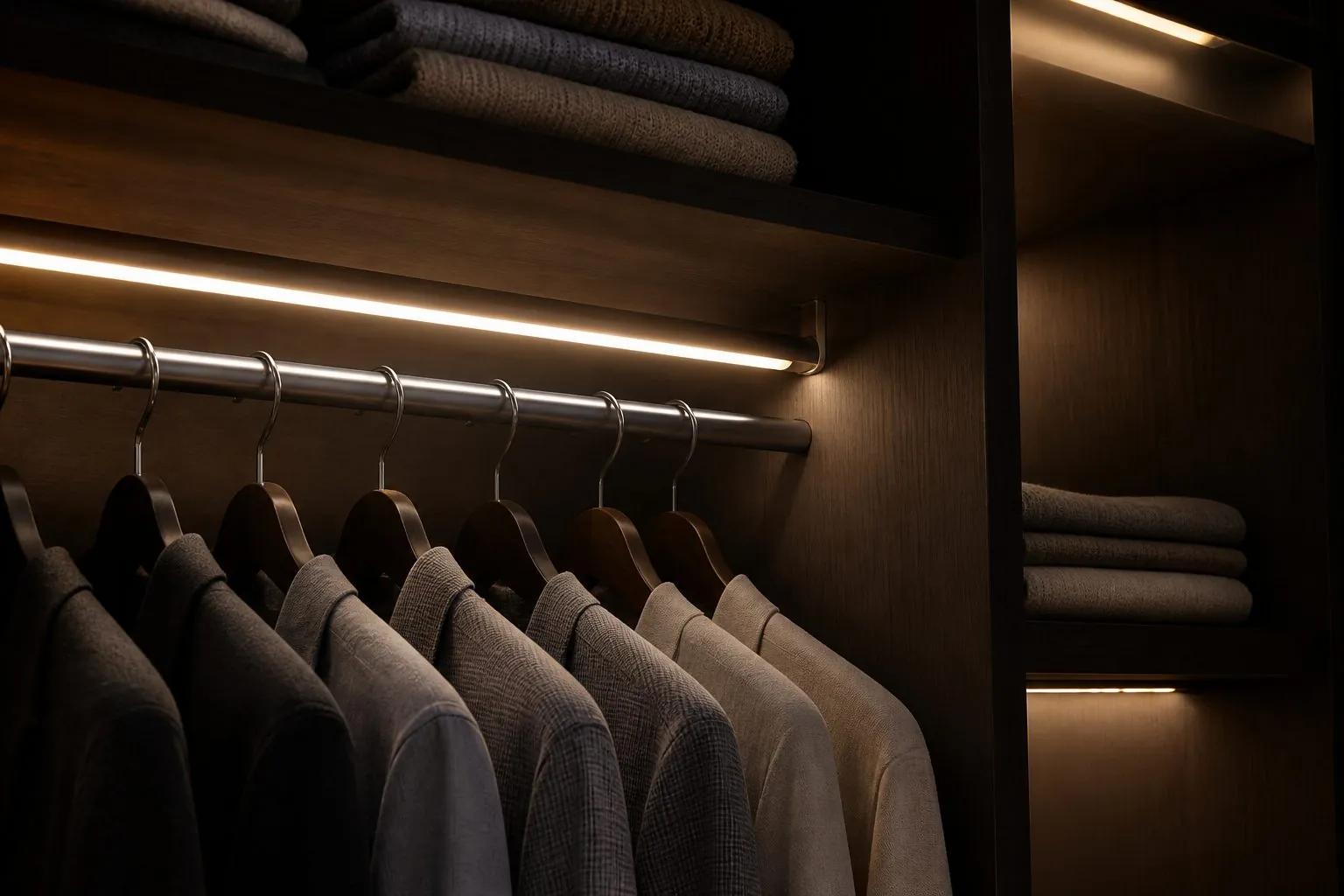
Compare wardrobe LED lighting types, color temperature, sensors, drivers and wiring, and learn what to specify on drawings for hotel and residential wardrobes.
Is LED lighting worth adding to built-in wardrobes?
Yes, for most mid-range and premium projects. Integrated LED lighting makes clothes easier to see, makes the wardrobe feel finished, and costs relatively little when it is planned at drawing stage. It becomes expensive and messy only when it is added after the joinery is installed.
Lighting matters most in deep built-in wardrobes, walk-in wardrobe systems, hotel guest rooms and bedrooms where ceiling lights cast shadows into the cabinet. Dark wood finishes and full-height doors make interiors darker still, so these designs benefit most from internal lighting.
Lighting is less important in shallow open shelving, in rental units where maintenance access is limited, or where the budget is very tight and every item must earn its cost. In those cases, a good ceiling light positioned in front of the wardrobe may be enough.
The key is to decide early. Grooves for profiles, cable holes, driver locations and switch types must be machined into panels during production. Retrofitting usually means surface-mounted strips and visible cables.
What types of wardrobe LED lighting are available?
Most wardrobe lighting falls into five types: lit hanging rails, shelf-edge profiles, vertical side profiles, top-panel downlights and accent lighting. Combining two of them, usually a lit rail plus shelf profiles, covers most needs.
| Lighting type | Where it is fitted | What it lights | Best for |
|---|---|---|---|
| Lit hanging rail | Aluminum rail with LED on its underside | Hanging clothes from above | Built-in wardrobes and walk-in hanging sections |
| Shelf-edge profile | Recessed into the front or underside of shelves | Folded items and shoes | Shelving sections and open walk-in units |
| Vertical side profile | Grooved into side panels or uprights | Full height of a section evenly | Tall open sections and glass-door wardrobes |
| Top-panel downlights | Small spots in the top panel | General interior light | Simple wardrobes, lower budgets |
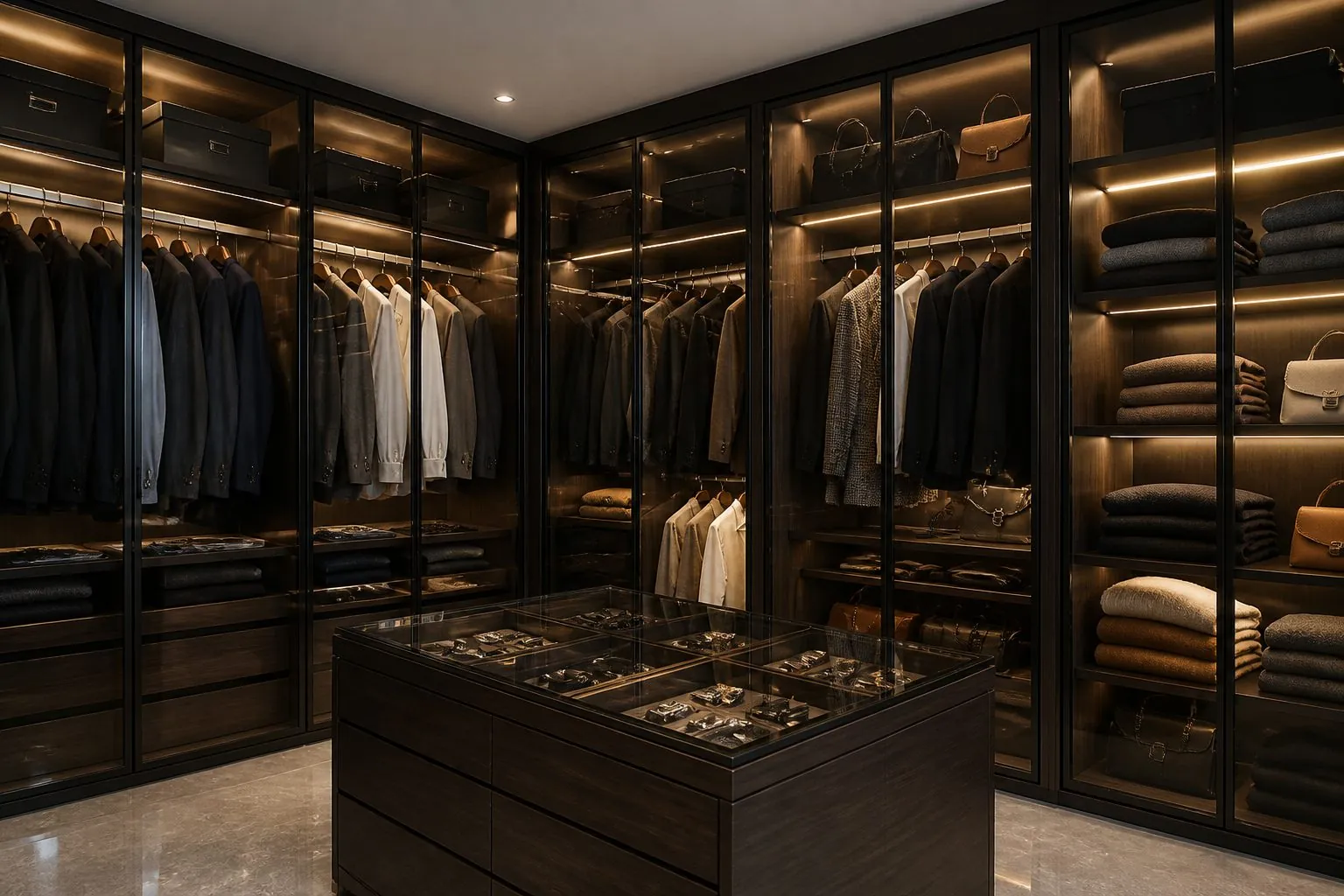
| Accent and drawer lighting | Inside drawers, glass displays, plinths | Jewelry, watches, display items | Premium dressing rooms and villas |
Lit hanging rails
A lit rail puts light exactly where clothes hang and avoids separate fittings. It is the cleanest choice for hanging sections. Check that the rail and its LED are rated for the hanging load and that the cable route through the side panel is concealed.
Shelf and vertical profiles
Profiles are aluminum channels with an LED strip and a diffuser cover. Recessed profiles sit flush with the panel surface and look neat; surface profiles are easier to add but show more. Vertical profiles give even, glare-free light down a whole section and work well behind glass doors.
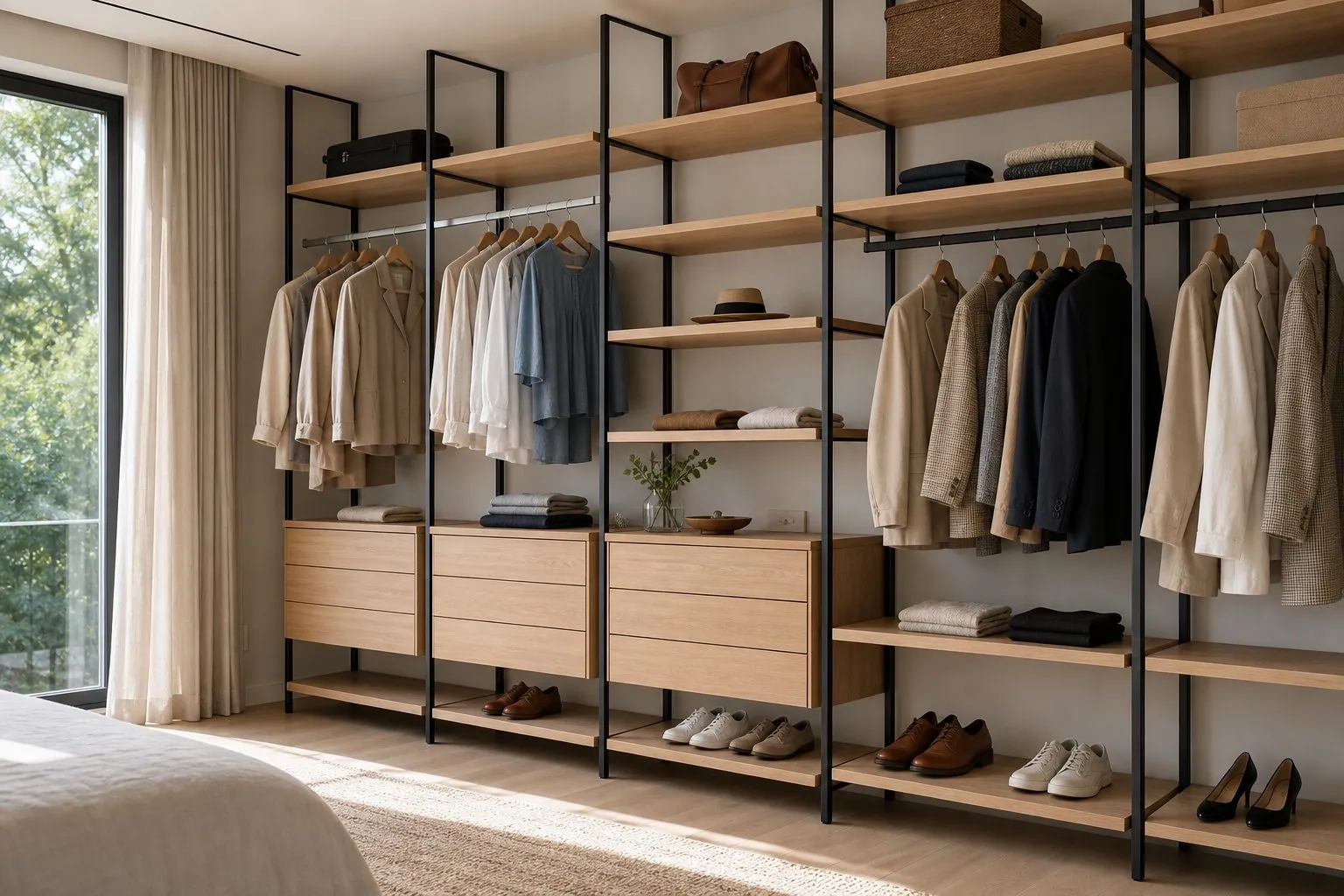
Which LED specifications should buyers check?
Color temperature, color rendering, brightness, voltage and diffuser type matter most. Getting them right makes clothes look true to color; getting them wrong makes navy look black and creams look yellow.
| Specification | Common options | Practical advice |
|---|---|---|
| Color temperature (CCT) | Warm white about 2700–3000K, neutral about 4000K | Warm suits bedrooms and hotels; neutral helps judge clothing color |
| Color rendering (CRI) | Often stated as Ra 80 or Ra 90+ | Higher CRI shows fabric colors more accurately; confirm with the LED supplier |
| Brightness | Varies by strip and density | Even light without hot spots matters more than maximum output |
| Voltage | Low-voltage DC strips, commonly 12V or 24V | 24V allows longer runs with less voltage drop |
| Diffuser | Opal (frosted) or clear | Opal avoids visible LED dots on glossy surfaces |
| Dimming | Non-dimmable, or dimmable with compatible drivers | Useful in hotels and master suites for night use |
The values above are common industry references, not product ratings. Exact specifications must come from the LED supplier chosen for your order and are confirmed per project.
Keep color temperature consistent within a room. Mixing a cool wardrobe light with a warm ceiling light looks unplanned, especially in hotel rooms photographed for marketing.
How should wardrobe lighting be switched?
Automatic switching is the best default because it means lights are never left on and guests never search for a switch. The right sensor depends on the door type.
- Door sensors: fitted at the hinge side of hinged doors, turning lights on when the door opens. Reliable and simple.
- PIR motion sensors: detect movement inside open walk-in wardrobes and sliding-door wardrobes where door sensors cannot be used.
- Touch or hand-wave switches: give manual control, often used in dressing rooms where lights stay on while dressing.
- Wall switches or smart home control: suit villas and premium homes where wardrobe lighting is part of a scene.
- Timer cut-off: a safety feature that switches lights off if a door is left open.
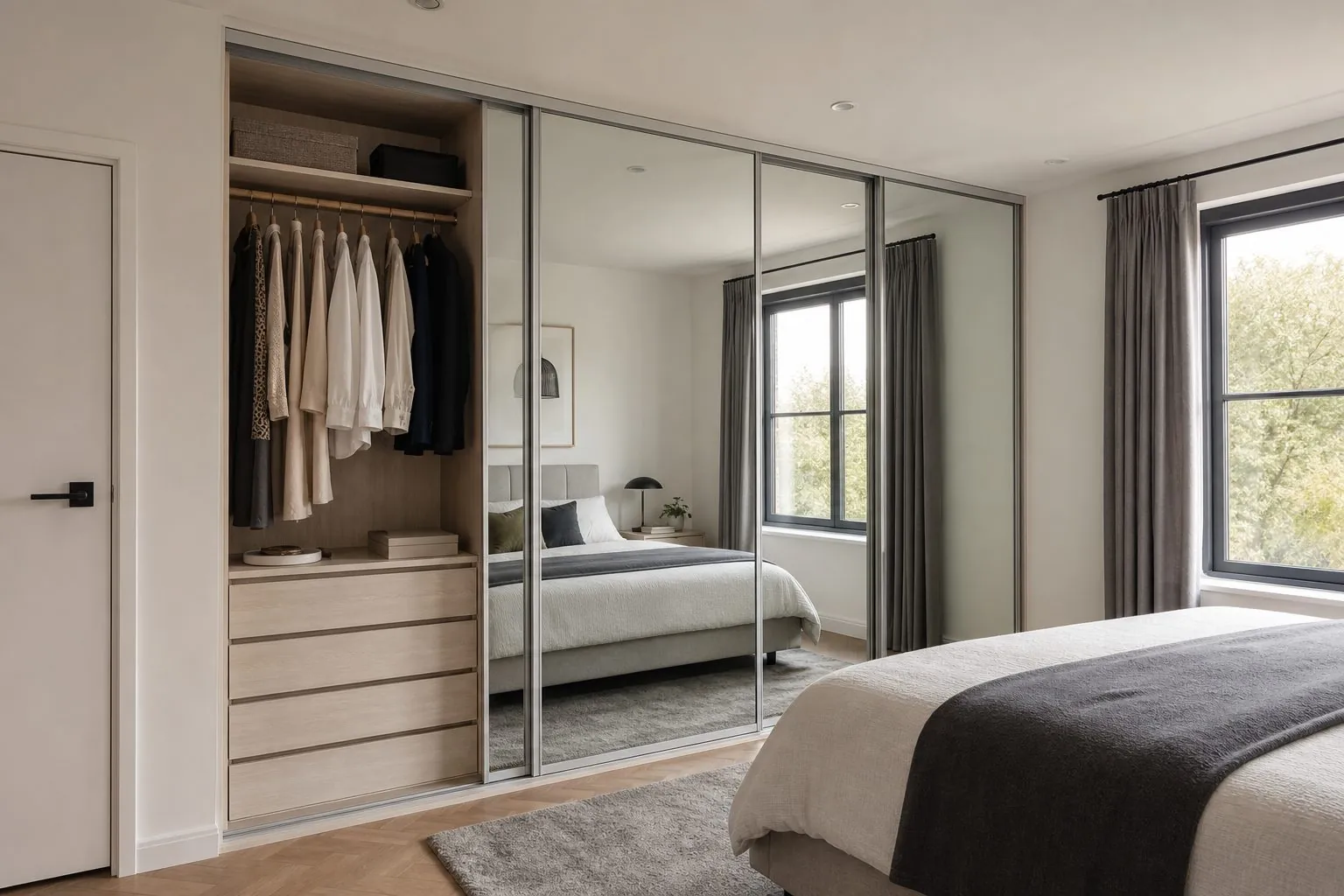
For sliding-door wardrobes, a PIR sensor per section or a sensor at each door track usually works best. For hotels, automatic sensors with timer cut-off reduce energy use and avoid complaints about lights staying on.
Where should drivers and cables go?
Drivers should sit in an accessible place, such as above a removable top panel, inside a plinth or in a service compartment, never sealed behind fixed panels. Cables should run through machined channels, not across the back of shelves.
- Plan the mains supply point with the electrical engineer before the wardrobe drawings are finalized.
- Position the driver close to the supply and within reach for replacement.
- Route low-voltage cables through grooves or behind back panels to each light.
- Use plug connectors between sections so modules can be separated during installation.
- Label cables and connectors to match the wiring diagram supplied with the joinery.
Size the driver with spare capacity rather than running it at its limit, which helps it last longer. Ventilation around drivers matters in enclosed spaces. Driver load and certification details are confirmed at quotation with the lighting supplier.
What electrical and safety requirements apply?
Wardrobe lighting must meet the electrical rules of the destination market, and connection to mains must be made by a licensed local electrician. The joinery manufacturer prepares the wardrobe; the site electrician completes the installation.
- Confirm voltage, frequency and plug or terminal type for the market.
- Ask which certification marks are required on drivers and sensors.
- Keep mains-voltage parts out of reach and inside enclosures.
- Avoid placing LED profiles where clothing presses directly on them for long periods.
- Use low-voltage systems inside the wardrobe interior wherever possible.
For hotels, operators often have brand standards for lighting, switching and energy use. Send these with the FF&E specification so the lighting matches across all room types.
How does lighting change between hotel and residential wardrobes?
Hotel wardrobe lighting prioritizes reliability, automatic switching and easy maintenance. Residential lighting can be more decorative and personalized. The same profile types are used, but the priorities differ.
| Factor | Hotel guest room | Residential and villa |
|---|---|---|
| Switching | Door or PIR sensor with timer | Sensors, touch switches or smart control |
| Design focus | Function and consistency across rooms | Display, mood and personal preference |
| Maintenance | Accessible drivers, standard spare parts | Owner-managed; accessibility still advised |
| Color temperature | Matched to brand standard | Chosen with room lighting design |
| Extras | Minimal; light for hanging and safe area | Lit drawers, jewelry trays, display niches |
In hotels, a mock-up room is the best way to approve lighting levels and sensor behavior before mass production. In villas, a 3D design view helps owners decide where accent lighting adds value.
What should be on the drawings before production?
A complete lighting specification on the shop drawings prevents most site problems. It should show what is lit, how it is switched, where power arrives and where parts can be serviced.
- Location and length of every LED profile or lit rail.
- Color temperature, CRI target and diffuser type.
- Sensor or switch type and position for each section.
- Driver location, access panel and mains supply point.
- Cable routes, holes and connector positions between modules.
- Market voltage, plug standard and certification needs.
Approve a lit sample or mock-up section where possible. Light looks different in real life than on renders, especially on glossy or dark finishes.
What are the most common wardrobe lighting mistakes?
Most problems come from late decisions and poor access, not from the LEDs themselves. Avoiding a short list of mistakes prevents most complaints after handover.
| Mistake | What happens | How to avoid it |
|---|---|---|
| Lighting added after production | Surface strips and visible cables | Decide lighting at drawing stage |
| Drivers sealed behind fixed panels | Failed driver means dismantling the wardrobe | Use removable top panels or plinth access |
| Clear diffusers on glossy shelves | Visible LED dots reflected in the finish | Use opal diffusers on reflective surfaces |
| Mixed color temperatures | Wardrobe looks cold against a warm room | Match CCT to the room lighting plan |
| Wrong sensor for door type | Lights stay off or stay on | Door sensors for hinged doors, PIR for open or sliding |
| Undersized driver | Flicker, overheating, early failure | Leave spare driver capacity |
Glare is another frequent issue. Lighting positioned at eye level, such as an exposed strip at the front of a shelf at head height, can dazzle users. Recess profiles under shelf fronts or angle them toward the clothes rather than toward the person.
Finally, think about the long-term owner. Hotels and property managers need standard parts that can be reordered years later. Record LED, profile, driver and sensor references on the drawings and in the handover documents, and keep a small stock of spare drivers and sensors for large projects.
A quick checklist for buyers
- Lighting positions and switching are shown on approved drawings.
- Color temperature matches the room lighting design.
- Every driver can be reached without tools beyond a screwdriver.
- Spare parts references are documented for maintenance teams.
- A lit sample or mock-up has been approved where budget allows.
How can Arcova help with wardrobe lighting?
Arcova plans lighting as part of each built-in wardrobe and walk-in wardrobe system order. Profile grooves, cable channels and driver spaces are machined on automated CNC lines, and lighting can be tested before packing.
- Shop drawings and 3D design showing lighting positions and switching.
- Finish sample approval and mock-ups for hotel and residential projects.
- Hardware and lighting coordinated with Blum, Hettich, Häfele and other brands by budget.
- Export packing labelled by unit or room, with wiring diagrams.
- 24-hour online technical support for installers and electricians.
Arcova holds ISO9001, BSCI and FSC certifications, with 12+ years of manufacturing experience. Lighting component ratings, warranties and lead times are confirmed for each order. Send your wardrobe drawings to discuss a lighting layout, or see our hotel furniture range for guest room packages.