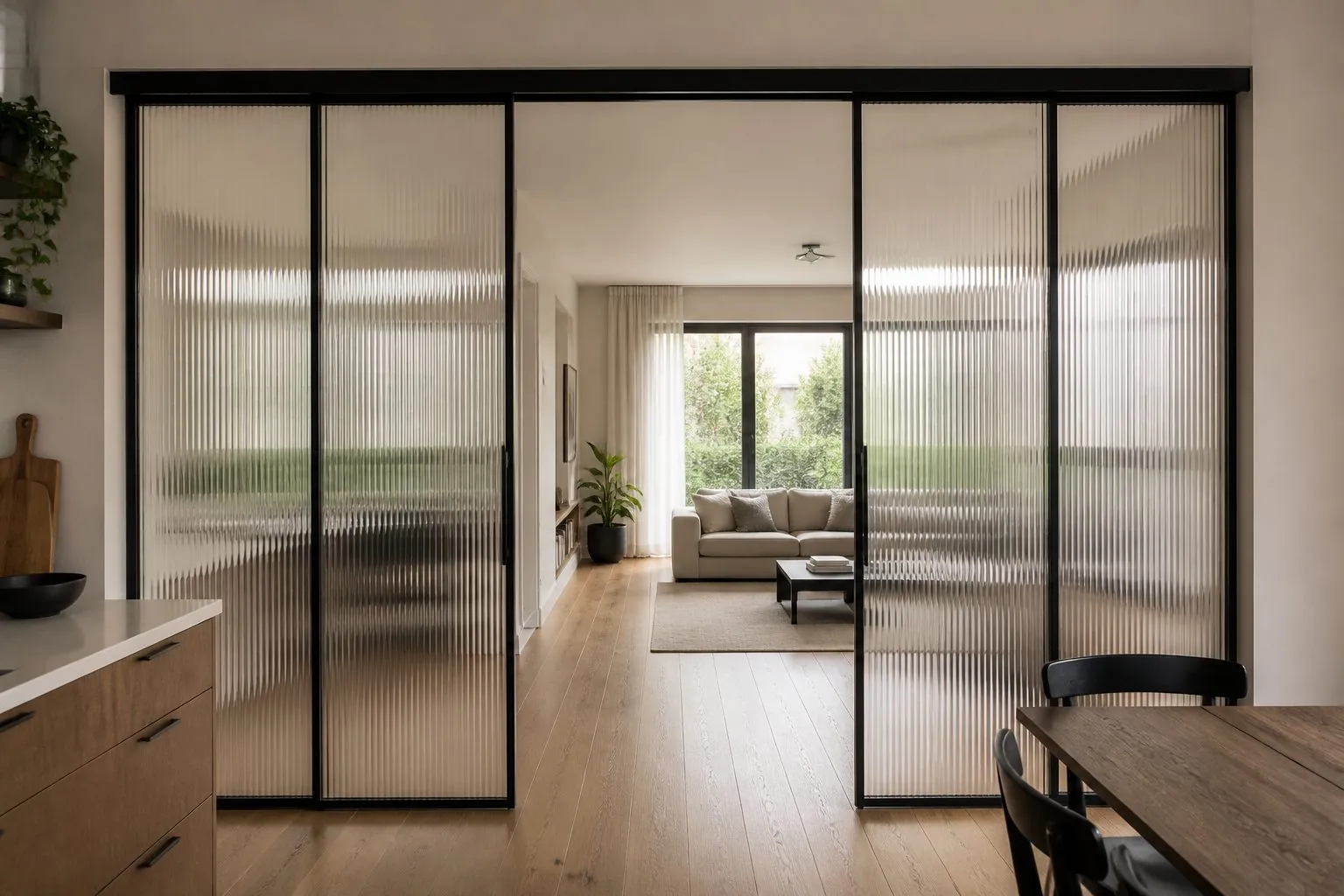
A practical checklist for aluminium-frame glass wardrobe doors: door type, glass safety and finish, frame quality, hardware, interior lighting, packing and installation.
Are Aluminium-Frame Glass Wardrobe Doors Right for Your Project?
Aluminium-frame glass wardrobe doors are a good choice when you want a light, modern look, a display effect for clothes or a way to make a bedroom feel larger. They are a poor choice for rooms where privacy inside the wardrobe matters, for homes with young children unless safety glass is specified, and for budgets that cannot cover quality frames and hardware.
These doors combine a slim aluminium profile with glass panels, usually tempered, in clear, tinted, frosted, reeded or mirrored finishes. They are used on built-in wardrobes and walk-in wardrobe systems in villas, show apartments, boutique hotels and premium residences.
- Suits: walk-in wardrobe systems, dressing rooms, master bedrooms, show units.
- Use with care: children's rooms, rental units with heavy turnover, rooms with strong direct sunlight on clothing.
- Avoid: walls that cannot be leveled accurately, or projects without trained installers for glass.
Should You Choose Hinged, Sliding or Pocket Glass Doors?
Sliding doors suit rooms with little clearance in front of the wardrobe; hinged doors give full access and a cleaner frame line; pocket or folding doors suit open walk-in areas. The choice changes the hardware, profile and glass weight limits, so decide it before anything else.
| Door type | Best for | Main limitation | What to confirm |
|---|---|---|---|
| Hinged | Walk-in systems, wide rooms | Needs swing clearance | Hinge type for aluminium profiles, door weight |
| Sliding (top-hung) | Bedrooms with tight space | Only part of the wardrobe opens at once | Track system, ceiling or bulkhead fixing |
| Sliding (bottom-rolling) | Heavier doors on level floors | Floor track collects dust | Floor flatness, track recess |
| Pocket or folding | Open dressing areas | Complex hardware, more cost | Pocket depth, folding clearance |
Glass doors are heavier than board doors of the same size. Sliding systems must be rated for the door weight, and hinged doors usually need more hinges per door. Ask the supplier for the hardware rating against your door sizes; values are confirmed per system.
Which Glass Type Should You Specify?
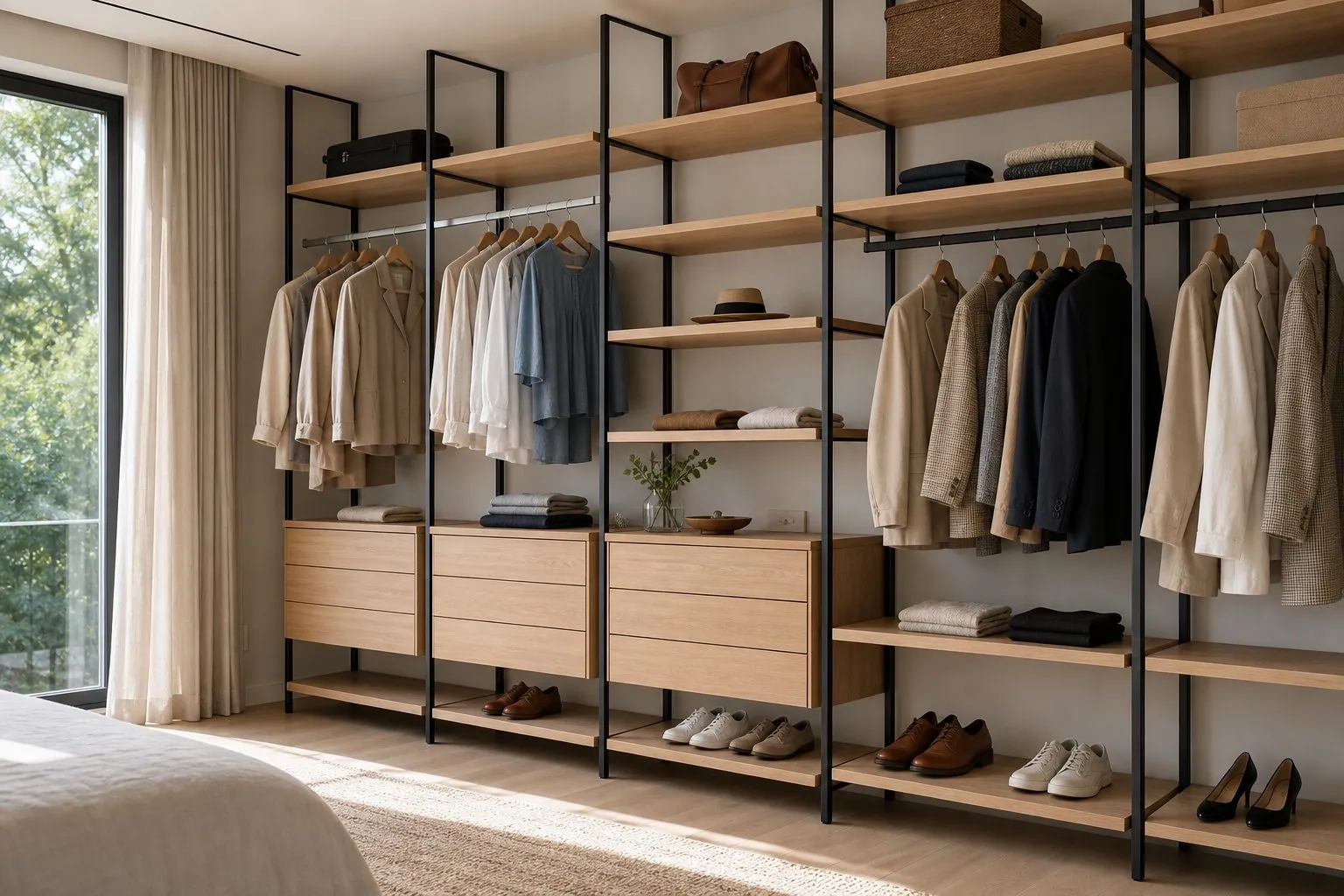
Specify tempered safety glass as a minimum for wardrobe doors, and laminated or film-backed glass where breakage risk or local rules demand it. Then choose the visual finish by privacy level and style.
| Glass finish | Visibility inside | Typical use | Care note |
|---|---|---|---|
| Clear | Full view | Display wardrobes, boutiques | Requires tidy interiors and LED lighting |
| Tinted grey or bronze | Partial view, more when lit | Master bedrooms, walk-in systems | Interior lighting controls the effect |
| Frosted or acid-etched | Shapes only | Guest rooms, hotels | Fingerprints show less on matte faces |
| Reeded or fluted | Blurred view | Modern and boutique interiors | Grooves need regular dusting |
| Mirror | None | Small bedrooms, dressing zones | Safety backing film recommended |
| Back-painted | None | Colored glossy fronts | Color sample approval needed |
Ask for physical samples, and view tinted and reeded glass with the wardrobe lights both on and off. The effect changes a lot between the two states, and buyers are often surprised after installation.
Safety points for glass
- Confirm tempered or laminated glass and ask for the relevant safety documents for your market.
- Use safety backing film on mirrors so broken pieces stay in place.
- Check rules for glass in children's rooms and hotels before approving the design.
What Should You Check in the Aluminium Frame?
The frame decides how straight, strong and long-lasting the door will be. Check profile shape and width, wall thickness, corner joints, finish quality and how the glass is held, rather than judging only by color.
- Profile width: narrow profiles look elegant but must still be stiff enough for tall doors.
- Wall thickness: thin extrusions can bend or twist; ask the factory to confirm the figure for your door sizes.
- Corner joints: mechanical corner keys or screwed corners keep frames square; poorly joined corners open over time.
- Glass retention: rubber gaskets or structural tape hold glass securely and reduce rattling.
- Surface finish: anodized or powder-coated finishes in black, champagne, gunmetal or brushed effects; check scratch resistance on samples.
- Handle integration: integrated pull profiles avoid drilling glass, which is safer and cleaner.
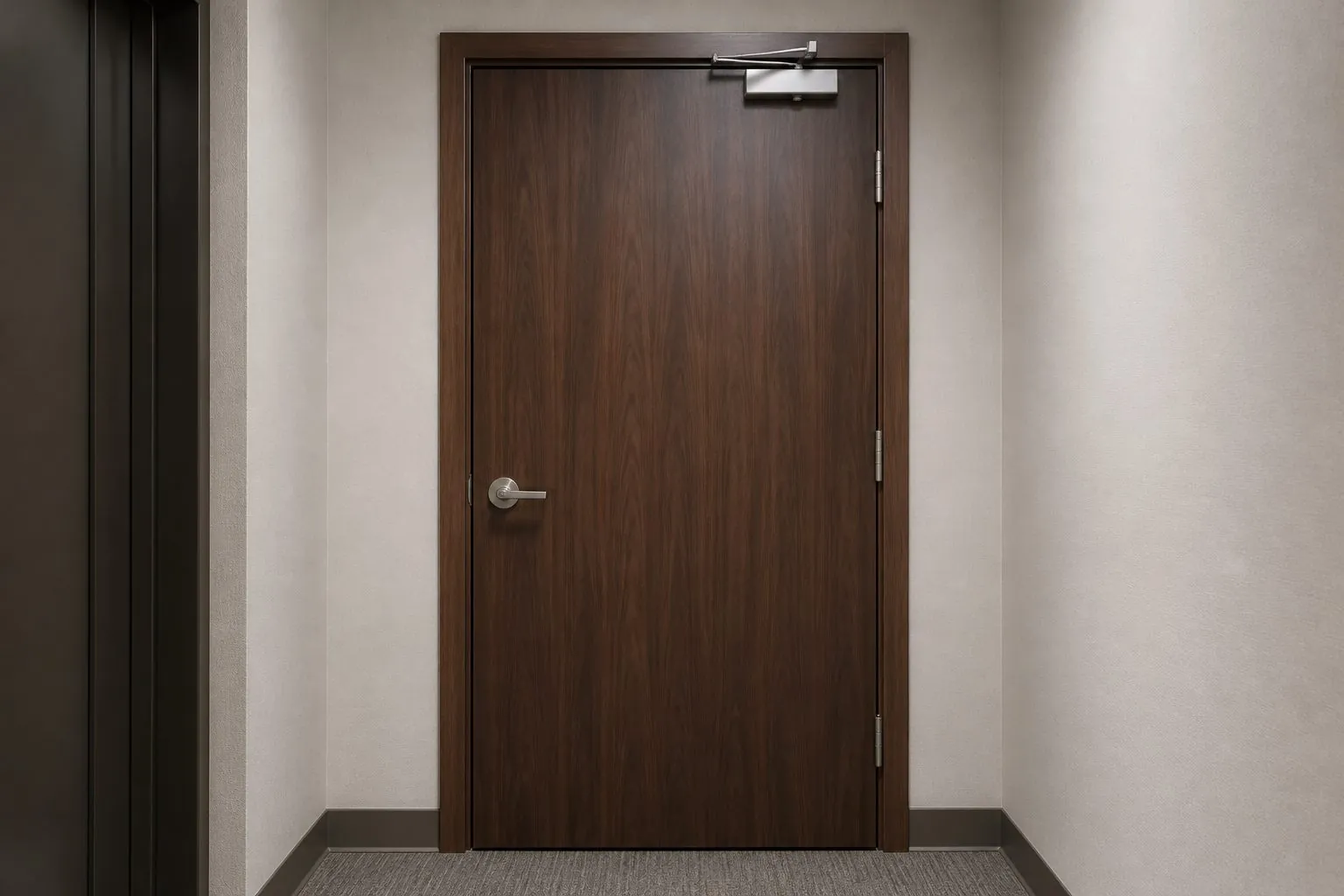
Ask for a full-size sample door or corner sample before mass production. A sample reveals finish color, joint quality and glass fit far better than a catalog photo.
How Tall and Wide Can Glass Wardrobe Doors Be?
Size is limited by frame stiffness, glass weight and hardware capacity. Tall, narrow doors tend to bow; wide, heavy doors strain hinges and tracks. The safe maximum depends on the specific profile and hardware, so it must be confirmed per system, not assumed.
- Floor-to-ceiling hinged doors usually need more hinges and sometimes a mid-rail to stay straight.
- Very wide sliding panels need a heavier-duty track and a level, rigid fixing surface.
- Splitting a tall door with a horizontal bar or top box reduces risk and can add design interest.
Door width also affects how the wardrobe interior is planned. Very narrow doors create many vertical frame lines across the elevation, which can look busy and block access to drawers behind them. Very wide doors reduce frame lines but increase weight. A common compromise is to align door widths with the interior sections, so each door opens onto a complete hanging or drawer zone.
Send ceiling height and wall length early. The factory can propose a door layout that stays within the rated limits, marked as confirmed at quotation until the system is selected.
How Does the Wardrobe Interior Change Behind Glass?
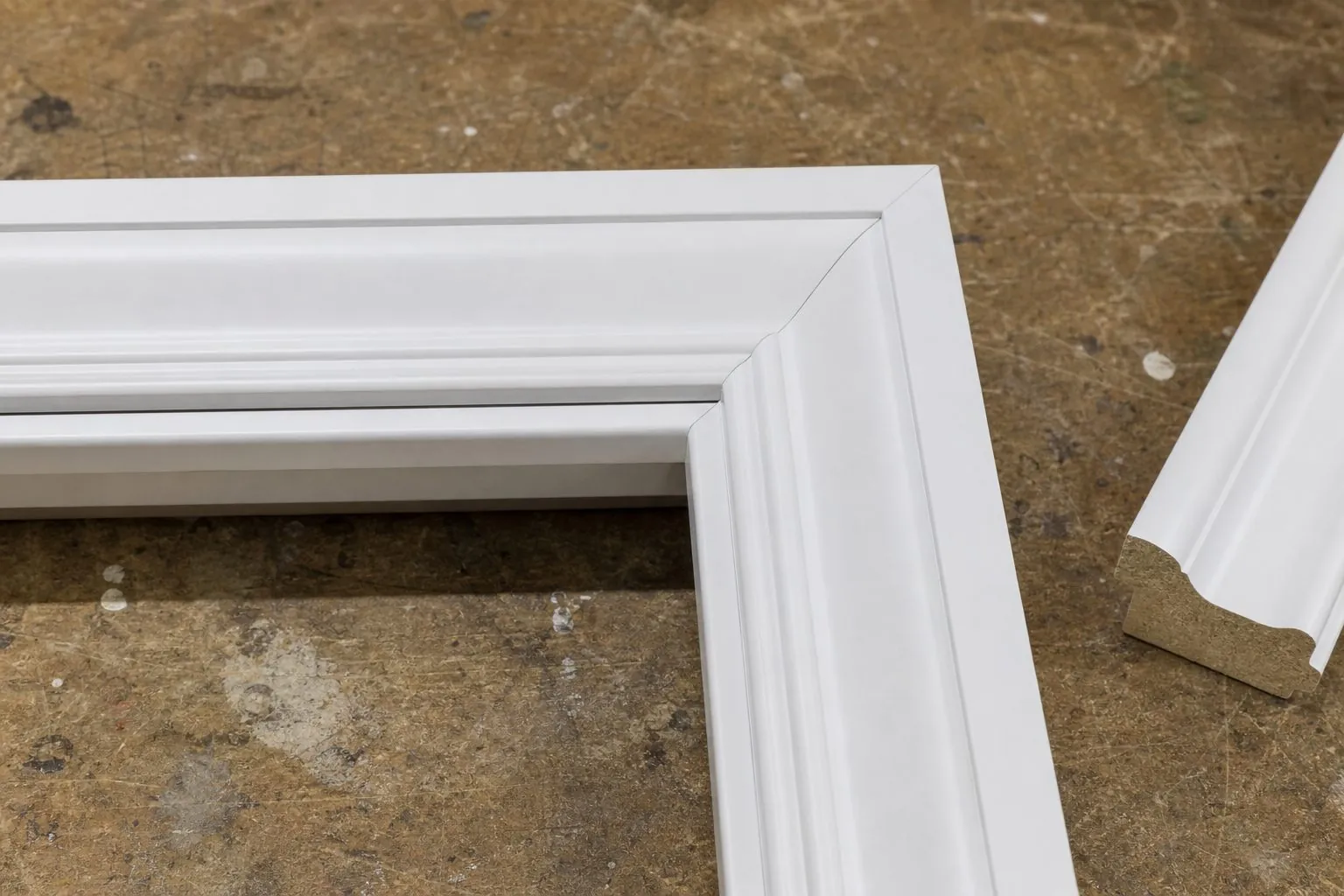
Behind clear or tinted glass, the interior becomes part of the room design, so plan it as carefully as the doors. Finishes, lighting and organization all become visible.
- Interior finish: choose a coordinated interior decor, such as wood grain or a soft color, instead of plain white carcass board.
- Lighting: sensor-controlled LED strips on rails or vertical profiles make the wardrobe glow when opened and improve visibility.
- Organization: matching hangers, drawer fronts and shoe shelves keep the display tidy.
- Back panels: leather, fabric or veneer back panels can upgrade the look in luxury projects.
- Drawers: glass-front drawers or fixed glass panels can extend the look inside.
Remember that sunlight through glass can fade clothes over time. In rooms with strong daylight, tinted glass or curtains help protect garments.
What Hardware and Accessories Should Be Included?
Good hardware makes glass doors feel solid and quiet; poor hardware makes them rattle and slam. Specify soft-close, the correct hinge type for aluminium frames and lighting controls in the order.
| Component | What to specify | Why it matters |
|---|---|---|
| Hinges | Aluminium-frame hinges with soft-close | Standard board hinges do not fit narrow profiles |
| Sliding track | Rated for door weight, soft-close both ends | Prevents slamming and derailment |
| Handles | Integrated profile or bar handles | Avoids drilling glass |
| Sensors | Door-activated or motion sensors | Lights turn on when doors open |
| Seals and buffers | Rubber bumpers and dust brushes | Reduces noise and dust inside |
Hardware can be selected from brands such as Blum, Hettich, Häfele, Salice, DTC or Hutlon depending on budget, but not every brand offers every glass-door fitting. Confirm the exact model and that spares are available in your market.
How Should Glass Doors Be Packed, Shipped and Installed?
Glass doors need stronger packing and more careful handling than board doors. Most damage happens in loading, unloading and on-site storage, not at sea.
- Pack each door in rigid crates or reinforced cartons with corner guards and foam spacing.
- Ship doors upright where possible and mark crates "Glass" and "This side up".
- Label each crate by unit and room so doors reach the right location.
- Store doors upright in a dry area on site until installation.
- Install carcasses and level them first, then hang doors and adjust hinges or tracks.
- Remove protective film only after installation to avoid scratches.
Installers should check that the wardrobe carcass is plumb and square before hanging glass doors, because aluminium frames do not flex to hide errors the way board doors sometimes can. Sliding tracks need a straight, rigid fixing line along the ceiling or bulkhead. After installation, test every door for smooth movement, even reveals, soft-close action and sensor lighting before handing over the room.
Order a small number of spare glass panels or doors for large projects. Replacement glass made later may not match exactly in tint or finish batch.
What Should Your Buyer Checklist Include?
Use a single checklist to confirm every decision before production. It prevents the most common errors: wrong glass, wrong hinge, wrong door size and unclear lighting.
- Door type: hinged, sliding or pocket, with opening direction.
- Door sizes and layout, with maximum size confirmed per system.
- Glass type, safety standard and finish, approved by sample.
- Frame profile, finish color and handle detail.
- Hardware brand, model and soft-close requirements.
- Interior finish, lighting type, color temperature and sensor control.
- Site measurements, wall and ceiling condition, fixing surface.
- Packing method, labelling and spare part quantities.
- Documents required, such as safety glass and material certificates.
Circulate the completed checklist to the designer, contractor and factory, and ask each to sign off before production starts. Any change after approval, such as switching from clear to tinted glass, should be recorded in writing with updated drawings so the factory and inspection team work from the same version.
How Can Arcova Help With Glass Wardrobe Doors?
Arcova manufactures built-in wardrobes and walk-in wardrobe systems with aluminium-frame glass doors as part of whole-house custom cabinetry packages. With 12+ years of manufacturing, a 40,000 m² factory and 12 production lines, we coordinate carcasses, interiors and doors in one order.
- Shop drawings and 3D design showing door layout and interior.
- Finish sample approval for glass, frame and interior decor.
- Hardware from Blum, Hettich, Häfele, Salice, DTC or Hutlon by budget.
- Inspection with photo reports and export packing labelled by unit or room.
- Installation guidance and 24-hour online technical support.
- Certifications: ISO9001, BSCI and FSC.
See our wardrobes range, review our quality process or send your drawings. Door size limits, MOQ and lead time are confirmed for each project.