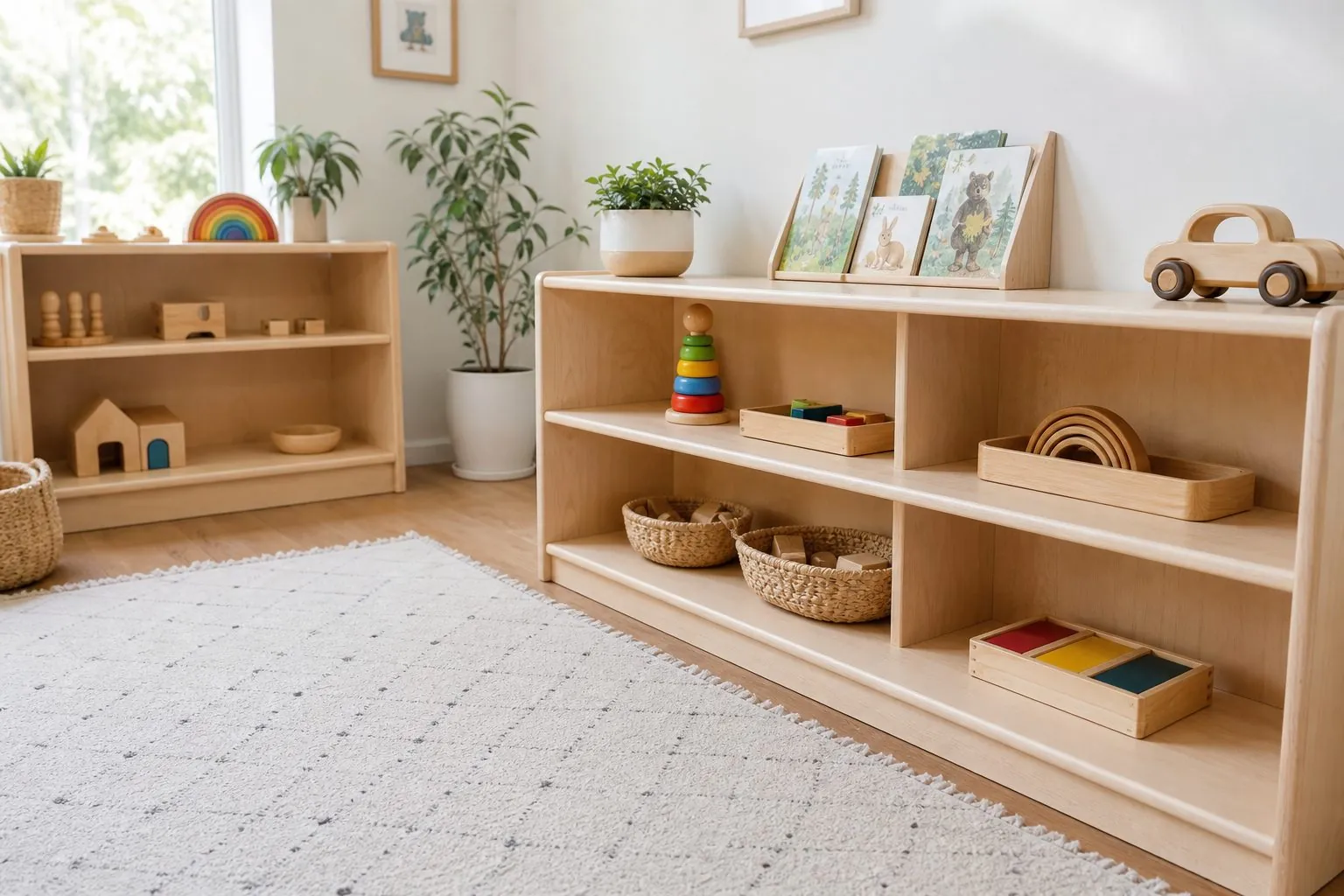
How to specify low-emission boards, coatings and adhesives for kids furniture, which certifications matter, how finishes compare and what to ask your factory.
Why Do Low-Emission Finishes Matter for Kids Furniture?
Low-emission finishes matter because children spend long hours in their bedrooms, breathe faster than adults relative to body size and often touch, chew or sleep close to furniture. Choosing certified low-emission boards, coatings and adhesives reduces formaldehyde and other volatile organic compound (VOC) emissions in the room.
Emissions in furniture come mainly from three sources: the composite boards such as particleboard and MDF, the adhesives used in boards and edge banding, and the coatings such as lacquers, paints and stains. A low-emission specification must cover all three, not just the surface finish.
- Boards: resins in particleboard, MDF and plywood can release formaldehyde.
- Coatings: solvent-based lacquers and paints release VOCs while curing and for some time after.
- Adhesives: glues in edge banding, veneers and assembly can add emissions.
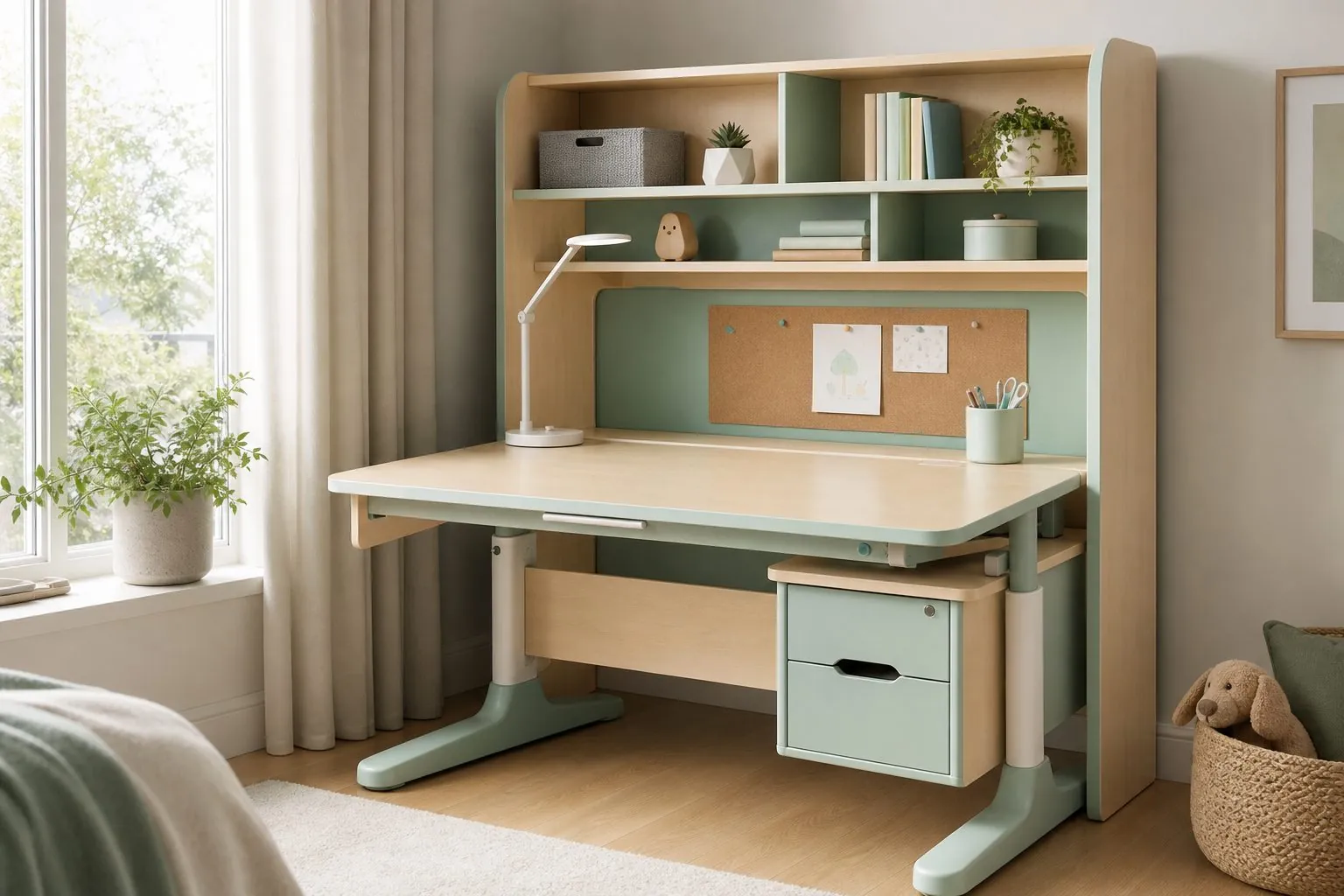
Which Certifications and Standards Should You Look For?
Look for recognized emission certifications on boards and documented low-VOC coatings, and match them to the rules of your destination market. Certifications differ by region, so state the required standard in the purchase specification.
| Reference | What it covers | Where it is used | Buyer action |
|---|---|---|---|
| CARB compliance | Formaldehyde emissions from composite wood products | United States, widely referenced elsewhere | Request board certificates and labels |
| E1 / E0-type classes | Formaldehyde emission classes for boards | Europe, Asia and other markets | Confirm class and test method in writing |
| FSC certification | Responsible forest sourcing, not emissions | Global | Request chain-of-custody documents |
| Coating VOC data | Solvent content and emissions of finishes | Varies by market | Request technical data sheets |
| Child furniture safety standards | Stability, edges, small parts, coatings | Market-specific | Confirm which standard applies |
FSC is often confused with emission certifications. It confirms responsible sourcing of wood, which many buyers want, but it does not measure emissions. Ask for both where your project requires them.
Requirements also change over time, and some markets tighten emission limits or introduce new labels. When ordering repeat batches, check that the certification you relied on is still valid and still meets current rules. Keep copies of certificates with each order so you can show retailers, developers or inspectors which materials were supplied.
For private-label buyers selling kids furniture under their own brand, documentation is especially important because the brand owner usually carries responsibility in the market. Build document requirements into the purchase contract rather than relying on verbal assurances.
Which Board Materials Are Best for Kids Furniture?
Certified low-emission particleboard, MDF and plywood are all suitable for kids furniture when their emission class is documented. The choice between them depends on strength, screw holding, edge quality and budget more than emissions alone.
- Melamine-faced particleboard: cost-effective, durable surface, good for wardrobes, desks and shelves.
- MDF: smooth for painting and routing rounded edges; good for lacquered fronts and shaped parts.
- Plywood: strong and lighter, good for bed frames, bunk beds and structural parts.
- Solid wood: naturally low in added resins, but needs suitable finishes and stable species.
Boards from established suppliers such as EGGER, Kronospan and DARE can be specified where buyers want recognized board sources with documented emission classes. Confirm that the documented board is the one actually used in production.
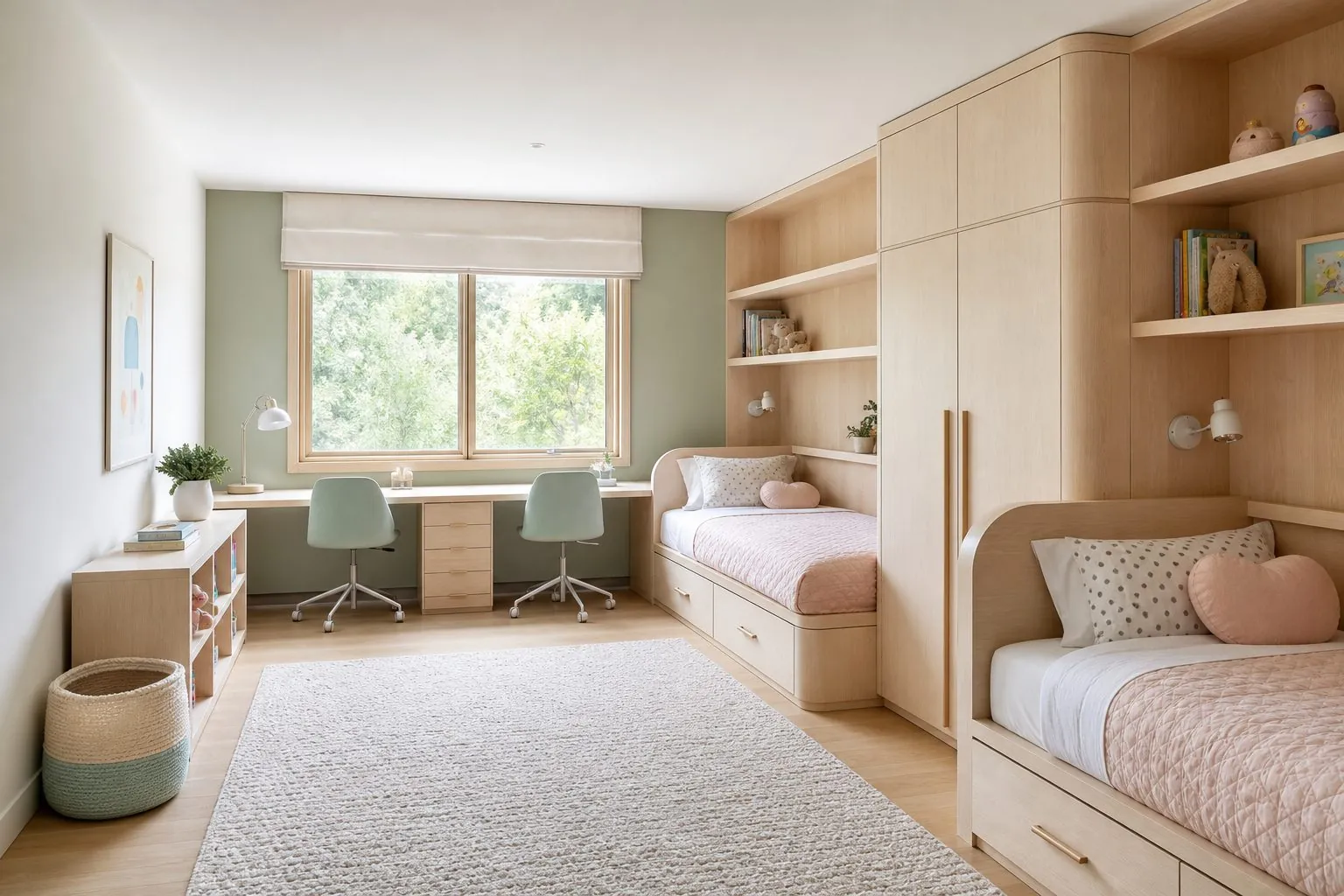
How Do Surface Finishes Compare for Emissions and Durability?
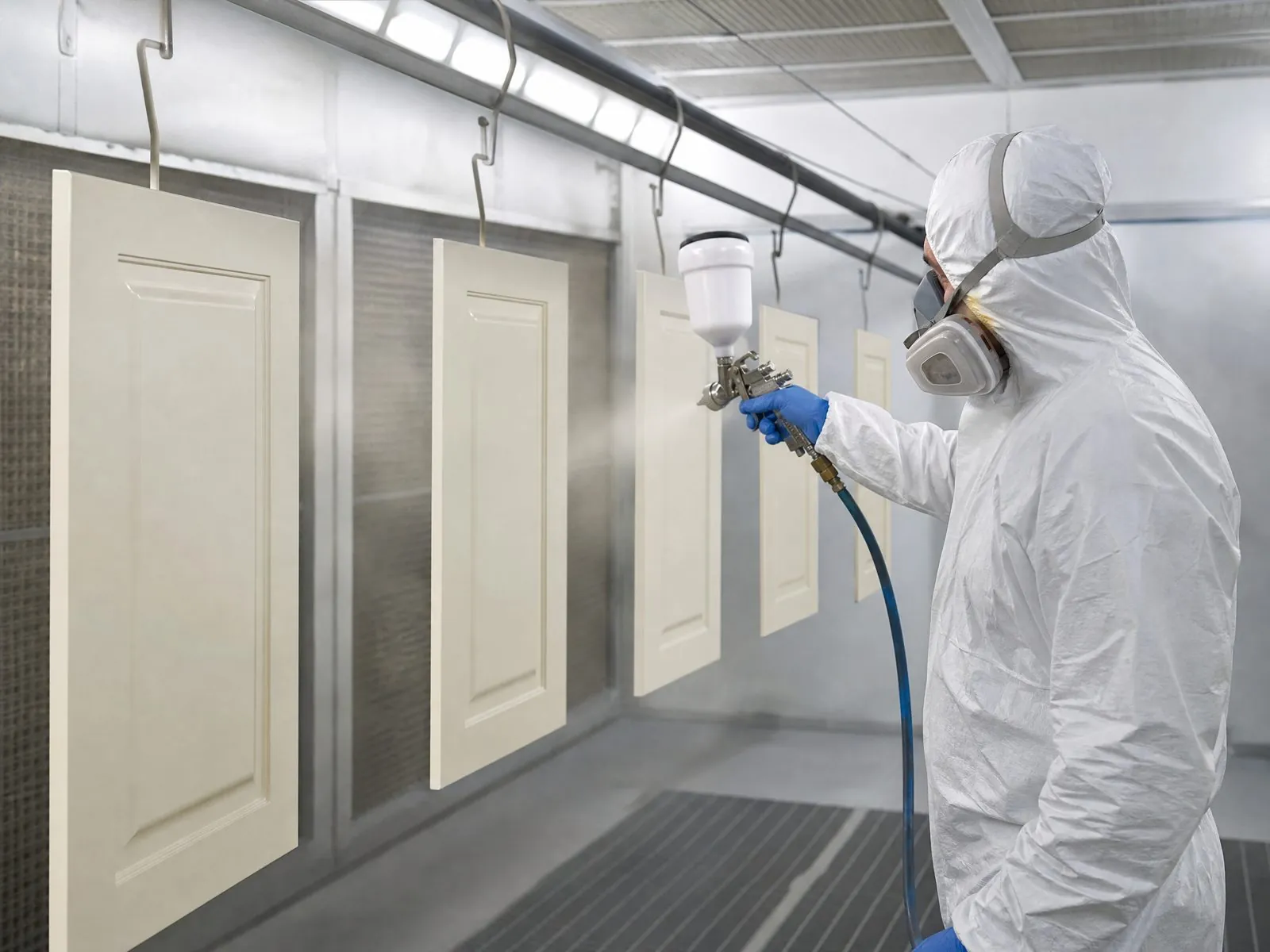
Melamine and laminate surfaces are cured in the factory and generally have low ongoing emissions, while sprayed lacquers and paints depend heavily on the coating type and curing time. Water-based and UV-cured coatings are common low-VOC choices for children's furniture.
| Finish | Emission note | Durability for kids | Comment |
|---|---|---|---|
| Melamine-faced board | Cured surface, low ongoing emissions | Good scratch and stain resistance | Edges must be well sealed |
| High-pressure laminate | Cured surface | Very good impact resistance | Suits desks and tops |
| Water-based lacquer | Lower VOC than many solvent systems | Moderate | Allow full curing before packing |
| UV-cured coating | Cured instantly by UV light | Good hardness | Best on flat panels |
| Natural oil or wax | Depends on product | Needs maintenance | Check product data and food-contact claims |
| Solvent-based PU lacquer | Higher VOC while curing | Good hardness | Needs longer airing time |
Durability matters for emissions too. A finish that chips exposes the board core, so edges and corners should be fully sealed with edge banding or coating. Easy-to-Clean Surface Finishes also reduce the need for strong cleaning chemicals in the room.
Why Are Edges and Hidden Surfaces Important?
Unsealed edges, backs and drilled holes can release emissions and absorb moisture, so a low-emission specification should cover every surface, not just visible faces. Children also tend to chew and pick at edges, making edge quality a safety point as well.
- Seal all exposed edges with edge banding or coating.
- Seal or cover the back of panels and unfinished areas inside drawers.
- Use caps or plugs on open drilling holes where possible.
- Choose rounded edge profiles to reduce injury risk and chipping.
- Inspect edge banding for lifting or gaps before shipment.
Rounded edges, often with a small radius, are easier to seal well and are safer for children who run and climb around furniture.
Drawer interiors deserve attention too. Children open drawers constantly and store toys, clothes and books inside, so drawer boxes should use the same certified boards and sealed edges as the visible furniture. Cheaper uncoated board inside drawers is a common shortcut worth checking during inspection.
How Long Should New Furniture Air Out?
Most emissions are highest when furniture is new and decline over the following weeks. Allowing coated parts to cure fully at the factory and ventilating the room after installation reduces exposure for children.
- Ask whether coated parts are fully cured before packing.
- Unpack furniture and let it air in a ventilated space before the child uses the room, where possible.
- Keep windows open or use ventilation for the first weeks after installation.
- Avoid installing new furniture in a nursery right before a baby arrives.
- Combine low-emission furniture with low-VOC wall paint and flooring.
Airing does not replace low-emission materials; it complements them. Specifying certified materials remains the main control.
For developers and hotels furnishing many family rooms at once, plan the delivery schedule so furniture is installed early enough to air before handover. Packing also plays a role: plastic film keeps dust out but traps emissions, so remove packing promptly once furniture is on site and dispose of it away from the rooms.
How Should Colors and Paints Be Specified Safely?
Bright colors are popular in kids' rooms, but pigments and paints must meet the same low-emission and safety requirements as clear finishes. Ask for coating data sheets and confirm that colored finishes comply with the chosen standard.
- Request data sheets for every colored lacquer or paint used.
- Check market rules on heavy metals in coatings for children's products.
- Use colored melamine or laminate for high-wear surfaces such as desks and drawer fronts.
- Limit lacquered color to fronts and features that see less wear.
- Approve color samples under the room's real lighting.
Colored laminates are often a practical choice for kids' furniture because they offer bright colors with a durable, factory-cured surface.
What Should Buyers Ask Their Factory?
Ask direct, document-based questions so claims about low emissions are backed by evidence. A reliable supplier should answer these clearly and provide copies of certificates.
- Which emission class and certification apply to each board used?
- Which coatings are used, and can you supply technical data sheets?
- Are adhesives for edge banding and assembly low-emission?
- How are hidden surfaces and edges sealed?
- How long do coatings cure before packing?
- Can the order be linked to board batch certificates?
- Which child furniture safety standards can the products be prepared for?
Any test results or emission values should be provided in writing for your specific order. If they are not yet available, mark them as confirmed at quotation in the contract and agree when documents will be delivered.
How Do Finishes Fit With Wider Kids Furniture Safety?
Low-emission finishes are one part of kids furniture safety. Stability, anti-tip fixing, rounded edges, finger-safe hardware and correct bed rail heights matter just as much, and they should be checked together.
- Anti-tip wall fixing for wardrobes, dressers and bookcases.
- Soft-close hinges and drawers to protect fingers.
- Guard rails and ladder design on bunk and loft beds.
- No small detachable parts on furniture for young children.
- Stable, non-slip feet on freestanding pieces.
Coordinate finish choices with these safety details. For example, a soft rounded edge in MDF must still be fully coated, and a bunk bed's plywood rails should use the same low-emission coating as the visible fronts. A single specification sheet listing materials, finishes and safety features for every piece makes this easier to check at inspection.
| Furniture piece | Practical low-emission choice | Safety point to pair with it |
|---|---|---|
| Wardrobe | Certified melamine board carcass, laminate or water-based lacquer fronts | Anti-tip fixing, soft-close hinges |
| Bunk or loft bed | Certified plywood or solid wood with low-VOC coating | Guard rails, ladder grip, load checks |
| Study desk | HPL or melamine top | Rounded corners, cable management |
| Toy storage | Melamine or laminate with sealed edges | Lid stays, finger gaps |
| Changing cabinet | Certified MDF with water-based lacquer | Raised top edges, wall fixing |
How Can Arcova Help With Low-Emission Kids Furniture?
Arcova manufactures kids room furniture, study furniture and built-in wardrobes for homes, developers and hospitality projects. With 12+ years of manufacturing, a 40,000 m² factory and 12 production lines including automated edge banding, we control board, edge and finish quality in-house.
- Boards from EGGER, Kronospan or DARE, with CARB, FSC, ISO9001, BSCI and CE certifications.
- Finish sample approval and rounded edge profiles.
- Inspection with photo reports and export packing labelled by unit or room.
- 24-hour online technical support.
Browse our kids room furniture and study furniture, review our quality process or request documents. Emission test values, MOQ and lead time are confirmed per project.