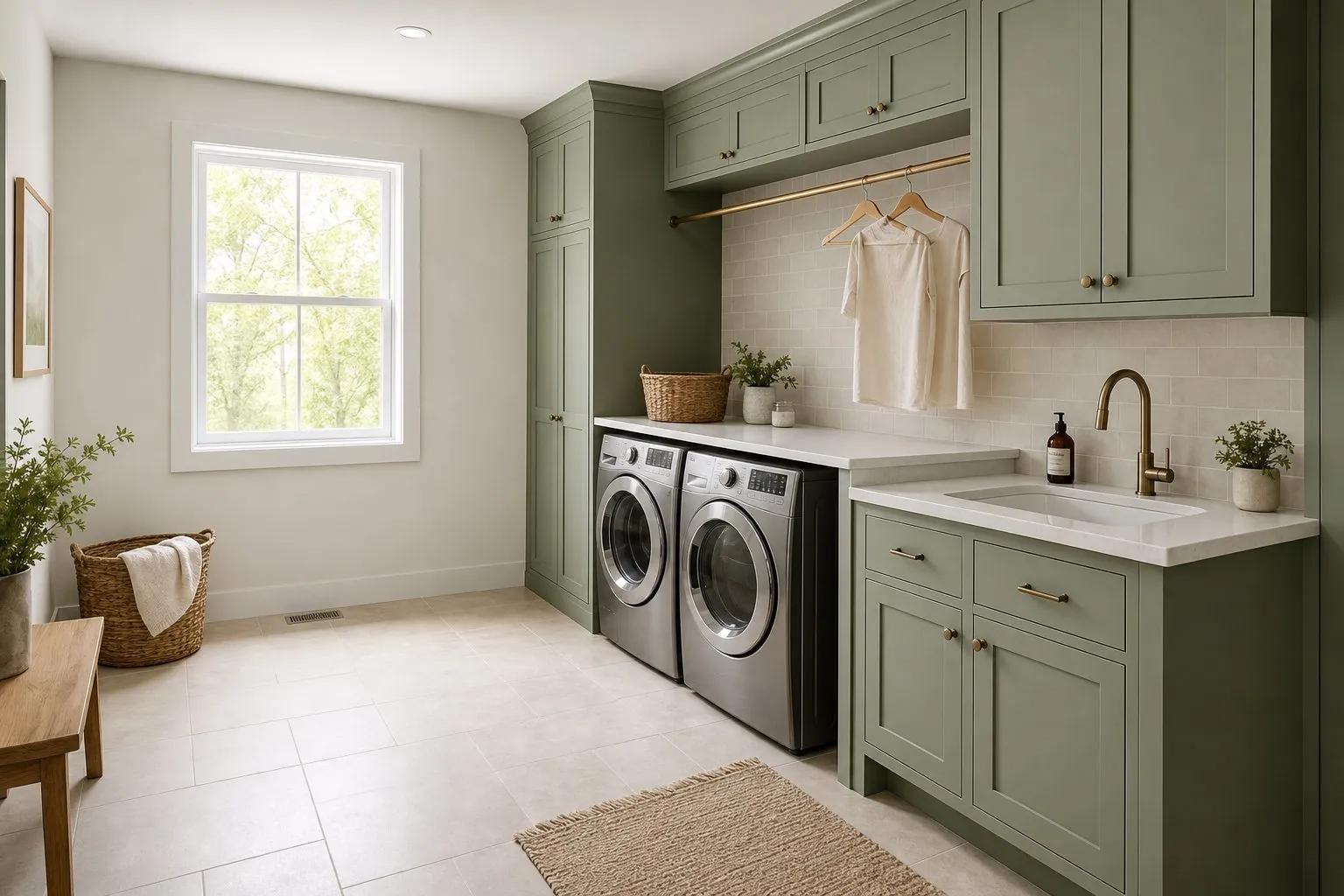
Compare balcony and outdoor cabinet materials, from moisture-resistant board and PVC to compact laminate, aluminum and stainless steel, with hardware and design advice.
What materials work best for balcony and outdoor cabinets?
For balcony and outdoor cabinets, the best materials resist water, UV and temperature change. Stainless steel, aluminum frames, HDPE or marine-grade board, compact laminate and PVC foam board are the most reliable options. Standard particleboard and MDF are only suitable for fully enclosed, dry balconies, and even then need moisture-resistant grades and sealed edges.
The right choice depends on how exposed the balcony is. A glazed, enclosed balcony behaves almost like an indoor utility room. An open balcony facing rain and afternoon sun is an outdoor environment, and cabinets there fail quickly if built like kitchen cabinets.
Start by classifying the site:
- Enclosed balcony: glazed, protected from rain, some sun and temperature swings.
- Covered open balcony: roof overhead but exposed to wind-driven rain and humidity.
- Fully open terrace or rooftop: direct rain, sun and possibly salt air.
- Laundry balcony: enclosed or semi-open, with water from washing machines and drying clothes.
Climate matters as much as balcony type. A covered balcony in a dry inland city may be gentler than an enclosed balcony in a humid coastal city, where condensation forms daily. Note the local climate, typical humidity and winter temperatures when briefing the manufacturer, because these affect board, finish and hardware choices.
How do common balcony cabinet materials compare?
Each material trades cost, appearance and durability differently. The table gives a practical overview for buyers comparing options.
| Material | Water resistance | UV resistance | Best location | Notes |
|---|---|---|---|---|
| Moisture-resistant particleboard or MDF | Limited; edges must be sealed | Low | Enclosed dry balconies | Economical; fails if wet for long periods |
| Marine or exterior plywood | Good with sealed finish | Needs UV-resistant coating | Enclosed or covered balconies | Strong; needs ongoing finish care |
| PVC foam board | High; does not swell | Moderate; color may fade | Laundry and enclosed balconies | Less rigid; check spans and fixings |
| Compact laminate (HPL solid) | High | Good with exterior grade | Covered and open balconies | Very durable; higher cost |
| HDPE or marine board | Very high | Good | Open terraces, poolside | Used in boats and outdoor kitchens |
| Aluminum frame with panels | High | High with powder coating | Open balconies and rooftops | Light, rust-free |
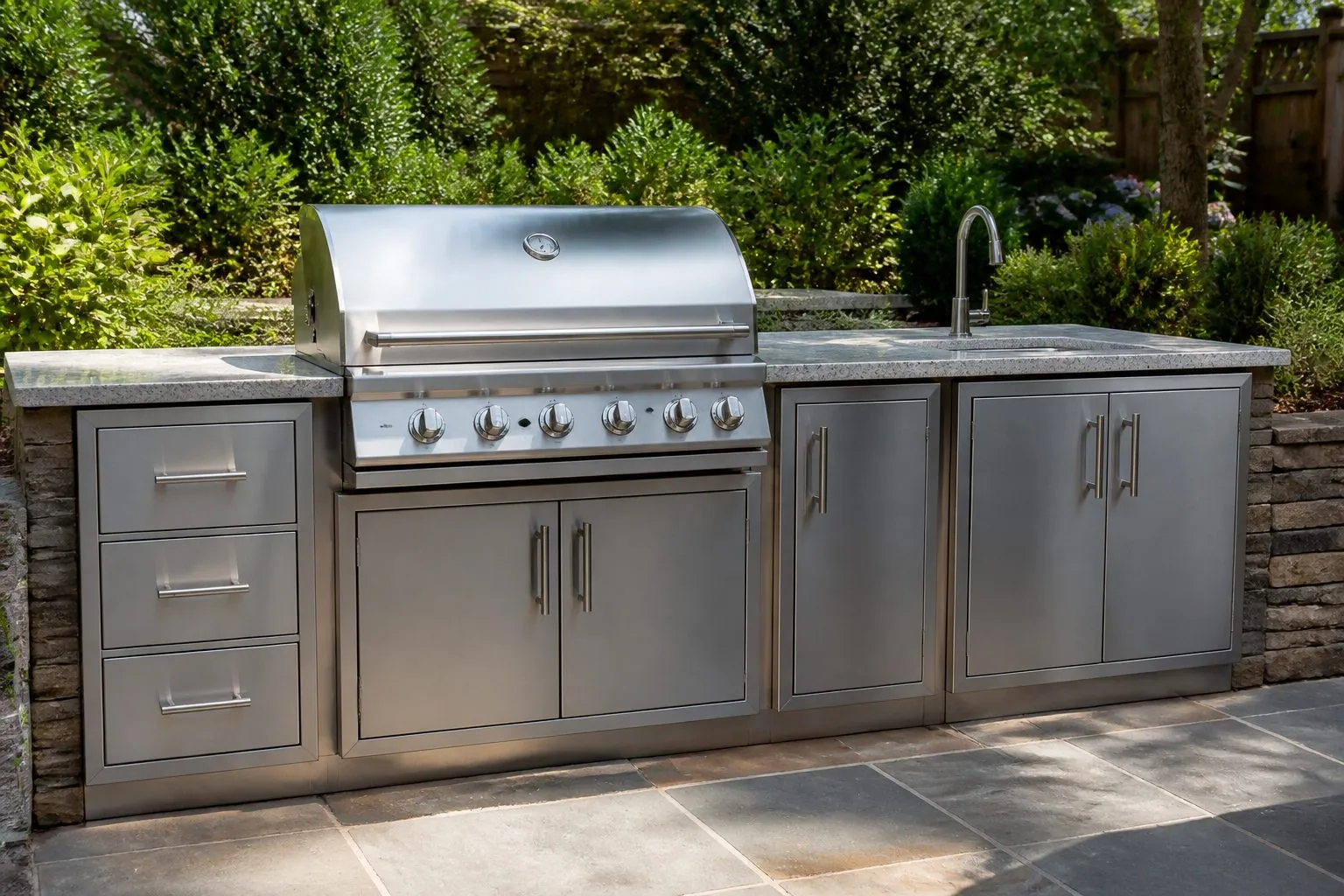
| Stainless steel | High | High | Outdoor kitchens and BBQ areas | Grade matters near the sea |
These are general characteristics. Specific performance data for the exact product chosen is confirmed at quotation with the material supplier.
Price usually rises from moisture-resistant board through PVC and plywood to compact laminate, HDPE, aluminum and stainless steel. However, the cheapest material is not the cheapest over time if it needs replacement after a few years. For rental and developer projects, consider the replacement cost and the disruption to residents, not just the initial price.
Mixed construction is often the best value: a durable carcass in PVC or compact laminate with doors in an outdoor-grade laminate, or an aluminum frame with HPL door panels. This keeps the visible surfaces attractive while the structure resists moisture.
Why do standard indoor cabinets fail on balconies?
Indoor cabinets fail on balconies because water, UV and temperature swings attack the weak points of wood-based boards: unsealed edges, drilled holes and joints.
- Water enters exposed edges and screw holes, causing swelling and delamination.
- UV light fades and cracks finishes, especially dark colors and lacquers.
- Temperature swings cause panels and edge banding to expand and contract, loosening edges.
- Standard hinges and runners rust, stain and stop working smoothly.
- Condensation forms inside closed cabinets on cold nights.
Even a fully glazed balcony can see strong sun and high temperatures. Choose finishes rated for sun exposure and avoid placing cabinets directly against cold exterior walls without a ventilation gap.
Enclosed balconies also trap heat. On sunny days the temperature behind glass can rise well above indoor conditions, which softens some edge-banding adhesives and fades finishes. If the balcony faces strong afternoon sun, choose heat-resistant edge bonding, such as laser or PUR-glued edges where available, and lighter colors.
Which hardware should be used outdoors?
Use stainless steel or properly coated hardware for balcony and outdoor cabinets. Ordinary zinc-plated hinges and runners corrode quickly in humid and salty air.
| Hardware item | Indoor standard | Balcony or outdoor choice |
|---|---|---|
| Hinges | Nickel-plated steel | Stainless steel or outdoor-rated hinges |
| Drawer runners | Zinc-coated steel | Stainless or corrosion-resistant runners |
| Screws and fixings | Zinc-plated | Stainless steel fixings |
| Handles | Various | Stainless, aluminum or coated handles |
| Legs and feet | Plastic or steel | Adjustable stainless or plastic feet |
Near the sea, specify a higher corrosion-resistant stainless grade and plan regular cleaning. Stainless steel can still show surface staining if salt is left on it.
Soft-close mechanisms and lift systems are harder to find in outdoor-rated versions. On fully exposed terraces, simpler hardware is often more reliable than complex mechanisms.
Hardware finish matters as well as material. Brushed stainless hides fingerprints and water marks better than polished stainless, and black or anthracite coatings should be outdoor-rated so they do not chalk or peel in sunlight.
How should balcony cabinets be designed for water and ventilation?
Design balcony cabinets so water drains away and air circulates. Detailing protects cabinets as much as material choice.
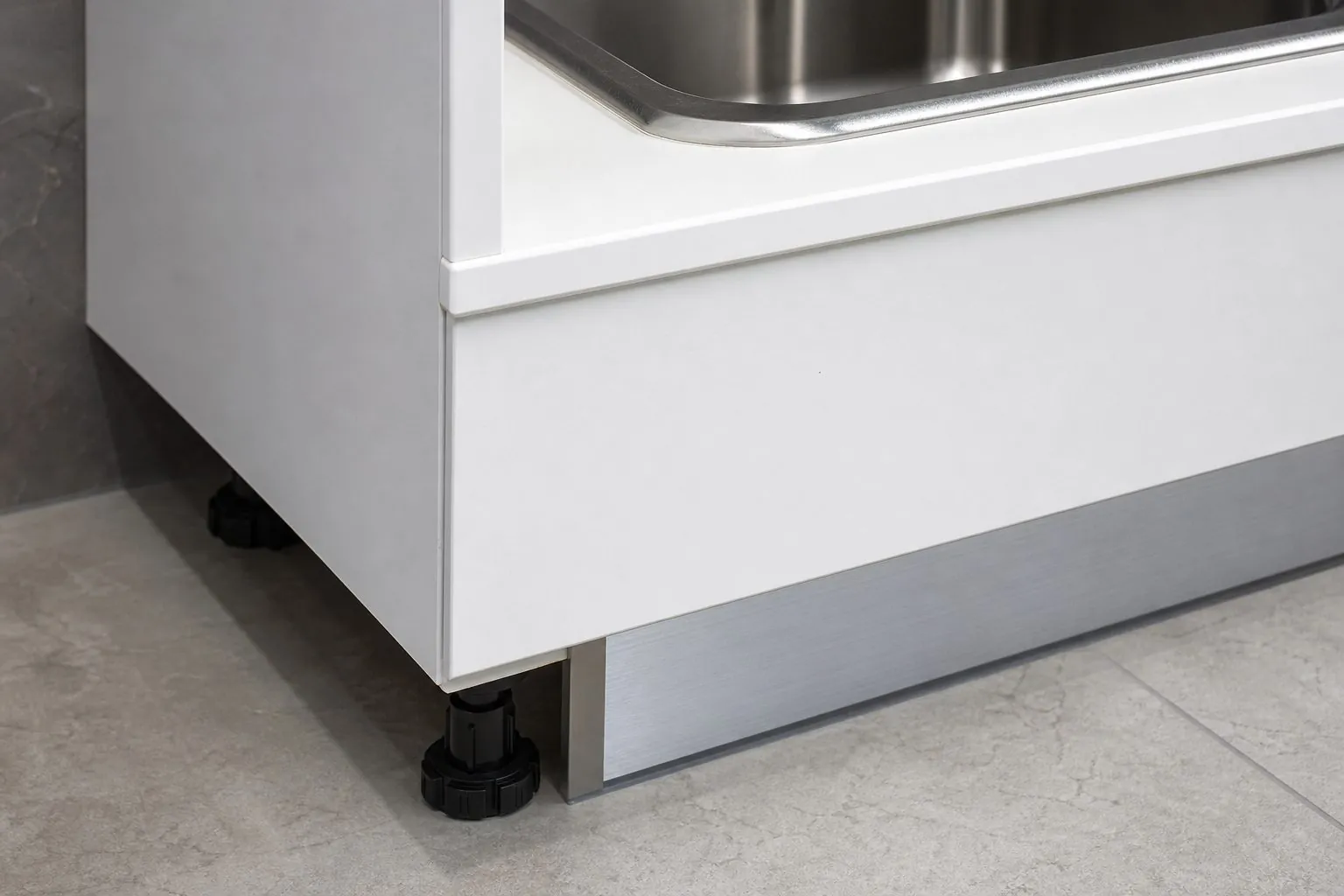
- Raise cabinets on adjustable feet or a plinth so they sit above standing water.
- Slope worktops slightly or add drip edges so water runs off.
- Leave a gap between the cabinet back and the wall for airflow.
- Add vents in doors or plinths to reduce condensation.
- Seal every cut edge and drilled hole on wood-based panels.
- Avoid flat tops that trap water against seams.
For laundry balconies, place a drip tray or waterproof base under washing machines and plan drainage near the machine. Keep drying areas separated from enclosed storage where possible.
Cabinet layout tips for laundry balconies
- Keep the washing machine on a waterproof base with a drain nearby.
- Place stacked washer-dryer units in a ventilated tall cabinet.
- Fit a utility sink with a compact laminate or stone top.
- Use open shelves or perforated doors for drying items.
- Keep cleaning chemicals in a lockable cabinet away from children.
What finishes stand up to sun and weather?
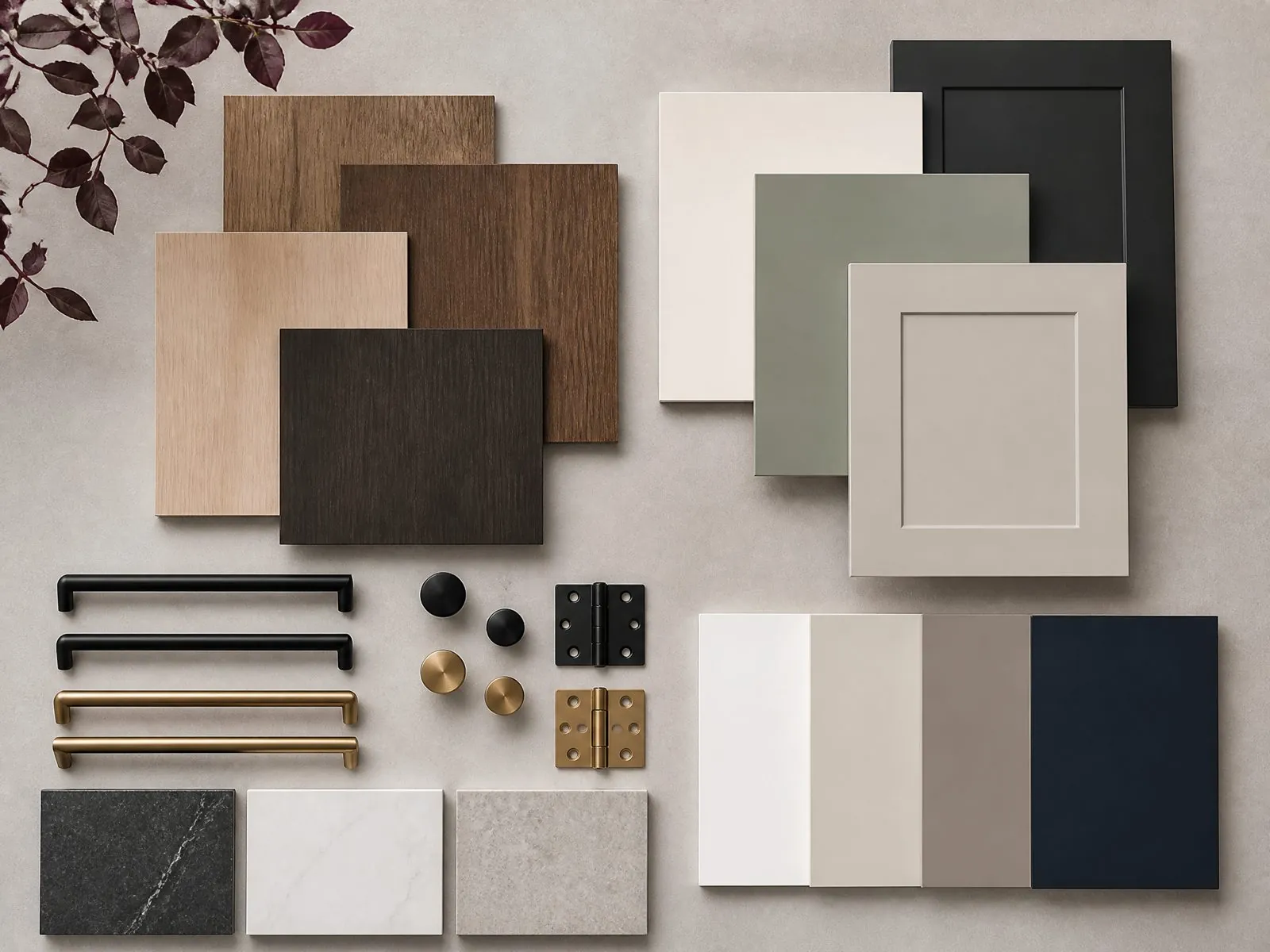
Exterior-grade laminates, powder coating and UV-resistant coatings perform best. Indoor lacquers and standard melamine papers fade and crack under strong sunlight.
- Powder-coated aluminum resists UV and corrosion and comes in many colors.
- Exterior compact laminate has UV-stabilized surfaces suitable for façades and outdoor furniture.
- Light colors absorb less heat and show fading less than dark colors.
- Wood-look finishes on outdoor-grade materials give warmth without maintenance of real timber.
- Natural timber needs regular oiling or coating and will weather to grey.
Ask for finish samples and, where possible, check them in sunlight on site. Colors outdoors look different from showroom lighting.
Glass-door cabinets on balconies should use tempered glass and aluminum frames rather than wood frames, which weather quickly. Mirror is generally not recommended outdoors because moisture attacks the silvering at the edges.
Which material suits each balcony use?
Match material to the balcony type and function. A single project may use different materials for enclosed laundry balconies and open terraces.
| Balcony use | Recommended materials | Key details |
|---|---|---|
| Enclosed laundry balcony | PVC foam board, moisture-resistant board, compact laminate tops | Machine tray, ventilation, sealed edges |
| Enclosed storage balcony | Moisture-resistant board with sealed edges | Ventilation gap from exterior wall |
| Covered open balcony | Compact laminate, aluminum frame, marine board | Stainless hardware, raised feet |
| Open terrace or rooftop | Aluminum, HDPE, stainless steel | UV-stable finishes, drainage |
| Outdoor kitchen | Stainless steel, HDPE, stone tops | Appliance ventilation, gas safety |
Where budgets are tight, prioritize durable materials on the parts that get wet most: the base, the worktop and the doors facing the weather. Interior shelves in a well-ventilated cabinet can use more economical moisture-resistant board, as long as edges are sealed.
For developments with many identical balconies, a single tested balcony cabinet module can be repeated across units. Build one sample, install it on a balcony during construction and check its condition after a period of weather exposure before confirming the full order.
What maintenance should owners expect?
Even outdoor-grade cabinets need simple, regular care. Setting clear expectations at handover avoids disputes about wear.
- Wipe surfaces with mild cleaners; rinse salt and chlorine deposits.
- Keep drainage paths and vents clear.
- Check hinges and fixings periodically and tighten if needed.
- Re-oil or re-coat natural timber as recommended.
- Use covers on fully exposed outdoor kitchens during wet seasons.
For developers and property managers, include care instructions in handover documents and keep spare hinges and handles for maintenance teams.
Warranty terms for outdoor products often differ from indoor cabinetry because exposure varies so much. Agree in writing what is covered, such as material swelling or hardware corrosion, and what is excluded, such as fading from direct sun. Any warranty period for a specific order is confirmed at quotation.
What should buyers confirm before ordering balcony cabinets?
Confirm the exposure level and function first, then select materials and hardware to match. Send site photos where possible.
- Balcony type: enclosed, covered or open.
- Orientation and sun exposure.
- Distance to the sea or pools.
- Function: laundry, storage, outdoor kitchen.
- Appliance models, water and drainage points.
- Preferred finishes and colors.
How can Arcova help with balcony and outdoor cabinets?
Arcova produces laundry and balcony cabinets with materials selected by exposure level, from moisture-resistant boards and PVC foam board to compact laminate and stainless steel for outdoor kitchens.
- Material and hardware recommendations based on site conditions.
- Shop drawings showing drainage, ventilation and appliance details.
- Finish sample approval before production.
- Inspection with photo reports and export packing labelled by unit.
- Installation guidance and 24-hour online technical support.
Arcova has 12+ years of manufacturing experience and holds ISO9001, BSCI and FSC certifications. Material performance data, MOQ and lead times are confirmed per project. Send your balcony plans and photos for a material recommendation.