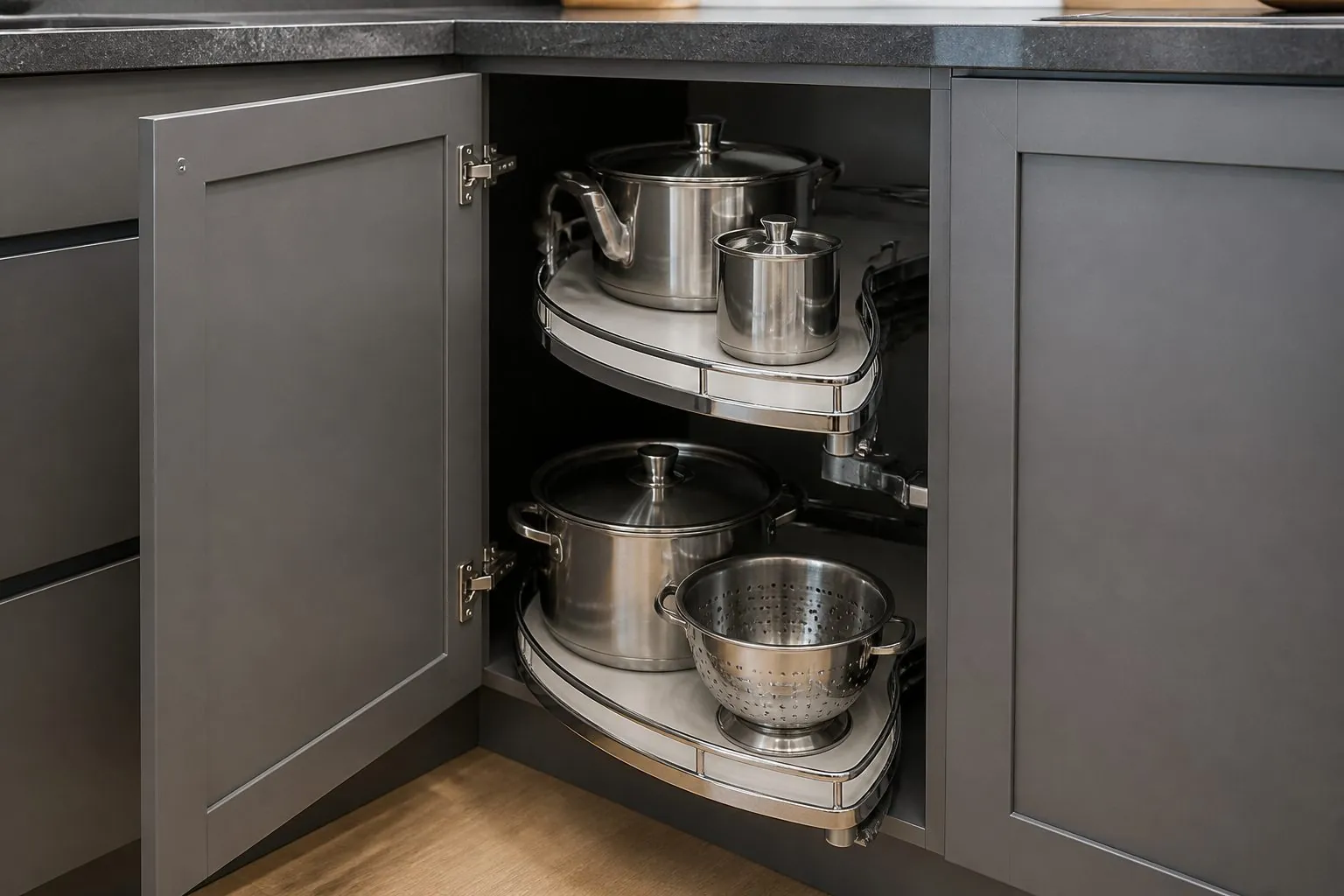
Blind corners, carousels, half-moons, swing-outs, magic corners and corner drawers compared on access, cost and reliability, with project-type recommendations for buyers.
Which Kitchen Corner Storage Solution Is Best for a Project?
For most multi-unit projects, a blind corner with a simple swing-out or half-moon pull-out gives the best balance of cost, reliability and access. Full LeMans-type swing-out units and magic corner systems give better access but cost more and need careful installation. Carousels suit L-shaped corners where both arms have room, and corner drawers suit premium kitchens with handleless fronts.
The right choice depends on four factors: the corner geometry, the budget per kitchen, who will use the kitchen and how much maintenance the owner can accept. A rental apartment and a villa kitchen should not share the same corner specification.
- Budget rental kitchens: blind corner with fixed shelf or a basic half-moon pull-out.
- Mid-range build-to-sell: carousel or swing-out unit from a recognized hardware brand.
- Premium homes: magic corner, LeMans-type swing-out or corner drawers.
What Corner Types Exist and How Do They Differ?
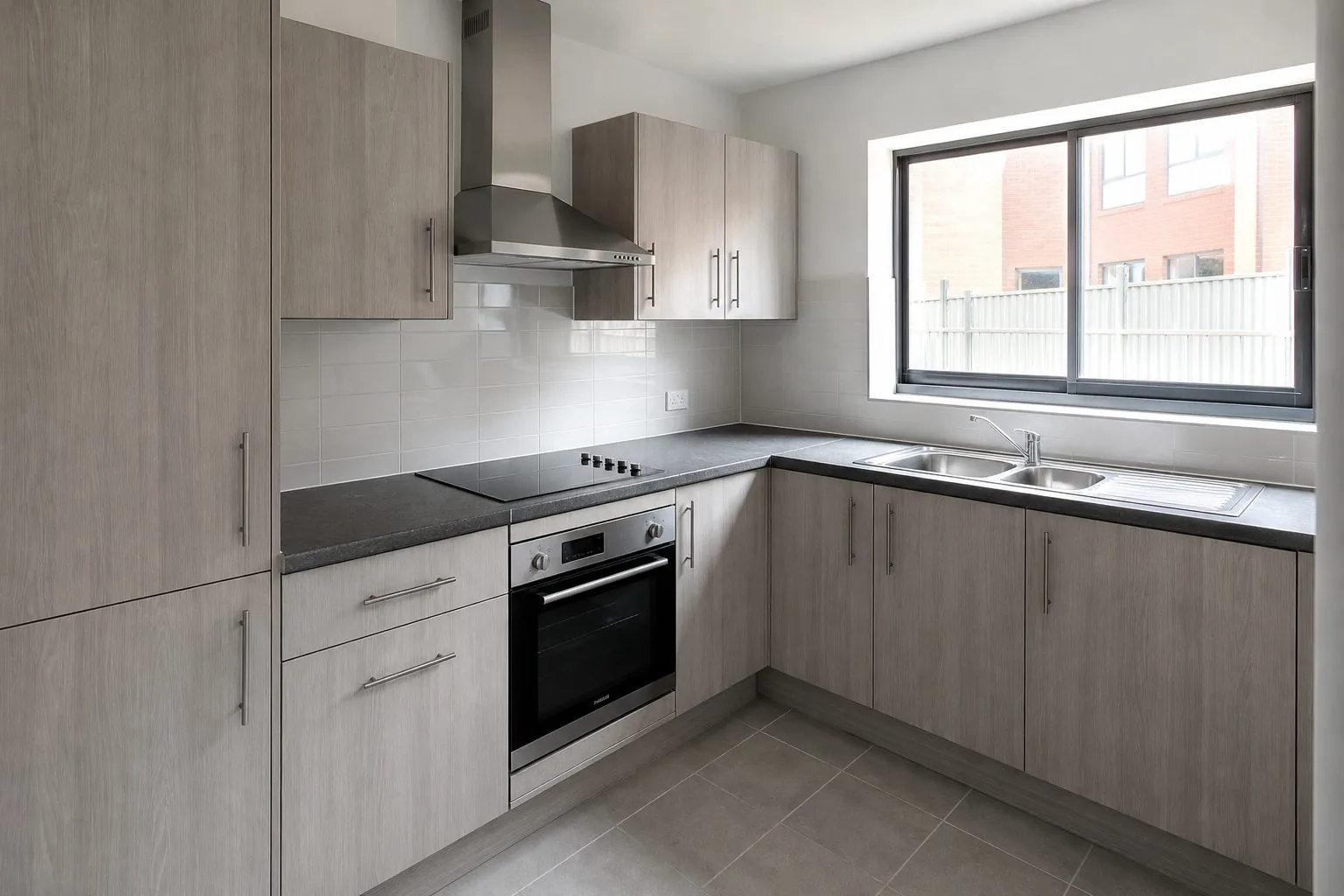
There are two basic corner geometries in base cabinets: the L-shaped corner cabinet, where a single cabinet fills the corner with a bi-fold door, and the blind corner, where one cabinet runs into the corner and the adjacent run butts against it. The geometry decides which mechanisms fit.
| Corner Geometry | Typical Door | Compatible Mechanisms | Space Need |
|---|---|---|---|
| L-shaped corner cabinet | Bi-fold door or two doors joined at 90 degrees | Full-round or pie-cut carousel | Equal space on both arms |
| Blind corner, left or right | Single door on the open side | Half-moon pull-out, LeMans-type, magic corner, fixed shelves | Blind section hidden behind adjacent run |
| Diagonal corner cabinet | Angled single door | Carousel, fixed shelves | Larger footprint; angled worktop |
| Corner drawer unit | Angled drawer fronts | Dedicated corner drawer system | Specific carcass shape and premium hardware |
Wall cabinet corners follow the same logic but usually use fixed shelves, an L-shaped corner wall cabinet or an open corner shelf, because mechanisms above head height are rarely worth the cost.
Wall Corner Options in Brief
- L-shaped corner wall cabinet: bi-fold door, full use of the corner, simple shelves; can take a small carousel.
- Blind wall corner: cheapest, but the back is hard to reach above shoulder height.
- Open corner shelves: break up a long wall run and display items; collect dust and grease near the hob.
- Glass door corner unit: combines display and storage; suits show kitchens and premium apartments.
Whatever the wall corner type, keep it clear of the extractor hood and check that the bi-fold door does not hit a window frame or the hood canopy.
How Do Carousels, Half-Moons and Magic Corners Compare?
Compare corner mechanisms on usable storage, access, cost and failure risk rather than on brochure images. A mechanism that looks clever in a showroom can become a maintenance problem in a rental building.
| Mechanism | Access | Relative Cost | Reliability Notes | Best Use |
|---|---|---|---|---|
| Fixed shelves (blind corner) | Poor at the back | Lowest | Nothing to break | Rentals, low budgets |
| Half-moon pull-out | Good on the front half | Low to medium | Simple swing and slide; check load rating | Mid-range kitchens |
| Carousel (lazy Susan) | Good, rotating | Low to medium | Items can fall off the edge; central pole needs alignment | L-shaped corners |
| LeMans-type swing-out | Very good | Medium to high | Precise setup; handles daily use well when branded | Build-to-sell, villas |
| Magic corner (pull-through) | Excellent, brings rear baskets forward | High | Several moving parts; needs careful adjustment | Premium kitchens |
| Corner drawers | Excellent, full view from above | High | Depends on drawer system quality | Handleless premium kitchens |
Relative cost is a general industry comparison, not an Arcova price indication. Actual cost depends on the hardware brand and model.
Usable Storage Versus Visible Storage
Buyers often compare mechanisms by how much they hold, but the more useful measure is how much users can see and reach without kneeling. A blind corner may hold a large volume, yet items at the back are effectively lost. A carousel holds slightly less but brings everything to the door opening. Magic corners and corner drawers score highest on visibility because baskets or drawers come fully out of the cabinet.
For senior housing or accessible kitchens, prioritize visibility and pull-out access over raw volume, and keep heavy items at waist height rather than in deep corners.
When Is a Simple Blind Corner the Right Choice?
A blind corner with fixed shelves is the right choice when the corner is used for rarely needed items, the kitchen is a rental, or the budget must go to visible items such as doors and worktops. It is also the easiest corner to install and the hardest to break.
To make a blind corner more usable without a mechanism:
- Use a wider door opening on the accessible side so users can reach further in.
- Place a pull-out bin or pull-out basket in the adjacent cabinet, leaving the blind section for bulky items.
- Add an internal LED strip with door sensor so the back of the corner is visible.
- Specify a filler wide enough that the door and handle clear the adjacent run.
The filler detail is the most common error. Without enough filler width, doors on the two runs collide or handles hit each other.
What Dimensions Must Be Checked Before Choosing a Mechanism?
Every corner mechanism has minimum cabinet width, depth, door width and opening sizes set by its manufacturer. Choose the mechanism before finalizing the kitchen layout, not after, or the cabinet may be a few centimeters too small.
- Cabinet width and blind length: each system specifies a minimum and sometimes a maximum width.
- Door width: swing-out units need a minimum door opening for baskets to pass.
- Internal height: check against plinth height and worktop thickness.
- Hinge type: some mechanisms need wide-angle hinges so the door opens past the baskets.
- Handles: projecting handles on the adjacent run may block the door; filler width must allow for them.
- Services: sink waste, water pipes or gas lines in the corner can block mechanisms entirely.
Ask your cabinet supplier to show the mechanism on the shop drawing with its manufacturer's minimum sizes. At Arcova, corner mechanisms are drawn and drilled to the selected hardware brand's template before production.
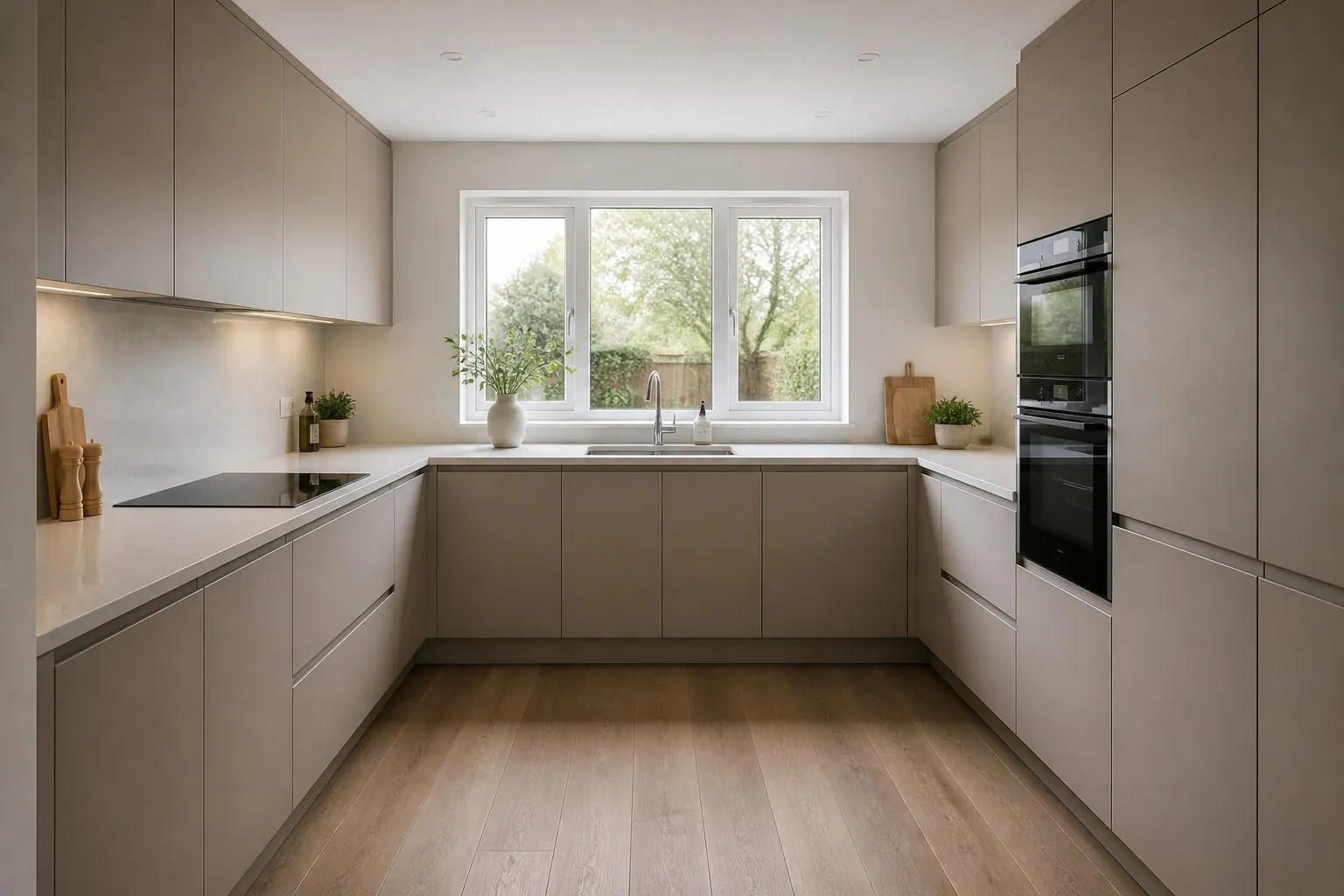
Where a project has several kitchen types, check each corner separately. An L-shaped kitchen in one unit type and a U-shaped kitchen in another can have mirrored corners, and a left-hand mechanism will not fit a right-hand blind corner. Listing the corner hand on the cabinet schedule avoids ordering the wrong version.
Can a Corner Cabinet Hold the Sink or Appliances?
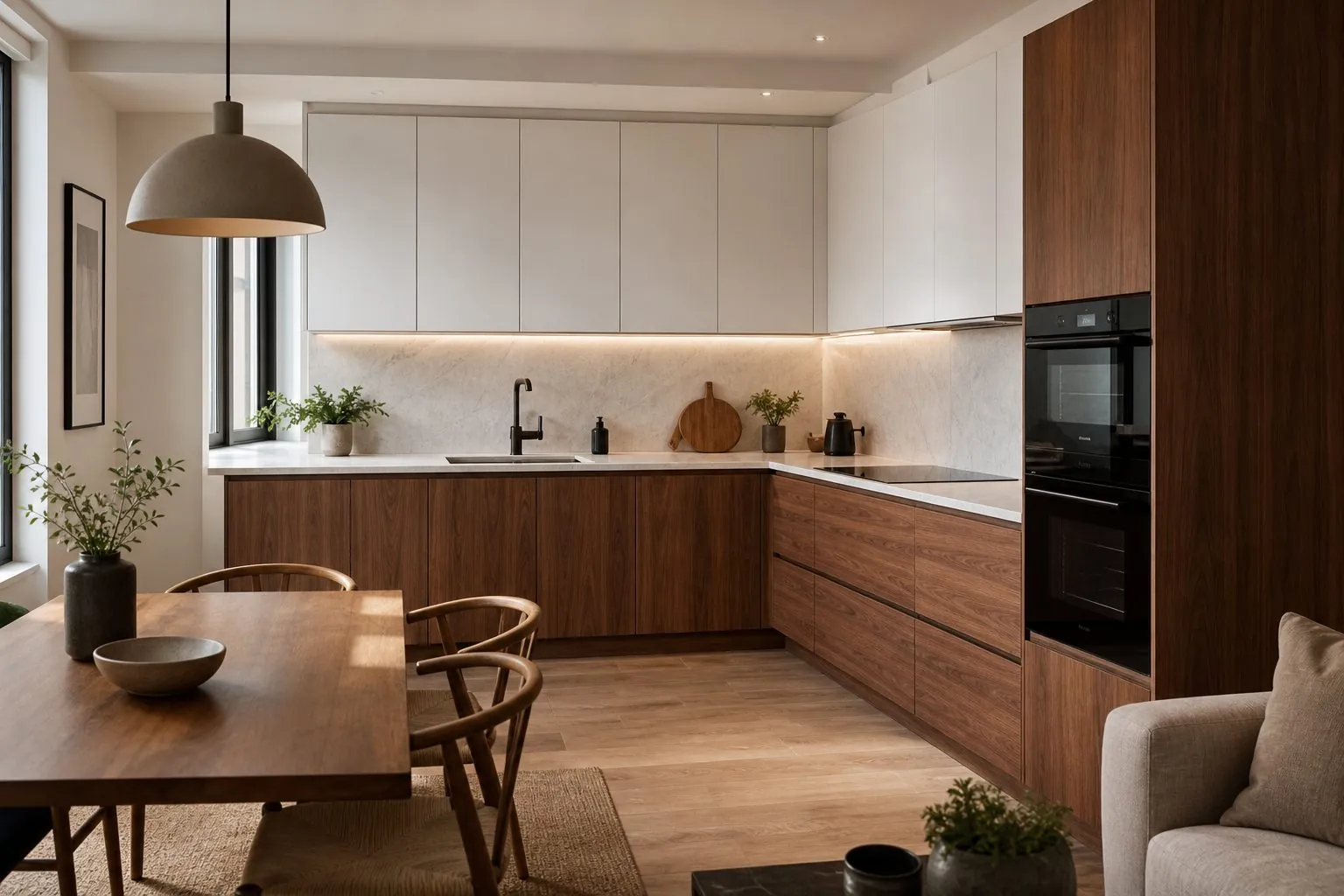
Yes, but it limits storage options. A corner sink places plumbing in the corner, which rules out carousels and most pull-through systems. A corner hob or oven rarely makes sense because of ventilation and heat clearances.
- Corner sink: use a diagonal or L-shaped sink base with open space for plumbing and a waste bin.
- Corner dishwasher: not recommended; the door will clash with the adjacent run.
- Corner appliance garage: a wall-level corner unit with a tambour or lift-up door can hide a kettle or coffee machine, with a socket inside.
If the corner must take plumbing, keep pipes tight to the back wall and confirm positions on site so the cabinet can be cut accurately.
How Do Corner Choices Change for Rentals, Build-to-Sell and Villas?
Corner specification should follow the project type. Matching mechanism complexity to user and maintenance expectations prevents both overspending and complaints.
| Project Type | Recommended Corner | Reason |
|---|---|---|
| Rental apartments | Blind corner with shelves or simple half-moon | Low maintenance; tenants rarely value mechanisms |
| Student and staff housing | Blind corner with fixed shelves | Highest durability, lowest cost |
| Build-to-sell apartments | Carousel or LeMans-type from branded hardware | Visible selling point in show units |
| Villas and premium homes | Magic corner or corner drawers | Maximum access, matches premium expectations |
| Serviced apartments | Blind corner or half-moon | Durable and quick for housekeeping |
Which Hardware Brands Are Used for Corner Systems?
Corner mechanisms are hardware products, so the brand and model determine quality more than the cabinet maker does. Most premium systems come from major European hardware brands, while value ranges come from established Asian suppliers.
- Premium: Blum, Hettich, Häfele, Salice systems and their corner solutions.
- Value and mid-range: DTC, Hutlon and similar established suppliers.
- Check the load rating per basket, finish of the wire or tray, soft-close function and spare part availability in your market.
Specifying a brand without a model number is not enough. Ask for the exact model on the quotation so the drawings, drilling and replacement parts all match.
For large projects, it is also worth confirming local availability of spare baskets, pivots and soft-close dampers. A building with hundreds of identical corners will need spare parts over its life, and a mechanism with no local distributor can turn a small repair into a long wait. Many developers order a small stock of spare components with the main shipment for the facility team.

What Installation Problems Should Buyers Expect?
Most corner complaints trace back to installation: doors that rub, baskets that hit the carcass and mechanisms that drift out of adjustment. A short checklist for installers prevents most of them.
- Install corner cabinets first and level them carefully, because the two runs reference the corner.
- Fit and adjust mechanisms after the worktop is in place, so the carcass is fixed.
- Check door clearance against handles on both runs before fixing fillers.
- Test each mechanism with a realistic load, not empty baskets.
- Leave the manufacturer's adjustment instructions with the facility manager.
How Can Arcova Help With Kitchen Corner Storage?
Arcova draws corner cabinets and mechanisms to the selected hardware template during drawing deepening, so drilling and filler widths are correct before production. We offer Blum, Hettich, Häfele, Salice, DTC and Hutlon hardware by budget, and can build a mock-up kitchen to test corner access before mass production. Our 24-hour online technical support helps installers with adjustment questions. Browse our kitchen cabinets or send your kitchen layouts for a corner proposal.