How bathroom vanities, stone tops, basins and mirrors are packed, labelled, inspected and loaded for export, and what buyers should check when goods arrive.
How Are Bathroom Vanities and Stone Tops Packed for Export?
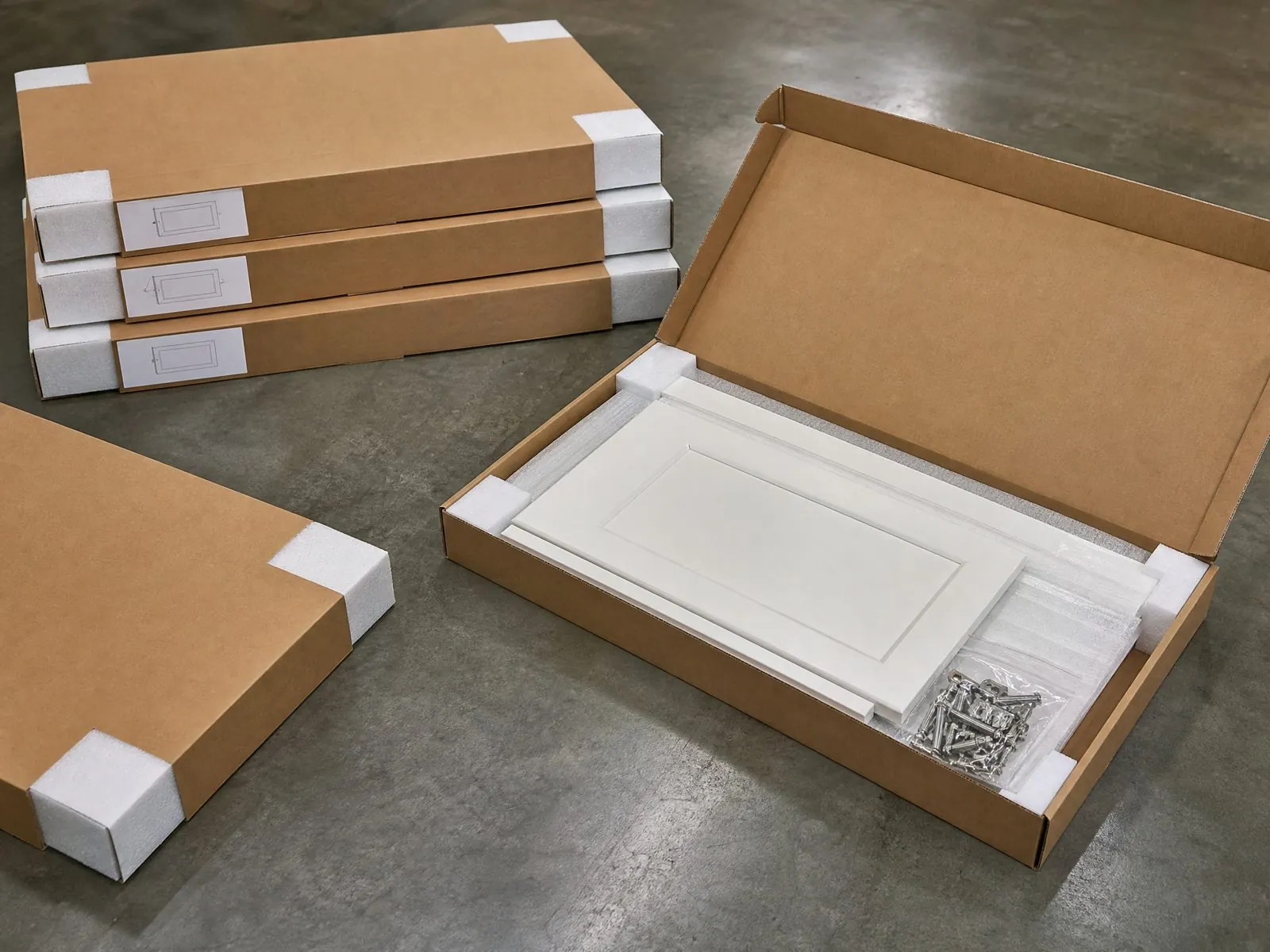
Vanity cabinets and stone tops should be packed separately: cabinets in cartons with corner and edge protection, and stone tops in vertical wooden crates or A-frames that stop flexing and edge impact. Most transport damage to vanities happens to stone corners, basin edges and glossy door faces, so packing is designed around those weak points.
Packing is not a final detail added after production. It affects container loading, landed cost, damage rates and how quickly installers can find the right parts on site. Buyers should agree the packing method at quotation stage and approve it during sampling, in the same way they approve finishes.
| Component | Typical Packing Method | Main Risk |
|---|---|---|
| Vanity carcass | Carton with foam or honeycomb corners | Crushed corners, scratched panels |
| Doors and drawer fronts | Fitted or packed flat with film and foam | Scratches and dents on finish |
| Stone or quartz top | Vertical wooden crate or A-frame | Cracks at cut-outs, chipped edges |
| Ceramic or solid-surface basin | Molded foam in carton | Chips at rim, cracks |
| Mirror and mirror cabinet | Wooden frame or reinforced carton | Glass breakage |
| Hardware and fittings | Labelled bags inside unit carton | Loss or mix-up on site |
Agreeing the packing standard in writing protects both sides. The purchase order should describe carton type, corner protection, crate method for tops and the label format. During pre-production sampling, a packed sample can be photographed and approved, and the inspection report before shipment can then check every pallet against that approved standard.
Should Vanities Ship Assembled or Flat-Packed?
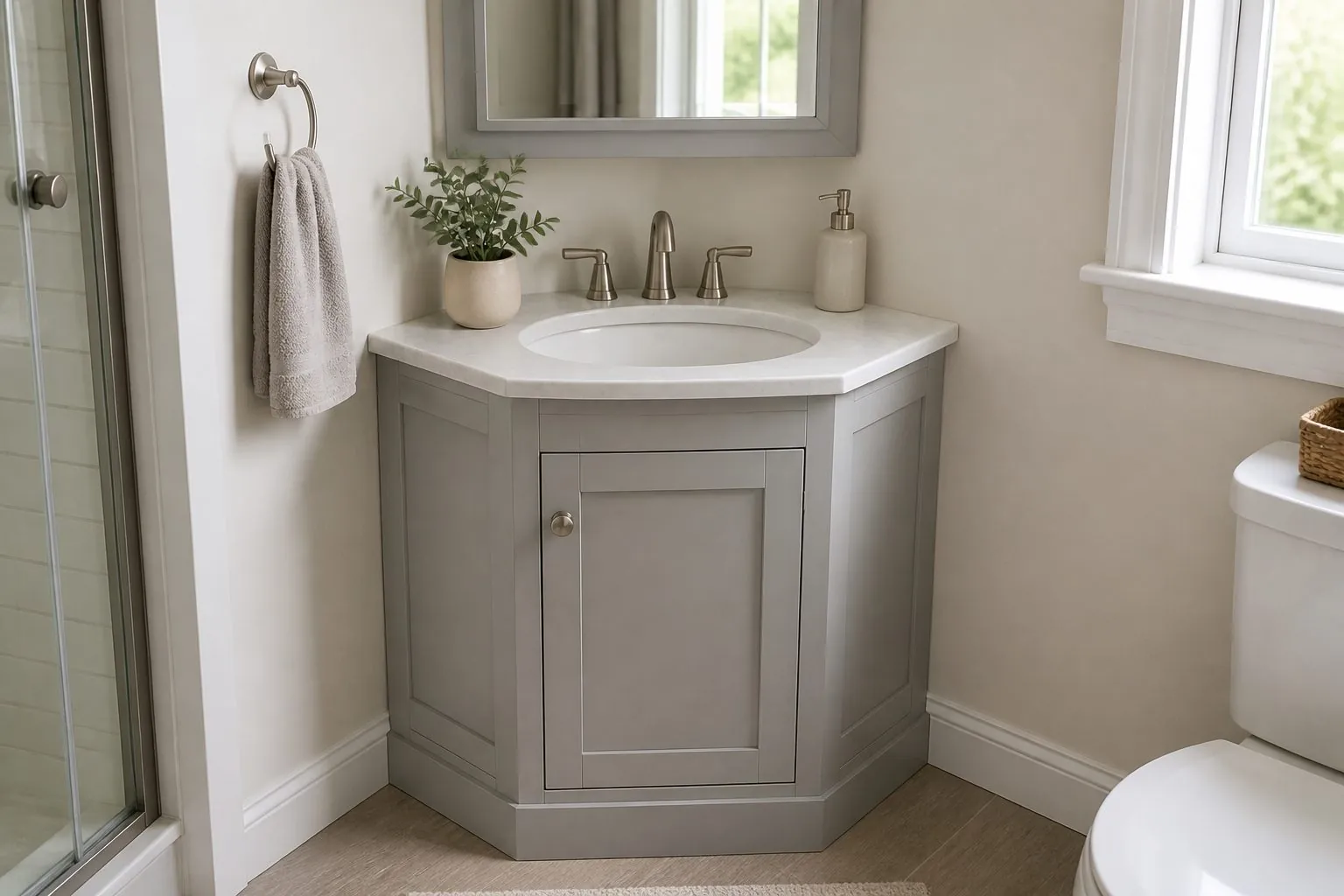
Ship vanities assembled when installation speed and finish quality on site matter more than freight cost; ship flat-packed when container space and freight budget are the priority. Many projects choose a middle way: carcasses assembled, tops and basins separate.
| Option | Advantages | Disadvantages |
|---|---|---|
| Fully assembled | Fast installation, factory-checked alignment | More container volume, higher freight per unit |
| Flat-packed | More units per container, lower freight | Site assembly time, risk of assembly errors |
| Assembled carcass, separate top | Balanced volume and site speed | Tops need separate handling and crates |
| Pre-fitted top and basin | Fastest site work | High breakage risk; usually avoided for stone |
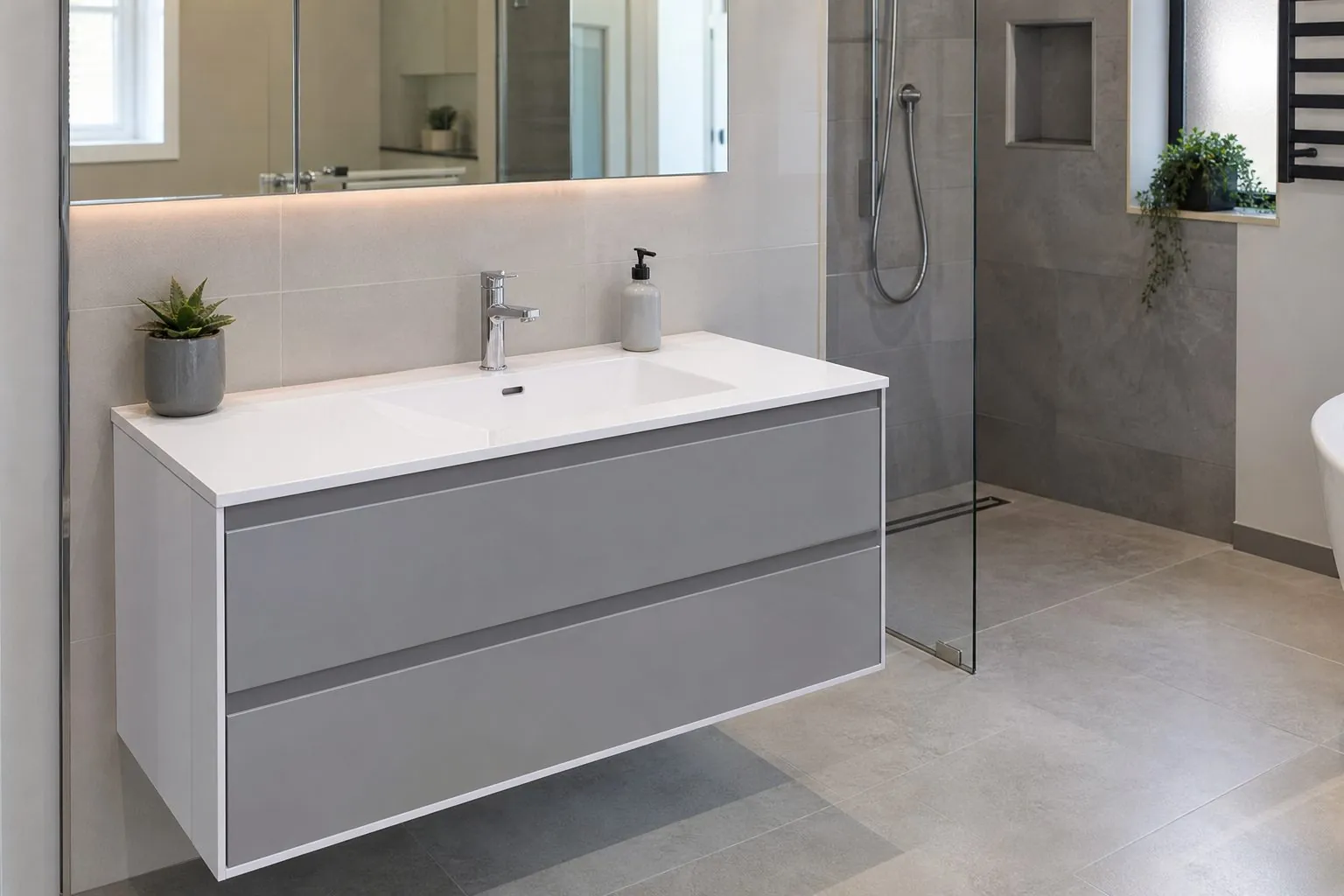
Wall-hung vanities with drawers are often shipped assembled because drawer alignment is easier to set in the factory. Large hotel projects with repeated units sometimes prefer flat-pack to maximize container loading, supported by clear assembly instructions and labelled parts.
A useful rule is to decide assembly level by product risk. Units with many drawers, integrated lighting or precise alignment benefit from factory assembly. Simple open carcasses or very large orders where freight dominates the budget suit flat-pack. Whatever the choice, labelled fittings bags and clear instructions are essential for flat-packed vanities.
How Are Stone and Quartz Tops Protected?
Stone and quartz tops are safest when transported on edge, in vertical crates, with every cut-out supported. Flat stacking puts bending stress on the thinnest sections, especially around basin and tap cut-outs, and can crack a top before it leaves the port.
- Vertical crating: tops stand on their long edge, separated by foam or timber spacers.
- Cut-out support: integrated basin openings and tap holes are reinforced or kept as knock-outs until installation where possible.
- Edge protection: foam or plastic edge guards protect polished and mitred edges.
- Surface protection: protective film or sheets stop scratches from spacers and straps.
- Fumigation-compliant timber: wooden crates and pallets must meet ISPM 15 rules for international shipping.
- Labelled crates: each crate shows top reference, room or unit number and orientation.
Integrated tops with a molded basin need extra care, because the basin rim is the weak point. Ask the supplier to show the crate design and a packed sample before mass production.
Dry-fitting tops before packing reduces site problems. Placing the stone or quartz top on its matching cabinet in the factory confirms that basin cut-outs, tap holes and overhangs match the cabinet. Once confirmed, both items receive the same reference number so installers can pair them on site without measuring again.
How Should Glossy Doors and Mirrors Be Packed?
Glossy lacquer, PET and acrylic doors need a soft surface layer, rigid corners and no pressure points. Mirrors need rigid frames and clear handling marks. These finishes show every scratch, so packing should be tested before the full order ships.
- Apply protective film to high-gloss surfaces before handling begins.
- Use foam sheets between doors and carcass faces.
- Add rigid corner protectors on every corner and edge.
- Pack mirrors in wooden frames or reinforced cartons marked fragile and this way up.
- Avoid tape directly on finished surfaces, which can leave residue.
- Do a drop or handling check on a packed sample when the order is large.
Handling marks matter for glossy fronts. Arrows, fragile symbols and do-not-stack marks guide forklift drivers and site crews who may not read the language on the carton. Using simple international symbols on every side of the carton reduces careless handling at transfer points between the factory, port, destination warehouse and site.
How Should Vanity Cartons Be Labelled?
Label cartons by project, building, floor, unit, room and item code, with a matching packing list. Good labelling saves days on large projects, because installers can deliver each box directly to the right bathroom.
| Label Field | Purpose |
|---|---|
| Project and PO number | Links carton to order and customs documents |
| Building, floor, unit, room | Direct delivery to installation location |
| Item code and description | Identifies vanity, top, mirror or accessory |
| Box number (e.g. 2 of 3) | Confirms all parts have arrived |
| Gross weight and size | Safe handling and logistics planning |
| Handling marks | Fragile, this way up, do not stack |
Barcode or QR labels help large hotel and residential projects track deliveries. Ask for the label format during sampling so it matches your site logistics system.
Packing lists should match labels exactly. If a carton label says unit 1205, bathroom 2, box 2 of 3, the packing list must show the same line. Mismatches waste site time and lead to mixed-up installations. For large hotels, ask for the packing list in spreadsheet format so the contractor can sort deliveries by floor.
How Is a Container Loaded With Vanities and Tops?
Load heavy stone crates at the bottom and secured to the floor, then cartons above or beside them with no gaps that allow shifting. Poor loading causes more damage than poor cartons, because loads move during sea and road transport.
- Plan the load with a loading drawing before the container arrives.
- Place crates on the container floor and secure them with straps or timber bracing.
- Fill gaps with air bags or dunnage to stop movement.
- Do not stack cartons above their rated limit.
- Photograph each stage of loading for the inspection record.
- Seal the container and record the seal number on shipping documents.
Mixed containers holding vanities, kitchen cabinets and doors need careful planning, as each product type has different stacking limits.
Weight distribution also matters. Stone tops are heavy and concentrated, so crates should be spread across the container floor rather than grouped at one end, which can overload axles during road transport. Ask the factory or forwarder to confirm gross weight against the container and trucking limits in the destination country before loading.
What Inspections Should Happen Before Packing?
Inspect finished vanities and tops before packing, not only after. Once cartons are sealed, many defects cannot be seen without unpacking.
- Check dimensions, finish and color against approved samples.
- Check drawer and door alignment and hardware operation.
- Dry-fit tops and basins on sample cabinets to confirm cut-outs.
- Inspect stone for cracks, chips and color variation.
- Check packing materials and labels on a sample of cartons.
- Record findings in a photo report shared with the buyer.
Learn more about our quality control process.

What Should Buyers Do When Goods Arrive?
Inspect deliveries immediately on arrival, photograph any damage before unpacking further and report it within the agreed time. Quick, documented reporting makes replacements and insurance claims much easier.
- Check container seal number against documents.
- Photograph the container interior before unloading.
- Count cartons and crates against the packing list.
- Open damaged cartons in front of the carrier where possible.
- Report damage with photos and carton labels.
- Store goods indoors, away from wet trades.
Ask the manufacturer to include a small stock of spare doors, hardware and touch-up kits for large projects. These cover minor site damage without waiting for a new shipment.
Agree a damage reporting period and process in the contract. A clear process names who to contact, what photos are needed, how replacements are arranged and whether replacement parts travel by sea or air. This avoids long discussions while the site waits for a missing top or door.
How Can Buyers Reduce Packing Damage Rates?
Buyers reduce damage most by approving packing on a sample, insisting on vertical stone crating and asking for loading photos. These three steps address the main failure points at low cost.
- Approve a packed sample with photos before mass production.
- Require vertical crates for all stone and quartz tops.
- Ask for corner protectors on every carton.
- Request loading photos and seal number records.
- Order a small stock of spare doors and touch-up kits.
Review damage reports after each shipment and share them with the factory. Patterns, such as damage always at the same corner, often point to a packing detail that can be improved for the next shipment.

How Can Arcova Help With Vanity Export Packing?
Arcova packs vanities, tops and mirrors for export with labelling by unit and room, inspection with photo reports and loading planned for safe transport.
Production takes place in the Arcova Contract Manufacturing Base, a 40,000 m² factory with 12 production lines and monthly capacity of 40 × 40HQ containers. Certifications include ISO9001, BSCI and FSC.
- Packing method agreed at quotation and approved at sampling
- Inspection with photo reports before shipment
- Export packing labelled by unit and room
- Installation guidance and 24-hour online technical support
Explore our bathroom vanities or contact us about your project.