How to choose wardrobe hinges, runners, sliding tracks, pull-down rails and accessories by use and budget, and how to specify them clearly in purchase orders.
Which Wardrobe Hardware Matters Most for Daily Use?
Hinges, drawer runners and sliding door tracks matter most, because they move every day and decide whether a wardrobe still feels good after years of use. Accessories such as pull-down rails, trouser racks and valet rods add convenience, but they only make sense once the core moving hardware is right.
Buyers often spend the budget on door finishes and leave hardware to the end. That is backwards. A beautiful door on a weak hinge will sag, and a premium walk-in wardrobe system with rough drawer runners will feel cheap the first time it is opened. Set the hardware level early, then design the finishes around it.
| Hardware Group | What It Does | Why It Matters |
|---|---|---|
| Hinges | Carry and align hinged doors | Door alignment, soft closing, long-term sag |
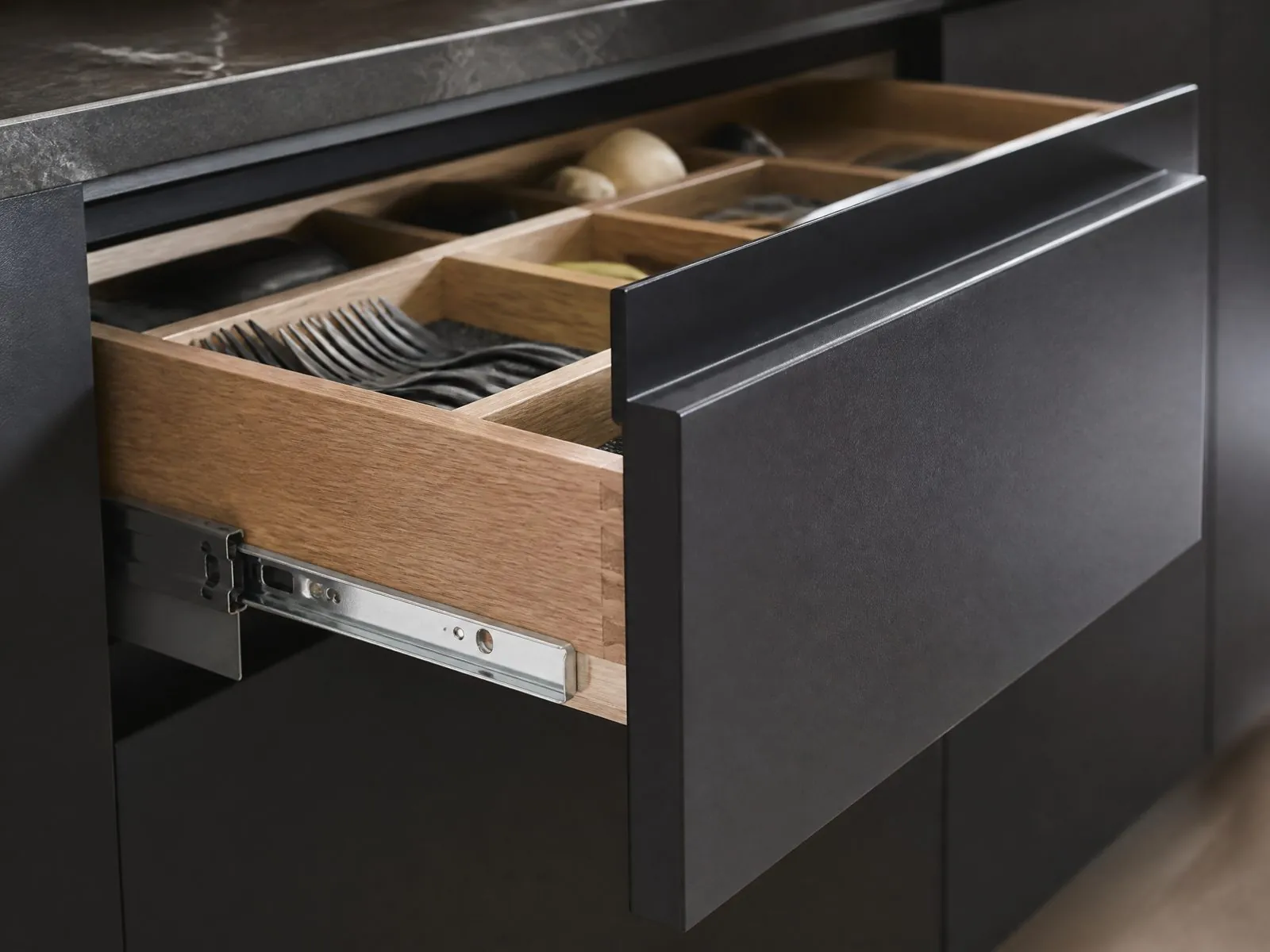
| Drawer runners | Guide drawers and internal pull-outs | Smoothness, load, full access to contents |
| Sliding door tracks | Guide sliding or bypass doors | Quiet movement, door stability, derailing risk |
| Hanging rails and lifts | Hold clothes at usable heights | Usable storage volume, accessibility |
| Accessories | Trouser racks, tie racks, valet rods, trays | Organization and perceived quality |
| Lighting and sensors | Show contents when doors open | Visibility in deep or dark wardrobes |
A useful way to rank hardware is by cycle count. A wardrobe door in a hotel room may be opened several times a day by different guests, every day of the year. A drawer in a family master bedroom is used constantly as well. Accessories such as tie racks are used far less. Spend first where the cycle count is highest, then add accessories where the budget allows.
How Do Soft-Close Hinges and Runners Differ by Quality Level?
Soft-close hardware varies mainly in durability, adjustment and consistency, not in whether it closes softly on day one. Almost every soft-close hinge works when new; the difference appears after thousands of cycles, in humid rooms and on heavy doors.
Arcova offers hardware from Blum, Hettich, Häfele, Salice, DTC and Hutlon depending on budget. Premium European brands are often chosen for villas and branded hotels; strong value brands suit apartments and rental projects. The right level depends on how the wardrobe will be used and how long it must last before refurbishment.
- Adjustment: better hinges offer easy three-way adjustment, so installers can align long rows of doors quickly.
- Damping consistency: quality dampers close at the same speed in cold and warm rooms.
- Load and door size: tall or heavy doors need more hinges per door or stronger hinge types.
- Runner extension: full-extension runners let you reach the back of the drawer; partial extension wastes space.
- Corrosion resistance: coastal and humid projects need finishes that resist rust.
Ask the manufacturer to state brand and model on drawings. Generic descriptions such as soft-close hinge allow substitutions that change quality without changing the price discussion.
When Should You Use a Pull-Down Wardrobe Rail?
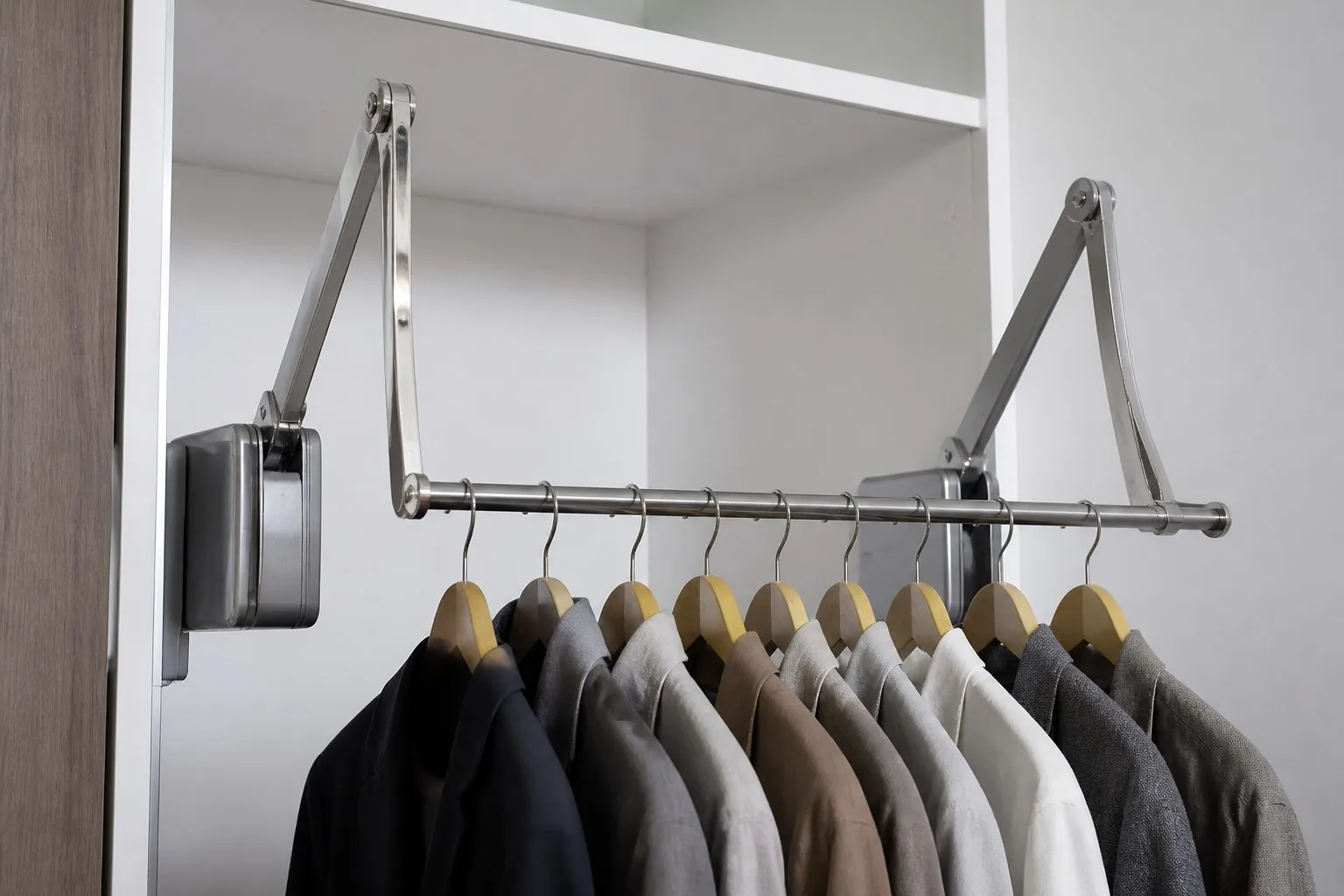
Use a pull-down wardrobe rail when the wardrobe is taller than a comfortable reach and you want to use the upper section for everyday hanging. It brings clothes down to the user with a handle and returns them up with damped assistance.
Pull-down rails are especially useful in high-ceiling villas, senior living, accessible apartments and hotel suites with full-height wardrobes. They are less useful in standard-height wardrobes, where a fixed rail is cheaper and just as practical.
| Factor | What to Check |
|---|---|
| Bay width | Mechanism must fit the internal width range |
| Wardrobe depth | Arms need clearance to swing down |
| Load rating | confirmed per mechanism model |
| Door type | Hinged doors that open fully work best |
| User group | Pulling force and handle height for elderly users |
| Side panels | Must be strong enough for fixing points |
Do not overload pull-down rails with heavy winter coats. Keep them for shirts, dresses and lighter garments, and use a fixed lower rail for heavy items.
Pull-down rails also change the interior layout. Because the lowered rail needs clear space in front, shelves and drawers cannot sit directly below the upper hanging zone in the same bay. Plan the bay with long hanging or open space below, or use the rail in a dedicated bay. This is easier to solve on the first set of shop drawings than after the interior is fixed.
Are Trouser Racks and Pull-Out Accessories Worth It?
Pull-out accessories are worth it in master bedrooms, villas, walk-in wardrobe systems and premium hotel suites, where organization is part of the product. In rental apartments and standard hotel rooms they often add cost without being used.
- Trouser racks: side- or bottom-mounted pull-outs that hang trousers without folding; need specific bay widths.
- Tie and belt racks: narrow pull-outs for side gaps that would otherwise be wasted.
- Jewelry trays: shallow drawers with velvet or felt inserts, often with locks in hotel suites.
- Valet rods: small pull-out rods for preparing the next day's outfit.
- Pull-out baskets and shoe racks: wire, mesh or framed baskets for knitwear, laundry and shoes.
- Mirror pull-outs: full-length mirrors that slide out from a narrow bay.
Most accessories are made for specific internal widths. Choose them before the bay layout is fixed, not after, because changing bay widths later affects doors, panels and drawings.
How Do Sliding Wardrobe Door Tracks Compare?
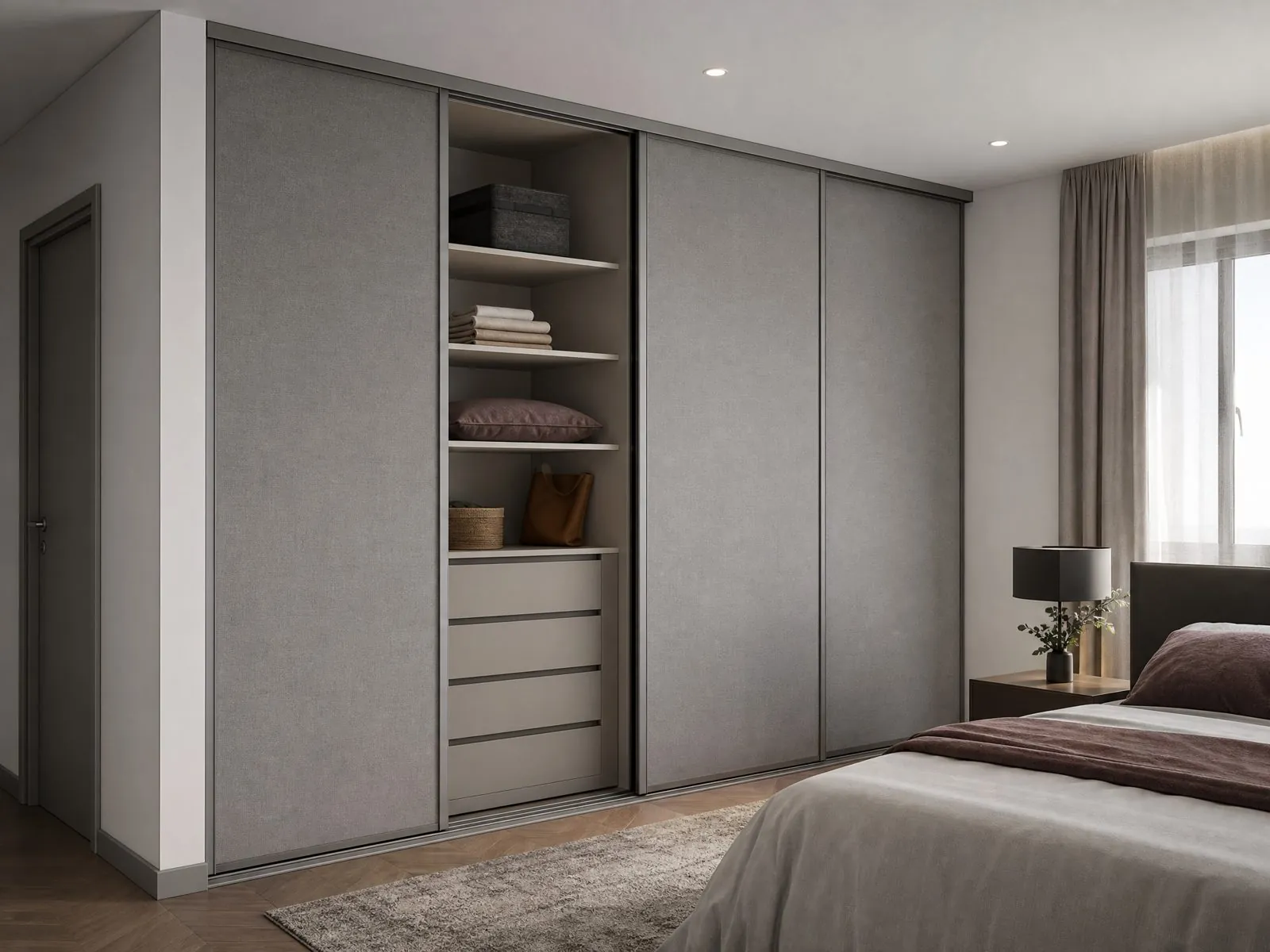
Choose the sliding track by door weight, door size and the user's expectations for smoothness. Top-hung systems feel light and keep the floor clear; bottom-rolling systems carry heavy doors well but need a clean, level bottom track.
| Track System | Typical Use | Strengths | Watch Points |
|---|---|---|---|
| Bottom-rolling | Standard bypass wardrobes | Carries heavier doors | Dirt in track affects movement |
| Top-hung | Lighter doors, clean floors | Smooth, no floor rail | Needs strong head support |
| Soft-close sliding | Mid to premium projects | Prevents slamming | Check damper adjustment access |
| Synchronized sliding | Premium walk-in wardrobes | Doors move together | Higher cost, careful installation |
| Flush sliding | Modern designs | Doors align in one plane | Precise installation required |
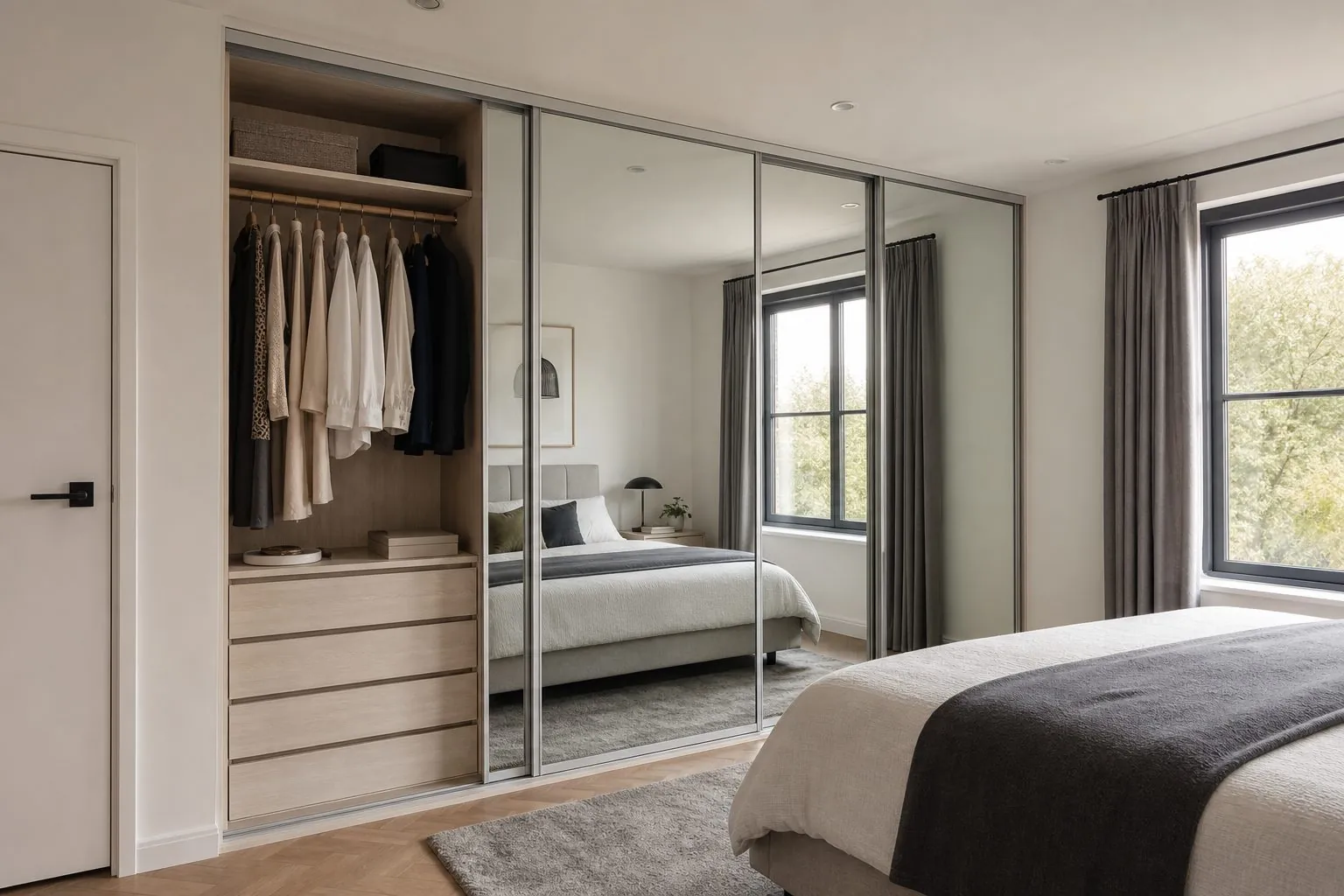
Mirror and glass doors are heavy. Confirm door weight against the track rating, and ask for anti-jump or anti-derail parts in hotels and family homes. Tracks should be adjustable after installation, because floors and ceilings are rarely perfectly level.
For family homes and hotels, ask for anti-jump stoppers and door stops at both ends of the track. These prevent doors from leaving the track when pushed hard and stop them from hitting the side panels. Soft-close dampers on sliding systems also reduce noise at night, which matters in hotel rooms and apartments with thin partitions.
Which Handles and Opening Systems Suit Different Wardrobes?
Choose handles for user comfort and cleaning first, then for appearance. Handle-less designs look clean but some push-open systems need careful adjustment and are less durable in heavy-use rooms.
- Bar handles: easy to grip, suitable for elderly users and hotels.
- Integrated groove handles: clean look, no protruding parts, good for rentals.
- Edge pulls: minimal metal profiles on the door edge for modern designs.
- Push-to-open: handle-free look; needs regular adjustment and may be pressed accidentally.
- Electric push systems: premium option for handle-less doors, requires power.
In hotels, avoid systems that confuse guests. A visible handle tells people how the door opens and reduces damage from pulling on door edges.
Should Wardrobe Lighting Be Part of the Hardware Plan?
Yes. Lighting should be planned with the hardware because it uses the same panels, rails and cable routes. Adding lights later usually means visible cables and drilled panels.
- Decide where light is needed: inside hanging rails, shelf fronts or vertical side profiles.
- Choose the switching method: door sensor, motion sensor or wall switch.
- Plan driver and transformer locations with ventilation and maintenance access.
- Route cables during production, not on site.
- Confirm plug type and electrical certification for the destination market.
Lit hanging rails are popular because they light clothes directly and hide the light source. They need matching rail lengths and connectors, so they should be selected with the rest of the hardware.
How Should Buyers Specify Hardware in a Purchase Order?
Specify hardware by brand, model, finish and quantity per unit, not by general description. This makes quotes comparable and inspections possible.
| Item | What to Write |
|---|---|
| Hinges | Brand, model, opening angle, soft-close, number per door |
| Drawer runners | Brand, model, extension type, length, load class |
| Sliding tracks | System name, door weight limit, soft-close, anti-derail |
| Pull-down rails | Model, width range, load rating |
| Accessories | Model, finish, bay width |
| Lighting | Profile, color temperature, sensor, driver, plug type |
Ask for a hardware schedule as part of shop drawings, and approve it with the finish samples. Inspectors can then check installed hardware against the schedule before packing.
A hardware schedule also protects buyers from silent substitutions during busy production periods. If a specified hinge or runner is temporarily unavailable, the factory should request approval for an alternative in writing, with the replacement brand and model. Make this rule part of the purchase order, so changes are visible and agreed rather than discovered during installation or after handover.
Finally, request spare hardware with the shipment. A small stock of hinges, runner sets, dampers and sliding door rollers lets maintenance teams repair problems immediately instead of waiting for a new order.
How Can Arcova Help With Wardrobe Hardware?
Arcova selects wardrobe hardware by budget and use during drawing deepening and 3D design. We propose combinations of hinges, runners, tracks and accessories, list them on a hardware schedule and confirm them before mass production.
Our 40,000 m² factory has 12 production lines, including automated CNC cutting, edge banding and drilling for accurate hardware positions. Monthly capacity is 40 × 40HQ containers, and certifications include ISO9001, BSCI and FSC.
- Hardware brands available: Blum, Hettich, Häfele, Salice, DTC and Hutlon
- Factory checks of door alignment and drawer movement
- Inspection with photo reports before shipment
- Export packing labelled by unit and room
- Installation guidance and 24-hour online technical support
Browse our built-in wardrobes or send your wardrobe drawings for a hardware proposal.