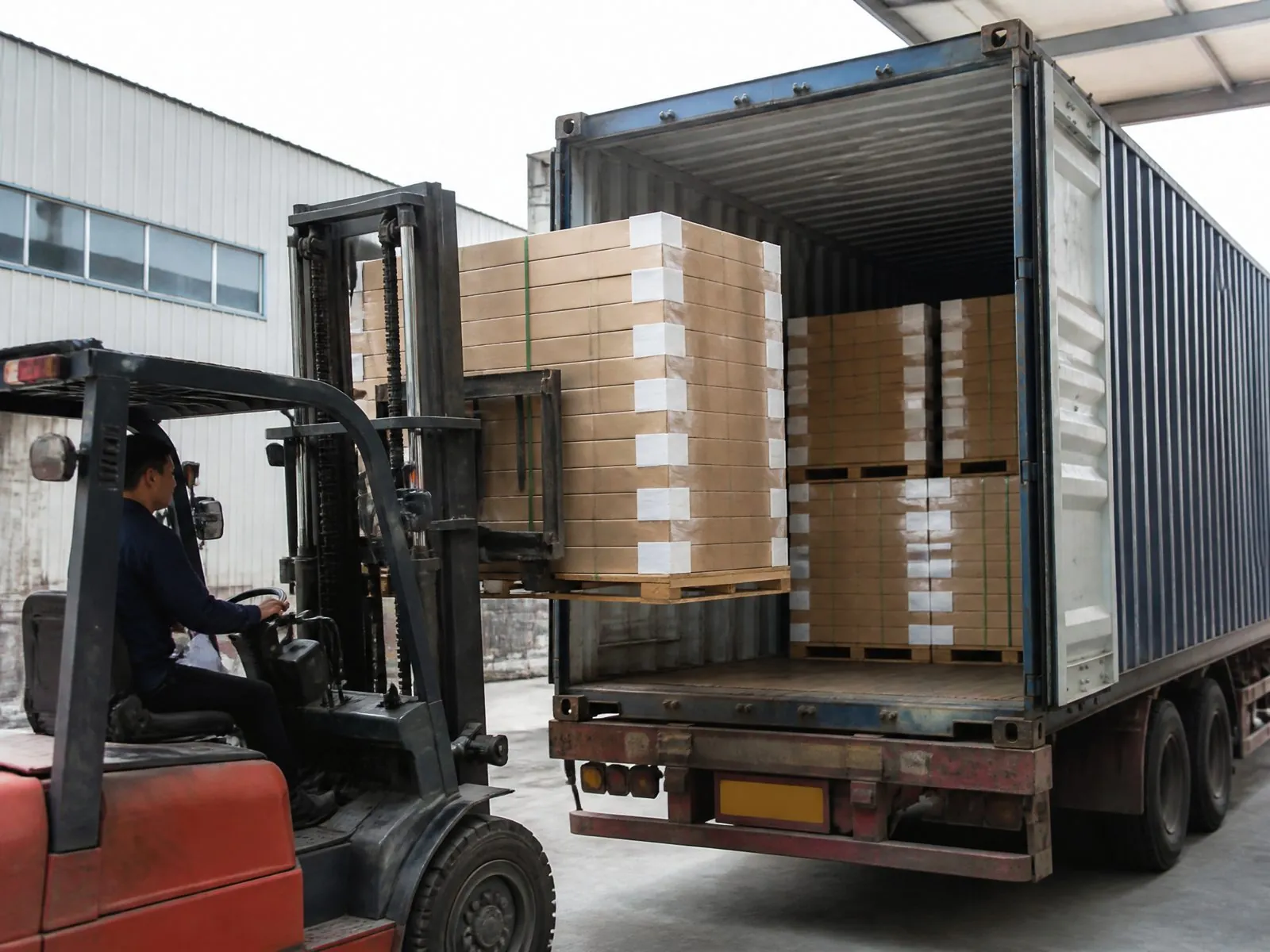
How to estimate cabinet quantities per 40HQ container: container sizes, flat-pack versus assembled, capacity factors, loading plans, mixed project loads and damage control.
How Many Cabinets Fit in a 40HQ Container?
There is no single number. The quantity of cabinets in a 40-foot high cube (40HQ) container depends mainly on whether cabinets are flat-packed or assembled, their sizes, the packing method and the mix of products. Flat-packed cabinets typically fit several times more units than assembled cabinets of the same size, because assembled cabinets ship mostly air. The only reliable way to know is a loading plan based on your actual carton list.
This guide explains how container capacity is calculated, the factors that change it and how to plan loading for kitchen, wardrobe and vanity projects. Any figures given are general industry references, not Arcova guarantees.
- Container capacity is limited by volume first, and by weight for heavy items such as stone tops.
- Flat-pack versus assembled is the biggest single factor.
- Packing protection adds volume, especially for lacquer and glass.
- Mixed project loads need careful sequencing by unit and floor.
What Are the Basic Dimensions of a 40HQ Container?
A 40HQ is the most common container for furniture exports because it offers extra internal height over a standard 40-foot container. Internal dimensions vary slightly by container owner and condition, so the figures below are typical references.
| Container | Typical Internal Length | Typical Internal Width | Typical Internal Height | Typical Volume |
|---|---|---|---|---|
| 20GP | About 5.9 m | About 2.35 m | About 2.39 m | About 33 m³ |
| 40GP | About 12.0 m | About 2.35 m | About 2.39 m | About 67 m³ |
| 40HQ | About 12.0 m | About 2.35 m | About 2.69 m | About 76 m³ |
In practice, usable volume is lower than the theoretical volume. Gaps between cartons, door clearance and irregular carton sizes mean a well-planned furniture load often uses a large share, but not all, of the internal volume. Ask your freight forwarder for the current container specifications on your route.
How Does Flat-Pack Compare With Assembled Cabinets?
Flat-pack shipping maximizes container quantity, while assembled shipping minimizes site labor. The right choice depends on labor costs at the destination, installer skills and project schedule.
| Factor | Flat-Packed | Assembled (Rigid) |
|---|---|---|
| Units per container | High | Much lower |
| Freight cost per unit | Lower | Higher |
| Site assembly time | Higher | Lower |
| Assembly quality risk | Depends on site installers | Controlled in factory |
| Damage risk in transit | Lower for panels | Higher for corners and joints |
| Typical use | Large projects, distributors | Projects with high labor costs or fast programs |
Many projects use a hybrid: carcasses flat-packed, doors and drawer fronts packed separately, and complex units such as corner carousels or vanity units with tops assembled.
When comparing quotations, make sure every supplier prices the same packing method. A lower unit price for assembled cabinets may be offset by much higher freight, while a flat-pack quote may hide extra site labor. Ask for the number of containers and the packing method to be stated alongside the price, so freight and installation can be compared on a like-for-like basis. Include the packing method in the purchase contract as well.
What Factors Change the Quantity per Container?
Beyond flat-pack versus assembled, several factors change how many cabinets fit. Each one should be checked when estimating freight.
- Cabinet sizes: tall pantry units and wardrobes take much more volume than wall cabinets.
- Carton design: efficient cartons with minimal empty space improve loading density.
- Protection level: lacquer, gloss and glass doors need more foam, corner protection and sometimes wooden crates.
- Countertops: stone and quartz tops are heavy and may hit the weight limit before the volume limit.
- Accessories and hardware: small but add up, especially appliances or sinks if included.
- Pallets versus floor loading: palletized loads are easier to handle but use more volume than floor-loaded cartons.
- Loading by unit or floor: grouping cartons by apartment may reduce density compared with grouping by size.
How Do You Estimate Container Quantity for a Project?
Estimate from carton volume, not from cabinet count. The factory's packing list gives carton dimensions and weights; the forwarder or factory then prepares a loading plan.
- List every cabinet and component with its carton size and weight.
- Calculate total carton volume and total gross weight.
- Compare volume with the usable volume of a 40HQ, allowing for loading gaps.
- Check total weight against the container's payload limit and road weight rules at the destination.
- Prepare a loading plan showing the sequence and position of cartons.
- Adjust packing or split shipments if one constraint is exceeded.
For early budgeting, a manufacturer can estimate the number of containers from similar past projects, then refine the estimate once drawings and packing details are fixed.
Why weight can limit the load
Most cabinet loads are limited by volume, but heavy components change that. Stone and quartz countertops, solid wood doors, fire-rated doors and assembled vanities with ceramic tops add significant weight. Besides the container's own payload limit, road transport rules at the destination may limit the gross weight of a loaded container on trucks. Check both limits with your forwarder. If a container would be overweight, mix heavy items with light, bulky items such as wardrobe panels to use both volume and weight capacity efficiently.
Full container or consolidated shipping?
Small orders that do not fill a container can ship as less-than-container-load (LCL) cargo, consolidated with other shippers. LCL is useful for samples, show units and replacement parts, but involves more handling and therefore higher damage risk per carton. For project volumes, full container loads are usually safer and more economical per unit. Some buyers combine a sample order with other goods from the same region to fill a container.
What Is a Typical Loading Approach for Kitchens, Wardrobes and Vanities?
Each product family loads differently because of its sizes and fragility.
Kitchen cabinets
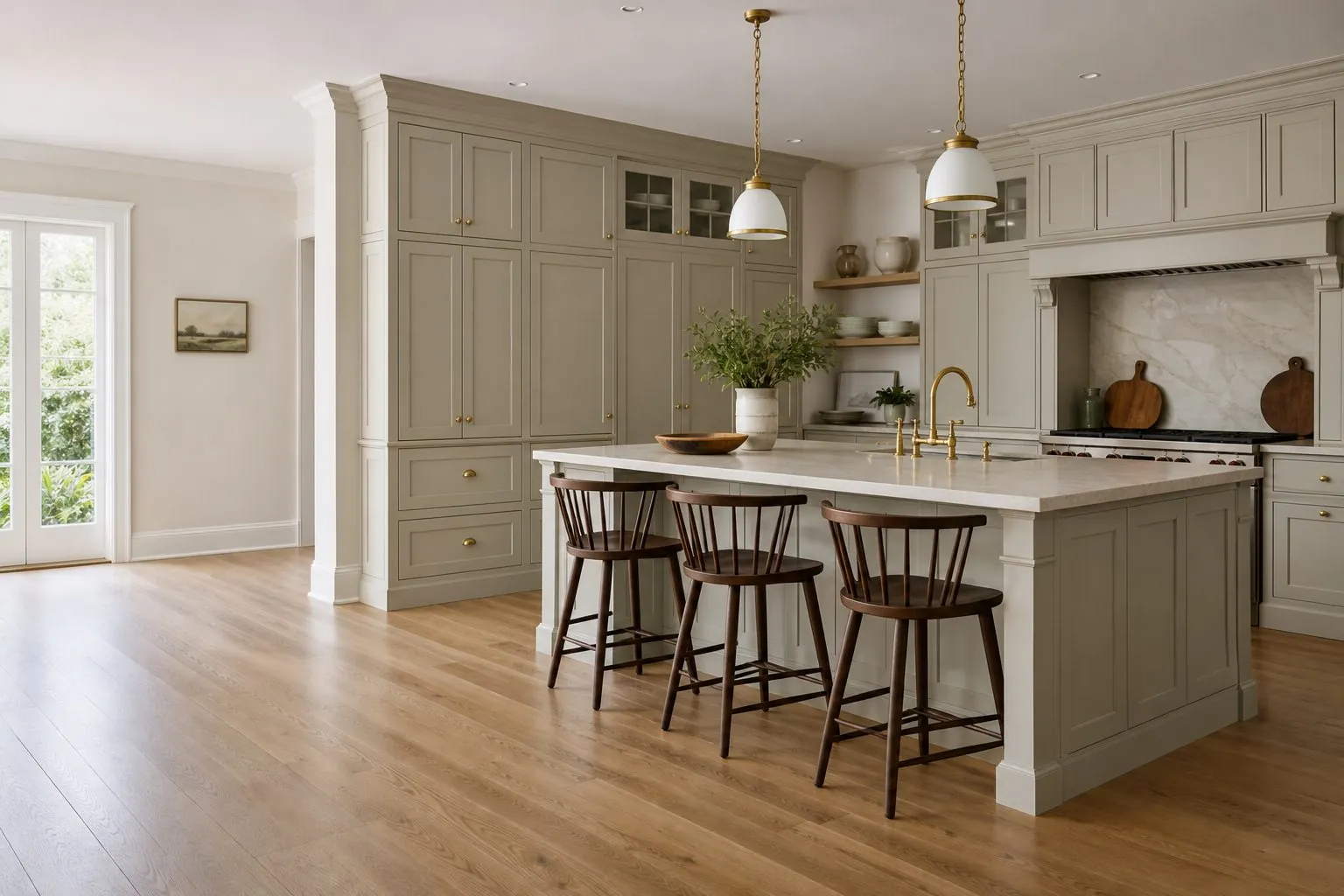
Base and wall carcasses flat-pack efficiently. Doors and drawer fronts are packed in separate cartons with protection. Countertops are heavy and usually loaded at the bottom and near the container center to balance weight. Tall units and panels are loaded upright or flat depending on size.
Built-In Wardrobes
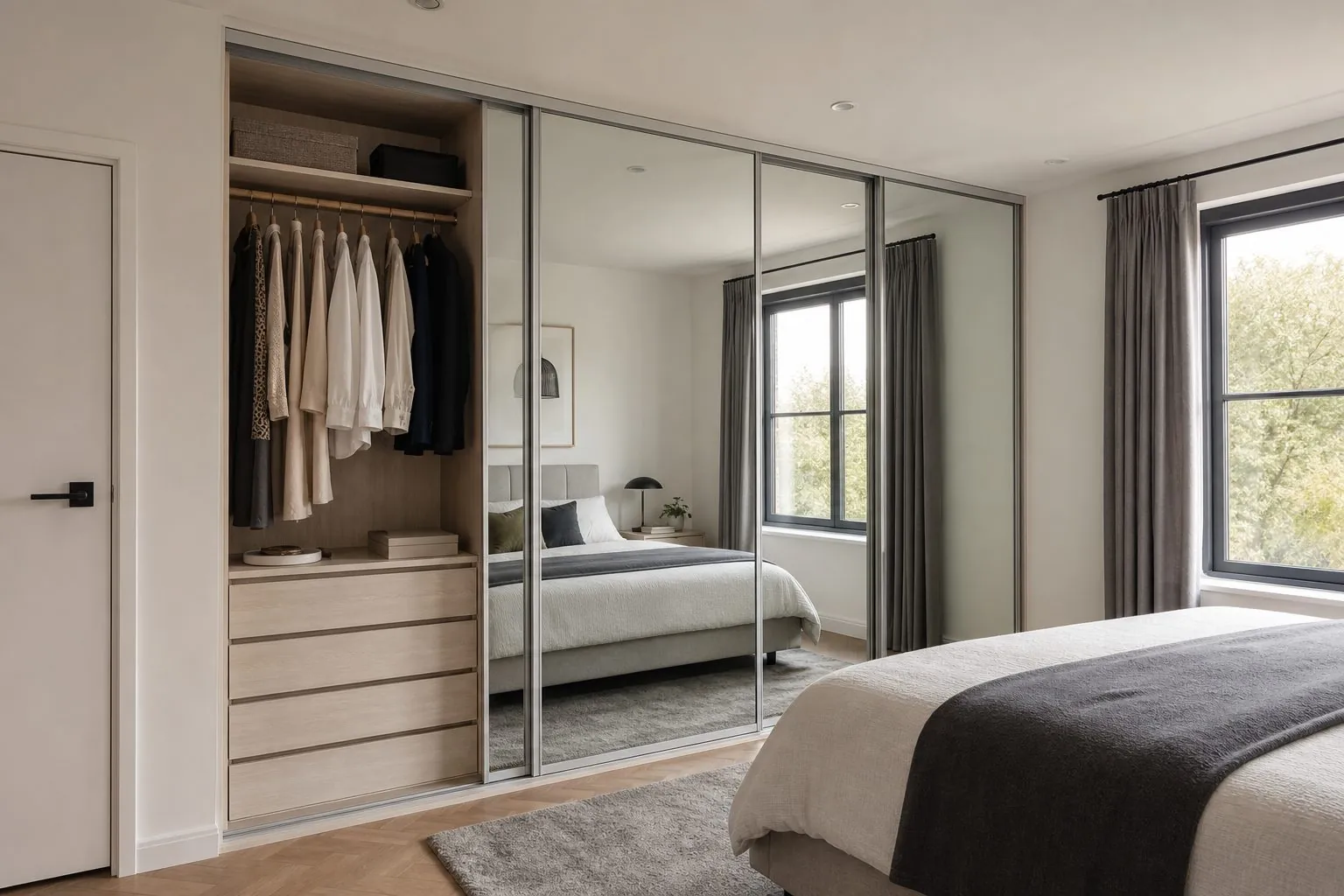
Wardrobe panels are long and flat, so they load efficiently when flat-packed. Sliding doors with mirror or glass panels need crates or reinforced cartons, which reduces density. Interior accessories are packed separately.
Bathroom vanities
Vanities are often shipped assembled because they are small and include tops and basins. Ceramic basin tops need individual protection. Assembled vanities take more volume per unit but reduce site work in each bathroom.
How Should Mixed Project Containers Be Planned?
Developers and contractors often need kitchens, wardrobes, vanities and doors for the same buildings. Mixed containers make sense when they match the site installation sequence.
- Load by building or floor so each container serves a specific installation phase.
- Put heavy items such as countertops and doors at the bottom and near the center.
- Place fragile items such as glass, mirrors and lacquer doors where they cannot be crushed.
- Load items needed first near the container doors.
- Label all cartons by unit, room and item code, matching the packing list.
- Keep a copy of the loading plan with photos of each loading stage.
Labelled packing by unit and room saves significant time on site, because installers can move cartons directly to the right apartment.
How Do Packing and Loading Affect Damage Rates?
Damage usually happens at carton corners, on lacquer faces and to glass. Good packing and loading reduce claims and delays.
- Use corner protectors and edge guards on all finished panels.
- Pack doors face to face with foam sheets or film between them.
- Crate glass, mirrors and stone tops.
- Fill gaps in the container with dunnage or airbags to stop movement.
- Avoid stacking heavy cartons on light or fragile ones.
- Photograph the load at each stage for documentation.
Inspect cartons on arrival and record any damage with photos before signing delivery documents.
Climate also matters on long sea routes. Containers can heat up and cool down significantly, causing condensation inside, often called container rain. Wrapping cartons in moisture-resistant film, adding desiccant bags and avoiding loading wet pallets or freshly finished items reduce the risk of moisture damage to boards and finishes. For shipments to humid tropical ports, discuss extra moisture protection with your manufacturer and forwarder. On arrival, unload promptly and store cartons in a dry, ventilated place rather than leaving them in the container.
What Documents Accompany a Furniture Container?
Customs and site teams both depend on accurate documents. Typical documents include the commercial invoice, packing list, bill of lading and any certificates or declarations required by the destination market.
| Document | Purpose |
|---|---|
| Packing list | Carton numbers, contents, dimensions and weights |
| Commercial invoice | Value and description for customs |
| Bill of lading | Shipping contract and title document |
| Loading plan and photos | Record of carton positions and condition |
| Product certificates | Such as CARB or FSC documents where required |
Check destination requirements with your customs broker, including fumigation or treatment rules for wooden packaging.
Make sure carton numbers on the packing list match the labels on the cartons exactly. On large projects with several containers, a shared spreadsheet listing every carton by container, unit and room lets the site team track deliveries and quickly locate missing or damaged items.

How Can Arcova Help Plan Your Container Loads?
Arcova ships kitchens, wardrobes, vanities, doors and other cabinetry from our 40,000 m² factory with a monthly capacity of 40 × 40HQ containers. We prepare packing lists with carton dimensions and weights, advise on flat-pack or assembled shipping, and pack and label cartons by unit and room for easier installation.
Production is inspected with photo reports before loading, and our factory holds ISO9001, BSCI and FSC certifications, with 24-hour online technical support. Read our quality control process, learn about our factory, or send your project list for a container estimate.