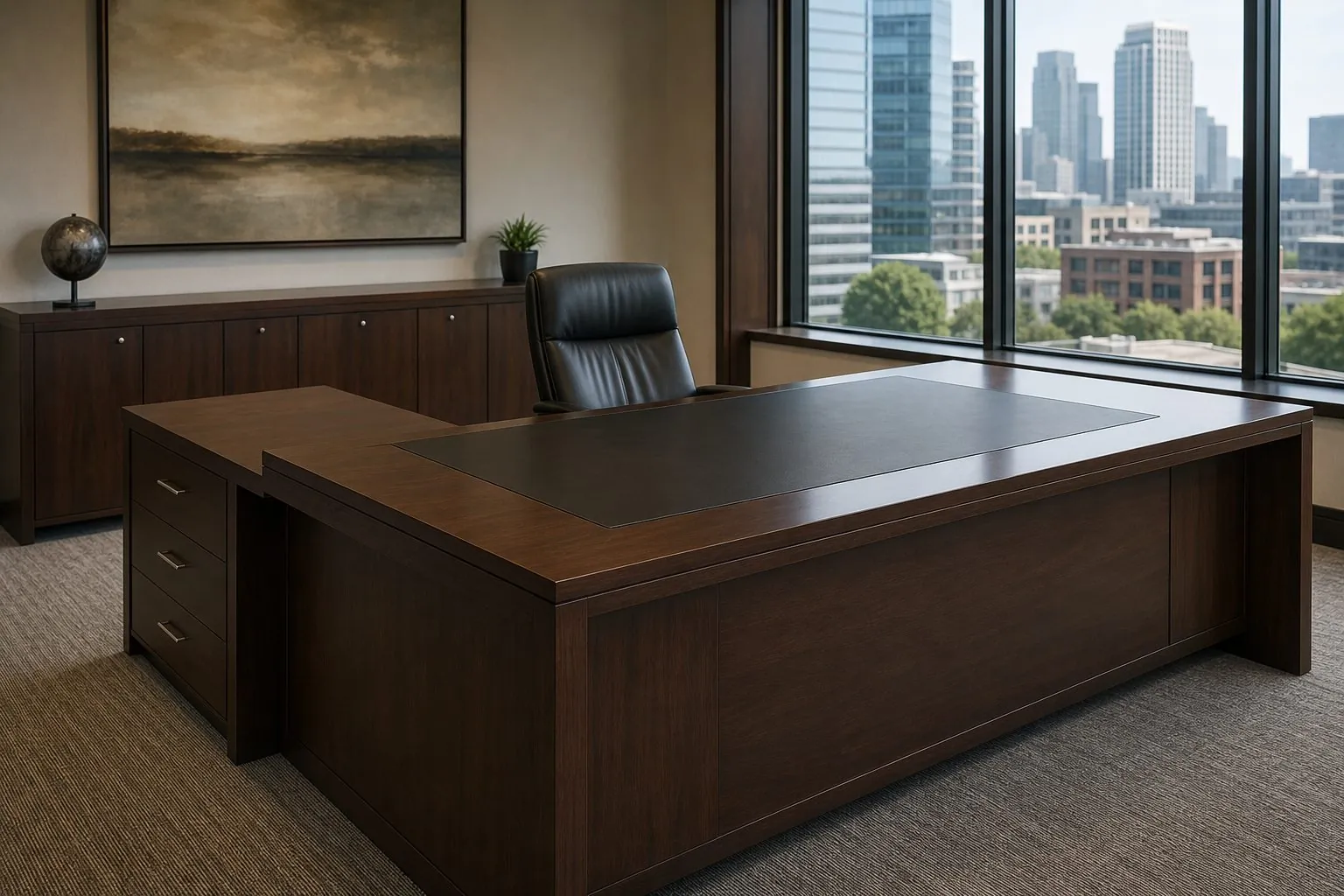
How to choose veneer, solid wood, laminate, lacquer, stone and metal for executive desks, with finish durability, edge details, bases and technology integration explained.
Which Material Should an Executive Desk Be Made From?
For most corporate projects, a stable engineered core with wood veneer or high-pressure laminate faces gives the best balance of appearance, durability and cost. Solid wood suits statement desks where natural character matters more than perfect stability. Stone, glass and metal are usually best as tops, inlays or bases rather than as the whole desk.
| Material | Appearance | Durability | Best Fit |
|---|---|---|---|
| Wood veneer on engineered core | Natural grain, premium | Good with a tough lacquer; edges need care | CEO offices, boardrooms, law and finance firms |
| Solid wood | Rich, authentic, repairable | Good, but moves with humidity | Bespoke executive suites |
| High-pressure laminate | Wood, stone or solid colors | Very high scratch and impact resistance | Manager offices, shared executive desks |
| Melamine faced board | Consistent wood grain and colors | Good for moderate use | Budget manager suites |
| Lacquer (painted) | Smooth, modern, any color | Shows scratches; edges chip if knocked | Design-led offices |
| Leather or leatherette inlay | Classic writing surface | Wears with use; replaceable panel helps | Traditional executive desks |
| Stone or sintered stone top | Solid, luxurious | Very hard surface; heavy | Statement desks, reception-facing offices |
| Glass top | Light, modern | Shows fingerprints; safety glass needed | Contemporary offices |
What Is the Difference Between Veneer and Solid Wood Desks?
A veneer desk uses thin slices of real wood bonded to a stable core; a solid wood desk is made from timber throughout. Veneer gives more consistent grain and stays flat on large tops, while solid wood offers depth and the ability to be sanded and refinished many times.
- Stability: large desk tops in solid wood can move or crack if humidity changes; veneer on a balanced core stays flat.
- Grain matching: veneer can be book-matched or slip-matched across the whole top and sides for a continuous look.
- Weight: solid wood desks are heavier, which affects shipping and installation.
- Repair: solid wood can be sanded deeply; veneer allows light refinishing only.
- Cost: solid wood usually costs more for the same size.
Many premium executive desks combine both: solid wood edges and legs with veneer tops and panels.
Which Veneer Species and Cuts Suit Executive Offices?
Species and cut set the character of the office. Darker woods read as traditional and formal; lighter woods read as modern and open.
- Walnut: rich brown, strong figure, popular for boardrooms and CEO offices.
- Oak: versatile, available in natural, smoked and stained tones; rift-cut oak gives straight grain.
- Ash: light, open grain, suits Scandinavian-style offices.
- Teak and sapele: warm tones with a classic, durable look.
- Engineered (recomposed) veneer: consistent color and pattern between batches, useful for multi-office rollouts.
Quarter-cut veneer gives straight, uniform lines; crown-cut gives cathedral patterns. Approve a sample showing the expected natural variation, and require desks in the same suite to come from one batch.
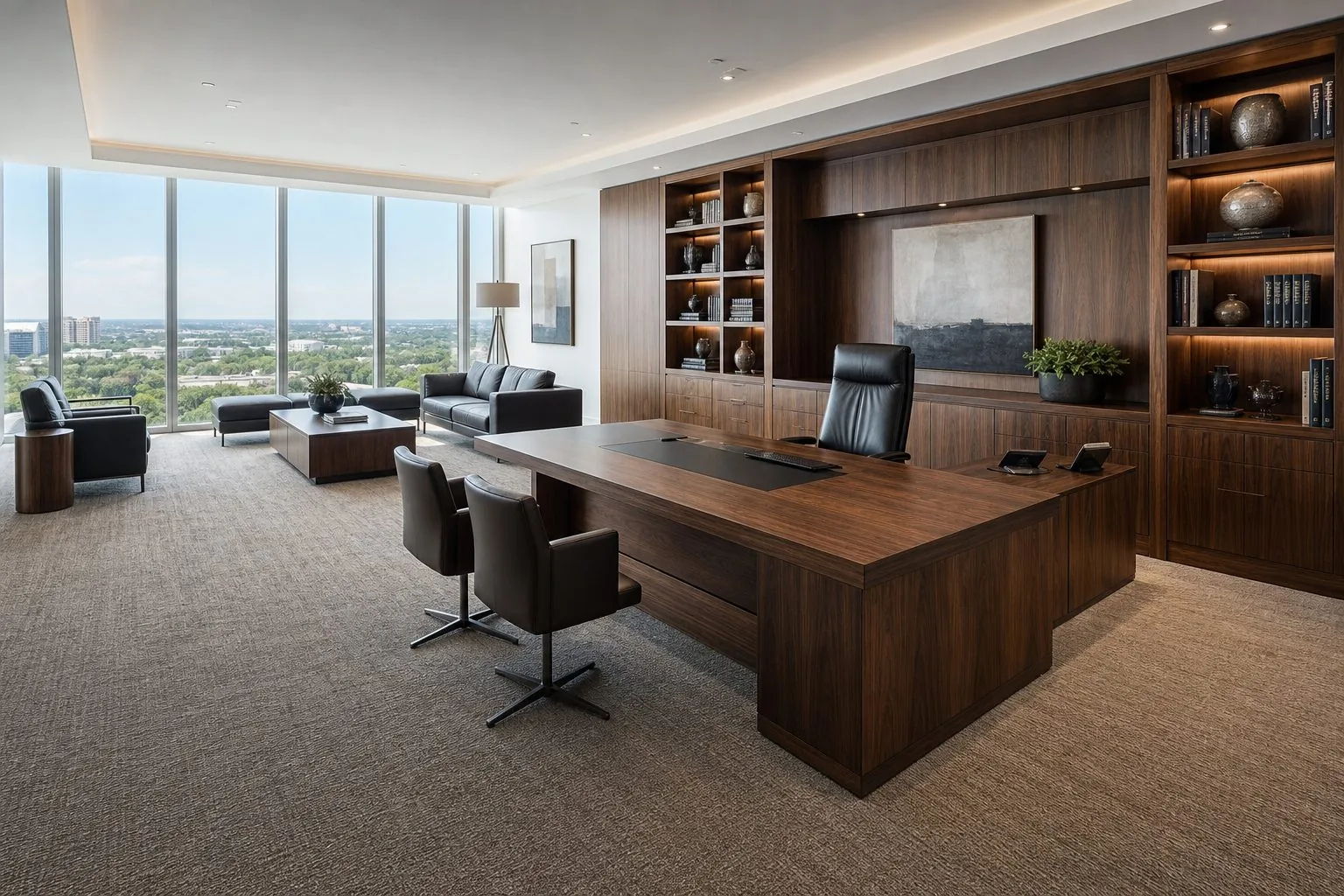
How Durable Are Different Finishes on Desk Tops?
The desk top takes keyboards, cups, pens and elbows every day. Finish choice decides whether it still looks good after several years.
| Finish | Scratch Resistance | Heat and Water Resistance | Repairability |
|---|---|---|---|
| Open-pore matte lacquer on veneer | Moderate | Moderate; coasters advised | Local touch-up possible |
| Closed-pore satin lacquer on veneer | Good | Good | Refinish panel |
| High-gloss polyester or lacquer | Shows fine scratches | Good | Polishing for light marks |
| High-pressure laminate | Very good | Very good | Replace top if damaged |
| Oil or wax on solid wood | Low to moderate | Low; marks easily | Easy re-oiling |
Ask the supplier which coating system is used and how many coats are applied. For heavy-use desks, a leather or laminate writing inlay protects the most worn zone.
Sheen level also matters. Matte and satin finishes hide fingerprints and light scratches better than gloss, which reflects every mark under office lighting. If the client prefers gloss for a statement desk, consider using it on side panels and keeping the working top in satin, or adding a desk pad zone that can be replaced when worn.
What Should Be Specified for Edges and Corners?
Edges show wear first. Specify them as carefully as the top surface.
- Solid wood lipping on veneer tops resists knocks better than thin veneer edging.
- Radius or chamfered edges feel better under the forearms and chip less.
- Waterfall edges carry the grain from the top down the side panels for a continuous look.
- Metal edge trims add protection and a contemporary detail.
- Edge banding on laminate and melamine desks should be thick and well bonded.
Which Bases and Structures Suit Executive Desks?
The base sets both style and stability. Large executive desks need a structure that prevents wobble when someone leans on the top.
- Pedestal base: drawer units at one or both ends, classic and stable.
- Panel base: full-height side panels in veneer, often with a modesty panel.
- Metal frame: steel or aluminium legs and frame for a lighter, modern look; powder-coated or plated finishes.
- Credenza return: an L-shaped return or rear credenza adds storage and work surface.
- Height-adjustable base: electric lifting frame with a veneer or laminate top for sit-stand use.
Large tops may need a hidden steel stiffener to stay flat and stable, especially on cantilevered designs.
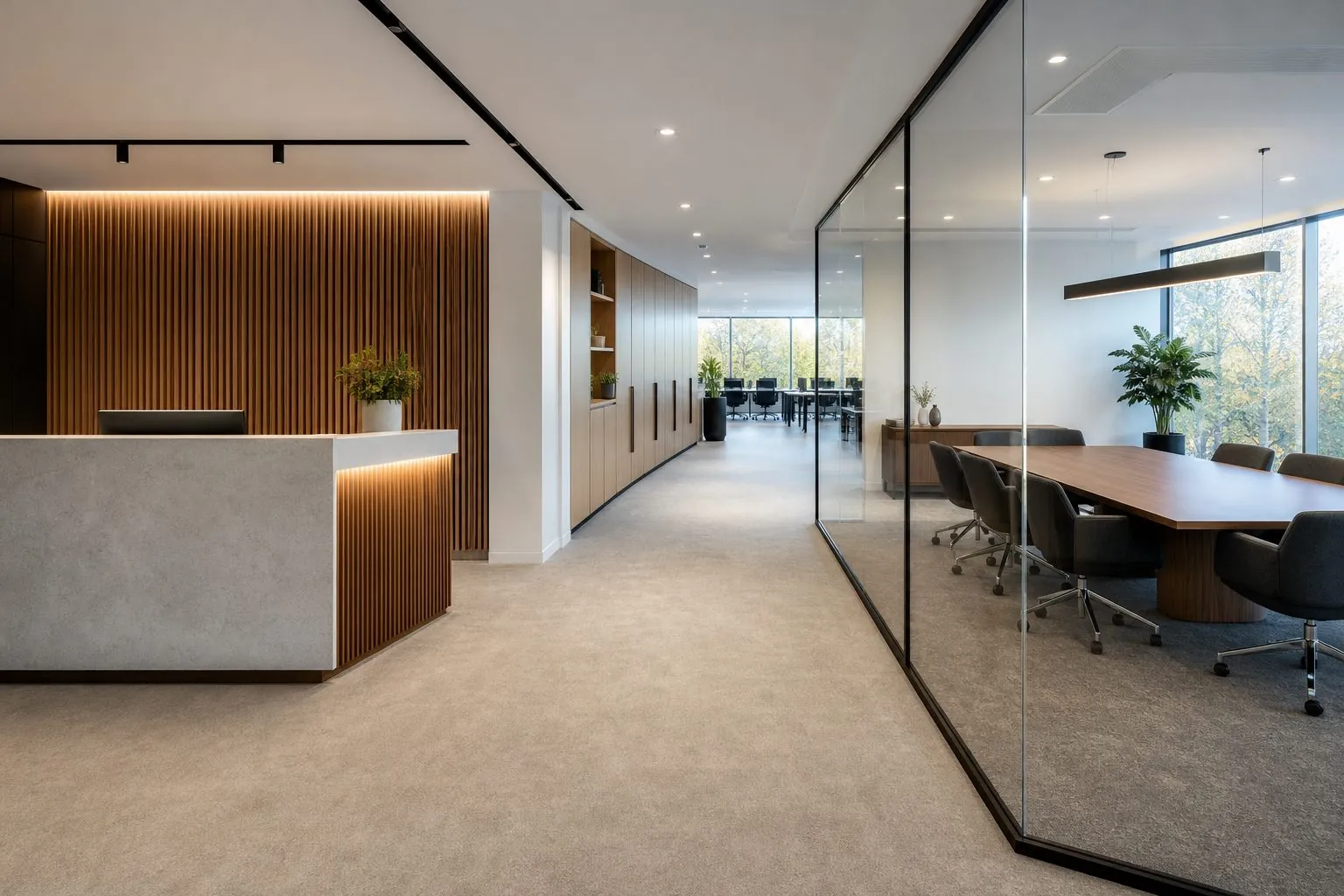
How Is Technology Integrated Into an Executive Desk?
Executive desks now need to manage cables, power and devices without looking cluttered. Plan technology at the design stage so grommets and trays are machined at the factory.
- Pop-up or flush power modules with sockets, USB and data ports.
- Wireless charging pads set into the top.
- Cable trays under the top and vertical cable routes through legs or panels.
- Ventilated compartment for a computer tower or docking station.
- Monitor arm mounting points reinforced inside the top.
- Lockable drawer for laptops and documents.
Electrical modules must suit the destination plug type and certification requirements. Confirm these before production.
How Should Executive Desks Match the Rest of the Office Suite?
An executive desk is usually part of a suite: credenza, bookcase, meeting table, storage wall and sometimes a matching office door. Matching materials and details across these items is what makes the office feel complete.
- Approve one finish sample board covering veneer, metal, leather and stone.
- Use the same edge details and handle style on all pieces.
- Produce all pieces for one office from one veneer batch.
- Coordinate heights of desk, credenza and meeting table.
- Plan storage walls and bookcases together with the desk position and power points.
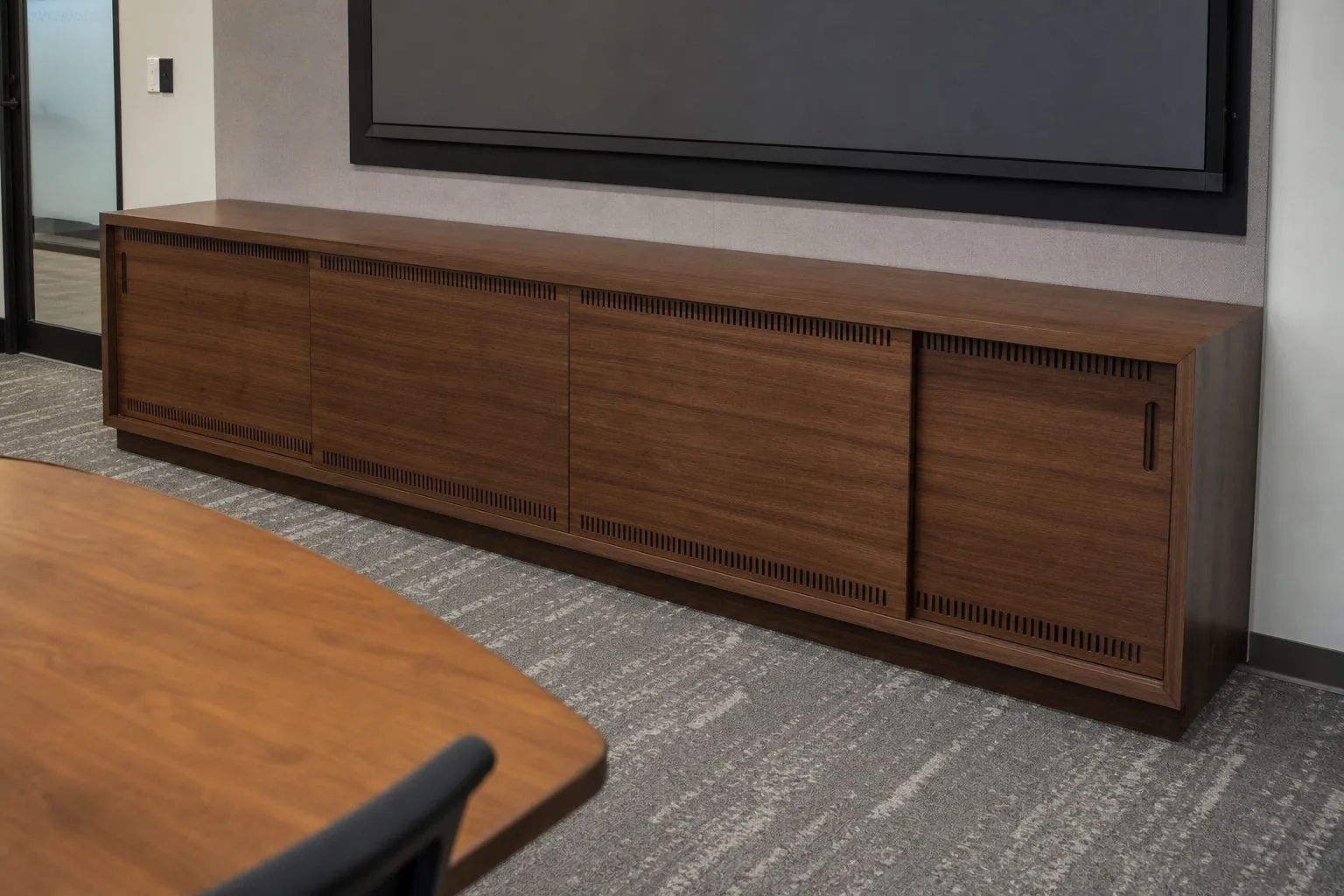
How Do Desk Sizes and Proportions Affect Material Choice?
Larger desks magnify every material weakness. A long veneer top shows grain mismatch more clearly, a wide lacquer top shows more reflections and a heavy stone top needs a stronger base.
| Desk Type | Typical Proportion | Material Consideration |
|---|---|---|
| Compact manager desk | Smaller top, single pedestal | Laminate or melamine works well; low weight |
| Standard executive desk | Wide top, double pedestal or panel base | Veneer on engineered core for flatness |
| Executive desk with return | L-shaped, desk plus side return | Joints between top sections must align in grain and height |
| Statement desk | Oversized top, sculptural base | Hidden steel stiffening, knock-down design for delivery |
| Sit-stand executive desk | Top on electric frame | Top weight within lifting frame capacity |
Check delivery routes as well as the office plan. A desk top that cannot fit in the lift must be designed in sections with a concealed joint, which affects veneer layout and must be planned before production.
What Sustainability and Emission Questions Should Buyers Ask?
Corporate buyers increasingly need evidence about wood sourcing and indoor air quality for green building programs and internal policies. Ask for documentation early, because it can affect material choices.
- Wood sourcing: request FSC-certified materials where a chain-of-custody claim is needed.
- Board emissions: specify the formaldehyde class required; CARB-compliant boards are available for markets that need them.
- Coatings: ask about low-emission lacquers if the project targets indoor air quality credits.
- Durability: a desk that lasts longer and can be refinished reduces replacement waste.
- Packaging: ask about recyclable packing materials for large office rollouts.
What Should Buyers Check Before Ordering?
Most executive desk problems can be avoided with a clear specification and a sample or mock-up.
- Overall size checked against the office plan, door width and lift size for delivery.
- Knock-down construction for large desks so they fit through doors.
- Sample of top finish, edge profile and base finish approved and signed.
- Board emissions class required by the destination market.
- Packing method: crated for stone and glass tops, foam and corner protection for veneer.
- Assembly instructions and fixings bagged per desk.
For multi-office rollouts, build one complete executive suite as a mock-up before releasing the full order. Use it to check veneer color under the office lighting, cable routes to floor boxes, drawer lock function and the height relationship between desk, credenza and meeting table. Record approved changes on the drawings and keep the signed mock-up as the reference for inspection of every later office.
Also agree on the spare-parts list at the ordering stage: spare keys, drawer runners, cable grommets, leveling feet and touch-up material in each finish. Executive offices are rarely refurbished as a whole, so a matched spare part is often the only way to repair damage without a visible difference.
Who Should Sign Off the Finish Sample?
Ideally, the person who will judge the finished office should sign the sample, not only the purchasing contact. Executive desks are often assessed by the end user, and a late preference change is costly. Show that person the expected grain variation and sheen, record their approval on the sample, and keep one signed copy at each end of the order.
How Can Arcova Help With Executive Desks?
Arcova produces executive desks, manager office sets, credenzas, conference tables and office storage walls in a 40,000 m² factory with automated CNC cutting, edge banding and drilling lines. We provide 3D design, shop drawings, finish sample approval, mock-ups, photo inspection reports and labelled export packing. Hardware brands include Blum, Hettich, Häfele, Salice, DTC and Hutlon, and boards come from EGGER, Kronospan and DARE. Certifications include ISO9001, BSCI and FSC. See our office furniture or send your office plans.