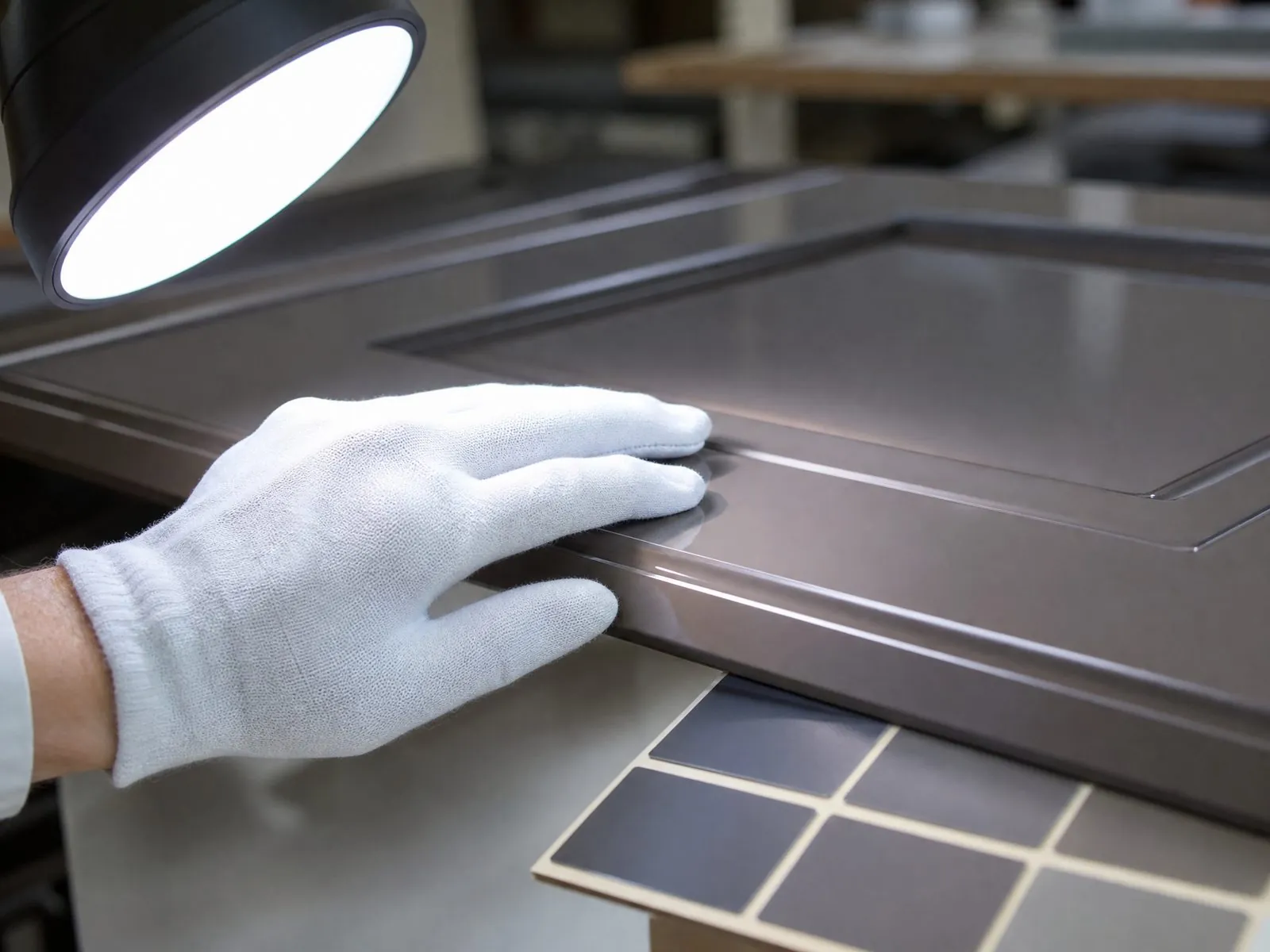
How developers and distributors choose kitchen cabinet finishes that age well: colors, surfaces, sheen, construction details, replacement planning and care guidance.
Which Kitchen Cabinet Finishes Stay Saleable the Longest?
Finishes that stay saleable for years combine a calm color, a durable surface and a texture that hides daily wear. In practice, that means light and mid-tone neutrals, natural wood grains, matte or satin sheens and finishes produced in consistent batches, such as melamine, PET and well-specified lacquer. Strong trend colors and very high gloss can sell well at launch but often date faster and show wear sooner.
For developers, the question is not only what looks good in the show unit, but what will still look good, and be replaceable, when the apartment is resold or re-let several years later. For distributors, it is which finishes will keep selling across several catalog seasons without leaving dead stock.
- Choose colors with broad appeal for the main cabinet runs.
- Use trend colors on small, replaceable elements such as an island or open shelving.
- Prefer matte, satin or textured surfaces in high-use areas.
- Pick finishes your supplier can reproduce consistently for future replacement doors.
Why Does Finish Longevity Matter for Developers and Distributors?
A kitchen is one of the first things buyers and tenants judge, so a worn or dated kitchen reduces resale value, rental appeal and showroom sell-through. Replacing a full kitchen is disruptive and costly, while replacing a few doors in a stable finish is simple.
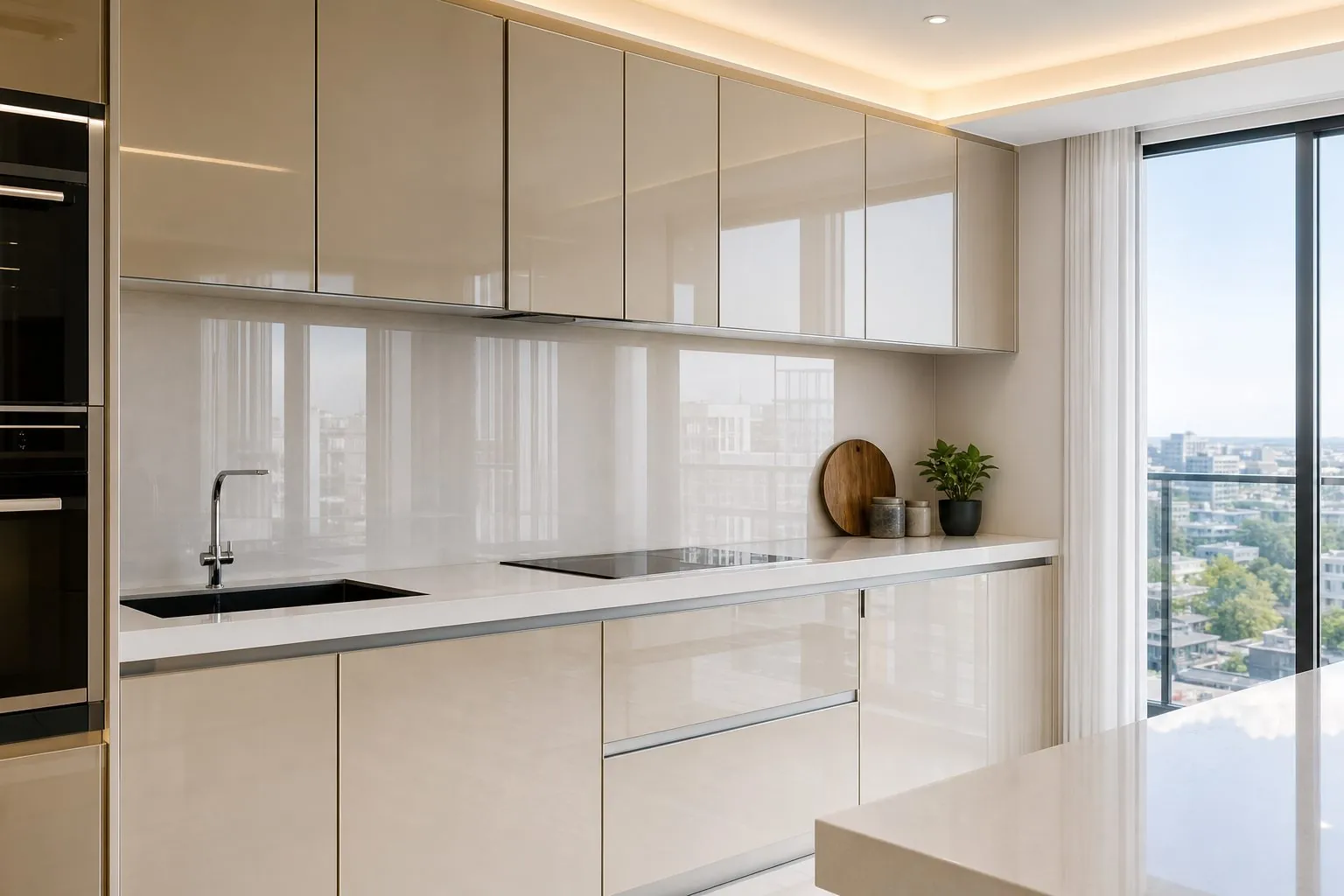
Saleable also means photographable. Listing photos and virtual tours favor even, low-reflection surfaces that do not show glare or fingerprints, which is another reason matte neutrals perform well in resale and rental marketing.
| Buyer Type | Longevity Concern | What to Prioritize |
|---|---|---|
| Build-to-sell developer | Show units must still match resales years later | Neutral palette, consistent supply |
| Build-to-rent operator | Kitchens must survive many tenancies | Hard-wearing surfaces, easy door replacement |
| Hotel and serviced apartments | Refurbishment cycles and daily cleaning | Easy-to-Clean Surface Finishes, durable edges |
| Kitchen distributor | Catalog colors must sell for several seasons | Core colors plus a small rotating trend range |
Which Colors Date Slowly and Which Date Fast?
Neutral whites, warm off-whites, soft greys, greige, natural oak and walnut tones date slowly because they suit many interior styles and flooring choices. Saturated colors, strong two-tone combinations and distinctive patterns are more closely tied to a specific design period.
Slower-dating choices
- Warm whites and off-whites rather than stark bright white.
- Light and mid oak wood grains with natural texture.
- Soft grey, taupe and greige solid colors.
- Deep navy or charcoal used on an island as a controlled accent.
Faster-dating choices
- Highly saturated greens, pinks or yellows across the whole kitchen.
- Strong high-gloss colors on all cabinets.
- Busy decor papers with heavy contrast.
- Very specific trend textures that rely on one interior style.
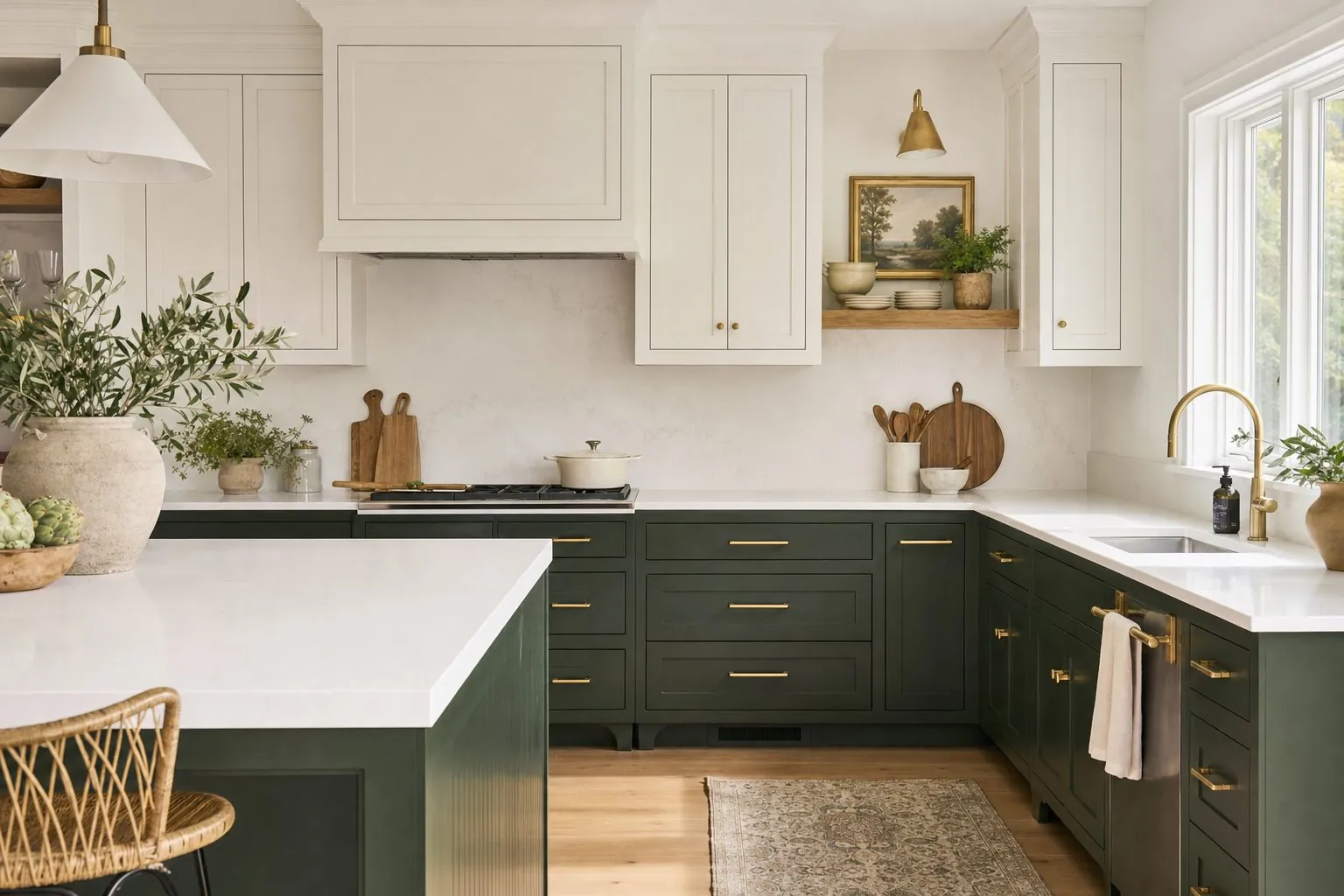
This does not mean trend colors should be avoided. It means placing them where replacement is easy, such as an island, a coffee bar or tall feature units, while the main runs stay neutral.
Which Surface Types Hold Up Best Over Time?
Pressed and laminated surfaces such as melamine and PET generally keep their appearance well under daily wear, while lacquer offers more design freedom and can be repaired. Veneer gives natural warmth but needs good protective lacquer. The right choice balances wear resistance, repairability and how the finish ages.
| Finish | Ageing Behavior | Long-Term Strength | Long-Term Risk |
|---|---|---|---|
| Melamine | Stable color, textured decors hide marks | Batch consistency, low cost replacement | Edge damage near water if poorly sealed |
| PET super-matte | Even surface, low fingerprints | Modern look that stays clean | Edges and heat zones need care |
| PET high gloss | Shows fine scratches over time | Bright reflective look | Visible wear in busy kitchens |
| Lacquer matte or satin | Good if coating is well applied | Can be touched up or refinished | Corner chips on impact |
| Wood veneer | Natural color change with light | Warm, premium appearance | Color shift varies by species |
Many long-lasting kitchens combine finishes: melamine carcasses, PET or lacquer doors, and veneer on a feature element. This places the most durable surfaces where wear is highest. It also lets the buyer refresh only the doors later while carcasses stay in place.
How Do Sheen and Texture Affect How a Kitchen Ages?
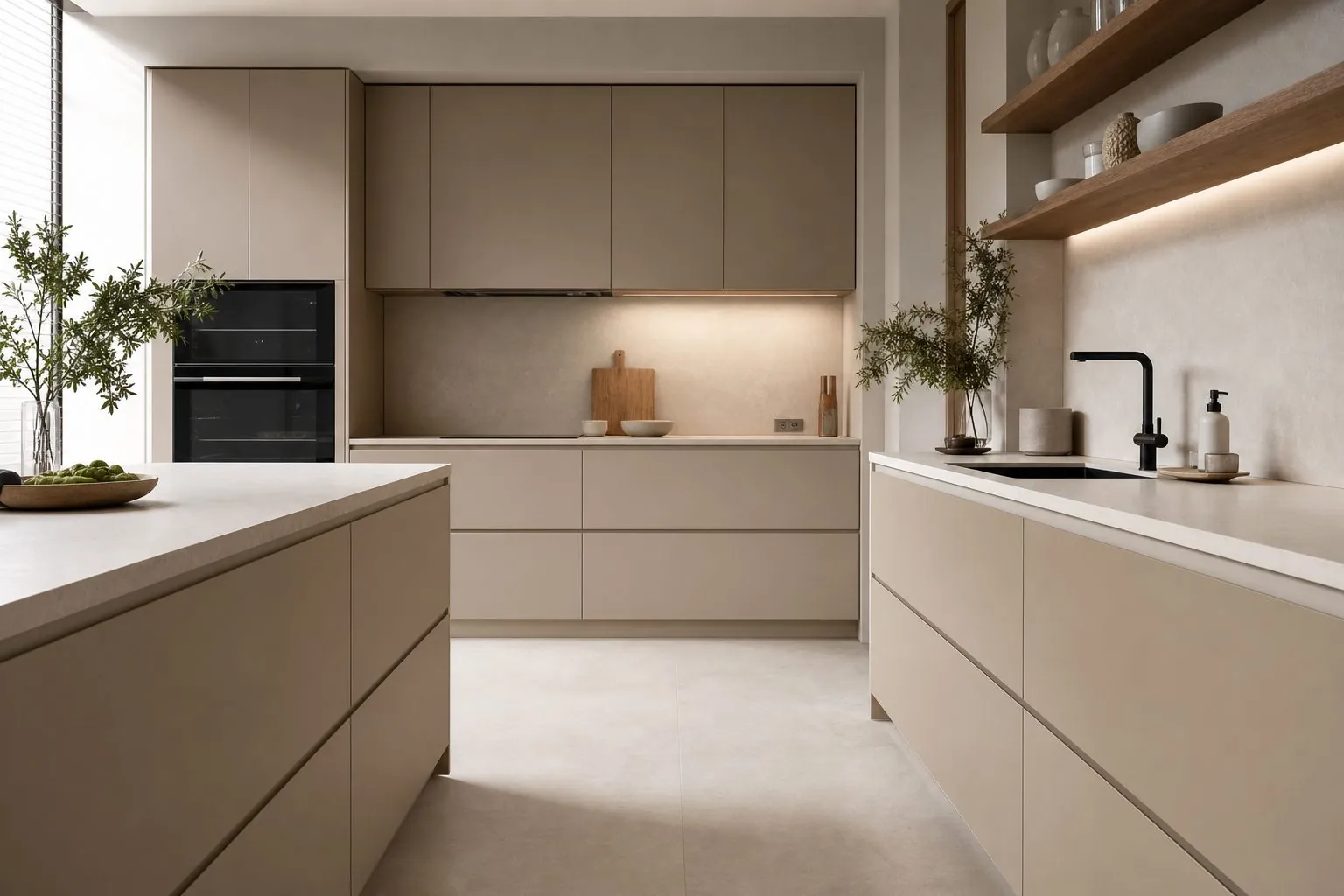
Matte, satin and textured surfaces hide scratches, fingerprints and small dents far better than high gloss. Gloss reflects light, so every fine mark and every small misalignment of doors becomes visible over time.
- Super-matte: low reflection and low fingerprints; can show polishing marks if scrubbed with abrasive cleaners.
- Satin or soft-sheen: a balance that hides wear while still looking clean.
- Synchronized wood texture: the surface follows the printed grain, which disguises everyday scratches.
- High gloss: striking at handover; best reserved for low-use areas or premium owner-occupied homes.
For rental and hotel kitchens, textured melamine or super-matte PET usually keeps a better appearance between refurbishments than gloss finishes.
Which Construction Details Decide Whether a Finish Lasts?
A finish fails at its weakest point, which is usually an edge, a corner or a heat zone, not the flat face. Specifying these details is as important as choosing the color.
- Edge banding quality: automated edge banding with a suitable adhesive seals the core; ask about zero-joint or laser edging where available.
- Moisture-resistant cores: use them in sink bases, dishwasher end panels and areas near kettles.
- Heat protection: add deflector strips or heat shields next to ovens and under hobs.
- Handle choice: handles and recessed profiles protect door faces from fingers and nails.
- Hinge adjustment: soft-close hinges from branded suppliers keep doors aligned and stop slamming damage.
- Plinth and kick zones: use durable plinths that resist mops and feet.
How Do You Plan for Future Replacement Doors?
A kitchen stays saleable longer when damaged doors can be replaced with an exact match years later. Plan this at the specification stage, not after damage appears.
- Choose decors from established board ranges, such as EGGER, Kronospan or DARE collections, that are likely to stay available.
- Record the exact decor code, edge banding code, lacquer color and sheen in the project file.
- Keep signed reference samples at your office and the factory.
- Order a small quantity of spare doors and drawer fronts with the main shipment for rental and hotel projects.
- Standardize door sizes across unit types so spares fit many kitchens.
Natural veneer and custom lacquer are harder to match after several years because of natural ageing and batch variation. If they are used, spares from the original batch are especially valuable.
Store spare doors flat, wrapped and in a dry place, ideally in the building's maintenance store rather than off site, so they experience the same climate as the installed kitchens.
What Cleaning and Maintenance Guidance Should Buyers Pass On?
Many finish problems come from cleaning, not from use. A simple care sheet for owners, tenants or housekeeping teams extends the life of every finish.
| Do | Avoid |
|---|---|
| Wipe with a soft damp cloth and mild detergent | Abrasive pads and scouring powders |
| Dry water spills near edges promptly | Leaving wet cloths hanging on doors |
| Use the cooker hood when boiling or frying | Steam from kettles under wall cabinets |
| Keep door film on gloss fronts until installation ends | Solvent cleaners on lacquer and PET |
For hotels and serviced apartments, include finish-specific cleaning instructions in the housekeeping manual. Housekeeping teams often use strong all-purpose cleaners and microfiber pads; confirm that the products they use are compatible with the chosen finish before handover, and train staff on gloss and super-matte surfaces, which react differently to scrubbing.
How Should a Developer Choose a Long-Lasting Finish Palette?
Select a small, coherent palette of two to four finishes that suits the target buyer, then test it on physical samples and a mock-up kitchen before committing.
- Define the buyer or tenant profile and price level.
- Choose one neutral main finish, one wood or texture finish and, optionally, one accent finish.
- Check the palette against flooring, worktop and wall color samples together.
- Build a mock-up kitchen and review it under daylight and evening lighting.
- Confirm supply continuity and replacement arrangements with the manufacturer.
Matching the palette to the worktop and floor
Cabinet finishes age together with worktops, splashbacks and floors, so judge them as one scheme. A warm oak door next to a cool grey quartz top can look deliberate at launch and mismatched once the wood tone deepens. Place real samples of the door, edge banding, worktop, splashback tile and flooring side by side, and look at them under both warm and cool light. If one element is likely to be replaced sooner, such as a laminate worktop in a rental unit, choose cabinet colors that will work with several possible replacement tops.
Offering buyer options without losing control
Some developers let buyers choose between two or three kitchen schemes. This improves sales appeal, but each extra option adds sampling, stock and replacement complexity. Keep options inside one board range and one handle family, vary only door color or wood tone, and fix a cut-off date after which choices close. That way production can be grouped efficiently and spare parts stay manageable.
How Can Arcova Help You Specify Kitchen Finishes That Last?
Arcova manufactures kitchen cabinets in melamine, PET, lacquer and veneer finishes in the Arcova Contract Manufacturing Base, a 40,000 m² factory with automated CNC cutting, edge banding and drilling lines. We can source boards from EGGER, Kronospan or DARE and pair them with Blum, Hettich, Häfele, Salice, DTC or Hutlon hardware by budget.
We prepare finish samples for approval, build mock-ups for larger projects, record finish codes for future replacement orders and inspect production with photo reports. Our factory holds ISO9001, BSCI and FSC certifications and provides 24-hour online technical support. Learn about our quality control or send your kitchen drawings for a finish recommendation.