Compare solid wood and engineered interior doors on stability, appearance, weight, acoustics, fire ratings and cost, and learn which suits apartments, hotels and villas.
Should you choose solid wood or engineered interior doors?
For most residential and hotel projects, engineered interior doors are the more practical choice because they are more stable, more consistent across large quantities and easier to match to veneer or painted finishes. Solid wood doors make sense when authenticity, carving or a premium natural look justify higher cost and more careful humidity control.
The choice is not simply about quality. A well-made engineered door can outperform a poorly dried solid wood door in stability, while a carefully made solid door can last generations and be refinished many times. The right answer depends on climate, budget, finish, size and the performance required.
Buyers usually weigh these factors:
- Dimensional stability in the site's humidity and heating conditions.
- Appearance and finish options.
- Weight and the hardware needed to support it.
- Acoustic and fire performance requirements.
- Cost per door and consistency across large orders.
- Repairability over the life of the building.
What is the difference in construction?
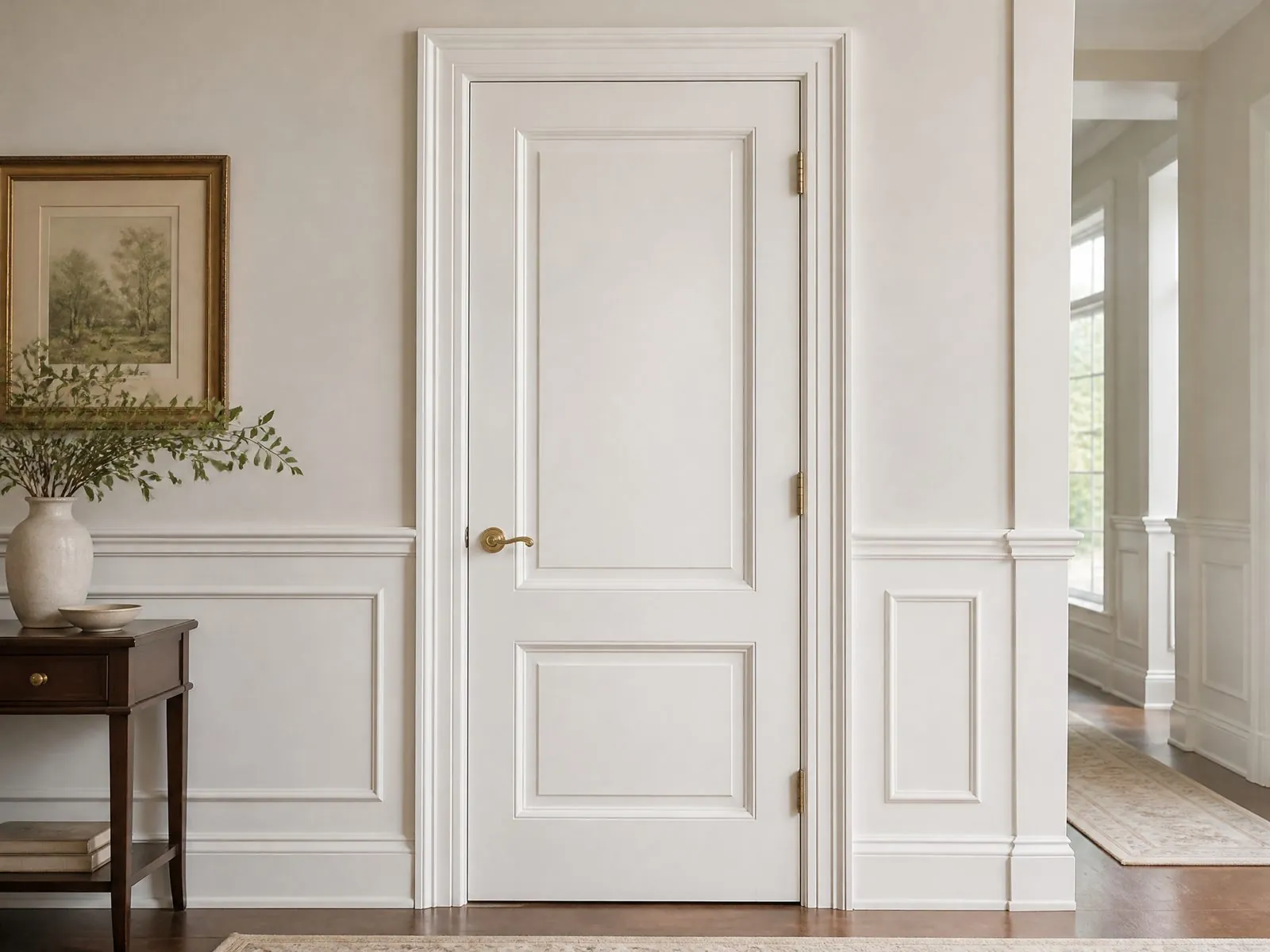
A solid wood door is made from solid timber throughout, typically using stiles, rails and panels joined together. An engineered door uses a core of stable materials covered with veneer, laminate, paint or another surface.
| Door type | Construction | Typical finishes |
|---|---|---|
| Solid wood | Solid timber stiles, rails and panels or glued solid blanks | Oil, stain, lacquer, paint |
| Solid-core engineered | Particleboard, MDF or laminated timber core with frame and facing | Veneer, laminate, paint, melamine |
| Hollow or honeycomb core | Frame with honeycomb or light core and thin facings | Paint, laminate, melamine |
| Engineered timber core | Finger-jointed or laminated timber core with veneer | Veneer, stain, lacquer |
| Fire or acoustic core | Special mineral or dense cores to tested build | Veneer, HPL, paint |
Within engineered doors, quality varies widely. A solid-core door with a dense core and good facing feels heavy and solid when closed, while a honeycomb door is light and economical but transmits more sound and is easier to damage.
Edges deserve attention. On engineered doors, the edges are covered with solid wood lipping, edge banding or a painted MDF edge. Solid lipping resists knocks and can be planed slightly during installation, which helps fitters adjust doors to the frame. Thin banding is economical but can chip on doors used heavily in hotels and rentals.
Weight is a quick quality indicator. Lifting the door or reading the leaf weight on the specification shows whether it is solid-core or hollow-core, and it tells you which hinges and closers are needed.
Which door type is more stable?
Engineered doors are generally more dimensionally stable than solid wood doors. Layered cores balance the stresses that make solid timber warp, twist or swell when humidity changes.
Solid wood moves across its grain as it absorbs and releases moisture. In stable, climate-controlled interiors, carefully dried and well-designed solid doors perform well. In buildings with seasonal heating, coastal humidity or long construction periods with open windows, solid doors are more likely to move.
- Panelled solid doors allow panels to float, reducing visible cracking.
- Wide, flat solid doors are the most likely to cup or twist.
- Engineered doors with balanced facings on both sides resist warping.
- All doors should be sealed on all six faces, including top and bottom edges.
- Storing doors in wet or unfinished buildings causes problems for both types.
For tall doors and flush designs, stability matters even more. A slight bow is very visible on a tall, flat door, so engineered construction is usually the safer choice.
Site storage is often overlooked. Doors delivered to a building that still has wet plaster or open windows absorb moisture before they are even hung. Store doors flat in a dry, closed room and allow them to acclimatize before installation. This applies to both solid and engineered doors, but solid doors react more.
How do appearance and finish options compare?
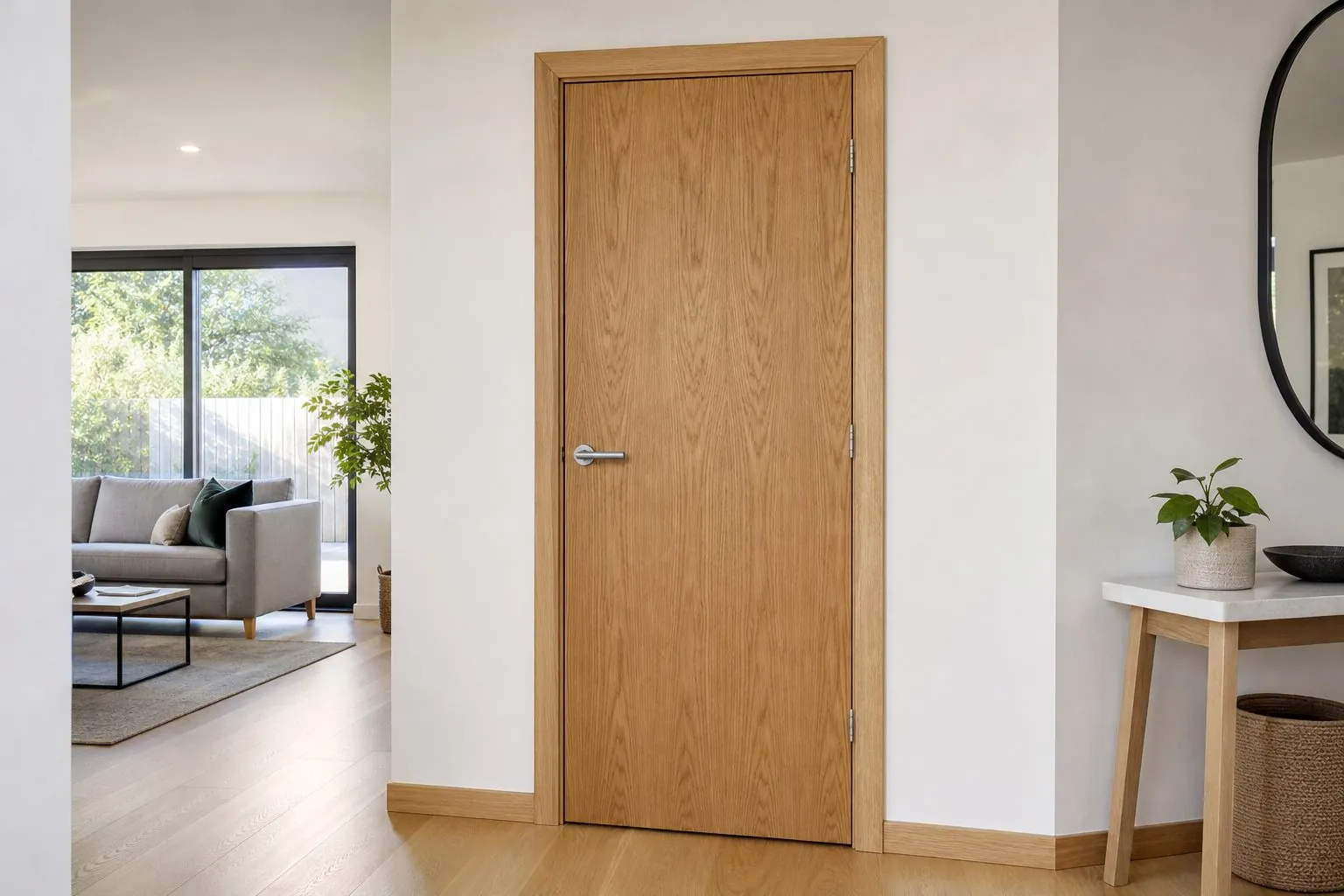
Solid wood offers authentic grain on edges and surfaces and can be carved or deeply profiled. Engineered doors offer a wider range of finishes and more consistent color, especially across hundreds of doors.
| Feature | Solid wood door | Engineered door |
|---|---|---|
| Grain appearance | Natural throughout, including edges | Veneer face; edges lipped or banded |
| Carving and deep profiles | Well suited | Possible with MDF, limited with veneer |
| Color consistency in large orders | Varies naturally | More consistent, especially with laminates |
| Painted finish | Possible; joints may show over time | Smooth MDF faces paint very well |
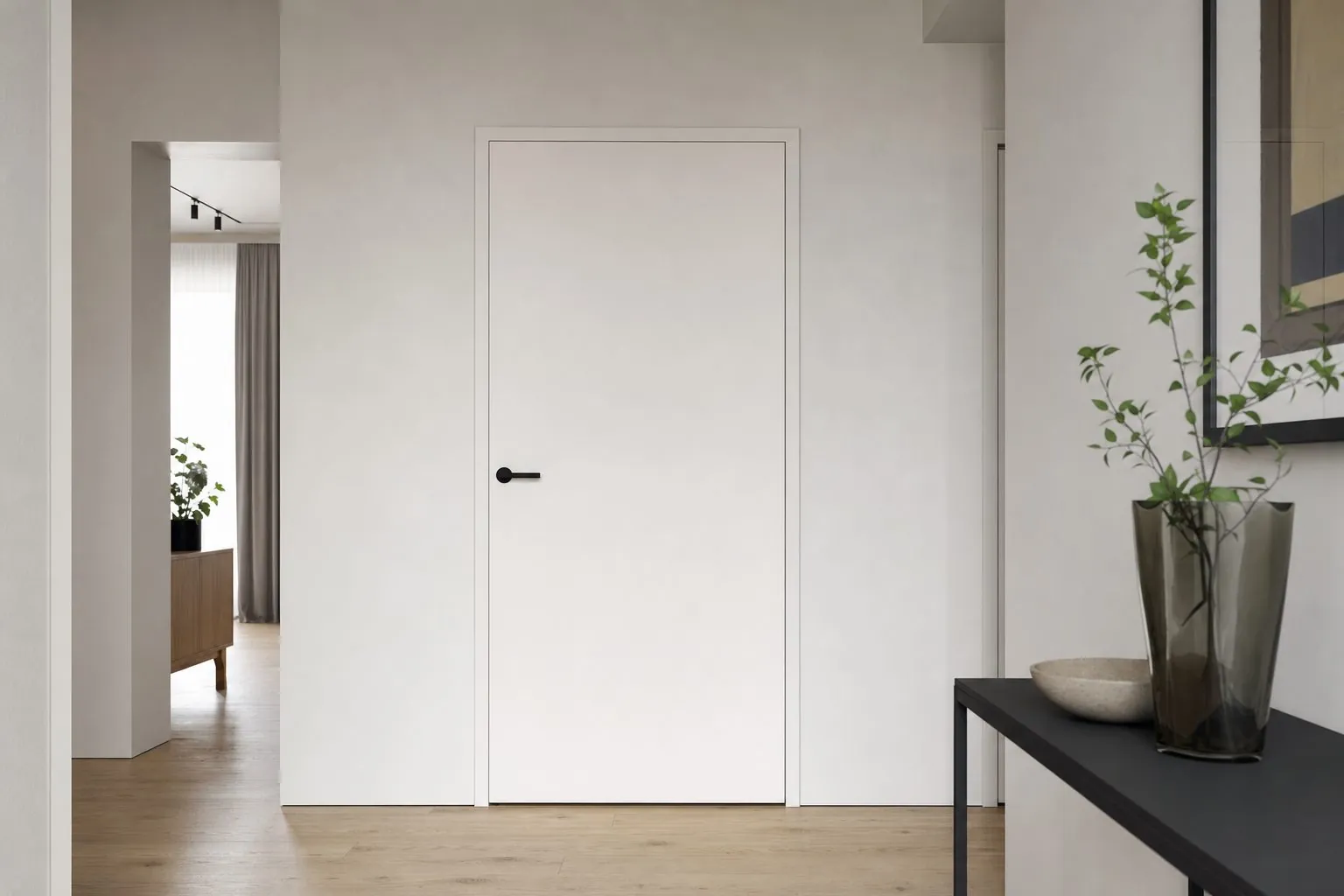
| Flush modern designs | Prone to movement | Well suited |
| Refinishing | Can be sanded many times | Limited by veneer or surface thickness |
For hotels and apartments where every door must match, engineered doors with veneer or laminate faces simplify approval and replacement. For villas and heritage-style interiors, solid wood may justify its cost through character and longevity.
How do weight, hardware and acoustics differ?
Heavier doors usually feel better and block more sound, but they need stronger hinges and frames. Both solid wood and solid-core engineered doors can be heavy; hollow-core doors are light.
- Heavier doors need more or stronger hinges and solid frame fixing.
- Door closers must be sized for the door weight and width.
- Acoustic performance depends on the whole door set, including seals and frame, not only the leaf.
- Hollow-core doors are the weakest acoustically and are best limited to low-privacy rooms.
- Sliding and pocket door systems have weight limits, which matter for solid doors.
If acoustic privacy is important, specify a tested door set with seals and a drop seal rather than relying on a solid door alone. Acoustic ratings for a specific door are confirmed at quotation by test results in your market.
Weight also affects installation labor. Heavy solid doors need two installers and careful handling up stairs and through corridors. For high-rise projects, check lift dimensions and weight limits before delivery, and plan the distribution of doors by floor to avoid moving them twice.
Which door type is better for fire-rated openings?
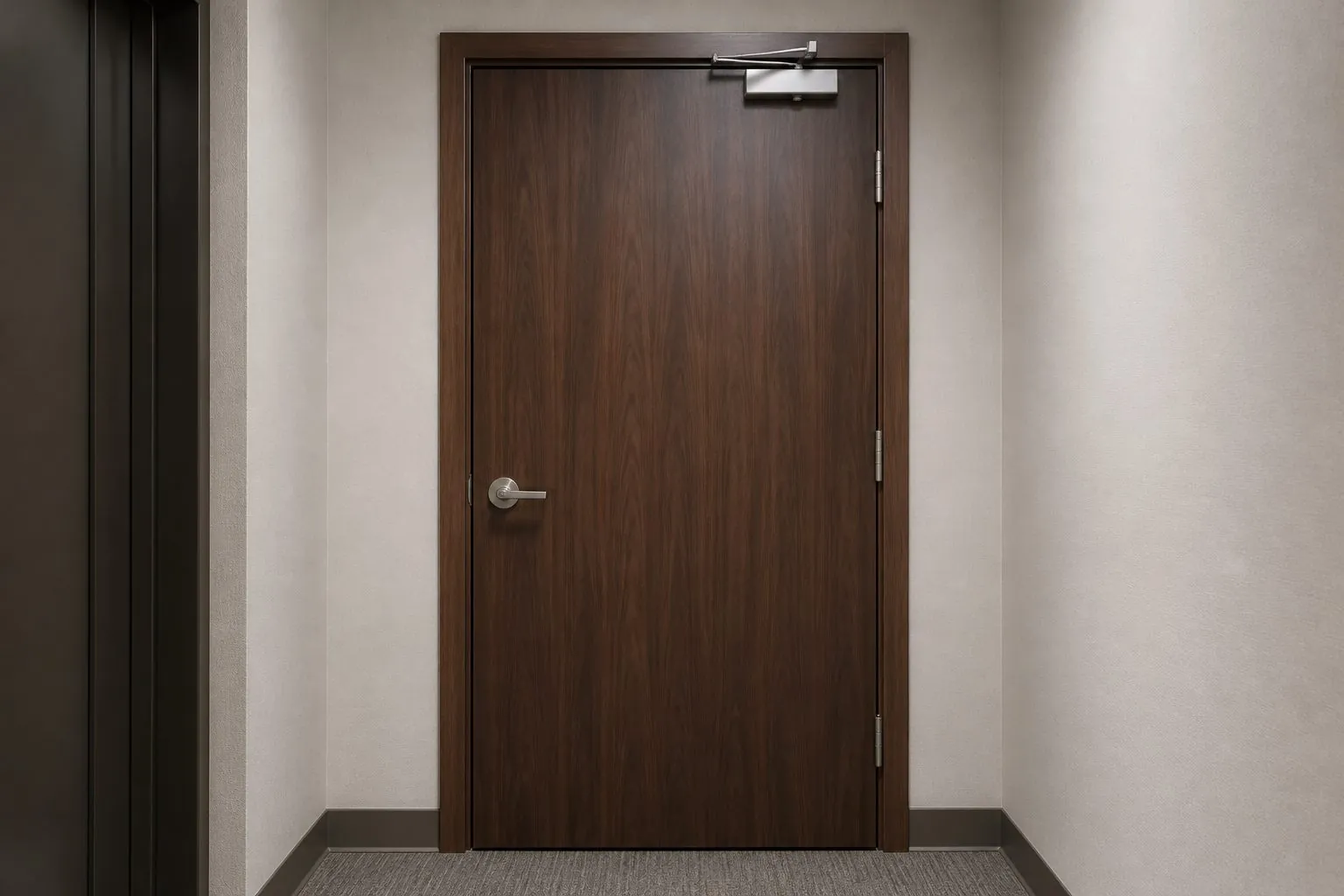
Fire-rated openings require door sets built and tested to a specific standard. In practice, these are usually engineered doors with special cores, because their construction can be controlled and tested consistently.
A solid wood door is not automatically fire rated, even if it is thick. The rating applies to the complete tested door set: leaf, frame, seals, glass, hinges and installation method. Changing any part can invalidate it.
- Identify which openings need fire ratings on the architect's door schedule.
- Confirm the required standard and rating for your market.
- Use only door sets with valid test evidence for that standard.
- Follow the tested specification for hardware and glass.
- Install exactly as the tested method describes.
Any fire rating for an Arcova door is confirmed per market and project, and must be supported by appropriate documentation.
How do cost and lead time compare?
Engineered doors are usually more economical and faster to produce in volume because cores and facings are standardized. Solid wood doors cost more due to timber selection, drying, waste and labor.
| Factor | Solid wood | Engineered |
|---|---|---|
| Material cost | Higher, depends on species | Lower to moderate |
| Production consistency | Varies with timber | High |
| Waste | Higher due to defects in timber | Lower |
| Suitability for large projects | Possible with careful planning | Well suited |
| Replacement matching later | Harder | Easier with recorded finishes |
Specific prices and lead times depend on species, size, finish and quantity, and are confirmed for each order. Ask suppliers to quote both options if you are undecided, with the same frame and hardware.
Which door type suits which project?
Match door construction to the building type, climate and maintenance plan rather than choosing by material name alone.
- Apartment developments: engineered solid-core doors with laminate, melamine or veneer faces.
- Hotels: engineered door sets with acoustic and fire performance as required by the operator.
- Premium villas: solid wood or engineered timber-core doors with veneer, depending on design.
- Heritage and classic interiors: solid wood panelled doors where authenticity matters.
- Rental housing: durable engineered doors with tough faces and edges.
- Humid climates: engineered doors with sealed edges and stable cores.
Mixing door types within one project is common and sensible. A hotel might use acoustic engineered door sets at guest room entrances, lighter engineered doors for bathrooms and solid wood feature doors in the lobby or restaurant. The key is to keep finishes, frames and hardware consistent so the doors look like one family.
What should buyers confirm before ordering interior doors?
Send a door schedule and finish references early. Door orders involve many variations, and missing details are a common cause of delay.
- Door schedule with size, swing and quantity per opening.
- Wall thickness for frame and architrave sizing.
- Required fire and acoustic performance per opening.
- Lock, hinge and closer models.
- Finish samples and glass details.
- Climate and site storage conditions.
Approve a sample door set, ideally installed in a mock-up room, before mass production. It shows finish, weight, hardware feel and closing action together.
Questions to ask a door supplier
- What core is used, and what is the leaf weight?
- How are edges finished and protected?
- Which ratings have test evidence for our market?
- Are doors pre-machined for our lock and hinge models?
- How are doors packed, and are they labelled by opening?
How can Arcova help with interior doors?
Arcova produces interior doors for apartments, villas and hotels, including engineered and timber door sets with matching frames and architraves. Doors are machined for hinges and locks and labelled by opening.
- Drawing deepening and door schedule coordination.
- Finish sample approval and mock-up doors.
- Hardware sourced by budget from Blum, Hettich, Häfele, DTC and Hutlon where applicable.
- Inspection with photo reports before shipping.
- Export packing labelled by unit or room, with installation guidance.
Arcova has 12+ years of manufacturing experience and holds ISO9001, BSCI and FSC certifications. Fire and acoustic ratings, MOQ and lead times are confirmed per project. Send your door schedule for a review.